Showing posts with label James Hay. Show all posts

Monday, 4 March 2024

Manon

Standard YouTube Licence

Royal Ballet Manon Royal Opera House Covent Garden, 2 March 2024 13:00

While watching Manon on Saturday I was struck by the similarities to MacMillan's Romeo and Juliet.   Not so much with the libretti perhaps though Manon loses Lescaut and Juliet loses Tybalt and both sets of lovers come to a sticky end.  The similarities I had in mind were the choreography with its spectacular duets including one around a bed and great sword fights.  Also, Nicholas Georgiadis created the sets and costumes for both ballets.

Although this was an original thought as far as I was concerned  I doubted that it was novel.   I ran a Google search on "similarities between MacMillan's Manon and Romeo & Juliet"  The only comparison that came to light was Robert Gottlieb's Manon and Romeo and Juliet.   Mr Gottlieb does not seem to have been at all impressed.  He described Manon as "a piece of junk" and complained that Romeo and Juliet was "tedious at times" though "relatively stage-worthy."  

Some pretty uncomplimentary things have been said about the ballet by such critics as Mary Clarke and Jane King but the public seem to like it.  It will celebrate its half-century in a few days and it has been performed by the world's leading ballet companies.  The House was packed to the gunwales on the afternoon of 2 March 2024 when I saw it.  Not a few patrons rose to their feet at the curtain call which does not happen for every show.   I agree that the leading characters, Manon, des Grieux, Lascaut and Monsieur GM are morally flawed and the story is pretty sordid but that did not make it a waste of the lovely Antoinette Sibley or any of her successors.

For those who do not know the ballet it is summarized on the Royal Opera House website.   It is based on the novel  Histoire du Chevalier des Grieux, et de Manon Lescaut by Antoine François Prévost which had already been dramatized, made into several films, at least one other ballet and Puccini's popular opera Manon Lescaut.  MacMillan did not adapt Puccini's score even though it would have been familiar to many members of his audience.  Instead, he commissioned Leighton Lucas to compile a score from Jules Massenet's collected works

The advertised dancers for the lead roles were to be Sarah Lamb and Steven McRae.  McRea was unavailable on Saturday so the role of des Grieux was danced by Ryoichi Hirano.  Lamb reminds me a little of Antoinette Sibley who first danced Manon and Hirano is the sort of chap who could be expected to handle the eye-catching lifts and fish dives with ease.   James Hay danced Lescaut, not an easy role as he had to project a range of emotions.  In one scene he is drunk manhandling his mistress Meaghan Grace Hinkis in one of the few comic scenes from the show. Shortly afterwards, he is dragged in chains and roughed up by Monsieur GM,   That role was danced by the venerable Christopher Saunders who has been dancing in the Royal Ballet for almost as long as I have been following it.

As for the creatives, Koen Kessels conducted the orchestra, Laura Morera staged the performance and Christopher Saunders was the rehearsal director.

I lost count of the number of curtain calls. Sarah Lamb received enough flowers to set up in business as a forest. There were also some for Hirano which would never have happened in Dame Anroinette's day, She used to select one of her choicest blooms and present it to her partner who would sniff the perfume in gratitude. In a reversal of the old tradition, Hirano presented one of his flowers to Lamb.

There are now two different versions of this ballet in this country: the Royal Ballet's version with Georgiadis's designs and English National's that I mentioned but did not review in French Revelation: "The Three Musketeers" on 9 Oct 2018. The main difference between the two is that ENB's came from Denmark and uses the designs of Mia Stensgaard.

Wednesday, 23 May 2018

Scarlett's Swan Lake

Standard YouTube Licence

Royal Ballet  Swan Lake Royal Opera House 22 May 2018 19:30

The curtain fell for the last time at about 22:35 yesterday and it is now 03:22 on Wednesday. Since then I have travelled 180 miles by rail and another 32 by road. I have read the programme from cover to cover.  Yet I cannot sleep because I am still excited about Liam Scarlett's new production of Swan Lake.

There are hardly any gimmicks in this production.  There are no new characters.  The story is unchanged:
"Prince Siegfried chances upon a flock of swans while out hunting. When one of the swans turns into a beautiful woman, Odette, he is enraptured. But she is under a spell that holds her captive, allowing her to regain her human form only at night.
The evil spirit Von Rothbart, arbiter of Odette’s curse, disguises his daughter Odile as Odette to trick Siegfried into breaking his vow of love. Fooled, Siegfried declares his love for Odile, and so dooms Odette to suffer under the curse forever (see the Royal Opera House's website).
Yet there was still innovation (see How choreographer Liam Scarlett is reimagining Swan Lake on the Royal Opera House's site).

There are, of course, John Macfarlane's brilliant new designs which I shall discuss later. For me the most striking innovation was the elevation of Baron von Rothbart from scary cape waving sorcerer on a rock to a an even more menacing scheming court insider reminding me just a little bit of President Putin.  Although he appears in the prologue the baron's first intervention in the story is as the queen's adviser.  It is obvious that he exerts considerable influence over her.  The idea that the prince should marry may even have been his idea.  He throws his weight around when he is alone with the prince. He reminds Siegfried of his mother's command to choose a bride. When Siegfried is about to leave the stage with his crossbow, von Rothbart gestures to him to put it down.  This enhanced role for the baron affects the dynamic of the story and in my view makes it much more realistic.  Particularly the third act when von Rothbart promotes his daughter as a possible royal bride.

A character who is so crucial to the story requires an artist who is as much as actor as he is a dancer and Bennet Gartside performed that role exquisitely.  As I could spare the time (and money) for only one performance of the new Swan Lake I chose last night in order to see Federico Bonelli and Lauren Cuthbertson.  They are two of my favourite dancers at the Royal Ballet.  When I saw them in Giselle three years ago they quite took my breath away (see Cuthbertson's Giselle 3 April 2016). It was on the strength of that performance that I chose Cuthbertson as my ballerina of 2016 (see The Terpsichore Titles: Outstanding Female Dancer of 2016 29 Dec 2016). Bonelli was on stage yesterday and he was as gallant and dashing as ever but sadly Cuthbertson was indisposed. Just before the start Kevin O'Hare came on stage to announce that she had been injured and invited us to join him in wishing her well which I, for one, certainly do. He also announced that Akane Takada. who took Cuthbertson's place, had danced Odette-Odile for the first time the previous Saturday. All I can say is that she was enchanting. While I hope to see Cuthbertson in that role soon I was not in the least disappointed by the casting change.

There were many other dancers who impressed me last night but this already over-long review would become as turgid as a telephone directory were I to include them all.  But James Hay stood out for me as the prince's mate Benno. Not quite as big a role in Scarlett's Swan Lake as in David Dawson's but the character does not appear in many productions.  Perhaps because I have tried to learn the cygnets' dance (see KNT's Beginners' Adult Ballet Intensive - Swan Lake: Day 1 16 Aug 2015) I feel a special sense of fellowship with whoever dances on it on stage.  I therefore gave Elizabeth Harrod, Meaghan Grace Hinkis, Romany Pajdak and Leticia Stock who performed that piece an extra loud clap prompting an old fashioned look from the lady next to me as if to say "What's so special about them?" It  would have taken me far too long to tell her.  I also liked the Neapolitan dance. Anna Rose O'Sullivan and Paul Kay were lively and sparky. They performed that divertissement in the way that Wayne Sleep and Jennifer Penney used to do.

This was a ballet in which every artist performed well. Especially the corps who were magnificent.  Not every man shared that view. On the stairs up to the Paul Hamlyn Bar in the first interval a pinstriped gent was holding forth that the boys were alright but the girls seemed somewhat under-rehearsed.  I was amazed by that criticism. "What had he seen that I had missed?" I wondered.  For me it was pure delight from beginning to end.  The lady who was with the opinionated gent didn't agree. She urged him to stop it and she struck him more than once with her rolled-up cast list.

Having said that it was a very funny audience last night. Nobody joined me in clapping the principals when they first appeared. Hardly anybody applauded Takada as she was approaching her 32nd fouetté. Folk were leaving Florida style even before the first curtain call   "It was only 22:30" I thought to myself, "If I can get home to Yorkshire tonight surely there must be trains to Penge." The dancers and musicians gave us there all and they deserved better from the crowd. Ballet Black got a well-deserved standing ovation in Nottingham last week as did Teac Damsa for their Swan Lake in Manchester. "What is it with stuffy old London?" I mused.  Those artists deserved a flower throw and when the flower market was next door they would have got it.

I promised to say a word about Macfarlane's designs. Well, they are good.  The backdrop of swirling waters for the prologue gave way to the palace gardens for act 1. Seamlessly they morphed into a lakeside with a full moon for act 2. The ballroom scene with its throne was magnificent. However, the most dramatic setting of all was the lakeside at the end. A monochrome landscape dominated by a rock. Those scene changes required ingenious lighting design and David Finn delivered it.  The costumes were magnificent particularly Siegfried and Benno's and the uniforms for the men.

Scarlett shows that you don't need bikes on stage, male swans, new characters or even a new libretto to rejuvenate Swan Lake.  His work is already pretty close to my favourite Swan Lake though I would hate to have to choose between it and David Dawson's. They are both excellent with their rspective strengths.  I loved Anthony Dowell's Swan Lake but I think we were ready for this change.

Wednesday, 12 April 2017

Jewels - The Royal Ballet at its best


Standard YouTube Licence

The Royal Ballet, Jewels, transmitted live to cinemas, 11 April 2017, 19:39


I once asked a distinguished panel of dance critics, dancers and the artistic director of Scottish Ballet whether a narrative ballet needed a plot (see My Thoughts on Saturday Afternoon's Panel Discussion at Northern Ballet 21 June 2015). All said no except Tobias Batley who was then a premier dancer at Northern Batley and seemed to have an interesting point to make but did not get the chance to develop it. When I asked that question I had Balanchine's Jewels in mind which actually tells a lot of stories from the history of ballet to the choreographer's life history without actually having a libretto.

Jewels is like a denial of service attack on the senses. Each of the three ballets is a feast in itself. You feel you can only take so much colour, and movement, and music in one evening - but after each act, there is more.  The only experience with which I can compare this ballet is, in fact, my first sight of real jewels. The Crown Jewels on my first trip to London. The impression that the dazzling display of light and colour made on a little five-year-old from the North in post-war Britain was very much the same as the concatenation of dancers in green, red and white create whenever I see Balanchine's masterpiece.

On Sunday I remarked that I had seen the Bolshoi at its best (see A Hero of our Time 10 April 2017). Yesterday, audiences around the world saw the Royal Ballet at its best. The company fielded Beatriz Stix-BrunellValeri HristovLaura MoreraRyoichi HiranoEmma MaguireHelen Crawford and James Hay in Emeralds.  As readers know, I am one humongous fan of Morera whose hand I once had the good fortune to shake (see Laura Morera  25 Aug 2015). She always delights me but yesterday she raised my admiration to a new level.

More favourites in Rubies Sarah LambSteven McRae and Melissa Hamilton. If Emeralds was lyrical, Rubies was spectacular. One gorgeous explosion of movement after another culminating in McRae's exit in chaînés. A dynamo harnessed to McRae at that moment could have powered a fair size town. Rubies is the shortest work in the three ballets but it is the one I like best, possibly because of Stravinsky's Capriccio possibly just the New World razmataz. The energy. The fun.

Diamonds, the white act, is sublime. An homage to Petipa. Marianela Nuñez and Thiago Soares were majestic. Stix-Brunnell and Hay returned to join them together with Claire CalvertTierney HeapYasmine NaghdiNicol EdmondsFernando Montaño and Valentino Zucchetti. Not all Petipa's ballets end well but some of them do. Think of The Sleeping Beauty, The Nutcracker and all your other favourites rolled into one and combine it with Tchaikowsky's Polish symphony and you understand why I compared the overpowering of the senses to the overwhelming of a website by millions of messages.

I should also say something about the presentation. I was very impressed with Kristen McNally. I warmed to her the moment she opened her mouth. Proud, elegant, knowledgeable, amusing and above all, Northern. I do hope the Royal Opera House enlists her services again. It was also good to see Darcey Bussell as it always is but this time she was there in her capacity as a great ballerina escorting a member of the original cast to the jeweller's shop that inspired Balanchine. A beautiful dancer surrounded by beautiful things. That is how I like to think of her. It would be good to see more of her in scenes like that.

Monday, 18 January 2016

The Royal Ballet's Double Bill


The Royal Ballet, Rhapsody and The Two Pigeons, Royal Opera House, 16 Jan 2016


A trip to Covent Garden is always something of an occasion.

First, the tickets arrive in a smart folder sponsored by Rolex, the "Official Watch". They carry a hologram and are printed on expensive paper. They look more like the title to an investment rather than a voucher for a show.

The redevelopment of the Covent Garden piazza following the relocation of the fruit and veg market to Nine Elms has transformed the neighbourhood from a place of manual labour into a playground with expensive shops and restaurants where once there were lorries, warehouses and pubs with crazy opening hours. You have to resist the lures of luxury chocolates and cashmere cardigans to reach the revolving doors and pass an equally tempting shop of Royal Opera House merchandise to reach the box office.

That box office looks and feels like the counter of a private bank with its elegantly groomed and exquisitely mannered staff. The queue for the cloakroom is divided into aisles so you never have to wait more than a few minutes to deposit or retrieve your coat and hand luggage. Instead of formidable flights of stairs from Floral Street there are lifts and escalators to whisk you to whichever part of the auditorium you are seated.

The auditorium looks and feels as it has always done with its elegant curtains and royal monogram even though it will have been renovated and redecorated many times but the bars and restaurants along the way are opulent.

I miss the old House with its all pervading smell of over ripe fruit and vegetables and unofficial flower throws. At least the London ballet crowd remain.  The twos and threes of office workers straight from work in their buns and twin sets with earnest stares who never seem to age.

Also the same rituals.  The short clap when the maestro appears, the ripple when the ballerina and male principal first appear on stage and at revolution 27 of Legnani's 32 fouettés in Swan Lake and sustained applause with cheers at the very end. The bewigged flunkies in their red liveries have gone but the order of precedence in which flowers are presented seems to be very much as it has always been.

As my readers will have surmised from the lack of recent updates my day job has kept me very busy lately. I had spent more or less every spare moment since the Christmas holidays preparing for a hearing which left no time for watching ballet and hardly any for class. That hearing took place on Friday and lasted the whole day.  To restore my spirits I checked the Royal Opera House's website for tickets and found there were still some left for the Rhapsody, Two Pigeons double bill. One was in the middle of the amphitheatre stalls that 50 years experience of theatre going has taught me to be one of the best parts in the House.

The two ballets are by Sir Frederick Ashton but from different stages of his career.  He staged the Two Pigeons in 1961 with the late Christopher Gable and Lynn Seymour in the title roles and created Rhapsody in 1980 as a birthday gift for the Queen Mother. Somehow I had missed both of those works when they had previously been performed so this double bill was a double first for me.

The matinee started with Rhapsody to Rachmaninoff’s Rhapsody on a Theme of Paganini.  The lead dancers in the first performance were Mikhail Baryshnikow and Lesley Collier so you can imagine the weight of expectations on the shoulders of their young successors.  James Hay and Francesca Hayward were brilliant in those roles as were the other twelve dancers who supported them including several soloists. Rhapsody was one of Ashton's last ballets but it reminded me of many of his early works with his spectacular turns and jumps for the males and the dainty pointe work and delicate arm and hand movements. for the women. The costumes designed by William Chappell for a set created by Ashton himself were gorgeous.  The dancers, orchestra and pianist richly deserved their deafening and sustained applause.

The Two Pigeons as re-staged by Ashton to Messager's music is quite charming.  It was originally created by Louis Mérante for the ballet of the Paris Opera in 1886.  Ashton changed the story and Lanchbery adapted and arranged the score. Two of my all time favourite dancers, Lynn  Seymour and Christopher Gable, were in the original performance at Covent Garden on 14 Feb 1961 and it must have been wonderful.  The leads on Saturday were Alexander Campbell and Yuhui Choe. I will tell you how they got on below

There is lots of humour such as the echoing of the pigeon steps by the young girl, the dance competitions and even some slapstick such as the sudden removal of the artist's chair.  A particularly delightful touch are provided by the trained pigeons, Toad, Mole and Bianca who flew past on stage and sat on the artist's shoulder right on cue.  Ironically, the last show that I had seen from Covent Garden was Carlos Acosta's Carmen (see Au Revoir but not Adieu 18 Nov 2015). Comparisons are odious and there is no bigger fan of Acosta on this planet than me but if the Royal Ballet wants to dance gypsies Ashton shows the way to do it.

Shortly after the performance Campbell tweeted:

I replied
Although I did not know it at the time the magnificent Janet McNulty also saw the show and she wrote:
Now I don't agree with Janet on everything. How can I? She's a Liverpudlian and I'm a Mancunian. She likes football and I cricket. She votes one way and I another. But in our appreciation of this performance we are as one.

It will be streamed to cinemas on the 26 Jan 2016. Now if you get a chance to see it you really must.

Monday, 2 June 2014

A Minor Miracle - Bringing Le Baiser de la fée back to Life

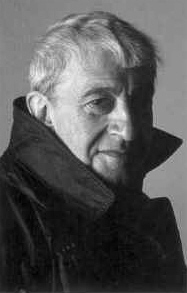
Sir Kenneth Macmillan
Source Wikipedia
Today at Ivy House, the former home of Anna Pavlova, a minor miracle occurred. Donald MacLeary, one of the stars of my youth, restored a fragment of Sir Kenneth MacMillan's ballet Le Baiser de la fée before my eyes.  

The idea of restoring one of Sir Kenneth's early works was that of his widow, Deborah. She and Clement Crisp had been invited by Ivy House Music and Dance to discuss Sir Kenneth's legacy at the London Jewish Cultural Centre. In February I had attended an interview by Mr Crisp of Dame Antoinette Sibley at the Royal Ballet School which had also been organized by the Centre (see "Le jour de gloire est arrive - Dame Antoinette Sibley with Clement Crisp at the Royal Ballet School 3 Feb 2014). Though this event also involved Mr Crisp and included some fabulous ballet it was very different from the interview with Sibley.

The main difference is that it was not really an interview or even a dialogue. It was more a monologue by Mr Crisp with some choice interventions by Lady MacMillan. It was through her that we learned that the great choreographer relieved tension by knitting.  He would begin a new garment with every ballet and then abandon it as soon as the ballet was finished. Lady MacMillan told him that she would never wear any of his creations and she never did because the ballet was finished before the knitting. When Mr Crisp discussed Sir Kenneth's inventiveness Lady MacMillan reminded us of his reverence for Petipa. Lady MacMillan told us that Sir Kenneth did not say much but when he did it was generally devastating. Clement Crisp for his part reminded us of Sir Kenneth's musicality, the dark side of many of his ballets such as The Judas Tree and curiously of his knowledge of things that he should not have known about. I liked that format and learned a lot from both speakers.

A short interval followed the discussion after which the room turned into a rehearsal studio. The choreologist Diana Curry introduced the audience to Benesch notation. Although the technique was quite new in the 1960s Sir Kenneth always worked with a choreologist and much of Le Baiser de la fée had been recorded. However there was a significant lacuna and that was the solo where the bridegroom danced by MacLeary goes looking for his bride and finds himself waylaid by the fairy. Fortunately that scene had been recorded on film which Ms Curry had analysed and notated.

The role that Sir Kenneth had created for MacLeary was danced by James Hay, a soloist with the Royal Ballet. Ms Curry had taken Hay through her recording earlier in the afternoon. When I first saw him in the late 1960s and early 1970s MacLeary was easily the handsomest of the Royal Ballet's principals and I was delighted to see that the years had been kind to him. Even after 45 years he remains a very good looking figure now. He invited Hay to dance the solo as he understood it. "Too classical" said MacLeary "You are looking for your beautiful fiancée. Be more natural." Though MacLeary complimented the choreologist on her work it was not exactly as he remembered it with the result that the piece was less than a perfect recreation. But it was good and to bring back to life a ballet created years before Hay was born was to my mind nothing short of a miracle.

This afternoon was special in so many ways. Special in re-creating a beautiful ballet. Special for the insights into MacMillan's work and personality from those who knew him best. And special for taking place in the home of one of the greatest dancers of all time. Had there been no Lady MacMillan or Clement Crisp, had there not been a step of dancing, the experience of being in a room in which Pavlova once walked would have been memorable enough for me.