Showing posts with label Mike Wamaya. Show all posts

Wednesday, 29 March 2017

Isabelle Brouwers in Kibera


Standard YouTube Licence


Over 4 years have elapsed since I first wrote about Mike Wamaya's ballet class in Kibera (see What can be achieved by a good teacher 3 March 2013). The world took an interest in that class towards the end of last year when The Guardian featured it on its Facebook page and other news outlets followed suit (see Recognition for the Kibera Ballet Class 9 Jan 2017).

Shortly after that feature appeared, dancers and companies in Britain offered help.  Birmingham Royal Ballet sent pointe shoes to the class (see Thank you Birmingham Royal Ballet 17 Jan 2017). Yesterday, after being reminded of its blog by Feedspot (see We hate to blow our own trumpet but .... 28 March 2017) I read that Isabelle Brouwers of English National Ballet had actually been to Kibera and given a class there (see Isabelle Brouwers teaches ballet to Kenyan children in Kibera slum 8 Feb 2017 ENB Blog).

I have always had a lot of affection for English National Ballet ever since I attended their Christmas performances of The Nutcracker at the Festival Hall. I have a high regard for that company and their artistic director, Tamara Rojo, not only for their work on stage but also for their work for the community, and in particular, their classes for patients with Parkinson's disease (see ENB's Big Give to Dance for Parkinson's 25 Nov 2016). It came as no surprise to read:
"Backed up by my ever supporting parents, and my wonderful colleagues and Artistic Director Tamara Rojo at the English National Ballet, who helped me gather an incredible amount of dancewear and shoe donations, I was all set for what I knew would be one of the most eye opening and life changing events of my life!"
The article on Brouwers's visit is a very good read and I commend it to my own readers.

I also commend the triple bill of ballets by Pina Bausch, William Forsythe and Hans van Manen at Sadler's Wells this week which I wish I could get to see.  If any of my readers wants to offer me a review I will be very pleased to publish it.

Tuesday, 17 January 2017

Thank you Birmingham Royal Ballet

Birmingham Royal Ballet's Studios
(c) 2016 Jane Lambert: all rights reserved


As readers know, one of my interests is Africa.  Ever since I first heard of it, I have been beating the drum for Mike Wamaya's class in the Kibera district of Nairobi.  In Recognition for the Kibera Ballet Class 9 Jan 2017 I reported that the mainstream media had begun to take an interest in those students. The Guardian had posted a film about a film about them to its Facebook page and the Huffington Post had run a feature on them.

The Birmingham Royal Ballet saw this publicity and decided to help. Here's what they said in an email that they circulated earlier today:
"We have recently been inspired by an article from The Guardian about a ballet school in Kibera, Nairobi; a 'slum' home to 700,000 people. The young dancers there mainly learn to dance barefoot and rely on donated shoes to learn advanced techniques that can be used in performance. We were incredibly moved and inspired by their talent and hard work, so we rounded up as many pointe shoes as we could to send over via Anno's Africa with our best wishes and warmest compliments on their work."
I think that's lovely.  That news really cheered me up.

I don't know whether Mike's students have all the pointe shoes they well need other things.  Scholarships to train abroad as Joel Kioko has done is one possibility,  I shall follow this story like a terrier and report anything new.

Monday, 9 January 2017

Recognition for the Kibera Ballet Class


Standard YouTube Licence


I first wrote about Mike Wamaya's ballet class in Nairobi in What can be achieved by a good teacher 3 March 2013:
"In many ways the kids in this class have had the worst possible start in life but in one very important respect they could not have had a better one. Look at the teacher, Mike Wamaya. He is good. I googled for some more information on Mike and I found an even better clip from CNN and this article in The Daily Nation. These films show what can be achieved from the discipline not only in the studio but also in the class room and in life generally. Something that I and most readers of this blog in many walks of life are likely to have found out for ourselves."
I mentioned them again in Back to Africa 7 Jan 2015, Revisiting Kenya with Obama 25 July 2015 and Al Jazeera features the Ballet Class in the Nairobi Slums 19 Oct 2016.

In the last of those posts, I mentioned that students from Kibera were taking classes at the Dance Centre Kenya which is directed by the US dancer Cooper Rust. On 3 and 4 Dec 2016, some of those dancers took part in the Dance Centre Kenya's performance of The Nutcracker at the Kenya National Theatre (see Dance Performance: The Nutcracker by Dance Centre Kenya, Dec. 3 & 4 2016 @ the Kenya National Theatre 2 Dev 2016 Nairobi Now :: arts, culture and events). Those performances were, of course, big news in Kenya (see Billy Odidi Holiday season starts with ‘The Nutcracker’ dance 1 Dec 2016 Business Daily) but the class was noticed internationally.   The Huffington Post featured the artists in  Striking Photos Of The Ballet Program Bringing Strength To One Of Africa’s Biggest Slums 14 Dec 2016 and now The Guardian has added a film about them to its Facebook page.

Now that this remarkable initiative has been discovered it is important not to forget it. These kids need encouragement and resources and it is important to build on what has already been achieved.

Wednesday, 19 October 2016

Al Jazeera features the Ballet Class in the Nairobi Slums

Kibera, Nairobi
Author Shreibkraft
Source Wikipedia
Creative Commons Licence


One of the first posts that I published was What can be achieved by a good teacher 3 March 2013. At the time it was my most popular article clocking up 434 hits almost overnight. It featured a remarkable ballet class in Kibera, a district of Nairobi described by Wikipedia as "the largest slum in Nairobi, and the largest urban slum in Africa," taught by a remarkable teacher, Mike Wamaya.

As I think that Africans will make an enormous contribution to ballet (and indeed all the performing arts as well as the humanities, sciences and civilisation generally) I have revisited the topic several times (see Back to Africa 7 Jan 2015 and Revisiting Kenya with Obama 25 July 2015 and Ballet in Sub-Saharan Africa 30 April 2016). I am glad to see that the Qatari news broadcaster Al-Jazeera has also taken an interest in that class. It posted a video entitled Ballet in Kenya is a beautiful thing to its Facebook page on 15 Oct 2016 which has already attracted nearly a million hits, 12,000 "loves" or "likes" and over 16,000 shares.

Al-Jazeera has also published an article by Fredrik Lerneryd entitled Kenyan children learn ballet at Kibera slum 14 Sep 2016 Al-Jazeera. It contains pictures of Mr. Wamaya's class in Kibera and also at a school in Karen, a rather more affluent neighbourhood, where some of Mr. Wamaya's older students take lessons. In the article Mr Lerneryd refers to Cooper Rust, a US dancer who is artistic director of Dance Centre Kenya. She says that the children from Kibera prove to be just as good as those from Karen despite their lack of resources and facilities.

Most of the comments on Al-Jazeera's Facebook page are favourable but there are exceptions. One lady asks:
"To what use exactly? The charity should instead teach them practical skills that will be useful later in life"
A  gentleman opines:
"Ballerina? Very good dream but it must be stopped! Kenya is an ancient land with a rich and colourful past, there are many aspects of Kenyan culture that can be embraced by Kenyan youths. Why are Africans still living like colonial subjects? Helping sustain European language, religion, culture, economy at the expense of Africa and African culture! Stop"
Try telling a boy or girl from any country or social background who feels compelled to dance to stop? Fat chance! The Kenyan TV station K24TV has a posted the video Ballet dance slowly gaining popularity among children in Kenya which shows that ballet is beginning to gain traction at all levels of Kenyan society. Another station KTN News shows Kenyan students training in Norway.

Ballet is no longer European. Look at the dancers from South America, East Asia and, increasingly, from South Africa in the companies of the world. Kenyans will soon be as proud of their dancers as they are of their long distance runners.

Wednesday, 27 July 2016

Ekaterina Vazem - the First Bayadere and a First Rate Teacher


Standard YouTube Licence


The first Bayadere was Ekaterina Vazem. In a quotation from her memoirs which appears in Wikipedia she described it as her favourite of all the ballets that she had occasion to create. She liked its:
"beautiful, very theatrical scenario, its interesting, very lively dances in the most varied genres, and finally Minkus' music, which the composer managed especially well as regards melody and its coordination with the character of the scenes and dances."
She then goes on to mention a disagreement with Petipa which you will have to read for yourself.

Vazem was a great teacher as well as a great dancer. From my conversations with dancers and my reading of their biographies I have detected a special bond between teacher and student which does not seem to exist in quite the same way in other disciplines.

I have mentioned that bond several times in this blog.  In Le jour de gloire est arrive 3 Feb 2014 I wrote about Dame Antoinette Sibley and her teachers Tamara Karsavina and Pamela May:
"At the beginning of this post I mentioned the tradition of ballet. Crisp described Sibley as a 'repository' - which set her giggling - of knowledge. She had known so many of the greats and indeed she had been taught by two of them. The great English ballerina Pamela May who taught at the School while appearing regularly at Covent Garden and Tamara Karsavina whom Sibley adored. Karsavina once invited the young Sibley to her home and she cooked a steak for her. Sibley chose a steak because she thought it might be easy - something you just place under a grill - but Karsavina took the same trouble over that steak as she did with everything else."
One of my best friends from St Andrews who trained with Olga Preobrajenska wrote this about her great teacher which I reproduced in my post of 31 March 2013:
"Haven’t forgotten about your Olga P. request….don’t really know what to say except that she was a tiny and fierce little lady who believed in physical punishment and commanded the utmost respect from her students. I was 9 years old and terrified of her. I grew to love her and when she died, mother and I attended a benefit and somewhere I have one of her linens that we purchased. There was a gentleman at the studio who acted as her manager…he appeared to be slavishly devoted to her. As a child I did not know what their relationship was other than he also collected money for the dance lessons. I remember the time that Maria Tallchief came to the studio. She was beautiful. Many famous dancers came to her for instruction."
In my article What can be achieved by a good teacher 3 March 2013 I wrote how Mike Wamaya has changed the lives of some of the poorest children in one of the roughest neighbourhoods of Nairobi through his ballet lessons:
"In many ways the kids in this class have had the worst possible start in life but in one very important respect they could not have had a better one. Look at the teacher, Mike Wamaya. He is good. I googled for some more information on Mike and I found an even better clip from CNN and this article in The Daily Nation. These films show what can be achieved from the discipline not only in the studio but also in the class room and in life generally. Something that I and most readers of this blog in many walks of life are likely to have found out for ourselves."
"Love my profession" exclaimed Esther Protzman who teaches at the Netherlands Royal Conservatory in the Hague on social media recently and well she might for she has already trained some lovely dancers many of whom are on a trajectory to the top.

Vazem's pupils included  Anna Pavlova, Olga Preobrajenska and Agrippina Vaganova after whom the Imperial Ballet School was renamed. There does not seem to be any film of Vazem's teaching but there is this clip of her famous pupil who would have inherited something from her.

When a teacher has danced with a major company his or her teaching has a special edge which is not easy but is always good.  I experienced that edge last year in Jane Tucker's Swan Lake intensive at the Dancehouse which I described in KNT's Beginners' Adult Ballet Intensive - Swan Lake: Day 1 18 Aug 2016. I wrote:
"We were led upstairs to one of the studios where we met our teacher. I know Jane Tucker from Northern Ballet and think the world of her. She has a wonderful way of coaxing us to carry on even when we can go no further. "Not bad" she exclaims after a shambles of a turn. "How are you doing?" She smiles. "All right?" And so we are."
This year I am back for La Bayadere.  These start on the 15 Aug for beginners and the 18 Aug for more advanced pupils and I gave full details in La Bayadere - where it all took place 24 July 2016. As I said before, if you want to take part call Karen on 07783 103 037 or get in touch through her contact form, Facebook page or twitter.

Sunday, 12 June 2016

Another Great Teacher


One of my very first and most popular posts was about the Kenyan dance teacher, Mike Wamaya, who gave ballet classes to kids from one of the roughest neighbourhoods of Nairobi and raised their aspirations not just in dance but in everything they do (see What can be achieved by a good teacher 3 March 2013). I revisited Mike's dance class in Back to Africa 7 Jan 2015 and Revisiting Kenya with Obama 25 July 2015).

I have now come across another remarkable teacher called Tuany Nascimento who does very similar work in the favelas of Rio de Janeiro (see Taylor Barnes How a Ballet School in the Slums of Brazil Is Changing Girls' Lives 27 April 2016 Marie Claire and Sarah Grossman Ballet Class For Girls In Rio Slum Is Free With Good Report Cards 10 June 2016 Huffington Post reported by Network Dance). A film has been made of her by Nownesss entitled Dancing for the Future 25 May 2016 which is also on Vimeo and she has a website called Na Punto Dos Pés or On Pointe.

Dance has made an enormous difference to my life. I took my first ballercise lesson when I was at my lowest ebb one month after losing my late spouse to motor neurone disease and just a few months after literally life changing surgery of my own during which time I had to run down my practice. Ballercise led to ballet which I took up at the grand old age of 64. My classes gave me something to which I could look forward and gradually restored my confidence and hope. The discipline for class is a discipline for life which can be applied to anything. I used it to restore my practice and rebuild my life.

I have been exceptionally privileged having been educated at the same secondary school as the Chancellor of the Exchequer, the same university as the heir to the throne and one of America's greatest research universities. If dance can do so much for me imagine what it can do for Mike Wamaya's kids in Nairobi or Tuany Nascimento's in Rio.

Saturday, 30 April 2016

Ballet in Sub-Saharan Africa

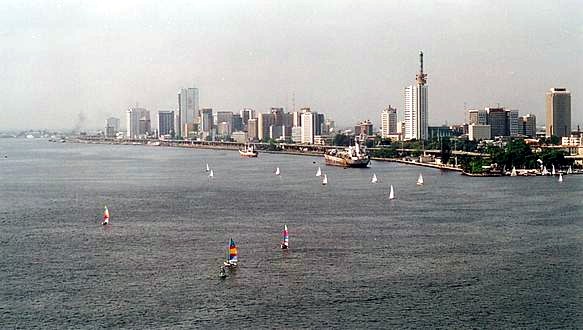
Lagos
Author: Benji Robertson
Source Wikipedia
Creative Commons Licence


In 13 Prominent Ballet Dancers and Choreographers Born in Southern Africa 3 May 2009 Ross Dix-Peek wrote:
"Most people would not dare to proffer southern Africa as an example of a prolific breeding ground of ballet dancers and choreographers, but, that she is. South Africa, and what was then Rhodesia, has for many decades now been a veritable nursery for ballet dancers, and her progeny have, after receiving expert local tutelage , often ventured abroad, performing for the Royal Ballet and other stellar ballet companies, some accruing universal acclaim. Listed below are thirteen southern African-born men and women who have distinguished themselves in the ballet fraternity, most notably abroad."
Dix-Peek listed some of the greatest names in dance: John Cranko, Monica Mason, Nadia Nerina and Merle Park. They were, of course, white dancers who made their careers in the United Kingdom and other advanced countries.

One of the most remarkable features of the art form has been its resilience to political change. It might easily have suffered from its association with the ancien regime in Russia and disappeared without trace but instead it was adopted by the Soviets and received considerable support from them. Later it survived the fall of the Soviet Union and continues to prosper in the current political and economic climate.

A similar transition seems to have occurred in Southern Africa. There was an audience for ballet in the apartheid period and it might have been feared that ballet would have been tainted by association with that system but that does not appear to have happened. South Africans of all races have trained in the art though many continue to make their careers in Europe and North America.

There are however signs that a market for dance is developing in Sub-Saharan Africa. Yesterday the BBC posted the video"Ballet: 'Every dancer should have this background'" 29 April 2016 about ballet in Nigeria to its website. The film featured Sarah Boulos, Chairperson of the Society for Performing Arts in Nigeria ("SPAN"), which describes itself as "a registered NGO offering unprecedented opportunities in dance, music, theatre and visual arts to Nigeria's talented citizens."  A Google search of ballet in Nigeria revealed this YouTube video of children having fun and correspondence between a number of young Nigerian women who sought ballet training and a US website (see Career Development Plan - Ballet in Nigeria on Ballet Dancers Guide.com).

Elsewhere I have written about Mike Wamaya's class in one of the toughest neighbourhoods of Nairobi (see What can be achieved by a good teacher 3 March 2013) which I followed up last year with Back to Africa 7 Jan 2015 and Revisiting Kenya with Obama 25 July 2015. One development that I should very much like to see would be a ballet school in Freetown (see A Ballet School for Freetown 20 May 2014) as it is the capital of the country where Michaela DePrince was born (see Michaela DePrince at TEDx Amsterdam 28 Nov 2014) and also a country with which I have many connections.

Though these developments are encouraging there is still a long way to go. Lagos has had a 5,000 seater National Arts Theatre for the last 40 years but I struggle to find evidence of any kind of performance there, much less a ballet one. With any luck that may change as Africa celebrates the achievements of dancers like DePrince and Mthuthuzeli November who are making a name for themselves abroad.

Saturday, 25 July 2015

Revisiting Kenya with Obama


President Obama's visit to Kenya has reminded me of Mike Wamaya's ballet classes in one of the toughest districts of Nairobi. I wrote about them in What can be achieved by a good teacher 3 March 2013 and Back to Africa 7 Jan 2015. I have found an interview with this remarkable teacher with this video of some of his students on the International Performers Aid trust website.

In his interview Wamaya says:
"Since the set up of Anno’s Africa in Kenya seven years ago, we have experienced significant results. The children now find school fun and by this their levels of concentration while studying have gone up. The program explores their individual human potential and creativity in a much broader sense; who they are, what they think and believe, what they want for their futures. This has brought a lot of confidence and self-esteem in them."
It is clear from the interview that Wamaya's students have learned some valuable lessons from his classes quite apart from pliés and tendus. 

According to the About IPAT page of its website "the International Performers’ Aid Trust is a charity created for the relief of poverty amongst people involved in the performing arts in distress in all parts of the world."  It supports projects in Africa, Asia, South America, Europe and the Middle East, Mike Wamaya's classes seem to be its only dance project.

Unless a student from Sub-Saharan Africa leaves for an advanced country at a very young age it is hard to see how he or she could make a career in ballet. There are very few schools and even fewer companies between the Mediterranean and the Cape and the few that do exist are concentrated in South Africa. But Africa is changing. It is becoming more prosperous and greater prosperity will provide a market for the performing arts. Even if few of Wamaya's students make it on stage a fair proportion of them should be able to afford the best seats in the auditorium and thereby provide a market for the next generation.

Wednesday, 7 January 2015

Back to Africa


One of my most popular articles when I started this blog was What can be achieved by a good teacher 3 March 2013. It was about the classes given by the remarkable Mike Wamaya to kids in one of the poorest and toughest neighbourhoods of Nairobi.

I am returning to the topic again because of a news item on the class on the RAD website. It is headed "Former Faculty of Education student, Amy Shelton, gives a fascinating insight into her personal experiences of teaching ballet to children in Kenya in this month’s edition of Dancing Times," The students are up to date with the new RAD syllabus and as you can see from the film above and those in my earlier post they are as diligent and ambitious as any in the world. I have high hopes that some of  Wamaya's kids will perform one day at Covent Garden and the Met.

What Wamaya has done in Kenya could be repeated elsewhere in Africa including Sierra Leone. That country has already produced Michaela DePrince. It is going through a terrible trial right now just as it did two decades ago when DePrince was born. Sierra Leone survived the civil war and it will survive ebola but, as I said in  Could the Arts not do something about this horrible Scourge 8 Oct 2014,  "Sierra Leone and its neighbours will need massive help in rebuilding their economic, social and cultural institutions when the immediate crisis is over."

A ballet school for Freetown may seem an odd priority for a country that needs to be rebuilt but men's minds and souls need feeding as well as their bellies and dance provides some of that food. We know that from our own experience for it was the Vic-Wells Ballet that kept us going during the Second World War (see David Bintley's Dancing in the Blitz: How World War 2 made British Ballet BBC website) just as it helped generations of Russians survive decades of famine, war and oppression. Look what Wamaya has achieved in Kenya. Why not the same in Kroo Town, Kissy or Kenema?

Further Reading
28 Nov 2014  Michaela DePrince at TEDx Amsterdam