Showing posts with label Africa. Show all posts

Sunday, 3 April 2022

Ballet Futures: The Pipeline Project


I am very grateful to Sarah Kundi for bringing the Pipeline Project to my attention.  This is an initiative of English National Ballet to encourage and incentivize more dancers from African, Caribbean, South Asian or South-East Asian communities to participate in professional ballet training as soon as possible. 

Applicants must be aged 8 or over and attend an audition. Those who are successful will receive the following benefits:
  • free weekly training at their local dance school
  • support towards shoes and school uniform
  • the chance to work with English National Ballet dancers, artists and teachers throughout the year
  • backstage access to English National Ballet’s home in London, the Mulryan Centre for Dance, with additional support for travel to and from East London.
Representatives of the English National Ballet will also visit participating schools at least once a year to answer students' questions and address their concerns.

The project started at Dupont Dance Stage School in Leicester and West London School of Dance.in January and has recently been extended to Nina Monteiro Ballet School in east London and Spotlight Stage School in Birmingham.

Sarah Kundi says on the project's website:
“It is imperative that we enable and support the underrepresented youth of today by providing training and opportunities, combined with being holistically nurtured, enabling them to flourish and fly”

This is a project that is dear to my heart for all sorts of reasons. I will follow it closely and support it in any way I can. Anyone requiring further information should contact the programme lead.Kerry Nicholls, on balletfutures@ballet.org.uk.

Saturday, 30 April 2016

Ballet in Sub-Saharan Africa

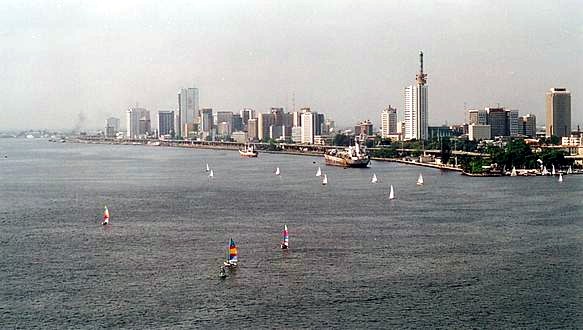
Lagos
Author: Benji Robertson
Source Wikipedia
Creative Commons Licence


In 13 Prominent Ballet Dancers and Choreographers Born in Southern Africa 3 May 2009 Ross Dix-Peek wrote:
"Most people would not dare to proffer southern Africa as an example of a prolific breeding ground of ballet dancers and choreographers, but, that she is. South Africa, and what was then Rhodesia, has for many decades now been a veritable nursery for ballet dancers, and her progeny have, after receiving expert local tutelage , often ventured abroad, performing for the Royal Ballet and other stellar ballet companies, some accruing universal acclaim. Listed below are thirteen southern African-born men and women who have distinguished themselves in the ballet fraternity, most notably abroad."
Dix-Peek listed some of the greatest names in dance: John Cranko, Monica Mason, Nadia Nerina and Merle Park. They were, of course, white dancers who made their careers in the United Kingdom and other advanced countries.

One of the most remarkable features of the art form has been its resilience to political change. It might easily have suffered from its association with the ancien regime in Russia and disappeared without trace but instead it was adopted by the Soviets and received considerable support from them. Later it survived the fall of the Soviet Union and continues to prosper in the current political and economic climate.

A similar transition seems to have occurred in Southern Africa. There was an audience for ballet in the apartheid period and it might have been feared that ballet would have been tainted by association with that system but that does not appear to have happened. South Africans of all races have trained in the art though many continue to make their careers in Europe and North America.

There are however signs that a market for dance is developing in Sub-Saharan Africa. Yesterday the BBC posted the video"Ballet: 'Every dancer should have this background'" 29 April 2016 about ballet in Nigeria to its website. The film featured Sarah Boulos, Chairperson of the Society for Performing Arts in Nigeria ("SPAN"), which describes itself as "a registered NGO offering unprecedented opportunities in dance, music, theatre and visual arts to Nigeria's talented citizens."  A Google search of ballet in Nigeria revealed this YouTube video of children having fun and correspondence between a number of young Nigerian women who sought ballet training and a US website (see Career Development Plan - Ballet in Nigeria on Ballet Dancers Guide.com).

Elsewhere I have written about Mike Wamaya's class in one of the toughest neighbourhoods of Nairobi (see What can be achieved by a good teacher 3 March 2013) which I followed up last year with Back to Africa 7 Jan 2015 and Revisiting Kenya with Obama 25 July 2015. One development that I should very much like to see would be a ballet school in Freetown (see A Ballet School for Freetown 20 May 2014) as it is the capital of the country where Michaela DePrince was born (see Michaela DePrince at TEDx Amsterdam 28 Nov 2014) and also a country with which I have many connections.

Though these developments are encouraging there is still a long way to go. Lagos has had a 5,000 seater National Arts Theatre for the last 40 years but I struggle to find evidence of any kind of performance there, much less a ballet one. With any luck that may change as Africa celebrates the achievements of dancers like DePrince and Mthuthuzeli November who are making a name for themselves abroad.

Tuesday, 20 May 2014

A Ballet School for Freetown?

The Cotton Tree where the Sierra Leonean nation was founded
Source Wikipedia


Although ballet belongs to the world there are places where the muse makes its home. In the early 19th century that home was in Denmark. Later in the century the muse moved to Russia, Diaghilev brought it to Western Europe and in particular England and France. In the last century it made its way to the New World. Arguably it has now found a home in East Asia and in Latin America. I believe its next abode will be Sub-Saharan Africa.

There are already signs that that is happening. Arguably the most exciting company in the British Isles is Ballet Black. In America there is the magnificent Dance Theatre of Harlem and Alvin Ailey. In just over a week London audiences will be thrilled by the Sierra Leonean born dancer Michaela DePrince as I was when I saw her last November (see "The Junior Company of the Dutch National Ballet - Stadsshouwburg Amsterdam 24 Nov 2013"  25 Nov 2913), Finally there are initiatives like Anno's Africa's remarkable class in the back streets of Nairobi (see "What can be achieved by a good teacher" 3 March 2014),

According to The Guardian's Africa correspondent, Michaela DePrince "plans to return to Sierra Leone one day to open a school" (see "Sierra Leone war orphan returns to Africa en pointe for ballet debut" 16 July 2912).  DePrince has achieved so much in her short life that I have every confidence that she will realize that plan. We in this country are particularly well placed to help her to do so.

Sierra Leone is an English speaking country which was administered by our government until 1961. It is a member of the Commonwealth and many of its political, educational, commercial and cultural institutions are modelled on ours. There is a large Sierra Leonean community in this country two members of which will be accompanying me to the Linbury to see De Prince dance when the Dutch National Ballet Junior Company visits London on the 28 and 29 of the month.  I have a personal link with Sierra Leone in that I was married to a Sierra Leonean for nearly 28 years.

If children from DePrince's school wish to complete their training we have great ballet schools in London, Leeds, Glasgow and elsewhere where they can do so. The Royal Academy of Dance which accredits teachers and examines students is here.  Above all we have a massive and sophisticated audience for dance and out great companies have always been open to, and attracted, the best dancers in the world.

There must be a massive reservoir of talent in Africa and the prospect of watching it develop is exciting.