Showing posts with label Kenya. Show all posts

Wednesday, 4 November 2020

World Ballet Day Highlights #1: The Royal Academy of Dance

World Ballet Day Trailer  -  Standard YouTube Licence

World Ballet Day came just as theatres and studios across the UK were emerging from a 7-month hibernation.  It was a day of optimism.  Sadly that optimism has been dampened by the announcement on Saturday of another lockdown in England.  The sudden closure of studios and theatres is devastating; It is therefore all the more vital to hang on to that optimism. One way to do that is to remember the highlights of World Ballet Day. Over the next few days, I shall recall some of my most memorable moments.  

I begin with the Royal Academy of Dance.  The RAD is an institution that educates students at all levels, of all ages in all parts of the world.  Its contribution to World Ballet Day summarized its work exactly.  The Academy's Artistic Director, Gerard Charles, and its President, Darcey Bussell, opened the clip. The first half featured the work of three RAD teachers in Peru, Kenya and Australia while in the second Dame Darcy coached Anya Mercer, a student at the English National Ballet School and a finalist in last year's Genée in the second female solo of the pas de trois in Act 1 of Swan Lake.

When I first started blogging about dance I mentioned the work of Mike Wamaya who teaches ballet in Kibera, one of the most impoverished neighbourhoods of Nairobi (see What can be achieved by a good teacher 3 March 2013). In Recognition for the Kibera Ballet Class  9 Jan 2017 I noted that some of those students had been accepted for training at the Dance Centre Kenya with Ms Cooper Rust.  In the video, Ms Rust taught a class of boys who showed considerable enthusiasm as well as aptitude for their art.

Nairobi is a conurbation of over 9 million people where there is the possibility of exposure to the performing arts through the press and broadcasting.  Such a possibility is much less in the upper reaches of the Amazon where the Nevada Building Hope Foundation operates.  One of its teachers is Barbara Land.  In the video, Ms Land explains how she introduced ballet to local children. They were enchanted and wanted to learn. 

As an RAD teacher, Ms Land was able to train the Peruvian kids to the same exacting standards as the young  Sydneysiders in Hilary Kaplan's class at the Alegria Dance Studios in Australia.  Australia has given the world some of its greatest dancers from Sir Robert Helpmann and Elaine Fifield to Alexander Campbell who was my male dancer of the year for 2019.  After watching Ms Kappan's class for a few minutes, I think we can understand why.  Excellence is baked into ballet at the very earliest opportunity.

Dame Darcey's session with Anya Mercer was a masterclass for her audience as well as for that promising young dancer.   It is a thrilling solo particularly the turns at the end.   Dame Darcey discerned details that I had never noticed before. Her pupil has shown considerable promise to reach this point.  I wish her well with her studies and subsequent career.

My next article will feature the Royal New Zealand Ballet's company class and preparation for the opening performance of The Sleeping Beauty in an apparently coronavirus fee Wellington.

Saturday, 30 April 2016

Ballet in Sub-Saharan Africa

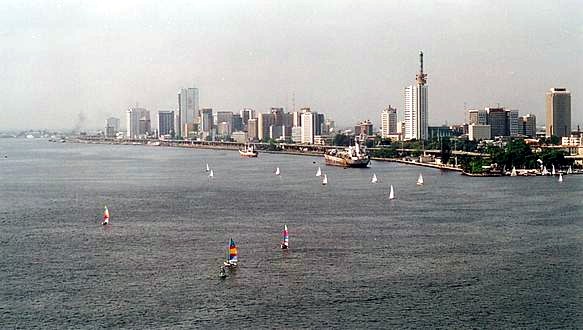
Lagos
Author: Benji Robertson
Source Wikipedia
Creative Commons Licence


In 13 Prominent Ballet Dancers and Choreographers Born in Southern Africa 3 May 2009 Ross Dix-Peek wrote:
"Most people would not dare to proffer southern Africa as an example of a prolific breeding ground of ballet dancers and choreographers, but, that she is. South Africa, and what was then Rhodesia, has for many decades now been a veritable nursery for ballet dancers, and her progeny have, after receiving expert local tutelage , often ventured abroad, performing for the Royal Ballet and other stellar ballet companies, some accruing universal acclaim. Listed below are thirteen southern African-born men and women who have distinguished themselves in the ballet fraternity, most notably abroad."
Dix-Peek listed some of the greatest names in dance: John Cranko, Monica Mason, Nadia Nerina and Merle Park. They were, of course, white dancers who made their careers in the United Kingdom and other advanced countries.

One of the most remarkable features of the art form has been its resilience to political change. It might easily have suffered from its association with the ancien regime in Russia and disappeared without trace but instead it was adopted by the Soviets and received considerable support from them. Later it survived the fall of the Soviet Union and continues to prosper in the current political and economic climate.

A similar transition seems to have occurred in Southern Africa. There was an audience for ballet in the apartheid period and it might have been feared that ballet would have been tainted by association with that system but that does not appear to have happened. South Africans of all races have trained in the art though many continue to make their careers in Europe and North America.

There are however signs that a market for dance is developing in Sub-Saharan Africa. Yesterday the BBC posted the video"Ballet: 'Every dancer should have this background'" 29 April 2016 about ballet in Nigeria to its website. The film featured Sarah Boulos, Chairperson of the Society for Performing Arts in Nigeria ("SPAN"), which describes itself as "a registered NGO offering unprecedented opportunities in dance, music, theatre and visual arts to Nigeria's talented citizens."  A Google search of ballet in Nigeria revealed this YouTube video of children having fun and correspondence between a number of young Nigerian women who sought ballet training and a US website (see Career Development Plan - Ballet in Nigeria on Ballet Dancers Guide.com).

Elsewhere I have written about Mike Wamaya's class in one of the toughest neighbourhoods of Nairobi (see What can be achieved by a good teacher 3 March 2013) which I followed up last year with Back to Africa 7 Jan 2015 and Revisiting Kenya with Obama 25 July 2015. One development that I should very much like to see would be a ballet school in Freetown (see A Ballet School for Freetown 20 May 2014) as it is the capital of the country where Michaela DePrince was born (see Michaela DePrince at TEDx Amsterdam 28 Nov 2014) and also a country with which I have many connections.

Though these developments are encouraging there is still a long way to go. Lagos has had a 5,000 seater National Arts Theatre for the last 40 years but I struggle to find evidence of any kind of performance there, much less a ballet one. With any luck that may change as Africa celebrates the achievements of dancers like DePrince and Mthuthuzeli November who are making a name for themselves abroad.

Wednesday, 7 January 2015

Back to Africa


One of my most popular articles when I started this blog was What can be achieved by a good teacher 3 March 2013. It was about the classes given by the remarkable Mike Wamaya to kids in one of the poorest and toughest neighbourhoods of Nairobi.

I am returning to the topic again because of a news item on the class on the RAD website. It is headed "Former Faculty of Education student, Amy Shelton, gives a fascinating insight into her personal experiences of teaching ballet to children in Kenya in this month’s edition of Dancing Times," The students are up to date with the new RAD syllabus and as you can see from the film above and those in my earlier post they are as diligent and ambitious as any in the world. I have high hopes that some of  Wamaya's kids will perform one day at Covent Garden and the Met.

What Wamaya has done in Kenya could be repeated elsewhere in Africa including Sierra Leone. That country has already produced Michaela DePrince. It is going through a terrible trial right now just as it did two decades ago when DePrince was born. Sierra Leone survived the civil war and it will survive ebola but, as I said in  Could the Arts not do something about this horrible Scourge 8 Oct 2014,  "Sierra Leone and its neighbours will need massive help in rebuilding their economic, social and cultural institutions when the immediate crisis is over."

A ballet school for Freetown may seem an odd priority for a country that needs to be rebuilt but men's minds and souls need feeding as well as their bellies and dance provides some of that food. We know that from our own experience for it was the Vic-Wells Ballet that kept us going during the Second World War (see David Bintley's Dancing in the Blitz: How World War 2 made British Ballet BBC website) just as it helped generations of Russians survive decades of famine, war and oppression. Look what Wamaya has achieved in Kenya. Why not the same in Kroo Town, Kissy or Kenema?

Further Reading
28 Nov 2014  Michaela DePrince at TEDx Amsterdam

Sunday, 3 March 2013

What can be achieved by a good teacher


I was looking for material on the general election in Kenya and I came across the above clip.  

In  many ways the kids in this class have had the worst possible start in life but in one very important respect they could not have had a better one.   Look at the teacher, Mike Wamaya.  He is good.  I googled for some more information on Mike and I found an even better clip from CNN and this article in The Daily Nation.  These films show what can be achieved from the discipline not only in the studio but also in the class room and in life generally.   Something that I and most readers of this blog in many walks of life are likely to have found out for ourselves.

The charity that employs Mike Wamaya is Anno's Africa "a UK based charity that offers an alternative, arts education to orphans and vulnerable children in some of Africa’s most desperately deprived city slums."   It was set up in memory of Anno Birkin a writer and musician who died just before his 21st birthday.   It is supported by some of the biggest names in the arts.

Who knows whether any of the children in the clips will find their way on to the stage or even to the audience of the Royal Opera House or the Met but they will certainly live fuller lives as a result of their exposure to their art.   

Incidentally, ballet is just one of the many activities of this charity as you can see from the promo.    If ever there was a cause worth supporting it is this one.   There are many ways you can contribute to its work.   Whichever way you choose I hope you will do so generously.