Showing posts with label Wayne McGregor. Show all posts

Monday, 27 March 2023

Next Year in Amsterdam

Standard YouTube Licence

The Dutch National Ballet has just announced its programme from 16 Sept 2023 to 6 July 2024.  It includes new works by Wayne McGregor, Juanjo Arqués, Milena Siderova, Wubkje Kuindersma and Ted Brandsen as well as Giselle, Raymonda and Annabelle Lopez Ochoa's Frida.

Here are the works in chronological order:
  • 16-30 Sep 2023 Four Temperaments  (a mixed bill consisting of The Four Temperaments  by George Balanchine, Frank Bridge Variations by Hans van Manen, The Chairman Dances by Ted Brandsen and a new ballet by Juanjo Arqués)
  • 25 Sep 2023 New Moves (short pieces by up-and-coming choreographers within the company)
  • 12 Oct - 19 Nov 2023 Giselle 
  • 9 Dec 2023 - 1 Jan 2024 Raymomda
  • 3 Feb-17 Mar 2024  Junior Company, Tenth Anniversary Tour  
  • 8-25 Feb 2024  Annabelle Lopez Ochoa Frida 
  • 9-24 Mar 2024 Wayne McGrego Oedipus Rex/Antigone 
  • 30 Mar-14 Apr 2024 Dancing Dutch (a mixed bill consisting of contributions by Jiří Kylián, Hans van Manen, David Dawson and Milena Sidorova)
  • 15-25 Jun 2024  Ratmansky Stravinsky Fairy Tales 
  • 28  June 2024 Gala and 
  • 5-6 Jul 2024  Dances of Tomorrow  End-of-year production by the Dutch National Ballet Academy.
Booking information is available on the Ticker Information page,

An event that took place last May which I have only just discovered is  In the Future, a collaboration between the company and dance groups from across the Netherlands.  In the Future is one of Hans van Manen's best-known works and the Junior Company has incorporated it into its repertoire (see "In the Future" - Junior Company's Fifth Anniversary Performance 17 April 2016). The Junior Company danced that piece in a programme that included Irish, Indian, Lindy Hop and many other styles of dance. It must have been a wonderfully exuberant occasion.  The rehearsals and highlights of the show have been captured in a remarkable film entitled  Documentary In The Future: Professionals and amateurs celebrate the future of dance - HNB.   I recommend this film. It shows not only the rich diversity of dance in Amsterdam but is also an introduction to the many communities that live in that city. 
 
I have been coming to Amsterdam for nearly years by train, plane and car.  The quickest and cheapest but also the least comfortable way of getting there is by air.   Some airfares from Leeds, Liverpool and Manchester are very reasonable.  The Eurostar tends to be more expensive and travellers who live outside London have to add the return fare to St Pancras but there are advantages.  There is no need to queue with plastic bags of tiny bottles, mobile phones and laptops. Passport control can be cleared before boarding the train. Even a full standard class carriage is more spacious than any aeroplane. Even with the slow and temperamental onboard wifi, it is possible to keep in touch with the world.

Board and lodging are generally cheaper than in London.  For those on a budget, the Bastion chain of hotels is comparable in tariffs and standards of accommodation with Travelodge and Premier Inns.  There are no Bastion properties in the city centre but the Amstel is close to Overamstel underground station. That is only 2 stops from Waterlooplein, the station for the National Opera and Ballet auditorium.  There are several other Bastion hotels near the airport.  Hotels within walking distance of the auditorium such as the Ibis and Holiday Inn are more expensive but not outrageously so.  When I am in Amsterdam to work my first choice is the Radisson at Rusland. Close to the Radisson and not far from the auditorium is the Hemelse Modder (literally, "Heavenly Mud") which is my favourite restaurant in Amsterdam.  

There is already plenty of information about the Rijksmuseum, the Van Gogh's Museum and Anne Frank's house. Less well known but well worth seeing are the Jewish Museum and the Portuguese Synagogue just across the road from the National Opera and Ballet auditorium.  I spent the best part of a day and a half exploring the complex on my last visit to Amsterdam.

Eeaders can now understand why I visit Amsterdam so often,

Monday, 16 July 2018

Half a show is better than none

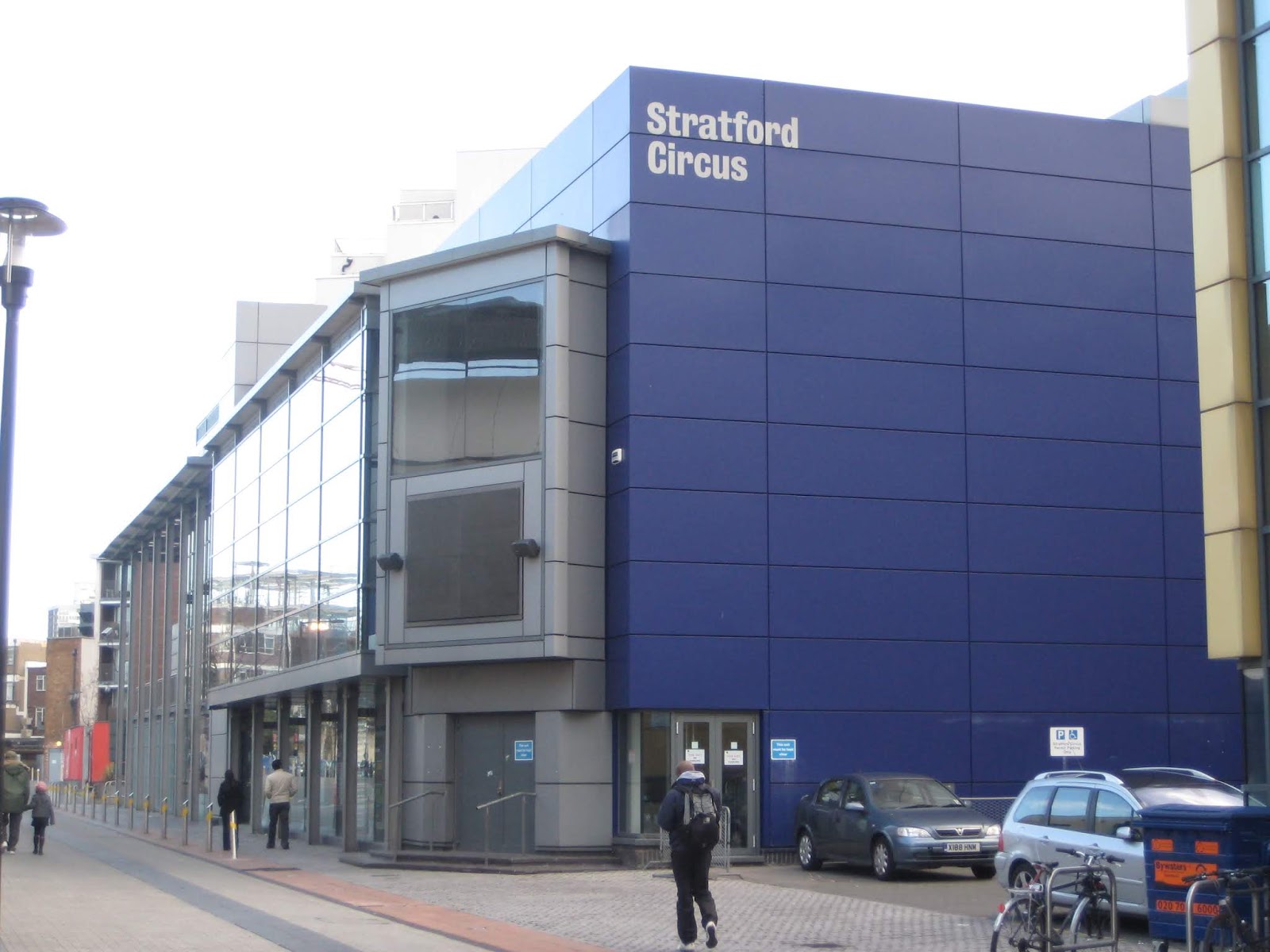
Stratford Circus Theatre
Author Andy Roberts
Licence Creative Commons 2.0 Generic


Ballet Central Black Swan et cetera  14 July 2018 19:30 Stratford Circus Theatre, Stratford, East London 

Ballet Central is the touring company of Central School of Ballet.  Its members are final year students on the degree course. Many of my favourite dancers and two of my favourite living British choreographers, Chris Marney and Kenneth Tindall, trained there.  Its tour of the UK during the second quarter of the year is one of the highlights of my calendar.

The lucky old South saw a lot of Ballet Central this year.  But their only appearance north of the Trent this year was in Leeds on 29 April and that was the day that Scottish Ballet danced Highland Fling in Gurn and Effie Land and the evening before I had a once-in-a-lifetime chance to attend class with Ballet West in Taynuilt and the 50th anniversary gala of the St Andrew's Dance Club which I helped to found many years ago.  I couldn't possibly miss all that even for Ballet Central.

I had hoped to see Ballet Central in London but alas alack the last train north by our wonderful, renationalized railway now leaves King's Cross at 22:00.  I tried ticking them off on twitter and you can see where it got me:

The Stratford Circus Arts Centre is a delightful theatre which reminds me of the Linbury but it is at least half an hour's trek to King's Cross whether you take HS1 from Stratford International or the tube. The tube was particularly awkward on Saturday because Bank was closed.  I looked into minicabs and black cabs but they could have been help up in traffic.   The only safe way to make the rattling Donny Choo-Choo was to
leave the Circus at 20:29 
without the chance of a shine.
Never mind!  Half a show was better than none and the but of the show that I did see was well worth the journey.

Wendy McDermott described the show in an excellent review when it visited Leeds (see Ballet Central in Leeds 31 May 2018).  I saw Jenna Lee's Black Swan and the extracts from Wayne McGregor's FAR and Kenneth MacMillan's Valley of Shadows.   I missed Christopher Gable's Cinderella which is one of my favourites in Northern Ballet's repertoire that I long to see again.  I felt so cheated as I left the theatre during the interval.   I have never walked out of a show before. Not even a bad one. To leave a good show was nothing short of heartbreaking. Although I am not a big fan of Sir Matthew Bourne's The Sleeping Beauty - the curtain climbing baby gives me the creeps - I would have loved to have seen the fairies' prologue once more.  

I comforted myself with the thought that I had at least seen Jenna Lee's Black Swan.   I like Lee's work a lot. I had enjoyed her ballroom scene from Romeo and Juliet  last year (see Triumphant 1 May 2017).  Her Black Swan combining scenes from the film and the ballet is even more ambitious.  It opened with a bad tempered ballerina banging her pointe shoes on a table thereby interrupting Philip Feeney who was at the piano playing Tchaikovsky.  The ballet continues with rehearsals and performance and ends with the removal of yesterday's black swan by her successor.   An interesting touch which might be followed in other Swan Lakes is the presentation of a white feather.  Even more dramatic perhaps than the flickering Odette in the seduction scene.

Like Wendy I saw Ayca Anil as the black swan. Wendy was impressed by Anil's technique and I agree with everything that Wendy said about that.  However I also thought she was a pretty good dance actor as was her prince, Saul Kilcullen-Jarvis.  He represented a very complex character, a bit like the prince in David Dawson's version.  The action flashed back to the ballet with clips from act 1 and act 3.  Echoes of familiar choreography and music as well as some innovation.  The entrance of the black swans with their arms in open 5th was particularly effective.  

Dante Baylor's costume designs, especially the red headdress for the women and the geometric piping of the prince's doublet were impressive.   There was a lot - probably too much - for the senses to take in on seeing this ballet for the first time.  I would love to see it again.

 In FAR - Company Wayne McGregor - 2010 - Behind the Scenes McGregor explains how he drew inspiration from Diderot's Encyclopedia and, in particular, his drawings of the human nervous system. Diderot showed how it was the brain that made the body work.  The brain is represented in McGregor's piece by an array of tiny lamps representing neurons.  Those neurons control movements of the body which are sometimes convulsive.  Ballet Central showed two scenes from an hour long work.  There was a duet by Rita Lee and Aitor Viscarolasaga Lopez and a group scene with Rishan Benjamin, Aoibh Ní Riain Broin,  Hitomi Nishizawa,  Hikari Uemura, Olivia Van Niekerk, Harris Beattie, Thomas Harden and Kevin Memeti.  Not an easy piece to dance, I should have thought, particularly with Ben Frost's multilayered score.  Again, I need to see this work again - and perhaps more than once - to appreciate and understand it fully.

The extract from Valley of Shadows was a beautiful dance for four: Mical Klara Coxill, Saul Kilcullen-Jarvis, Jamie Wallis and Scot Baldie set to Tchaikovsky's Souvenir de Florence. This scene shows the Finzi-Contini family in the seclusion of their garden before their lives are shattered by deportation to a concentration camp in Germany.  Wendy referred to sad and dark undertones and that is because we know what happened to the family.

Knowing that I would have to leave early to catch the rattling Donny choo-choo I booked a seat in the balcony which would have allowed me to slip out before the end of the performance with minimum noise and fuss.  It allowed me to spot who was in the audience and I spotted more than a few friends and acquaintances.  That made it even harder to leave the theatre.

Finally a message for Heidi Hall and Chris Marney.  There are approximately 25 million people who live north of the Trent and we can't all squeeze into the Stan and Audrey on a Sunday night.  We have some lovely theatres such as the Keys and Aldridge at the Lowry, the Atkinson at Southport, the Waterside in Sale, the Cast in Doncaster, the Library in Sheffield and indeed the Lawrence Batley here in Huddersfield.  Do stay with us a little longer when you go on tour next year.

Thursday, 31 May 2018

Ballet Central in Leeds


Standard YouTube Licence


Wendy McDermott

Ballet Central  2018 Tour 29 April 2018, 19:30 Stanley and Audrey Burton Theatre, Leeds

It’s been a turbulent time for Ballet Central since their unimaginable announcement via social media that their tour vehicle and its contents had been stolen. The vehicle contained everything from their production equipment to over 100 unique handmade costumes. Being able to see the tour and how much work had gone into making this a professional production then to hear of their plight was pretty shocking. Since then those that follow Ballet Central will know that much of what was stolen had been retrieved and also, thanks to the generosity of many they’ve managed to raise several thousands to help pay for replacements.

I saw Ballet central perform, for the first time I might add, at the Stanley & Audrey Burton theatre in Leeds.

The show was made up of five pieces in two Acts: ‘Black Swan’ by Jenna Lee, ‘Far’ by Wayne McGregor, ‘Valley of Shadows’ by Kenneth MacMillan, ‘Sleeping Beauty’ by Matthew Bourne and finally ‘Cinderella’ by Christopher Gable.

I think it’s fair to say that many will know of Swan Lake even if never having had the pleasure of seeing it. What Jenna Lee gave us in Black Swan was something very different, yet still referencing the classical ballet loved by so many with Tchaikovsky’s music and the beautiful swans (who looked marvellous in their black tutus). The mood was much darker, echoing the film The Black Swan. In this version however, it was not the ballerina that experienced the hallucinations, it was the Prince, confused and a little disoriented by what he was experiencing. Ayca Anil danced the principal role. Her technique seemed solid, the développés clean with extensions reaching the heights that we see in professional ballet companies of today. I thought her ports de bras were lovely, as were the swans' dancing in the corps, with their elegant swan arms, and I thought the acting of her character expressed the sultriness befitting of a temptress.

The second piece in the programme was a complete contrast of contemporary choreography. At times there was so much happening on the stage between the 10 dancers I didn’t know who to watch however there were dancers that stood out with their stage presence alone. As with most, if not all art, it’s subjective; contemporary is not a style that I personally favour, however if its premise is to showcase the movement of body and mind in fusion then this choreography does that. The Guardian (Luke Jennings to be precise) wrote of the piece when it appeared on stage:
“Muse too intently on notions of embodiment and you stop seeing the living bodies in front of you. They're the story, ultimately.”
It was a challenging piece for young dancers but on comparing clips from the original, they all performed with confidence and flare, speed and agility given that these students are on the cusp of their professional careers, potentially joining companies with both classical and contemporary repertoire, they need to be able to show their depth and breadth of skill in both styles. This choice of piece allowed them to do just that. There were three dancers that, for me anyway, particularly shone. Again, it was as much about their stage presence as their technique and quality of movement. Luckily one of those dancers has their photograph in the programme so easy to identify.

Act I closed with Valley of Shadows by MacMillan. Yet another personally unknown piece, though reading the synopsis it has very sad and dark undertones, the programme describing it as “the fate of an Italian Jewish family under fascism, Nazi occupation and the horrors of the death camps.”
Being a cast of four, the spotlight was on all the dancers. The cast had the fantastic fortune of being coached by Alessandra Ferri and Guy Niblett, who were original cast members when it was first performed at Covent Garden in March 1983. What a luxury for these dance students to inherit the experience and knowledge of these dancers to have it passed down to them. We had already seen Ayca Anil in the opening excerpt so her performance was assured, this time it allowed the male dancers the chance to show off their skills, in particular their partnering skills and they all performed with aplomb.

After the interval of 20 minutes, Act II opened with an excerpt of The Sleeping Beauty (Fairies Prologue). Gone were the tutus of the classic work, instead we saw costumes worthy of comic superheroes, of beautiful colour and imagination. It was a showcase indeed for the six dancers on stage and each deserved and duly received acknowledging applause from the audience, appreciative of the individual performances. Even the Princess Aurora as a baby in her cradle received applause in her own right as the crying baby which only added to the characterisation, humour and lightness of the whole piece.

The finale of the night was Christopher Gable's Cinderella and the audience were treated to a 30 minute shortened piece of this well known fairy tale. Despite the story depicting the ill treatment of Cinderella by her step mother and children, the performance felt just as much a celebration and in some ways echoed the journey that a dancer takes throughout their student life. The celebratory dance by the cast of apple pickers and wedding guests was light, airy and quite joyous to watch. In particular the green colour in the costumes reflecting the fresh apples that they had harvested that day expressed the emotion and worked well on stage, as if to say that the whole cast had now come of age in their early training careers and ready to advance into professional performers and spread their wings far and wide. Both the young and older Cinderella were emotive and expressive and i’m sure they, and all the touring company of 2018 will have careers to be proud of.

I’d like to give a mention to Rishan Benjamin and Harris Beattie as my own personal ones to follow in the future. There was another young woman in Far that unfortunately i’m unsure of her name. Looking at the cast list it was possibly Hikari Eumura (but perhaps Ballet Central would like to confirm?).

Finally, congratulations to all the performers and all those behind the scenes for making a thoroughly enjoyable evening of dance theatre.

Sunday, 18 March 2018

Bernstein Centenary

Leonard Bernstein 1918-1990
Photo Jack Mitchell
Source Wikipedia


Royal Ballet Bernstein Centenary (Yugen, The Age of Anxiety and Corybantic Games 17 March 2018, 19:30 Royal Opera House Covent Garden

This year is the 100th anniversary of the birth of Leonard Bernstein, one of the most popular classical composers ever. One of the reasons for his popularity is that he did not work entirely in the classical idiom.  Consequently, many of his tunes appeal to an audience who have never entered a concert hall.  They are simple and memorable - easy to sing, hum or whistle. To celebrate the anniversary the Royal Ballet revived Liam Scarlett's The Age of Anxiety and commissioned new works form Wayne McGregor and Christopher Wheeldon, namely Yugen and the Corybantic Games.

I liked all the ballets in the programme. Yugen and The Age of Anxiety appealed immediately.  Corybantic Games was different. I admired the choreography, the geometric sets and, of course, Bernstein's music and I am an enormous fan of Lauren Cuthbertson but I think I will have to see it again and probably more than once to appreciate it properly.  Happily I will get that opportunity when the programme is streamed to cinemas on 28 March 2018.

Recently Gary Avis, the work's ballet master, tweeted that Yugen was breathtakingly beautiful. On seeing the tweet my first reaction was that he would say that - but he was right. I literally gasped for breath from the moment the stage revealed the geometric set with the dancers clad in red at first glance almost exactly alike. McGregoor had interpreted Bernstein's Chichester Psalms (extracts from the psalms including the 23rd sung in the original Hebrew) in movement and the result can only be described as sublime. I was enchanted by the whole performance.

The Age of Anxiety could not have been more of a contrast.  According to the programme notes it is based on W H Auden's poem which I have yet to read.  Wikipedia states:
"The poem deals, in eclogue form, with man's quest to find substance and identity in a shifting and increasingly industrialized world. Set in a wartime bar in New York City, Auden uses four characters – Quant, Malin, Rosetta, and Emble – to explore and develop his themes."
Well everybody must have got the New York bar bit but the coming to terms with industrialized world bit bypassed me. The ballet seemed to be about 4 people getting progressively drunk until the barman throws them out. They repair to Rosetta's flat with a magnificent view of the New York skyline. One of them passes out.  The last scene reveals Manhattan at dawn and the dancer's wonder at the sight.

Well Rosetta was  obviously Sarah Lamb and she was splendid in that role as she always is.  Luca Acri was Emble, Yorkshireman Thomas Whitehead was Qant and James Hay was Malin. I always give Whitehead an extra loud clap or cheer whenever I see him on stage because ........ well, we Northerners have to stick together, don't we.

For some reason or other the Corybantic Games reminded me of Ashton's Symphonic Variations even though Bernstein's music is so different from Cesar Franck's as is Wheeldon's choreography from Ashton's. I think it may have been because of the classical allusions. I seem to remember my old classics master telling me that the Olympic games were only one of a number of games in which the Greek city states competed. I surmised that the Corybantic Games must have been another. The dancers were clad simply as athletes and their movements were pretty extraordinary too. The work was divided into five movements with Matthew Ball, William Bracewell, Yasmine Naghdi accompanying Cuthbertson in the first. Beatrix Stix-Brunnell on her own in the second, Navarra Magri and Marcelino Sambé in the third, Cuthbertson, Naghdi, Ball, Ryoichi Hirano, Stix-Brunnell and Bracewell in the fourth and Tierney Heap leading the ensemble in the fifth.

The crowd applauded politely at the end of Corybantic Games - especially when the leading ladies received bouquets - but the applause ended before the lights came on again. Nothing like the sustained clapping and cheering for the other two works.  I think the Wheeldom will become a well loved staple of the repertoire in time but audiences need to get to know it better.  Perhaps a different title would have helped.

Friday, 30 June 2017

More than "Dancing Bananas": Chantry Dance's Demystification of Contemporary Dance

Halifax Victoria Theatre
Author: Space Monkey
Reproduced licensed by the user
Source Wikipedia


Chantry Dance Company  Demystifying Contemporary Dance 29 June 2017, 19:00  Halifax Victoria Theatre

Chantry Dance Company is a family enterprise based in Grantham in the East Midlands which was already famous for its parish church with its chained bible and magnificent spire, its biennial science festival in honour of Sir Isaac Newton the most famous scholar of the town's grammar school who was born and raised nearby, its Beehive pub with its living inn sign and, of course, the grocer's shop in which Baroness Thatcher, our first woman Prime Minister was born. Chantry Dance has recently added to the fame of that handsome market town with their performances and school.

I first came across Chantry Dance just over three years ago when I allowed myself to be dragged onto the stage of the Lincoln Drill Hall by Gail Gordon to take part in a dance workshop called Dream Dance where four of us created and danced a modern ballet to accompany the company's performance of The Sandman (see Chantry Dance Company's Sandman and Dream Dance 10 May 2017). That was the first time I had danced in public and it emboldened me to put my name down for Northern Ballet Academy's  end of term show (see The Time of my Life 28 June 2014) and a number of other shows right down to last May's MoveIt in the Dancehouse on Oxford Road in Manchester (see "Show!" The Video 10 Jun 2017). But for Chantry Dance, it is unlikely that I would I have tried any of that which would have been a pity because I have also found out that performance is essential to dance education.

But I digress.  Chantry Dance has expanded the show it performed in Lincoln in 2014 into a full-length work which it is taking on tour (see The Sandman Tour 27 Jan 2017) including the North (see Chantry Dance goes North 14 March 2017). To prepare audiences for that work the company's directors, Paul Chantry and Rae Piper, are visiting some of the venues in which they will perform with an audio-visual presentation called Demystifying Contemporary Dance  (see Demystifying Contemporary Dance 1 June 2017). I caught them yesterday in Halifax in the bar of the Victoria Theatre.

Having seen hundreds if not thousands of ballet and other dance performances over the last 50 years, having kept this blog since 2013, having attended adult ballet classes for most of that time and having read loads of books and articles on all forms of dance I doubted that there was anything Paul and Rae could tell me in a PowerPoint presentation that I did not already know. I was wrong,  I learned a lot last night.

Rae started her presentation with exploding some myths about contemporary dance such as "It's all about dancing bananas" with a great slide of dancers in banana shaped tutus. She and Paul started with the characteristics of classical ballet (Paul trained at Central and Rae has been dancing since she was 5) and then the history of dance. They illustrated various points with a dance or demonstration.  So, the question "will you marry" me was reflected in a balletic flourish of the arms about the head ending with the right hand pointing to the ring finger.

They proceeded to the divergence from the classics such as The Rite of Spring, Les Noces and L'Après Midi d'un Faune by Diaghilev's Ballets Russes, Isadora Duncan where Rae danced a few steps from one of her routines, Martha Graham, Merce Cunningham and finally to Mats Ek, Wayne McGregor and Sir Matthew Bourne of our own time and a summary of their respective contributions to dance. They listed some of the characteristics of modern dance and Paul appeared in a boiler suit and brush to demonstrate all of those.  The evening ended with a duet from The Sandman which the company will dance on the main stage in September.

There followed a Q & A and a mingling wth the audience which would have continued all night had an official not reminded us with a gentle "Eh Up!" that he had a home to go to even if we didn't. There will be similar presentations next month in Andover, Horsham and Lincoln and if you live in or near any of those places I would advise you to go.

Friday, 13 January 2017

Factory to go ahead

St John's Gardens
Author: R Lee
Source Wikipedia
Creative Commons Licence


Ever since George Osborne MP delivered his Autumn Statement for 2014 I have been beating the drum for the Factory arts and cultural centre as a centre for dance in Manchester (see Let's bring the Royal Ballet to The Factory Manchester 11 Dec 2014, The Factory begins to take shape 26 Nov 2015 and Thanks George 8 Dec 2015). Yesterday, Manchester International Festival ("MIF") announced that it had obtained planning permission to build the arts complex as part of the redevelopment of the St John's district of Manchester (see MIF announced as operator for Factory).

According to the Festival's website:
"MIF will be the operator for Factory, creating a year-round programme of work and running the building, which is due to open 2020. Factory will give audiences the opportunity to enjoy the broadest range of art forms and cultural experiences – including dance, theatre, music, opera, visual arts, spoken word, popular culture and innovative contemporary work incorporating multiple media and technologies"
MIF has commissioned dance before.   In 2015 it commissioned Wayne McGregor's Tree of Codes which was premiered at the Manchester Opera House on 3 July 2015 and is to be performed this year at the Palais Garnier, the Musikhuset in Aarhus and Sadler's Wells. Last year it facilitated Akram Khan's Giselle which the MIF's artistic director described as “an example of the sort of collaboration we can expect to find at The Factory” (see Verity Williams MIF’s Giselle at The Palace Theatre, preview: Dancing to a different tune 15 Dec 2016 creativetourist.com).

While I was not exactly bowled over by Akram Khan's Giselle I applaud MIF's commitment to dance. Now that we shall have a 1,600 seat auditorium for Manchester there is no reason why the second city of the UK should not host its own world class resident ballet company. Ideally, I should like to revive plans for a Northern home for the Royal Ballet which the last Labour government had proposed.  If that is not possible we may have to build one ourselves from the ground up. We shall see.

Meanwhile, if anyone wants some idea as to how the Factory will look there is a great article about the Factory with some good pictures on the BBC website (see Designs approved for Manchester's £110m Factory arts venue 12 Jan 2017).

Wednesday, 4 January 2017

Taking Stock of 2016 and Looking Forward to 2017


Standard YouTube Licence


I have been comparing what I had tipped last year in Looking Forward to 2016 which I posted on 30 Dec 2015 with The Year of the Swans: My Review of 2016 27 Dec 2016 to see how many of my forecasts turned out to be correct. It seems that most of them were.

I featured a clip of Jean-Christopher Maillot's version of The Taming of the Shrew to Looking Forward to 2016 which was uncannily prescient as I did not get a chance to see it in the cinema until a month later.  As you know, it was my ballet of the year (see The Terpsichore Titles: Ballet of 2016 30 Dec 2016). I was also right about Mata Hari (see Brandsen's Masterpiece 14 Feb 2016), Ballet Bubbles and David Dawson's Swan Lake (see Empire Blanche: Dawson's Swan Lake 4 June 2016) for Ted Brandsen, Ernst Meisner and David Dawson were my choreographers of 2016 (see Terpsichore Titles: Best Choreographers 30 Dec 2016). Also, I was right about Kate Flatt's Undivided Loves because Phoenix ended up as my contemporary company of the year.

On the other hand I missed David Bintley's new work The Tempest and Cathy Marston's Jane Eyre. Like a lot of bloggers and journalists I expected far too much of Akram Khan's Giselle.

Looking forward to this year, I am very excited by the return of the Mariinsky to Covent Garden between 24 July and 12 Aug 2017. They are bringing Ekaterina Kondaurova, Oxana Skorik, Viktoria Tereshkina, Diana Vishneva, Timur Askerov, Yevgeny Ivanchenko, Kimin Kim Vladimir Shklyarov and of course good old Xander Parish. Not so much of the old perhaps even though the Mariinsky's visit will fall on the 10th anniversary of the first time I saw that remarkable young artist. I saw him and his sister Demelza dance in Christopher Hampson's Echoes at the Grand Opera House in York on my 25th wedding anniversary on the 29 July 2007.  I did not blog about ballet in those days but Charles Hutchinson of The Press reviewed the show in A Summer Gala of Dance and Song, Grand Opera House, York, Sunday 31 July 2007. Incidentally, Xander will be dancing Albrecht in English National Ballet's Giselle later this month.

Returning to the Mariinsky, they will perform Don Quixote on 24, 25, 26 July and 5 Aug at 19:30 and also at 14:00 on 5 Aug, Swan Lake on 27, 28, 29, 31 July and 1,2, 7 Aug at 19:30 and 14:00 on 29 July, Anna Karenina on 3, 4 Aug at 19:39, Contrasts a triple bill consisting of Carmen Suite, Infra and Paquita Grand Pas on 8, 9 Aug at 19:30 and La Bayadere on 10, 11, 12 August at 19:30 and also at 14:00 on 12 Aug. Tickets will be on sale from 7 March for Friends of Covent Garden and 28 March for everyone else.

Other treats coming to Covent Garden are Wayne McGregor's Woolf Works which I missed first time round, a mixed bill consisting of David Dawson's The Human Seasons, Christopher Wheeldon's After the Rain and a new ballet by Crystal Pite, Balanchine's Jewels which is unmissable and three of my favourite Ashton works, The Dream, Symphonic Variations and Marguerite and Armand. I may be reaching for a tissue as memories of Fonteyn and Nureyev, Sibley and Dowell come flooding back.

just down Long Acre and right at St Martin's Lane lies The Coliseum where English National Ballet will stage Mary Skeaping's Giselle (see English National Ballet's other Giselle 22 Oct 2016). English National will run Akram Khan's Giselle at Sadler's Wells from the 20 to 23 Sept 2017. As a van Manen fan I am looking forward to the company's Pina Bausch, William Forsythe and Hans van Manen triple bill between 23 March and 1 April 2017.  Having grown up with Festival Ballet's Nutcracker at the Festival Hall it will be good to see them reclaim that space with their Romeo and Juliet between 1 and 5 Aug 2017. I saw that production when they were in Manchester on 28 Nov 2015 (see Manchester's Favourite Ballet Company 29 Dec 2015). A special treat for me as I have been following her ever since she danced in Leeds was Sarah Kundi's performance as Lady Capulet.

The show from Birmingham to which I am most looking forward is Ruth Brill's Arcadia and I explained why in Ruth Brill's Arcadia  16 Dec 2016, It will be performed with The Moor's Pavane and Wink on the company's tour of the South (Cheltenham, Poole and Truro) and at the Hippodrome with Cranko's Pineapple Poll and Macmillan's Le Baiser de la Fee.  Talking of Cranko, the Dutch National Ballet (which was my company of the year in 2016) will dance Onegin in April, That will be unmissable as will Juniors Go Dutch  at the Meervaart.  Crossing back to the Hippodrome, the Birmingham Royal Ballet's Coppelia is another "must see."

I shall be in the audience for Scottish Ballet's Hansel and Gretel in Newcastle next month and also for their visit to Sadler's Wells in June with Emergence and MC14/22 (ceci est mon corps). I shall gladly travel to Glasgow or Edinburgh for Christopher Hampson's new Rite of Spring as well as another Baiser de la Fee in Scottish Ballet Dances Stravinsky. Finally, the company will re-stage Peter Darrell's version of The Nutcracker for Christmas in Edinburgh, Glasgow, Aberdeen and Inverness.  Having seen  The Nutcracker two years ago I  recommend it highly (see Like meeting an old friend after so many years 4 Jan 2015).

Other shows I hope to see will be Kenneth Tindall's new Casanova. Daniel de Andrade's The Boy in the Striped Pyjamas and David Nixon's The Little Mermaid for Northern Ballet, Ballet Black's triple bill with new works by Martin Lawrance, Michael Corder and Annabelle Lopez Ochoa and Alexander Ekman's Swan Lake for the Norwegian Ballet in Paris. The Norwegians impressed me considerably on World Ballet Day.

Friday, 18 November 2016

McGregor Triple Bill

Wayne McGegor
Author Deborah Hustic
Source Wikipedia/Random Dance Company
Creative Commons Licence


Royal Ballet Chroma, Multiverse and Carbon Life Royal Opera House 17 Nov 2016. 19:30


To celebrate the 10th anniversary of his appointment as resident choreographer at Covent Garden, the Royal Ballet has staged a short season of Wayne McGegor's works. These include two of his most popular creations, Chroma and Carbon Life, and a new work, Multiverse, which was performed for the first time just over a week ago. McGregor is remarkable for the volume of work that he has created, for the awards and distinctions that he has achieved for such work and for being the first contemporary choreographer to become a resident choreographer at Covent Garden.

Chroma is a work that I already know quite well having seen it several times, most recently by the Dutch National Ballet as part of their Cool Britannia programme (see Going Dutch 29 June 2015). The Dutch National Ballet is not the only company to perform that work. According to McGregor's website it has been danced by many other leading companies including the Australian Ballet, the San Francisco Ballet and the Bolshoi. One company that dances it particularly well is Alvin Ailey's American Dance Theatre as can be seen from the YouTube video below.

Standard YouTube Licence

No doubt that was why Luca Acri, Federico Bonelli, Lauren Cuthbertson, Sarah Lamb and Calvin Richardson of the Royal Ballet were joined on stage by Jeroboam Bozeman, Jacqueline Green, Yannick Lebrun, Rachael McLaren and Jamar Roberts of Alvin Ailey. The latter company has just completed a tour of the UK visiting the Bradford Alhambra and the Lowry where I caught them (see Alvin Ailey in Bradford  29 Sept 2016 and Alvin Ailey in Salford 8 Oct 2016).  It was good to see them again, particularly Roberts who earned an especially loud applause at the end. He is tall, strong and commands the stage in the way few other dancers can.

In all three works that we saw last night, McGregor offered not just choreography (thrilling though it was) but total theatre particularly in the set designs and lighting. In Chroma, for instance, John Pawson's simple geometric shapes were bathed in subtly changing lights beautifully engineered by Lucy Carter. The importance of lighting - another principal in the show - is obvious from the title. The programme notes began with the dictionary definition:
  1. "The purity of a colour or its freedom from white or grey
  2. Intensity of distinctive hue, saturation of a colour"
When combined with Moritz Junge's costumes and Joby Talbot and Jack White III's score, this work excites all the senses. Clearly, that explains why the work is loved so much by audiences as well as admired.

Multiverse was more challenging, at least for me, even though similar techniques were used and Junge and Carter contributed the costume designs and lighting. The performance began quite unexpectedly with the curtain rising on a set with two figures against a plain geometric set of two high walls while the house lights were still on. The hubbub from the audience continued for a few seconds after the curtain rose until the realization that the show had started sank in. The house lights dimmed gradually and the words of a street preacher in San Francisco from over 50 years ago began to fill the auditorium:
"After a while - it's gonna rain after a while! For forty days and for forty nights! And the people didn't believe him. And they began to laugh at him! And they began to mock him! And the began to say 'It aint gonna rain.'"
In his famous work from 1965, It's Gonna Rain, which was written at the height of the cold war when the risk of thermonuclear war threatened to wipe out life on earth in the way that environmental catastrophe had threatened the world at the time of Noah, Steve Reich chops up that recording until it becomes percussive and repetitive. Not easy listening as anyone who plays the YouTube Steve Reich - It's gonna rain  will probably agree. But although the movements against the stark towering walls seem angular in the beginning the piece begins to soften. The walls break down into slabs of colour like the sides of a Rubik cube and eventually elements of a painting. It's Gonna Rain ends and the more soothing Runner takes its place. Reich is said to be America's greatest living composer. I have not heard enough of his work to judge but I have heard his Drumming several times which was used by Arthur Pita in Ballet Black's Cristaux (see Ballet Black in Doncaster 3 Nov 2016) and that work has definitely grown on me.

My favourite work of the evening was Carbon Life which began almost magically with the artists behind a gauze screen lit only by what appeared to be fairy lights. Music was provided by a live band on stage including a rapper called Dave who earned an enormous titter from the audience with his dig at President-elect Trump. Each scene presented something exciting and something new. The dancing was vigorous and exuberant. Carter provided the lighting once again and Gareth Pugh's costumes bordered on the fantastic. I particularly liked the colour combination such as the green stripes against the black.  Sadly, it came to an end all too soon. I felt compelled to rise to my feet as first the dancers and then the musicians appeared on stage to take their bow. Standing ovations do not happen every day at Covent Garden but these folks deserved it and I am glad to say one or two people in the stalls and more in the slips and circles seemed to follow my example.

I floated out of the Opera House on a cloud which carried me off to Holborn tube, followed me down the escalator onto the Piccadilly line and even on to the 23:30 train back to Doncaster.  Not even the exorbitant £20.90 parking charge (£5 more than my train fare from London) which the Frenchgate Centre extracted because all the spaces in the section reserved for rail passengers had bee full spoilt my evening. On the train back I read in the programme that McGregor came from Stockport which is just across the Mersey from Didsbury where I was born. Yet another reason to like him, I'd say.

Saturday, 2 July 2016

Small Steps and other Pieces - Leeds CAT End of Term Show

Author Ben Btooksbank
Source Wikipedia
Creative Commons Licence


Northern School of Contemporary Dance and Academy of Northern Ballet, End of Year Show, Stanley and Audrey Burton Theatre, Leeds, 25 June 2016

I have mentioned Cara O'Shea in this blog several times since I saw her class at the Northern Ballet and Phoenix Dance Theatre open day on 15 Feb 2014 (see Northern Ballet Open Day 18 Feb 2014). She is an inspiring teacher as I found out for myself a few days later when she taught our Over 55 class (see A Treat For Us Old Ladies 27 Feb 2014). We love Cara as we do all the teachers at Northern Ballet Academy and, in particular, our regular instructor, Annemarie Donoghue, but, on the very rare occasions that Annemarie can't take us, we are always delighted by Cara.

Cara's job title is Head of Lower Level Pre-Professional Programme which places her in charge of the younger pupils of the Academy of Northern Ballet. Occasionally she is asked to coach some of those pupils for ballets such as The Nutcracker where children have a role in the ballet.  When I reviewed Northern Ballet's performance of that ballet on 18 Dec 2015 in Northern's Nutcracker 19 Dec 2015 I wrote:
"there are some delightful touches that one does not see in every other production. There are the mime sequences where Clara recounts the battle with the mice to Drosselmeyer and later her dad and the children's pieces, particularly the little chap with his trumpet whom Gita named "man of the match". Cara O'Shea has to be congratulated for the work she did with the little ones for so often it is they who can make The Nutcracker."
Cara's contribution to the Academy and Company was acknowledged last week by Northern Ballet's Artistic Director, David Nixon, in a brief introduction to the Academy and Northern School of Contemporary Dance Centre for Advanced Training End of Year Show on the 25 June 2016. He mentioned in particular her ballet Small Steps which she had created for the Academy to commemorate the International Holocaust Memorial Day earlier this year (see Small Steps - Northern Ballet Academy's Commemoration of the Kindertransport 21 Jan 2016). I had missed it when it was first performed because it clashed with the live screening of the Bolshoi's performance of The Taming of the Shrew from Moscow. I got my chance last Saturday when it was performed as part of the Academy's end of year show.

Small Steps was a very beautiful work and I was profoundly moved by it for two reasons. The first is that the dancers were about the same age as the children who were sent abroad. They looked so bonny but also so lost and vulnerable. The second is that Cara chose very appropriate music - Arvo Pärt's Für Alina and Spiegel im Spiegel, Lee Holdridge's Into the Arms of Strangers, the intermezzo from Pietro Mascagni's Cavalleria Rusticana and Paul de Senneville's Marriage d'Amour.  The ballet explored the conflict in the parents' minds and the pain of separation.  Although she challenged her dancers her choreography was restrained and sombre - and as I have said before profoundly beautiful.

Although Small Steps was the high point of the afternoon it was not the only work of excellence. Cara worked with Yoko Ichino, the Academy's Associate Director and the company's Ballet Mistress on Greeting, the grande entree, and with Nixon and Ichino on the Finale. She also created Presentation to Johann Strauss's Napoleon March in which the girls displayed their mastery of technique with considerable grace and Knightsbridge, a bravura piece for the boys to Eric Coates's famous score.

Although the choreography was attributed (quite rightly) to Fokine I am pretty sure that Cara must have had something to do with the more senior students' performance of Chopiniana  (or Les Sylphides as it is called in the programme). It is a very beautiful but also very difficult ballet to perform well and not every professional company gets it right but Cara's girls and boy did and all credit to her and them.

There was excellent contemporary dance too.   I was particularly impressed by the NSCD's performance of Studio Wayne McGregor's Datum towards the end of the show but I admired all the works including Matthew Slater's Converge, Tim Casson's Connect, Holly Noble's Phonic and Gemma Harrison's Another Day. In his speech Nixon stressed the importance of contemporary dance in ballet training and vice versa. Leeds is lucky to have the NCDS and Academy in such close proximity.

As I explained in The Lowry CAT 27 Feb 2016 Centres of Advanced Training provide opportunities for pupils aged 10 to 18 who aspire to a career in dance. The programme was accompanied by a list of student destinations which included some of the top schools in the country - Elmhurst, Central, Ballet West, Royal Conservatory of Scotland and Northern Ballet School where Cara trained.  I am sure all my readers will join me in wishing those students well in their careers.

Thursday, 7 April 2016

The Royal Ballet's New Season

Royal Opera House


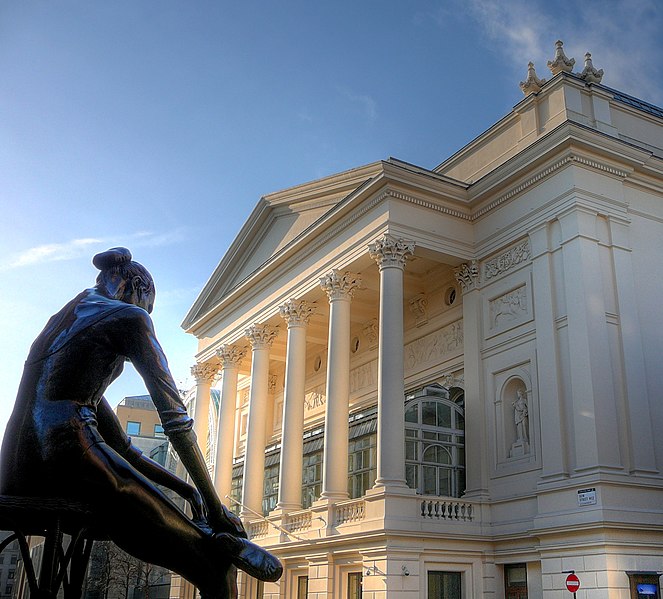
The Royal Opera House announced its 2016-2017 season yesterday and released a video of a discussion between Kasper Holten and Kevin O'Hare about their respective companies' offerings. So far as ballet is concerned the season starts well with La Fille mal gardée and ends well with three glorious works by Ashton. There are also one or two treasures in between like Jewels but it also includes one not very welcime surprise.

I am talking, of course, about the revival of Anastasia which I saw in 1971 and which I have never been tempted to see again. According to the performance database there have been two productions. The first by Sir Kenneth MacMillan ran between 22 July 1971 and 1 Dec 1993 and the second, produced by his widow, between 2 May 1996 and 12 May 2004. The work is about Anna Anderson who claimed to be the Archduchess Anastasia a member of the Romanov family who had ruled Russia until the revolution.  We now know from DNA tests that Anderson was an imposter and that the grand duchess almost certainly died with the rest of her family at Ekaterinberg but that was not known for certain in 1967 when Sir Kenneth created the first version of the ballet.

It is a very long time since I saw the work but I distinctly remember some film and some very dissonant music. Nowadays that would be commonplace. We would probably call it multimedia. In the pre-digital 1970s it was unusual. I saw it when I was in my early twenties when I would have been my most receptive to new ideas. If I didn't take to it then I am quite unlikely to take to it now. I gave Nixon's Swan Lake a second chance last month and found that the judgment that I had formed in 2004 had not changed (see Up the Swannee 17 March 2016). One of the threads of an internet forum to which I subscribe and occasionally contribute was "What is your LEAST favourite ballet?" to which I wrote that it was a dead heat between Northern Ballet's Swan Lake and Beauty and the Beast and Anastasia. Beauty and the Beast is also about to be revived.  If I say that Jonathan Watkins's 1984 which I have seen twice is not too far behind you will understand that 2016 will not have been a very good year in that regard.

However, that is all a matter of taste and my taste may not be your taste. Each of the ballets on my "least favourite" list has its aficionados some of whom are surprised and even a little hurt to find someone with a contrary view. Anastasia has not exactly been big box office over the last 50 years but that may change as it is to be streamed to cinemas on 2 Nov 2016.  I shall not be traipsing down to London to see it and I will have to be at a very loose end even to take the bus to the Huddersfield Odeon.

One ballet that is definitely worth a trek to London is The Sleeping Beauty. This is one of my favourite ballets but one that I was surprised to find on quite a lot of subscribers' least favourite list. I have already seen a very creditable performance by the Chelmsford Ballet (see A Real Beauty: Chelmsford Ballet's The Sleeping Beauty 25 March 2016) and I am about to watch Sir Peter Wright's production for the Hungarian Ballet in Budapest (see The Hungarian National Ballet's Sleeping Beauty 24 Feb 2016). Funny isn't it that ballets like buses seem to come along in threes. I can see why some folk don't like it. It is a bit long and the story of the disappearance of a whole kingdom is even more unbelievable than girls morphing into swans or wilis but, hey ho, the music is lovely and divertissements like the bluebird pas de deux are among the most enchanting in dance.

Even more worthy of an awayday to the Smoke will be Balanchine's Jewels which will be running this time next year. Balanchine is one of my favourite choreographers and Jewels along with Serenade are among my favourite works. I missed Jewels when the Dutch National Ballet did it last season and also in the cinema when it was streamed from Moscow as I was travelling up from High Wycombe after seeing the Royal New Zealand Ballet's Giselle. Wild horses won't keep me from Covent Garden this time.

Having enjoyed Wayne McGregor's Chroma when performed by the Dutch National Ballet as part of its Cool Britannia triple bill last year (see Going Dutch 29 June 2015) I am looking forward to the Wayne McGregor triple bill (Chroma / New Wayne McGregor / Carbon Life) in November. I am also looking forward to new works by McGrego's protégés, Charlotte Edmonds and Robert Binet in the Clore Studio. I have already been introduced to their works by the Dutch National Ballet Junior Company (see The Dutch National Ballet Junior Company's best Performance yet 8 Feb 2015 and Ballet Bubbles 16 Feb 2016). If these young choreographers are good enough for Ernst Meisner and his outstanding young dancers then they are good enough for me.

The Christmas show this year will be The Nutcracker again. This is in honour of Sir Peter Wright's 80th birthday. It will be just as I like it with a real Clara Stahlbaum (not Edwards) somewhere in Mittleeuropa and not on the banks of the Thames, no balloons, no rodents hanging on into Act II, a Columbine and Harlequin, a Sugar Plum Fairy and her cavalier and all the usual divertissements. As reassuring as turkey with all the trimmings, Christmas pud and mince pies.

Woolf Works, another McGregor ballet, is to be revived. I missed it first time round largely because I find Virginia Woolf's Orlando a bit too close to the bone. Those who have read the book and know me will understand why. But the ballet has been received enthusiastically and the video of McGregor's rehearsal with Edward Watson indicates why. So maybe I shall give it a try this time round.

Another triple bill by David Dawson, Christopher Wheeldon and Crystal Pite (The Human Seasons / Aftethe Rain / New Crystal Pite) comes next, followed by MacMillan's Mayerling, a new work by Liam Scarlett as well as Forsythe, Balanchine and Wheeldon (The Vertiginous Thrill of Exactitude / Tarantella / Strapless / New Liam Scarlet) and finally the piece de resistance,  The Dream / Symphonic Variations / Marguerite and Armand).

A lot of new work this season together with some old favourites. Something for everyone and quite enough to keep me happy. Happily the Dutch National Ballet will be dancing La Bayadere in November which is just about the same time as Anastasia so I have a lot to relish and little to dread.

Wednesday, 2 September 2015

The New Season at Covent Garden

Royal Opera House
Author Russ London
Source Wikipedia
Creative Commons Licence


The Royal Opera House's new dance season has been on the House's website since 15 April and it has already attracted some 71 comments, not all of them positive though I can't see why. The Royal Ballet is special and I wish I had the time and resources to see everything though if I did I would never be able to see anything else.  There are some who would ask "Why would you want to see anything else when the Royal Ballet is the gold standard, at least in Britain?" My view is that one needs a bit of variety in life. Fish and chips and chicken tikka masala as well as haute cuisine. In ballet terms, that means small regional as well as national flagship companies. So I have to be selective and here are my choices.

This Autumn I am tempted by Viscera, Afternoon of a Faun, Tchaikovsky pas de deux and Carmen particularly Viscera after hearing Laura Morera at the London Ballet Circle last week (see Laura Morera 25 Aug 2015). Of course, I am also looking forward to Carlos Acosta's Carmen. There have been lots of attempts to translate Bizet into ballet but they have not generally stuck with the public. Maybe  this production will be different.

One ballet that I really love is Ashton's Monotones and that is to be performed with Two Pigeons in November and early December. The Nutcracker returns at Christmas and the Royal Ballet's production is particularly good. There are so many Nutcrackers at that time of the year that it is easy to get Nutcracker fatigue. However this one is magical not least because the House with its Christmas decorations offers such n enchanting setting. It is the show to which I shall take my grandson manqué for his first experience of Covent Garden.

I did not do justice to The Winter's Tale first time round because I was shattered by the drive (see Royal Ballet "The Winter's Tale" 14 April 2014) and I only got to appreciate it in the cinema (see The Winter's Tale - Time to eat my Hat 29 April 2014) and on telly last Christmas. I think I shall appreciate it far more when I see it on stage again.

The last show on my "must go" list is the new Wayne McGregor, The Invitation  and Within the Golden Hour in Spring.  Another Wheeldon and one, of course, MacMillan.

Most of the productions are contributed by the Royal Ballet but there will be visits to the Linbury by our own Phoenix Dance Theatre which I would not miss for the world, the Royal New Zealand Ballet and a number of other interesting companies. This year the Linbury will close for a while which will mean that Ballet Black will have to find somewhere else to launch their new season which is a shame because they always shine in that auditorium. The Dutch National Ballet Junior Company will also have to find another venue if they come to this country this year. I am trying to persuade them to perform at the Stanley and Audrey Burton Theatre and if they came to Leeds Gita and I would spoil them to bits. But I guess there are many other factors that they have to consider.

Monday, 29 June 2015

Going Dutch

Dutch National Ballet, Empire Noir,  Igone de Jongh, Floor Eimers,
Suzanna Kaic, Michaela DePrince, 17 June 2015
Author Angela Sterling
(c) 2015 Dutch National Ballet, all rights reserved
Reproduced with kind permission of the Company


Dutch National Ballet, Cool Britannia, Stopera Amsterdam, 27 June 2015

I have just returned from Amsterdam where I saw the Dutch National Ballet's Cool Britannia at The Stopera. The word "stopera" is an abbreviation of the words stadhuis or town hall and opera the meaning of which is obvious. The building combines the functions of Amsterdam's town hall with the national opera house and concert hall. It was my first visit to the Stopera but I hope it will not be my last for it is a magnificent auditorium.

As I said in my preview Cool Britannia - in Amsterdam 16 April 2015, this is a triple bill of one act ballets by three leading British choreographers: David Dawson, Christopher Wheeldon and Wayne McGregor. Dawson and Wheeldon created new ballets called Empire Noir and Concerto Concordia which I discussed in David Dawson's Empire Noir 18 June 2015 and Wheeldon in Amsterdam and the Dutch National Ballet in London 6 June 2015). McGregor contributed Chroma which British audiences already know. Each of those works was very different from the others.

Empire Noir showcased the dancers' virtuosity. It was full of spectacular jumps, turns and lifts and looked quite exhausting. Even the dancers' entrances and exits were made at the double.  Haines's score was throbbing, vibrant and incessant.  I had seen Michaela DePrince and Sho Yamada in the Junior Company last year but this was the first time I had seen Casey Herd, Jozef Varga, Artur Shesterikov and James Stout about whom I had read so much. My only disappointment was missing Igone de Jongh but there was some fine dancing from Samantha Mednick, Sasha Mukhamedov, Floor Elmers and, of course. DePrince. She may only be an apprentice in the company (though I am delighted to learn that she will be elevated to coryphee next year) but she has quite a following in Amsterdam. She received particularly loud applause when she took her bow. The chap next to me rose to his feet as soon as she stepped forward. In the interval I noticed that a stand was selling her t-shirts. The only other dancer with t-shirts on offer was de Jongh.

Wheeldon's Concerto Concordia was a quieter and more contemplative work. He chose Poulenc's Concerto for Two Pianos and Orchestra in D Minor for his music. This is a work with sudden changes of moods could have been written for ballet. It was the first time that I had heard it and I adored it. According to the programme notes Wheeldon created the work for Anna Tsygankova and she was on stage on Saturday accompanied by Varga. They were one of two principal couples who are joined on stage from time to time by six others. The other principal couple was Victoria Ananyan and Serguei Endinian. This was the work that I enjoyed the most, probably because I liked the music.

I had  seen Chroma once before and remembered the sharp, angular almost robotic movements, the simple set with its large window through which dancers entered or against which they were silhouetted and the curious almost canine sniffing gestures at two points in the show. This cannot be an easy ballet to dance and I was delighted to see Nathan Brhane and Wantao Li who were in the Junior Company last year with  Yamada and DePrince. It was good to see those young dancers again and great to see how far they have come in a year. They were led  by Herd, Stout and Roman Artyushkin. The crowd loved this ballet and they rose to their feet as one. I like Amsterdam audiences. They see enough ballet to know what's good and what's not but they are much less stingy in their praise than Londoners.

The Stopera has a massive stage. I don't know how it compares to Covent Garden's but it seems pretty cavernous to me. There's plenty of reasonably priced seating. I was in the front row of the 1st circle and was as close to the stage as I would have been in the front row of the dress circle in the Royal Opera House. My seat cost 53 euros which is less than I would have paid for the amphitheatre. There was plenty of leg room and although the house was pretty full it did not seem crowded.  I was served very quickly when I queued for a drink in the first interval and I was charged less than I would pay in a theatre bar at home.  The auditorium overlooks the Amstel and it is possible to step out onto a walkway in warm weather. There is a metro station almost next door and a couple of pubs and two Argentine restaurants across the street.

There are flights to Schiphol from Ringway and Yeadon at a fraction of the cost of the train fare to London and hotels are generally cheaper in Amsterdam than London. I am already looking forward to my next trip back.