Showing posts with label Sophie Laplane. Show all posts

Friday, 7 February 2025

Hampson's Triumph

Standard YouTube Licence

Scottish Ballet The Nutcracker Theatre Royal Newcastle, 6 Feb 2025 19:30

I was so delighted with the first act of Christopher Hampson's production of The Nutcracker that I tweeted in the interval that the company that had brought me my favourite Swan Lake had also created my favourite Nutcracker.  Immediately after I had clicked the "post" button I reflected on my rashness as I had only seen half of the ballet.  I need not have worried because the second act was every bit as good as the first. 

Scottish Ballet already had a fine version of The Nutcracker that had been created by its founder Peter Darrell in 1972.  I saw it in Edinburgh just over 10 years ago and reviewed it in Like Meeting an Old Friend After So Many Years on 4 Jan 2015.  Hampson seems to have retained the best bits of Darrell's version such as Brotherston's designs while inserting a few innovations like casting Drosselmeyer as a woman.  At this point, I might explain that there is a difference between an innovation which adds a new dimension to a ballet and a gimmick which is simply change for change's sake.  In this production, a female Drosselmeyer brought extra magic and mystery and even a hint of menace to the role possibly because of humankind's inherent fear of witches.

According to the programme notes several of the dancers added to Hampson's choreography.  One of those contributors was Sophie Laplane who has created some unforgettable work for Ballet Black.  Her dialogue between patient and therapist in Click illustrates succinctly the difference between coincidence and causation so absent in contemporary transatlantic political discourse.  She contributed to the Russian divertissement presenting the dancers as playful and slightly chaotic wearing candy cane costumes rather than as slightly sinister Cossacks.  Other contributors were Javier Androu to the Spanish dance, Jessica Fyfe to the French (itself an innovation) and Nicholas Shesmith to the English dance which I think was another innovation.  Their contributions added to the freshness and the exuberance of the second act.

For some reason or other the Arabian dance was dropped from Act II though I think I recognized the music in Act I if my memory is not playing tricks on me. In other productions, it is one of my favourite divertissements.  It is not a long dance and I would love to have seen what Hampson and Co would have made of it.

Turning to last night's show, the Snow Queen was danced by the excellent Marge Hendrick who reminds me so much of the late and great Elaine McDonald.  Hendrick's performance at Northern Ballet's 50th Anniversary Celebration Gala was the high point of that evening for me.   Her performance at that gala moistened my eyes then and her dancing did so again yesterday.  

The other great female role in the traditional Nutcracker is Sugar Plum who is sometimes danced by Clara or Marie in some productions.  It was performed exquisitely by soloist Gina Scott.  

Evan Loudon, another of my favourites, was the gallant Nutcracker.  

I was awed by Madeleine Squire's magic as Madame Drosselmeyer.  She is a magnificent character dancer and I look forward to seeing her in other roles.  

Ava Morrison was a delightful Clara and a realistic one in that she was not all goody-goody unlike her counterpart in other productions, She was as much responsible for damaging the nutcracker as Jamie Drummond, her brother Fritz.  

 My one "bravo" of the evening was directed at Thomas Edwards after some amazing fouettés and sautés.  

I also enjoyed Ishan Mahabir-Stokes's performance as King Rat.   

All danced well in this performance and all deserve congratulations.  Northumbrians are not known for wearing their hearts on their sleeves and the standing ovation that the cast received attests to the excellence of last night's performance.  

The company will remain in Newcastle until tomorrow.   This is the last stop of its Scottish and Newcastle tour,   if you can lay your hands on one of the very scarce remaining tickets for the last few shows you will not be disappointed,

Tuesday, 19 November 2019

Ballet Black's Best Programme Ever


Standard YouTube Licence


Ballet Black (Triple Bill (Pendulum, Click! Ingoma) Stanley and Audrey Burton Theatre, Leeds 16 Nov 2019 19:30

I suppose that a company that has danced at Glastonbury is pretty well made. There is not much that a blogger or even a critic can say that could be of much consequence.  It does not, however, hurt to repeat what I said to Cassa Pancho, the company's founder and artistic director, as I was leaving the auditorium.  This year's triple bill is the company's best programme ever.

Last Saturday's programme was the same as the one that I had described as "stunning" in March.  As I described the three works in some detail in my review pf that performance it is unnecessary for me to do so again.  However, there was one important difference between the show in March and Saturday's.  The Stanley and Audrey Burton Theatre is very much smaller and more intimate than The Barbican.  There is no gap or barrier between the front row and stage. When the seats are removed the theatre becomes a rehearsal studio. The audience is very close to the dancers. Having twice danced on the Stanley and Audrey Burton's stage, I can say that the dancers are very aware of the audience's proximity.

Mthuthzeli November took advantage of that intimacy in leading the audience to the coalface as his dancers slowly approached stage left with the house lights still lit.  As those house lights dimmed the beams of light from the lamps on the miners' helmets focused on the audience.  Trapped!  The danger, the darkness, the monotony, the pain of the mine was palpable.  Heightened, of course, by the cruelty of apartheid on the surface as well as under the ground.   Ingoma is an impressive work. November had already captured our hearts as the rakish wolf spinning his tail in Annabelle Lopez Ochoa's Little Red Riding Hood.  He has now captured our minds with his choreography.  Nobody will be surprised that he has been commissioned to create a new baller for the company's next season at The Barbican (see Beautiful Ballet Black's 2020 Season 8 Nov 2019).

Seeing Martin Lawrence's Pendulum for a second time, I noticed similarities and parallels with Ingoma, particularly with the score which resembled a heartbeat.  It was opened by two of the company's strong young dancers, Ebony Thomas and Marie Astrid Mence.  Mence spent a year with Phoenix Dance Theatre where she became an audience favourite. We still miss her.  Their pace and the complexity of their movements increase as the heartbeats quicken.  It is an almost mesmeric experience.

Click! by Scottish Ballet's Sophie Laplane is just pure joy.  Each of the dancers in different brightly coloured suits performs solos or duets to Snapping Fingers and other snappy music carefully arranged by Kenny Inglis.  All the company's dancers except Alexander Fadayiro were in the piece.  Cira Robinson, magnificent in red, Isabela Coracey resplendent in yellow et cetera et cetera.  In many ways, this work displays the essence of Ballet Black,  its exuberance, its energy and its diversity.

In my preview of the new season, I mentioned the recruitment of Fadayiro, his training and career with New Adventures. On Saturday I saw him for the first time. He appeared only in Ingoma as one of the miners and it was possible to see him properly only at the reverence but he performed well.  He appears to be very strong and cuts an impressive figure on stage. I look forward to seeing more of him in future.

I was very lucky to get a ticket for Saturday's show. I was #13 on the waiting list and held out very little hope of seeing the company again this year.   Their performances in Stratford and Leeds were sold out weeks ago.  That may be because of their appearance at Glastonbury - though I have to say that Saturday's crowd did not strike me as the sort of folk who go to Glasto - or it may be because they gave fewer performances this evening.  Either way, it is good to see that they have developed a very loyal following not just in London and with one ethnic group but among the whole population and across the nation.

Tuesday, 19 March 2019

Stunning - Ballet Black's Triple Bill


Standard YouTube Licence

Ballet Black, Triple Bill (Pendulum, Click! Ingoma) Barbican Theatre, 17 March 2019 15:00

I see a lot of dance every year and one of my highlights every year is Ballet Black.  I usually see them in London (whenever I can get a ticket because they perform to packed houses) and again when they go on tour.  I have come to expect a lot from them and they have never failed to meet my expectations.

Their matinee at the Barbican last Sunday was stunning.  I mean that quite literally and I was not the only one.  Neither the family to my left nor the one to my right could get up after the performance.  We just sat still coming to terms with what we had seen on stage.  When we found the strength to move I clambered up the stairs and slumped into the first unoccupied chair.  There I stayed for a couple of hours until I was forced to sprint to the Circle Line to avoid being marooned in London.

I had brought my Chromebook with me with a view to reviewing the triple bill while it was still fresh in my mind but when I tried to write it I found it was just too soon.  The words would not flow.  However, I did make notes. I wrote that Mthuthzeli November's Ingoma was the most impressive new work that I had seen in a while. It is a work of considerable substance. It is all the more remarkable in that it was created by one so young.

According to the programme, Ingoma means "prayer" in Xhosa. In this case the Lord's Prayer though I had guessed that before I read the note. The performance began with the house lights burning.  Two miners came on stage carrying their equipment. They were joined shortly by the rest of the cast dressed identically irrespective of gender.  November mentioned two strikes in his programme note: one in the 1940s that had been suppressed brutally by the authorities and a more recent one at Marikana in post-apartheid South Africa which was also put down violently.  While I think there was more to the ballet than that there was a scene where Ebony Thomas seemed to fall to a rat-tat-tat that reminded me of automatic gunfire.

For me, the most moving part was the women's dance in the last phase of the piece.  It was danced with considerable energy by the company's four female members dressed identically in light blue smocks and head ties.  Having lived through the 1984-1985 miners strike 7 miles from Barnsley I can attest how it was the women who kept the coalfield communities intact - and indeed still do even though the mines are long gone. Having been married to an African for 27 years I was reminded of my sisters in law, strong, fierce women. Just as in the choreography.  It took a lot of courage to be a miner and perhaps, even more, to be married to one. There were always threats of accidents. pneumoconiosis and poverty even when the men were not on strike.  All of that fierceness and passion came through in that dance.

The piece was greeted enthusiastically even in London which never had mining and has now lost its heavy industry.  I think ti will strike a chord when it goes on tour.  It may have been set in South Africa but it will speak to folk here in a way that few other works can.  This is not the first time Ballet Black has moved me. It did so the first time I saw Chris Marney's War Letters at the Bernie Grant Centre and it did again last year with Cathy Marston's Suit.  But I don't think the impact of those ballets was anything like as great or as longlasting as Ingoma.

Because he had created and staged Ingoma we did not see much of November this year. That was a shame because he has the habit of stealing shows as he did with Little Red Riding Hood (see Ballet Black Triumphant 7 March 2017). I have been following him since 2015 when he was with Ballet Central (see Dazzled 3 May 2016).  He appeared in Pendulum, the first ballet of the evening, with Sayaka Ichikawa. With music by Steve Reich this was a revival of a work that Martin Lawrence had created for the company in 2009. The work starts in silence and then a gentle heartbeat cuts in.  It gathers pace until it becomes compelling.  This is a thrilling work amplified by those dancers' vigour.

The middle work was Click! by Scottish Ballet's Sophie Lapllane whom I have long admired. It shows her sense of fun. Jose Alves, Isabela Coracy, Marie Astrid Mence, Cira Robinson and Ebony Thomas are in primary colours. The piece opens with some dialogue:
"Eddie consulted his therapist because he could not stop clicking his fingers,
The therapist asked Eddie why he thought he was clicking his fingers,
'To keep the tigers away' he replied.
'But Eddie there are no tigers here within 6,000 miles of here.'
'I know' he replied, 'It works pretty good.'"
Ballet Black can make us laugh just as easily as it can make us cry,  This was our chance to laugh before Ingoma.

A sixth star of Click! was David Plater, the company's lighting designer.  I have never mentioned him before and I should have done because he is a genius.  Nowhere did his genius shine more brightly than in Click!  I love that piece and can't wait to see it again.

The company will tour Cambridge, Northampton and Bristol next month before venturing to Cambridge, Derby and Birmingham in May and Edinburgh in June (see Upcoming Performances on its website). It has not announced a date just yet but it usually comes to Leeds in November.   I shall see the company at least a couple more times this year.  This will be a season we shall long remember.

Saturday, 15 August 2015

Scotland the Brave

Scotland
Source Wikipedia


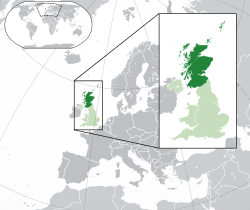
Some of the most interesting new work over the next few months is likely to be performed in Scotland. Scottish Ballet will tour Glasgow, Edinburgh, Inverness and Aberdeen between the 25 Oct and 10 Oct with a triple bill consisting of Javier de Frutos's Elsa Canasta, Bryan Arlas's Motion of Displacement and Sophie Laplane's Maze.  The company will dance Cinderella which its artistic director, Christopher Hampson, created for the Royal New Zealand Ballet in 2007 in Edinburgh, Glasgow, Aberdeen and Inverness in December and January. In April and May Scottish Ballet will dance David Dawson's new Swan Lake in those same venues in the Spring.

I am looking forward to all those works. I am a great fan of Christopher Hampson and was very disappointed not to have the chance to shake his hand when he visited Leeds on 20 June 2015 (see My Thoughts on Saturday Afternoon's Panel Discussion at Northern Ballet 21 June 2015). I loved his Hansel and Gretel (see Scottish Ballet's Hansel and Gretel 23 Dec 2015), Four for Ballet Central (see Dazzled 3 May 2015) and Perpetuum Mobile for Northern Ballet (see Between Friends - Northern Ballet's Mixed Programme 10 May 2015). Hampson described his Cinderella as a study of grief in the Narrative Dance in Ballet discussion. Having seen two excellent but very different versions of Cinderella from Ballet Cymru and the Dutch National Ballet I shall be very interested in Hampson's interpretation of the story.

However, the performances to which I am looking forward even more than Cinderella are Laplane's Maze and Dawson's Swan Lake. Why those two in particular? Well Laplane is a dancer who has caught my eye more than once. Like Constant Vigier who contributed to Tell Tale Steps in Leeds last June she comes from France. Not long ago I would have struggled to name a woman choreographer other than Ninette de Valois and Bronislava Nijinska. Now there are several coming through strongly in this country and abroad. My interest in Dawson has been stimulated by his Empire Noir which I saw in Amsterdam in June (see Going Dutch 29 June 2015). Dawson has spent a lot of time with the Dutch National Ballet and he must know van Dantzig's Swan Lake very well. I wonder how much (if anything) of van Dantzig's style has rubbed off on to him.

I have had some other good news from Scotland which is that The Byre theatre will reopen today. I remember the original Byre which was literally a byre or cow shed. There was a notice in the auditorium requesting patrons in the front row to refrain from resting their legs on the stage. The Byre was forced to close for financial reasons early in 2013 and I feared that that great St Andrews institution might be lost forever. One of the shows that was to have been performed at The Byre was Ballet West's The Nutcracker but that had to be cancelled when the theatre went dark and I saw Ballet West at Pitlochry instead (see Ballet West's The Nutcracker 25 Feb 2013). It would be lovely if Ballet West could return to St Andrews. It may be too late for them to book a slot for 2016 but perhaps they can return with La Sylphide in  2017. The Byre would make a good venue for other companies such as Chantry Dance, Ballet Cymru, Ballet Black and maybe even Scottish Ballet. I was on the steering committee of the first St Andrews arts festival which brought that company to St Andrews on 15 Feb 1971 though the venue was the Buchanan and not the Byre.

It was at St Andrews that I learned to dance and appreciate ballet. I had spent my first 18 years without setting foot on any kind of dance floor not even a discotheque.  I think my first time on my feet was the Celtic Society's bejants' ceilidh when I was dragged protesting to make a third for the dashing white sergeant. Later I discovered ballet and took my first lessons in St Andrews. The first company that I got to know and love was Scottish Ballet (then called Scottish Theatre Ballet) and that company still has a special place in my affections and I am proud to be one of its Friends.

Thursday, 2 April 2015

Scottish Ballet's Streetcar


Scottish Ballet has always occupied a special place in my affections for the reasons I explained in Scottish Ballet 20 Dec 2013, Peter Darrell 9 March 2014, Elaine McDonald in her own words 11 March 2014 and Scottish Ballet and Ballet West 3 Oct 2014. Yesterday I found fresh reason to love that company last night when I saw A Streetcar named Desire at Sadler's Wells.  This was a collaboration between theatre director, Nancy Meckler and choreographer, Annabelle Lopez Ochoa. The result is quite extraordinary: high drama as well as great ballet. I don't think I've ever seen anything quite like it.

The ballet is based on the play by Tennessee Williams. I say based because there are bits of the ballet that do not appear in the play such as Blanche Dubois's marriage and her late husband's suicide but these are necessary in order to set the ballet in context.  In the play there are four main roles: Blanche Dubois, once the heiress of the great Southern mansion Belle Rêve, her sister Stella who has thrown in her lot with the uncouth Stanley Kowalsk and his mate Mitch who courts Blanche for a while. Commencing the ballet with the marriage enables Meckler and Lopez Ochoa to create a firth: Blanche's late husband Alan who shoots himself in despair after Blanche discovers his apparent affection for another man.

Blanche is not nice to know.  Her rejection of Alan leads leads directly to his suicide. She is arrogant and disdainful of the hospitality that her sister and brother show her initially by taking her off the street. Stanley may be a brute but we can well understand why he doesn't like his sister in law. Playing dance music while he and his friends try to relax over a game of cards. She gets Mitch to change the the light fittings without so much as a by your leave. Finally she tries to turn Stella against her husband.  She takes to the bottle. She has a succession of unhappy relationships. Eventually she tries to seduce the delivery boy. But for all her faults we can't help feeling sorry for her as her dignity  like her clothes in the rape scene- is stripped away in layers. In the penultimate scene she is left naked quivering on the floor. A very powerful image.

Two fine young dancers have created that role - Eve Mutso and Luciana Ravizzi.  Last night I sa Ravizzi, She comes from Buenos Aires - a city which, like the Southern states in the 1940s has known better days. It is the city of the tango - the mournful music of the Italian immigrants so far from home. That city has more than its fair share of tragic heroines. Most particularly María Eva Duarte de Perón whom we know as "Evita". I was conscious of those connotations as I watched Ravizzi dance last night.

Whereas I had some sympathy for Blanche I had much less for her sister Stella. One of the few wise and brave things that Blanche did was to try to save her sister from Stanley. To no avail for she threw herself into his arms no matter what the abuse. In the end she connived at Blanche's committal to the psychiatric hospital  That role was danced by Sophie Laplane who portrayed that poor conflicted soul exactly.

Christopher Harrison danced the loutish Stanley. He was menacing in every movement. He walked in a slow, threatening swaggering gait. His gestures were staccato even when playing cards,  His manhandling of Blanche in the rape scene was harrowing. A first class performance in every respect. Remi Andreoni danced the gentle Mitch with sensitivity. Andrew Peasgood was the ghostly blood stained spectre of Blanche's husband.

There were two other elements that made the show: Peter Salem's magnificent score and Niki Turner's designs. The loss of Belle Rêve was symbolized by the porticoed mansion collapsing into a pile of rubble, Brilliant theatre! One of several images from the performance that I doubt that I shall forget in a hurry

Scottish Ballet spent only three days with us. It was lovely to see them but I wish it were longer. I would love to have seen Mutso's interpretation of the role of Blanche. In her interview with Christopher Hampson in Uncut which I mentioned in Object of Desire 7 March 2015 and also in Mark Monahan's programme note Becoming Blanche, she describes the research she carried out to understand the role. She read the play, saw it on stage and studied the film. I would imagine her performance would be quite different.

The company is now taking the production to the United States and it will be interesting to see what the Americans make of this transposition of a classic of their literature. I think they will be as impressed as I have been and I certainly hope so.