Showing posts with label Bintley. Show all posts

Thursday, 31 July 2025

Making a Splash - The National Ballet of Japan in London

By Katsushika Hokusai - Metropolitan Museum of Art: entry 45434, Public Domain,
https://commons.wikimedia.org/w/index.php?curid=2798407


National Ballet of Japan Giselle  The Royal Ballet & Opera, 26 July 2025, 14:00

The National Ballet of Japan has made quite a splash on its short visit to London.   Louise Levene of the Financial Times (Clement Crisp's old paper) wrote: "The National Ballet of Japan makes its UK Debut with an Exquisite Giselle".  David Jays of The Standard exalted Yui Yonezawa's triumph in the title role. Debra Craine of The Times acclaimed "a triumphant return for Miyako Yoshida".  Mark Monahan of The Telegraph asked: "Who needs the Russians when the Japanese can dance like this?"  It seems a long time since a visiting company received a reception of this kind.   The only comparable one that I have been able to find was when the Bolshoi first visited London in 1956.

We should not be surprised by the National Ballet's success.  There are Japanese principals and soloists in many of the world's great companies.  One of them was the company's director, Miyako Yoshida, who danced first with the Sadler's Wells Royal Ballet and then with the Royal Ballet as a principal. Japanese students often do well in international competitions like the Prix de Lausanne.  Yoshida won that too. 

The company that visited London last week was founded in 1997.  According to Wikipedia, it had made only two previous trips abroad.  It visited Washington in 2008 and Moscow in 2009.  Roslyn Sulcas of The New York Times observed that "In London, the National Ballet of Japan steps onto the World Stage."  As I said in Yoshida Coming Home, the National Ballet is not the first company in Japan.  The art form appears to have been introduced into Japan at about the same time as it was introduced here.  There are parallels between the development of ballet in Japan and its development here.   The history of Japanese ballet is explored by Janey Pritchard in an article in the programme entitled Ballet - A Bridge Between Britain and Japan.  

There are certainly strong links between artists in the UK and Japan.  One of Yoshida's predecessors was Sir David Bintley, and Alastair Marriott and Dick Bird contributed to Yoshida's production of Giselle.  But the British connection does not seem to be the only one.  I think I detected a Russian influence in the dancers' virtuosity and maybe an American one in their athleticism. Indeed, Pritchard mentions some of those connections in her notes.

I attended the matinee on 26 July 2025.   The first thing that impressed me, even before the curtain rose, was the full-throated sound of the orchestra.  It was, of course, the Royal Ballet Symphonia who must have played that overture countless times, but something was different.  The conductor was Misato Tomita.  According to Meet Misato Tomita, 25 Sept 2015, on the English National Ballet's Facebook page, this was not the first time that Tomita had worked with the orchestra of an English ballet company, but I am not sure how many times she has conducted the Royal Ballet's orchestra.  She had a rapport with the musicians, which usually takes a long time to develop.

Shortly afterwards, the curtain rose to reveal Bird's set, which was magnificent.  The details and colours of the trees and buildings in Giselle's village were intricate.   His scenery for the second act was even more impressive.  Hills around the cemetery marked with crosses and lanterns were spine-chillingly spooky.  I did not think that I would ever see a set to compare with Toer van Schayk's designs for the Dutch National Ballet's Giselle, but Bird's designs were at least their equal.   Bird had collaborated with the lighting designer Rick Fisher, who plotted the course of the moon as it receded and dimmed with the first rays of morning.  

The first on stage was Hilarion, danced by Takaro Watanabe.  He was well cast for the role.  An excellent dance actor, he expressed jealousy, indignation and self-pity in Act 1 as Giselle's relationship with Albrecht developed.  The audience could almost hear gears grinding in his brain as he worked out the stranger's identity.  In Act 2, he demonstrated his athleticism, flinging himself across the stage at the wilis' behest.

Hilarion was followed by Shogo Hayami, who danced Albrecht, and Fukunobu Koshiba, Albrecht's squire Wilfred.  Hayami was good-looking and suave, but the role required him to project haughtiness and entitlement.  Even though he had concealed his sword and discarded his cloak, it was obvious that he was no peasant.  It was not difficult to understand why an inexperienced, perhaps somewhat simple-minded country girl should be flattered by his attention.  Nor was it difficult to understand Berthe's exasperation or indeed Hilarion's at Giselle's headstrong naivety.  There were a few sniggers and gasps from the audience as Albrecht picked up the flower and surreptitiously removed a petal.

Of all the great classical roles, Giselle must be one of the hardest to perform.  Like Odette/Odile, it requires a personality change, though in Giselle's case, the change results from a transformation and not an impersonation.  In Act 1, Giselle is an impressionable peasant girl from a remote village with a weak heart and a protective mother.   In Act 2, she is transformed into an aetherial being capable of sublime love.   Saho Shibayama performed that transformation flawlessly.   Her interpretation of Giselle was one of the best I have ever seen.

The peasant pas de deux is the only divertissement in Giselle.  The piece offers an opportunity for two of a company's up-and-coming young soloists to show off their virtuosity.   On this occasion, it was danced entertainingly by Moeko Iino, one of the company's most experienced dancers, and  Ren Ishiyama, one of its first artists. I think it was there that I detected a Russian accent. At any rate, I was not surprised to learn that Moeko Iino had studied in Novosibirsk before joining the company,

Although it is not a major role, Berthe (Giselle's mother) is important to the story.   She has a premonition of Giselle's fate, which she reveals graphically to her daughter.  She even traced out the outline of the wilis' veils with her hands.  That role was performed by Misato Nakada, who is an excellent character dancer. I am sure she would be a great Madge in La Sylphide or nurse in Romeo and Juliet.

Other featured dancers in Act 1 were Masahiro Nakayo, who was the Duke, and Misato Uchida, Albrecht's betrothed.  All danced well, as did the villagers and hunting party.  The women members of the corps were magnificent in Act 2, as I shall mention later.

The success or otherwise of any production of Giselle rests on Myrtha, one of the great female roles in ballet.   In Saturday's matinee, it was danced by first artist, Suzu Yamamoto.   Technically, she was faultless.  However, wilis are the spirits of scorned women whose fury exceeds that of Hell.  I have come to expect an iciness and steeliness, not to mention spite in Myrtha's role, and maybe Yamamoto was just a little bit too nice.

Susan Dalgetty Ezra of the London Ballet Circle once referred to Moyna and Zulme as "Myrtha's sidekicks", and I smile at that thought, which I can never remove from my mind.   Moekko Iinp, who had danced in the peasant pas de deux in Act 1, reappeared as Zukme in Act 2.  Maho Higashi danced Moyna. They also danced well.

I was most impressed with the corps in Act 2.  They were disciplined, well-rehearsed and as precise as a company of guardsmen.   The scenes in which they crossed the stage en arabesque in formation were mesmerizing.  The scene in which they dispatched Hilarion was spine-chilling.  They deserve much of the credit for the success of the show.

Yoshida has produced a fine Giselle. It stands comparison with my other favourites, Mary Skeaping's, Sir Peter Wright's and even Rachael Beaujean's.  The National Ballet's visit was far too short.  They have left their audience wanting more.   If they come back to London, it would be good to see some of the other works featured in their 2024/2025 video, or better still, some of their commissioned works, such as Ishii Jun's Bonshō no Koe—from The Tales of the Heike, or Maki Asami's La Dame aux Camélias. 

Saturday, 20 June 2015

Three into Two won't go

You can't put a quart into a pint pot
Author John White
Reproduced under Creative Commons licence
Source Wikipedia


Today I shall watch Northern Ballet's company class and panel discussion on narrative ballet in Tell Tale Steps (see Tell Tale Steps - Choreographic Laboratory 13 June 2015) after which I will beetle down to the Hippodrome to see Birmingham Royal Ballet dance Bintley's double bill (The King Dances and Carmina Burana).

On any day but this I would have hoofed down to London to see English National Ballet's Choreographics at the Lilian Baylis Studio at Sadler's Wells or at least watched the live streaming on ArtStreamingTV at 14:15. There is a great programme with works by Fabian Reimair, James Streeter, Stina Quagebeur, Max Westwell, Morgann Runacre-Temple and Renato Paroni de Castro. I should particularly love to have seen de Castro's piece since Sarah Kundi is dancing in it with Vitor Menezes and Guilherme Menezes. Readers of this blog will know that Kundi is one of my favourite dancers and I have not seen her on stage since Coppelia in November (see Coppelia in Oxford 2 Nov 2014). I have seen a picture of her with the Vitor and Guilherme Menezes and she looks stunning. Graham Watts has written:
"Well done Sarah - lovely piece, beautifully danced,"
And he should know.

But if I were to watch that live screening I would miss Watts's contribution to the State of the Art Panel Discussion: Narrative Dance in Ballet which will take place between 13:15 and 15:00. Aside from a little pedagogic grumbling at the use of the term state of the art which is defined by s.2 (2) of the Patents Act 1977 as
"all matter (whether a product, a process, information about either, or anything else) which has at any time before the priority date of that invention been made available to the public (whether in the United Kingdom or elsewhere) by written or oral description, by use or in any other way"
in the wrong context (but who other than me would pick that up) I am really looking forward to that discussion because one of the panellists is Christopher Hampson who created Hansel and Gretel for Scottish Ballet which is one of the best new full length ballets I have seen recently (see Scottish Ballet's Hansel and Gretel 23 Dec 2013. You don't get such a line up of choreographic and critical expertise every day and certainly not every day in Leeds.

Sadly, I shall miss out on the choreographic sharing but Gita will cover it for me and I will get the chance to see it all on Northern Ballet's YouTube channel later. The sacrifice will be worthwhile to catch the last performance of The King Dances. Now this is a work of tremendous importance as I explained in my article of 23 May 2015. This is a special work to mark Bintley's 20th anniversary as Artistic Director. It may go on tour but then again it may not and I am not going to miss it.

I wish all the dancers in London, Leeds and Birmingham well. I shall be thinking of them all, particularly Kundi and the Menezes.  I wish I could see all three shows live but sadly you can't repeal the laws of physics. I will do the best I can and report back tomorrow.

Thursday, 19 December 2013

The Choral

A view of Huddersfield from Castle Hill   Source Wikipedia


For one day a year a week or so before Christmas Huddersfield becomes the centre of the musical world. On that day the Huddersfield Choral Society which is arguably the best choir in Britain if not the world performs Handel's Messiah in Huddersfield Town Hall.

The Choral as we like to call it has a unique sound which is easier to experience than describe. It is something that is felt almost as much as heard. It can be awesome and almost frightening, a rumble like an express train or even an earthquake in the Dies Irae of Verdi's Requiem. Or it can soar majestically in the Hallelujah chorus as it did yesterday. What my late spouse called "a foretaste of Heaven". Words, incidentally, used to describe only one other shared experience during a long marriage, the beauty and tranquillity of Iona. I have heard recordings of the Choral that were made before I was born and that sound was there. I have heard other Messiahs by other great choirs, and, despite the richness of their sound, it was not there.

Although  this Huddersfield sound is a constant each year every Messiah is different because there are different conductors and different soloists. Last night the conductor was Martyn Brabbins and he understands us the subscribers. How we clapped and how we cheered and, at one point, Brabbins conducted our cheers. We, the audience, good solid Yorkshire folk are part of every performance, you know. We could sing it ourselves from memory. Every word. Every note.

In fact we do sing a little because every Messiah begins with the Christmas Hymn, 
"Christians, awake, salute the happy morn
Wherein the Saviour of mankind was born;"
Yesterday we were conducted by the Choral's chorus master Joseph Cullen. And he understands Yorkshire folk too.

We had four wonderful soloists, Susan Gritton, soprano, David Allsopp, countertenor, Ben Johnson, tenor and Neal Davies, bass.  Allsopp brought out qualities of the score that I had never previously noticed. I was particularly moved when he sang the air "He was despised". We had a great organist in Darius Battiwalla. And last but not least the magnificent Royal Northern Sinfonia.

"So what's all this got to do with ballet or even dance?" I hear you say. Well I did reserve the right to go off topic occasionally for an exceptional concert and this was certainly exceptional. And we dance in Huddersfield as well as sing (see "The Base Studios, Huddersfield"). We produced David Bintley of the Birmingham Royal Ballet. I don't know whether he had any connection with the Choral or even attended a concert but you can't live in this part of Yorkshire without knowing about it. The Choral must have been part of Bintley's cultural heritage.

Saturday, 2 March 2013

The Base Studios, Huddersfield


"Huddersfield is not as famous in the world of classical dance as St Petersburg, Paris or London," observes the Birmingham Royal Ballet's website, "but it was the birthplace of David Bintley - one of the most consistent and significant forces in British ballet."   But the birthplace of the Director of one of the world's great ballet companies is not our town's only contribution to dance.

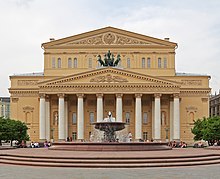
I am not referring to the photograph above which is the town's railway station and not an opera house even though its splendid portico bears more than a passing resemblance to the Bolshoi Theatre but to The Base Studios at 3 New Street where I render my very humble homage to Terpsichore's muse every Tuesday at 20:00 trying the bottomless patience of the adult ballet teacher Fiona Noonan, 


Fortunately, The Base has much better students than me even in the adult ballet class and in its Youth Dance Academy which I mentioned in one of my other blogs ("Huddersfield Youth Dance Academy Auditions 26 Jan 2013" IP Yorkshire 18 Jan 2013), it is nurturing some quite remarkable talent.   

Other activities that may well produce another Bintley include Heavy Arts  the resident youth production company which provides students with the opportunity to work with professional artists to create full-scale youth musical productions. Students for the Heavy Arts programme are taught in three groups:  Juniors (ages 5-8), Intermediates (ages 9-12) and Seniors (ages 13+).  I am told by Matt Slater, the Base's General Manager, that one of the programme's Juniors will be in tonight's première of Northern Ballet's "The Great Gatsby" in Leeds.  This remarkably talented child has already performed recently in two of Nixon's other works.   

Of course, ballet is not the only type of dance to be taught at The Base Studios.   There's a great list of other styles on The Base's Dance Classes page and it is ever expanding.   I can't keep up with it which is why I have invited Matt to become an author of this blog and I am even more delighted to say that he has accepted. So there is at last one contributor to this blog who knows what he is talking about.

Finally, Terpsichore is not the only Muse that Huddersfield honours.  It is also the home of the Choral which claims not without justification to be the UK's leading choral society "producing a unique and thrilling full-bodied ‘Huddersfield Sound’ from over 200 voices."  The University has a great music school which hosts the famous Huddersfield Contemporary Music Festival every autumn. There is an excellent art gallery and the Lawrence Batley repertory theatre . 

This Pennine town which is my adopted home is not as large as St. Petersburg, Paris or London but it is no worse a place than any of those metropoles for producing and refining exceptional talent.

Update
9 Mar 2013  The Base Studio's Facebook page with great pictures of Sean, Fun Fridays, the rehearsal studio and my wonderful teacher.

Friday, 1 March 2013

Birmingham Royal Ballet's Aladdin


The Lowry, Manchester, 28 Feb 2013

It is not every day that a new ballet is premièred.  Between the end of February and the beginning of March 2013 there will have been two:
I hope to see The Great Gatsby in Leeds on 7 March 2013 and I shall review it as soon as possible afterwards. Yesterday evening I saw Aladdin at the Lowry in Salford, near Manchester.

The Birmingham Royal Ballet is one of the world's great ballet companies.  Founded by Ninette de Valois the company was and remains the Royal Ballet touring troupe.   It adopted its present name in 1990 when it moved from Sadlers Wells to the Birmingham Hippodrome.   It is directed by David Bintley who choreographed Aladdin.

Aladdin is one of the stories in One Thousand and One Nights or Arabian Nights which are rarely read to children nowadays. Most of us in the United Kingdom will have been taken to a pantomime by the name of Aladdin which is about as far removed from the original story as a value burger is from a cow.   I remember being taken to The London Paladium or some other West End theatre in the late 1950s or early 1960s where the principal characters - Aladdin, Widow Twankey (his mother) and Wishee Washee (his brother) -ran a Chinese laundry. There was very little of that in Bintley's work.   It was far closer to Andrew Lang's compilation which was to be expected given the production's funding from the Houston Ballet Foundation and its original creation for the National Ballet of Japan.

Having said that there were certainly members of last night's audience who thought they were at a pantomime which manifested itself in an initial booing of Iain Mackay who danced The Mahgrib (or wicked magician) magnificently though those boos were quickly transformed into well deserved applause. More annoying, there was an intolerable level of coming and going, shuffling in the seats, unwrapping of sweets and even illicit photography  which required more than a little concentration to blot out.

Fortunately, the brilliance of the work did blot out those distractions.   Bird's sets and Blane's costumes were captivating.  You can get some idea of that brilliance from the Creating Aladdin website - the hustle and bustle of a Chinese street, the stalactites and stalagmites of the cave that glowed in different colours as the scene progressed, Aladdin's home, the Sultan's palace, Aladdin's castle after his marriage to the Princess Badr and Morocco.

However, it is the choreography, music and the artistry of the dancers that generate magic for audiences and for me and my companion it all worked wonderfully.   Having developed my love of ballet while Frederick Ashton was the Royal Ballet's choreographer I am very hard to please.   But pleased I was.   The pas de deux that Bintley created for Aladdin and the Princess danced yesterday by Jamie Bond and Jenna Roberts reminded me a lot of Ashton.   So did the powerful roles for the djinn (Matthias Dingman), Mahgrib and Sultan (Rory Mackay).   Also, the sweet role for Aladdin's mother danced delightfully by Marion Tait - no Widow Twankey she.   Other lovely touches - and very familiar to Manchester with our famous Chinese quarter - were the lion and dragon dances.   It is probably unfair to single out any of the other dancers because all excelled but I was impressed particularly by Céline Gittens who danced Diamond.   Finally, Davis's score with its oriental allusions was perfect for Bintley's choreography.

This show will stay at The Lowry until tomorrow after which it will move to Plymouth, Sunderland and the Coliseum.   If you are near any of those venues - or even if you are not - you should try to see this work.   I think it will become an audience favourite along with the 19th century classics which very few modern works do.