Showing posts with label The Lowry. Show all posts

Sunday, 31 March 2024

Nobody Dances The Sleeping Beauty better than the Birmingham Royal Ballet

Standard YouTube Licence

Birmingham Royal Ballet The Sleeping Beauty The Lowry 7 March 2024 18:39

Every March the Birmingham Royal Ballet visits The Lowry to perform one of its full-length works.  This year the company brought Sir Peter Wright's production of The Sleeping Beauty.  I had been looking forward to it very much.  I have seen many performances of that ballet by different companies over the years but none has danced it better than the Birmingham Royal Ballet.   It is not surprising that Sir Peter has been commissioned to create versions of that work for the Dutch National Ballet and the Hungarian Ballet.

I attended the evening performance on 7 March 2024.   As I had expected, the dancing, drama, music, sets and costumes were outstanding but I do have one criticism.   A performance of The Sleeping Beauty normally lasts three and a half hours with intervals between each of the Acts and between the Prologue and Act I.  Those intervals are there for a purpose.   They allow the audience to reflect on the dancing that they have just seen and, unless they already know the ballet backwards, prepare for the next Act by consulting the synopsis.  Intervals also provide opportunities to look out for friends and acquaintances, take a comfort break, grab some refreshments or just stretch pairs of legs.  The show that I attended was telescoped into 2 hours and 50 minutes with just 2 breaks of 15 minutes each.  Acts I and II, which are supposed to span 100 years in the story, were juxtaposed with just a 3-minute pause between them.  Those intervals were just not long enough to absorb and appreciate fully the cascade of colour, sound and movement.       

Happily, there was still plenty to enjoy.  The Sleeping Beauty is a contest between good and evil represented by the Lilac Fairy and Carabosse.  I know that Aurora and Florimund are supposed to be the leads and that their roles are always performed by principals but I have always found them two-dimensional.  The success of the ballet hinges on the performance of those two fairies.  If they fall flat then the ballet is nothing more than an endless string of divertissements,

By far the more interesting fairy is Carabosse as she arrives on a black conveyance surrounded by petty monsters on a peel of thunder following a flash of lightning.  In some productions, Carabosse is danced by a man but I sense an extra frisson when the role is danced by a woman.   The best Carabosse that I have ever seen was the great Dutch ballerina Igone de Jongh but Daria Stanciulescu was pretty good too. I felt her rage as she peevishly plucked the last remaining hair from Catalabutte's pate, 

But evil does not win completely because Carabosse's curse is mitigated by the Lilac Fairy.  She was danced by Eilis Small.  She has a demanding role because she is the only character that appears in every scene of the show.  She guides Florimund through the thicket to Aurora's bed, projecting goodness and calm, banishing Carabosse in a puff of smoke on the way. 

Though their characters may not be as interesting as Carabosse's or Lilac's,  Aurora and Florimund have the best choreography.   The grand pas de deux at their wedding requires considerable virtuosity.  Momoko Hirata and Max Maslen performed those lead roles with flair.   Perhaps the most demanding part of Aurora's role is the rose adagio in Act I where she has to pass gracefully between four suitors.   The sequence requires considerable poise and concentration but Hirata almost made it look easy.

The only parts of the choreography of The Sleeping Beauty that I have ever tried to learn are the fairy variations in the Prologue.  Each is very short but none is easy.  Isabella Howard, Rasanna Ely, Rachele Pizzillo, Reina Fuchigami, Sofia Liñares and Yu Kurihara danced the fairies of beauty, honour, modesty, song, temperament and joy respectively.  I learnt a lot from them.  They were a joy to watch.

Liñares and Pizzillo joined Enrique Bejarano Vidal and Shuailun Wu in the pas de quatre for Aurora's wedding.  I loved Gus Payne's cheeky Puss-in-Boots and Isabella Howard's coquettish White Cat. I must congratulate Riku Itu and Yaoqian Shang on their Bluebird pas de deux.  Itu started his career at Northern Ballet and it was good to see him again.  Tessa Hogge and Callum Findlay-White were an amusing Little Red Riding Hood and Woolf.

This production has been in the company's repertoire for nearly 40 years but it seems as fresh as ever. Philip Prowse's sets and costumes continue to awe.  Touches like the scattering of the stage with gold confetti continue to delight.  So, too, does the Royal Ballet Sinfonia. On 7 March it was conducted by  Paul Murphy.

The Sleeping Beauty itself occupies a special place in the history of British ballet as it was the first work to be performed by the Sadler's Wells Ballet at the Royal Opera House after the Second World War.  That show took place on 20 Feb 1946.  However, according to the Manchester Guardian review of that performance of 21 Feb 1946, it was not the first time that the company performed The Sleeping Beauty at Covent Garden.  The company danced The Sleeping Beauty there at a special performance for the state visit of the President of France in March 1939.   

As this review will appear early on Easter Day, I wish all my readers who observe the festival a Happy Easter and everyone in the UK a happy bank holiday weekend.

Monday, 10 July 2023

Birmingham Royal Ballet at the Lowry's Open Day

Author RobChafer Licence CC BY-SA 3.0 Source Wikimedia Commons
The Lowry


According to its website, The Lowry is holding an open day on 6 Aug 2023.  It has not published any details yet though it has posted a video about the event in 2021.   As we have a company class in Leeds on 5 Aug 2023 and I shall be speaking at the Cambridge IP Law Summer School between 7 and 11 Aug 2023 I would have given the event a miss had I not received an email about it from the Birmingham Royal Ballet last week.

That email carried an image of Carabosse doing her worse towering over a smaller image of Désiré and Aurora at their wedding above the banner headline "Join us at The Lowry Open Day on Sunday 6 August".  The email announces that the Birmingham Royal Ballet will attend the open day between 10:00 and 17:00 bringing costumes for The Sleeping Beauty that visitors can try on.  Between 11:00 and 14:00 there will be workshops where attendees can learn some of the choreography.

The Birmingham Royal Ballet returns to Salford to dance Sir Peter Wright's production of The Sleeping Beauty between 7 and 9 March 2024,  Readers can view the trailer here.  Companies around the world dance that production and I have seen performances of that work by the Hungarian and Dutch National Ballets. The best that I have ever seen was in Amsterdam on 17 Dec 2017 with  Maia Makhateli as Aurora, Daniel Camargo as the prince and Igone de Jongh as Carabosse (see The Dutch National Ballet's "The Sleeping Beauty" - I have waited nearly 50 years for this show 20 Dec 2017).  That bit of ballet history will never be repeated but I have very high hopes of BRB's visit to the Lowry in the Spring.

Saturday, 11 June 2022

Candoco at the Lowry

YouTub Standard Licence

 Candoco Dance Company Set and Reset/Reset and Last Shelter The Lowry, 11 May 2022 19:30

The Candoco Dance Company is one that I have long wanted to see because it has received much critical acclaim.  A quotation from The Observer that appears on its website describes it as "the company for which choreographers reserve their wildest and often most inventive work."  I got my chance to see it on 11 May 2022 when it visited The Lowry to perform Set and Reset/Reset and Last Shelter in the Quays auditorium.

According to its history page, the company developed out of inclusive workshops at London’s Aspire Centre for Spinal Injury.  It was the first live performance that I saw after my injury on 19 March 2022 when I was temporarily struggling on crutches. I marvelled at the virtuosity of Markéta Stránská who used hers to power across the stage with the speed of a cheetah and the grace of a gazelle while I found it an effort to trudge to The Quays from the car park.

The company treated us to two works:  a reconstruction by Abigail Yager of Trisha Brown's Set and Reset/Reset and Jeanine Durning's Last Shelter.   Set and Reset/Reset was immediately appealing with a catchy score and plenty of action.  The humming chatter that David Nixon called "the best sound in the work" erupted around the auditorium as the lights came on.  Last Shelter was a very different work starting off slowly and punctuated with dancers' soliloquies including one from Stránská in what I guess must have been Czech. There was less chatter and more thought as the public left the theatre at the end of the performance.  Although it took longer for me to get my teeth into Last Shelter and I probably need to see it again at least once to appreciate it properly, I enjoyed both works. 

The name "Candoco" appears to combine "can do" with "co" as an abbreviation for company.  It seems to affirm that disability and injury need not mean an end to creativity. When Candoco started in the 1990s such affirmation needed to be trumpeted.  Since then, other companies including the national classical dance companies of Wales and Scotland have staged works for disabled and non-disabled dancers (see An Explosion of Joy 23 Sept 2014 and No Mean City - Accessible Dance and Ballet 26 April 2015). While continuing to showcase the work of dancers with disabilities as well as those without out, it is increasingly celebrated for its innovation and ingenuity.

Sunday, 17 March 2019

Phoenix Comes of Age with its Rite of Spring

The original cast of the Rite of Spring, Paris 2013


Phoenix Dance Theatre The Rite of Spring The Lowry, 8 March 2019

In my review of Windrush, Movement of the People 8 Feb 2018, I described the work as "the best show that I have ever seen in Leeds."  "What could possibly follow that?" I asked myself.  My answer came on 8 March 2019 when I saw Phoenix Dance Theatre's Rite of Spring with Opera North's Gianni Schicchi at The Lowry. As Vanessa Vince Pang led Maestro Garry Walker on stage to acknowledge the audience's applause I thought to myself that Phoenix had truly come of age.

The foundation of any production of The Rite of Spring is Stravinsky's music which sets out a framework in two parts starting with an introduction and ending with the sacrificial dance of the chosen one,   Some choreographers have kept the music but chosen not to follow the framework.  Jeanguy Saintus has not done that and although his choreography reflects his genius I did not fear that Nijinsky's shade would be troubled. In fact, I felt that Santus's work was the next best thing to a time machine that would transport me to the Théâtre des Champs-Élysées for the 29 May 1913.

For the first time, I saw Phoenix perform before a live orchestra and they did so magnificently.  Five members of the cast I already knew well but Manon Adrianov, Aaron Chaplin and Michael Marquez were new to me. They complimented Carmen Marfil, Carlos Martinez, Vaness Vince-Pang, Prentice Whitlow and Natalie Alleston seamlessly.  The stage was a caldron of movement and sound.   It was everything that Stravinsky, Nijinsky and indeed Diaghilev must have imagined.  The applause at the end was deafening.

The Rite of Spring was performed not with another dance piece but with a one-act opera by Puccini,   Stravinsky and Puccini may have lived and worked at the beginning of the last century. I have long admired them both.  But until their works were juxtaposed I never thought that they had much in common.  To my great surprise and joy, The Rite of Spring and Gianni Schicchi seemed to work very well together.   The latter work is not nearly as well known as the former though it does contain one very well-known air, O mio babbino caro by Lauretta.

The libretto, incidentally, was about something that actually happens in real life from time to time though happily in England the Inheritance (Provision for Family and Dependants) Act 1975  alleviates the need for a deceased's disappointed relations to impersonate the testator or forge his will.  The opera was staged beautifully by Opera North.  I hope that the success of this production will lead to similar collaborations between Opera North and Phoenix and indeed other opera and contemporary dance or ballet companies.

There is just one more performance of The Rite of Spring and Giani Schicchi at the Theatre Royal Nottingham on 22 March 2019.   If you live anywhere near Nottingham this is the show to see even if you see nothing more all year.

Saturday, 19 May 2018

Teac Damsa's "Swan Lake" - it may not have been Ballet or even entirely Dance but it was great Theatre


Teac Damsa and Michael Keegan-Dolan Swan Lake (Loch na hEala) 18 May 2018 20:00 Lowry

It didn't start promisingly.  A bare stage.  A handful of musicians clutching their instruments. A chap in a tuque smoking a fag.  A slightly flabby bespectacled middle aged gent in his underpants with a rope round his neck like a leash walking in circles and bleating occasionally. A lady in a wheelchair.

The house lights went down and sinister looking types in wide brimmed hats circled the semi-naked gent.  After performing a ritual dance one of them tugged at the rope. The bleating quickened.   They brought him to the floor, splashed water over him whipped him with towels but then they clad him in shirt and trousers. They led him to a chair with a microphone in the centre of the stage and sat him down.

"I won't say another word until I have a cup of tea" announced the man in the chair. Someone poured him a cup and handed it to him.  The man in the chair asked for a cigarette and that was provided too.  He began to tell his story and the man in the tuque and the lady in the wheelchair approached the front of the stage. From that point the story of Swan Lake emerged.  My impatience and scepticism evaporated and I became absorbed.

The man in the tuque was the Siegfried of the tale though he was called Jimmy in this story. He was disorientated and depressed because he had lost his father and was about to lose his home where his family had lived for 300 years.  He lived in the house with his disabled mother.  It was his 36th birthday and she wanted him to find a nice girl and settle down. Instead of a crossbow she gave him his father's old shot gun. By now, gentle reader, you should be seeing parallels with the ballet. The parallels were not exact because the tale was set in modern Ireland but it was much closer to Petipa than David Nixon, Graeme Murphy or Sir Matthew Bourne.

The swans were four young girls who had been students at the local girls's secondary school.   One of them,  Fionnuala, had been ravaged by her parish priest who had also been the girls' divinity master and chaplain.  Fionnuala's sisters caught him flagrante delicto.  "If any of you breath a word of any of this", he threatened, "you will be turned into a filthy animal," That is what seems to have happened to the girls for they disappeared from home and were never seen again.

Jimmy went down to the lough with his gun one night with a view to shooting himself.  Just as he was about to squeeze the trigger a swan swooped down and distracted him. A duet ensued between Jimmy and the Swan which was as tender as Petipa's.

Jimmy's mum threw a party for his birthday and invited every unattached girl in the neighbourhood plus the lecherous priest.  The priest dragged a a big cardboard box onto the stage which contained a swan with black feathers that looked just like Fionnuala or the swan that had saved Jimmy's life at the lough.  Jimmy tried to approach her but was repelled.  He became distracted and retired to his home with his gun.  A local councillor visited him.  Jimmy appeared brandishing the gun.  The councillor panicked and complained to the police.  Firearms officers arrived at Jimmy's house.  They ordered an unarmed Jimmy to place his hands above his head.  When he failed to comply they shot him.

In the last scene the dancers tossed swans' down into the air.  One of them  menacingly swung a bin liner full of the stuff before emptying its contents over the front rows of the stalls.  Clearly the audience loved the show for nearly everyone rose to their feet.  Indeed, I loved it.  Mancunians stand up for all sorts of shows for which I would never rise like Akram Khan's Giselle but they were right about Teac Damsa's Swan Lake.  It may not have been ballet.  It was not even all dance.  But it was great theatre.

After the show the audience were invited to a dimly lit bar behind the stage that I never knew existed.  It was furnished with cushions, easy chairs and lip-shaped balloons.  Soft drinks were on sale for a pound and alcohol was not much more expensive.  Three members of the band - a violinist, cellist and an electric viola player - serenaded us with traditional Irish music.  At one point, a guest cellist called Mary joined the band on stage to sing a song about sorting socks.  Many companies hold Q & A after the show which I always attend out of respect for the dancers.   It is probably a mistake because it breaks a spell. I think audiences much prefer to remember the artists under the lights with makeup.  Yesterday's after show concert was so pleasant.  It will always remind me of this show.

Teac Damsa are at the Lowry for one more night.  As I am in Move It! at The Dancehouse tonight (see Our Turn to Impress 16 May 2018) I can hardly recommend a rival show but if you get the chance to see this show anywhere else but the Lowry tonight you really must watch it.

Sunday, 24 September 2017

Birmingham Royal Ballet's Aladdin nearly Five Years on


Standard YouTube Licence


Birmingham Royal Ballet Aladdin The Lowry, 23 Sept 2017, 19:30

Shortly after I started this blog I reviewed Birmingham Royal Ballet's Aladdin (see my review of 1 March 2013). I saw it just after I had started taking ballet lessons with Fiona Noonan several months before I entered the over 55 class at Northern Ballet. Although I had seen a lot of ballet before 2013 I had not actually done very much. I have since learned that however much ballet you see from the stalls or dress circle you really don't know what you are talking about until you try your hand at it. Then your admiration for those who make their living from the art soars beyond bounds.

In March 2013 I wrote:
"Having developed my love of ballet while Frederick Ashton was the Royal Ballet's choreographer I am very hard to please. But pleased I was. The pas de deux that Bintley created for Aladdin and the Princess danced yesterday by Jamie Bond and Jenna Roberts reminded me a lot of Ashton. So did the powerful roles for the djinn (Matthias Dingman), Mahgrib and Sultan (Rory Mackay). Also, the sweet role for Aladdin's mother danced delightfully by Marion Tait - no Widow Twankey she. Other lovely touches - and very familiar to Manchester with our famous Chinese quarter - were the lion and dragon dances. It is probably unfair to single out any of the other dancers because all excelled but I was impressed particularly by Céline Gittens who danced Diamond. Finally, Davis's score with its oriental allusions was perfect for Bintley's choreography."
I saw many of the same dancers in the same roles last night. Would I still like it especially as I had been looking forward to Stanton Welch's La Bayadère which had to be axed when Birmingham City Council reduced its grant to Birmingham Royal Ballet? (see A Birmingham Bayadère 26 Nov 2016 and How Nikiya must have felt when she saw a snake 31 Jan 2017)

Well, I am glad to say that I liked Aladdin even more last night and I think I have to thank my teachers in Leeds, Manchester, Huddersfield, Sheffield, London, Liverpool, Cambridge, Budapest and, half a century ago, St Andrews for that as they taught me how to appreciate ballet. As before I loved Carl Davis's score. I was impressed by Sue Blane's costumes, Dick Bird's sets and Mark Jonathan's lighting. I was thrilled by David Bintley's choreography. Most of all I was dazzled by the dancing.

César Morales was a perfect Aladdin alternating from an awkward adolescent to the sultan's splendid sun in law. Jenna Roberts was as lovely as she had been when I had last seen her in that role. Iain Mackay was a magnificent magician (why does Salford feel it has to boo him at the curtain call just because he is cast as a baddie?)  Aitor Galende. clad and coloured from head to toe in blue was a noble djinn. Tom Rogers was every inch a sultan.  Marion Tait is always a delight. One of my all-time favourites. It was appropriate that many of my other favourites appeared as jewels for gems they are. The incomparable Céline Gittens, glittered as a diamond, Chi Cao glowed as an emerald, Samara Downs and Alys Shee gleamed as gold and silver, Yasuo Atsujii and Yijing Zha radiated as rubies, Karla Doorbar shone as onyx as indeed did the whole cast.

I attended the performance with a friend who has seen a lot of ballet and attended a lot of classes though she likes the other performing arts and other dance forms at least as well. She also saw the 2013 show with me and said she enjoyed last night's performance even more. Sitting next to us were a couple for whom ballet was still a new experience. In fact, for one them it was his first live show. I was curious to see whether he would take to it. He told me that he found difficulty with the first act but enjoyed the second and third very much. On balance he enjoyed the whole experience.

I hope to see Stanton Welch's La Bayadère one day even if I have to fly to Texas to do so.  As one of my favourite young dancers has just moved from HNB to the Houston Ballet I hope to do so soon, I was sad to learn that the company had suffered so much from Hurricane Harvey.  As I said in Houston Ballet  30 Aug 2017 we in the North know the damage flood water can do. I am sure that company will emerge stronger than ever as Northern Ballet did. I shall look out for the Houston Ballet on World Ballet Day and give it a special cheer.

Sunday, 7 May 2017

Casanova Second Time Round

The Lowry
Photo Andrew Dunn
(c) 2004 Andrew Dunn: Creative Commons Attribution-Share Alike 2 Licence
Source Wikipedia


Northern Ballet, Casanova. The Lowry, 6 May 2017, 19:30

I was pretty complimentary about Kenneth Tindall's Casanova when it opened in Leeds on 11 March 2017 (see Casanova - "it has been a long time since I enjoyed a show by Northern Ballet as much as I enjoyed Casanova last night" 12 March 2017). I liked last night's show at the Lowry even better.

I think there are three reasons for that.

The first is that we had a very strong cast that included both of Northern Ballet's remaining premier dancers, Javier Torres and Pippa Moore as well as personal favourites like Hannah Bateman, Abigail Prudames, Antoinette Brooks-Daw and Mlindi Kulashe in important roles.

The second reason for last night's success is that the dancers will have grown used to their roles over the last two months and danced in the confidence that audiences around the country and most of the critics like the show.

Thirdly, I think the dancers were lifted by the venue. The Lowry is a great auditorium, certainly for audiences because seating is comfortable commanding good views of the stage from just about every part of the house, but I think also for performers as the stage is large and it is well equipped for scenery changes and special effects.

The company danced before a receptive crowd and though the house was less than full the warmth of the applause at the end when more than a few rose to their feet more than made up for it. Manchester audiences may be a little bit more critical than Leeds ones as they see Birmingham Royal Ballet, English National Ballet and visiting companies from abroad such as the National Ballet of China and Alvin Ailey as well as Northern Ballet. If a show does well in the second largest conurbation of the United Kingdom it will probably do well anywhere. As the old saying goes, "what Manchester does today, the world does tomorrow."

As I have written a lot about Casanova already, I won't bore readers with a rehash of the plot or the work of the various contributors. They can get all that from Northern Ballet's website and the bibliography below. I will concentrate on the dancers and what made last night's performance even better than the first night.

As I noted above, we had a very strong cast. Giuliano Contadini was the poster boy of the show and deservedly so for he danced Casanova very well but Torres was cast perfectly for the role. Powerful, athletic and passionate, he was how I had always imagined the historical Giacomo Casanova. There is a point towards the end when he has to hold a very uncomfortable pose for what must seem like an age. That was when I appreciated just how good he was.

Another inspired bit of casting was Prudames as Bellino. One of the most touching scenes of the ballet - touching in both senses  - is where Contadini gradually winds her confidence. It was demonstrated at the preview with a commentary from Tindall by Contadini and Dreda Blow (see Casanova Unmasked 16 Feb 2017). Prudames made it work even better for she showed the vulnerability of her character and the sensitivity of their encounter given the disparity in power.

Yet another powerful performance came in the first act where MM (described in the blurb as "an aristocratic nun" and danced by Bateman) seduces Casanova thereby giving the inquisition the excuse they need to throw him into the Leads, the prison on the other side of the Bridge of Sighs.

Constraints of time and space prevent my commending everyone individually, All, dancers and musicians, did well last night.  I congratulate everyone who took part in the show.

As the orchestra pit of the Lowry is a bit more spacious than most I was able to glimpse the orchestra occasionally as it tackled Kerry Muzzey's score. Percussion is important particularly towards the end of the show and I was drawn to the percussionist seated on the back row of the pit as he sounded out the change of mood. Thr Northern Ballet Sinfonia was conducted by Daniel Parkinson last night who interpreted the music well. I am not sure that I appreciated the score as much as I did last night the first time round. Yesterday I particularly liked the first act where there were hints of the 18th century without pastiche.

I also appreciated the sets and lighting more and noticed things like the sort of white smoke that rises from the Sistine Chapel when a new pope is found which opened the show. I am not sure of its significance. I assume it was used in the Grand but, for the life of me, I just can't remember it.  It was, however, very effective owing moe than a little to the cinema which I know to be Tindall's passion (see "A Many Sided Genius, Tindall on Casanova 4 March 2017). Not everything worked quite so well. If, as I hope, this ballet has a second run, t I hope that Tindall takes another look at the flashback scene with its falling pages reminiscent of the snow scene at the end of Nixon's Wuthering Heights. A fine bit of choreography deserves a stronger and more original ending.

It was very good to see Northern Ballet west of the Pennines where the company began. As a Mancunian, I took pride in Northern Dance Theatre's existence long before I ever saw them dance. And when I did see them dance I saw them first in Manchester which is where they performed some of their best work. It would be good to see more of them in our city and there is no reason why they should not do so. After all, the Australian Ballet has a strong base in Sydney as well as Melbourne and the Miami City Ballet has homes in Fort Lauderdale and West Palm Beach as well as Miami. As I have said many times, the company is called Northern Ballet, not Leeds City or even Yorkshire Ballet. If Birmingham Royal Ballet can manage two seasons a year in our city region I see no reason why Northern Ballet could nit do the same if it really wanted to do so.

Bibliography: Reviews and Insights


Saturday, 4 March 2017

"A Many Sided Genius" - Tindall on Casanova

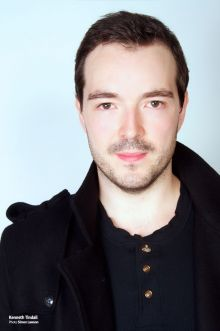
Kenneth Tindall
(c) 2015 Northern Ballet: all rights reserved
Reproduced wth kind permission of  Northern Ballet


Next Saturday will be the first night of Casanova which Northern Ballet will launch at Leeds Grand Theatre. Between the 11 March and 13 May 2017, the company will dance the ballet at Leeds, Edinburgh, Sheffield, Norwich, Milton Keynes, Cardiff, The Lowry and Sadler's Wells. Last Monday, the choreographer of the ballet, Kenneth Tindall, gave me an exclusive interview in which we discussed the ballet, his interests and hopes for the future. 

What impressed me most in my conversation with Kenneth Tindall was not so much what he said but the way he said it. Though he spoke softly he did so confidently, with a clear vision, and a determined focus. Tindall is still a young man and Casanova is his first full-length commission. It is obvious from the costumes on display at the Casanova Unmasked preview and from the number of venues in which this ballet is to be performed that a lot rides on this production. Tindall readily acknowledged the risks when I put it to him that this project could make or break Northern Ballet. Yet where others might see risk he sees opportunity. He emphasized the strengths of his dancers and of his creative team. He spoke enthusiastically of their capacity to deliver a quality of performance and production to be surpassed by none.

That enthusiasm was infectious. I must admit to some private concern when I first wrote about Casanova on 24 May 2016. Tindall had created one act ballets like The Architect and Luminous Junc*ture that had appealed to audiences and critics (including Mel, Joanna and me) but, again as he agreed when I put it to him, the jump from one-act to full-length is an exponential and qualitative leap - not merely doubling or tripling of effort.  However, after 45 minutes with Tindall my concerns evaporated. I am as confident as I can be of anything in ballet that this production will succeed spectacularly.

Tindall is used to overcoming odds. He was one of 8 children to be selected from 250 candidates at his audition for the Central School of Ballet. The nation’s ballet schools are full of talented students but only a handful find employment in a top regional ballet company. Of that handful only a few become principals (or, as Northern calls them, “premier dancers”). As a premier dancer, he had a considerable following. He was especially admired for his roles as Wadjet in Cleopatra and Heathcliff in Wuthering Heights. When his retirement was announced in the Friends of Northern Ballet newsletter. I wrote in Kenneth Tindall on 28 Feb 2015 that it:
“contained a headline that made me root for a tissue - just for a second - before I also raised a smile. The headline was "Kenneth Tindall is retiring" and that was the bit that made me sad for he is one of my favourite dancers but my sadness was tempered with the words ‘award-winning Kenneth is moving on to a career as a Freelance Choreographer after gaining recognition for his work with Northern Ballet and other artists.’"
I amplified the reason for my smile in the last paragraph:
“He has an international following which was brought home to me when I visited Amsterdam earlier this month (see The Dutch National Ballet Junior Company's best Performance yet 8 Feb 2015). His name came up whenever I mentioned Northern Ballet or Leeds at the party after the show. Perhaps not so surprising for a choreographer who has already won a fistful of awards and nominations. He is still a young man and his career - though meteoric - has only just begun. I look forward to great things.”
I believe that Casanova will be the first of those great things.

At Casanova Unmasked on 15 Feb 2017 Tindall had told us that a ballet on the life of Giacomo Casanova had been one of three ideas that he had pitched to Northern Ballet’s artistic director, David Nixon. Nixon liked the idea and invited Tindall to refine his proposal. Tindall did some reading and came across Ian Kelly’s biography. He approached Kelly for a licence but he and Kelly got on so well that he invited Kelly to help him develop the story. Though Kelly is an actor and dramatist this is the first time he will have worked on a ballet. I asked Tindall how he came to hear of the historical Casanova. He replied that he had seen some film or TV footage and an article in the New York Times.

I had asked Tindall about his collaboration with his composer Kerry Muzzey at Casanova Unmasked recalling historical accounts of Petipa’s collaboration with his composers. Tindall had replied that unlike Petipa’s relationship with his composers his relationship with Muzzey had been a two-way process. In the interview I asked him to elaborate on his answer as he was in Leeds and Muzzey was in Los Angeles. In the early days, Tindall said, there had been Skype calls at least three time times a week. These had tapered off to two a week and were continuing at that rate right up to the present. I asked whether these conversations ever involved Kelly. Tindall replied that they did. He might play some music to Kelly who might reply with an observation such as “I can really feel Venice.” That was important as he and Kelly aimed to create a ballet about the times of Casanova as well as on his life.

Tindall emphasised more than once the importance of the story. 
“You need to have a libretto,” he said, “that is everything.” 
The plot is based on Kelly’s book but, he explained, yet it is not the book. 
That prompted me to ask about one of the main characters in the ballet, Father Balbi. According to the synopsis, the ballet opens with:
“A mass in honour of the new French Ambassador Cardinal de Bernis. Among the church clerics is aspiring priest Giacomo Casanova who has arrived late with his pupils the Savorgnan sisters. In the congregation is Father Balbi who has with him a book forbidden by the church. Balbi gives the book to a curious Casanova. After the mass the Three Inquisitors accost Balbi believing him to be still in possession of the forbidden book”
From what I could remember from my own reading, Casanova first met Balbi in gaol. Balbi had facilitated Casanova’s escape from the Piombi (or “the Leads”) prison that adjoins the Doge’s palace. Casanova’s life was surely colourful enough without inventing incidents, I suggested. What about his relationship with his mother? Kelly had told us at Casanova Unmasked that Casanova had been born while his mother was in a play. Immediately after he had been delivered she returned on stage for the next act.

Tindall replied that Balbi had been introduced early in the ballet to illustrate the repression of ideas by the Inquisition, the thought police of 18th century Venice. The book that Balbi handed to Casanova in the ballet was the Kabbalah, the Jewish theological work that had been proscribed by the Venetian authorities. Both Balbi and Casanova had read the Kabbalah, Tindall added. It was quite possible for Casanova to have known Balbi and even for Balbi to have given Casanova a copy of the Kabbalah before they met in prison.

Tindall and Kelly had thought about including Casanova’s relationship with his mother in the context of his treatment of women but had rejected it because this ballet is not just about sex. Sex is important, Tindall continued, because Casanova had written so much about it and so explicitly in his life story, but he was a many-sided genius. The imperative was to show different sides to that life. Tindall noted that Casanova’s conquests averaged 4 a year which was not much for a libertine. Thinking of Leporello’s catalogue of his master’s conquests in Don Giovanni, I could not help but agree:
“In Italia seicento e quaranta;
In Alemagna duecento e trentuna;
Cento in Francia, in Turchia novantuna;
Ma in Ispagna son già mille e tre.”
“In Italy 640;
In Germany 231;
100 in France, 91 in Turkey;
But in Spain, 1003 and counting.”

Casanova’s philanderings had been on quite a different scale. I reminded Tindall of my speculation on whether Casanova might even be regarded as a proto-feminist. Quite possibly, he replied. Casanova said that he had never conquered a woman’s heart. He had always submitted.

That led us to the first of the extracts that we had seen at the preview on the 15 Feb 2017 where Casanova (danced by Giuliano Contadini) had met Bellino (Dreda Blow) and the way Tindall had represented by mime and dance the dropping of the mask and the developing of trust. I remarked that that had reminded me very much of Christopher Gable and Lynn Seymour in the balcony scene from MacMillan’s Romeo and Juliet (see Rachel Thomas Romeo and Juliet Dance Highlight: The Balcony pas de deux 3 Sept 2015 Royal Opera House website). Tindall willingly accepted that possibility. He had after all been trained in Central which had been founded by Gable and Gable had directed Northern Ballet. Gable had been an important influence on his work. “But” he added with emphasis, “so was David Nixon”. 

At Casanova Unmasked Nixon had said that “he had been allowed to play with Kenny toys” in that he was acting as Tindall’s ballet master. “Quite a role reversal having been directed by Nixon for 14 years” I suggested. Tindall agreed adding that Nixon was performing the role of ballet master to perfection.

We talked about the role of choreographer which Tindall compared to that of a film director. The roles were similar and maybe even converging as techniques and technology that had been developed for the cinema were increasingly used in ballet. I recalled the filming of The Architect to which project I had contributed (see Tindall's Architect - How to Get a Piece of the Action - Literally! 7 June 2014). I asked whether another film might result from Casanova. Tindall’s eyes sparkled. No concrete plans as yet, he said, but would it not be splendid to film Act I in Venice and Act II in Paris.
“How do choreographers learn their trade?” I asked.
“They ask as they go along” was the reply. “For instance, they ask the lighting designer why he places a spot there? and ‘what would happen if he changed a filter here?”
I was reminded of my conversation with Cristiano Principato in Trecate (my Outstanding Young Choreographer of 2016 28 Dec 2016). He told me that he even had to operate the lighting himself.
“He is quite right,” added Tindall. His message to Principato and any other aspiring choreographer was:
“a choreographer has to know everybody’s job. For instance, I asked Christopher Oram our designer ‘How do you start with scenery or a character’s clothes.”
I have never been a dancer but I have done several intensive workshops where we started with floor exercises at 10:00, then 90 minutes class followed by wall to wall rehearsals until cool down at 17:00. That was exhausting enough for me but dancers have to pack in a performance on top and maybe even a matinee as well. 
“How do you fit all that in?” I asked.
“When you take on a project like this you put your life on hold” Tindall replied.  “You are always thinking about it, running scenes through your mind, even in your sleep.”
“But you need to turn it off occasionally” he quickly added, “otherwise you would go insane”
I asked Tindall how he switched off. “Meditation” was the reply, “and the cinema.” Tindall added that he is a great film buff. He even refers to the cinema as “church.”

We talked about the promotion of the ballet. “You see posters for the ballet everywhere in Leeds” I noted. He replied that it had been marketed very cleverly and that advanced ticket sales at all venues had been encouraging.
“This ballet will compare with anything that could have emerged from the Royal Opera’s workshops” but at a fraction of the cost.”
I reflected that the sets and costumes have to be robust to be brought out time and time again then packed away in a lorry for another destination, possibly on the other side of the country. I noted that Oram had never designed for the ballet before. Tindall saw that as an advantage. Oram will bring a fresh approach to his task as Kelly has done with the libretto.

“So what’s your next project?” I asked, “if you can tell me without risking commercial confidentiality.”
The answer was a triple bill in Germany 8 days later.

As for the longer term, Tindall would love his work to be performed in America.
“You never know” I replied, “only this weekend we have made contact with a company in Miami that seems to have a lot in common with Northern Ballet (see Miami City Ballet 26 Feb 2017. “I would cross the Atlantic to see your work in the USA” I added.
I asked him whether he aspired to be a resident choreographer somewhere. He replied that he had thought of it.
“How about forming his company or directing an existing one?”
That, too, was a possibility but for now he was content with freelancing.

“And how about film?” I suggested. “You would not be the first choreographer to cross over to that medium? Look at Helpmann, Shearer........”
“And Gable” he added.
Yet again his eyes lit up.
We discussed the convergence of film and ballet, experiments in 360 and other technologies. I mentioned Peter Leung’s Night Fall and the Royal Ballet’s The Nutcracker (see Virtual Reality in Ballet 13 Sep 2016 We could have explored that topic alone for at least another 45 minutes and maybe longer but Tindall had to prepare for a rehearsal.

Kenneth Tindall is much more than a choreographer. At the risk of embarrassing him, I would say that he, like the subject of his ballet, is a many-sided genius.

I shall be at the premiere next week and my review will appear next Sunday.  I wish the casts of this production "chookas", "toi-toi-toi" or whatever greeting theatrical and balletic tradition permits.

Tuesday, 28 February 2017

Bintley's Cinders


Vimeo Licence


Between tomorrow and Saturday, the Birmingham Royal Ballet will make the first of its two annual visits to The Lowry. We always look forward to it. Like snowdrops and crocuses, it is a harbinger of Spring. The advancement of the clocks (one hour's less sleep that we never grumble about) and slightly warmer days, Pennine lambs, Easter eggs are and the first trips to the seaside are just weeks away. So welcome dear BRB to our region.

This week the company will perform David Bintley's Cinderella which he created in 2010. Like Hampson and Wheeldon but unlike Nixon or James, Bintley uses Prokofiev's score. The production won the best classical choreography award of the Critics' Circle National Dance Awards in 2011.

The company will present four shows at 19:30 each day it is here as well as matinees on Thursday and Saturday. On Friday there will be a pre-performance talk at 18:30 on Friday. Sadly, the company is competing for my patronage with Beautiful Ballet Black at the Barbican and Sergei Polunin's Dancer so I will only get one chance to see Cinderella on this visit.   I shall see the Wednesday evening performance in which Jenna Roberts will dance the title role, William Bracewell the price, Marion Tait the stepmother and Samara Downs and Laura Purkis her daughters. Sadly I shall miss Delia Matthews, Tyrone Singleton, Celine Gittens and Ruth Brill this time as I shall be in the Barbican on Saturday when they are on stage but I wish them toi, toi and chookas and hope they all enjoy their stay in my native city.

This is one of the highlights of the year for balletomanes in the North of England. Tey are assured of a very warm welcome.

Saturday, 7 January 2017

Double Latin: Contemporary Dance from Cuba and Cherkaoui’s m¡longa


Standard YouTube Licence 


In The Year of the Swans: My Review of 2016 27 Dec 2016 I wrote that two of the highlights of the year were the visits by NDT2 (see NDT2 at the Lowry 24 April 2016 and Prickling - NDT2 in Bradford 1 May 2016) and Alvin Ailey (see Alvin Ailey in Bradford 29 Sept 2016 and Alvin Ailey in Bradford 8 Oct 2016) to the Alhambra and Lowry. The Alhambra and Lowry are members of a group of theatres in Great Britain and Ireland known as Dance Consortium that collaborate to bring leading dance companies from around the world to the UK and Republic of Ireland. Their website is worth visiting not just for news of current tours but also for the vast accumulation of articles, videos and other resources on dance companies, choreographers and artists to be accessed through the Features page.

This year, the Dance Consortium will bring two Latin American companies to this country:
There are very interesting companies and I look forward to seeing both.  

The Cuban company will present three works that have not yet been seen in the UK: Reversible by Annabelle López Ochoa, The Listening Room by Theo Clinkard and Matria Etnocentra  by George Céspedes. Reversible is described by the Dance Consortium website as:
"Hot Cuban passions, sass and wit all meet in Reversible by Annabelle Lopez Ochoa. It delves deep into the path of gender matters, sudden changes in relationships, the games, rivalry and pleasure of being opponents and dissidents. To an eclectic soundtrack including music by Jean-Claude Kerinec & Staff Elmeddah, Kroke, Scanner and Eric Vaarzon Morel, Reversible is a captivating comment on gender, spoken in Lopez Ochoa’s trademark quirky style, this time with a Cuban accent."
The Listening Room was partly funded by the British Council as part of the Islas Creatvas collaboration between the UK and Cuba. The music is by Steve Reich and the work is described as "a celebration of expressive and instinctive dancing" with the dancers in headphones responding to an alternate soundtrack of wildly diverse music and text.   Matria Etnocentra is said to portray "the tension between the fluidity of music and dance and the regimented nature of daily life in Cuba."

Having travelled extensively through Argentina in 1988 and 1998 I am particularly looking forward to Cherkaoui's m¡longa. According to Wikipedia
 "Milonga dance incorporates the same basic elements as Tango but permits a greater relaxation of legs and body. Movement is normally faster, and pauses are less common. It is usually a kind of rhythmic walking without complicated figures, with a more humorous and rustic style in contrast with the serious and dramatic Tango."
Choreographed by  Sidi Larbi Cherkaoui consists of 10 tango dancers from Buenos Aires, two contemporary dancers and a tango band of five musicians. This dance form is enthralling almost hypnotic to watch. Its antecedents are unknown but it developed in the area of Buenos Aires known as La Boca (or "Mouth") which has a history as colourful as the decoration of its houses.

Monday, 5 December 2016

Ballet Cymru's "Sleeping Beauty Moment"

The Millennium Centre
(c) 2016 Jane Lambert: all rights reserved


Ballet Cymru Little Red Riding Hood and Three Little Pigs Millennium Centre, 4 Dec 2016

Yesterday I was fortunate enough to attend an event which may be as significant for Ballet Cymru as the first performance of The Sleeping Beauty by the Sadler's Wells Ballet in the Royal Opera House on 20 Feb 1946 was for the Royal Ballet. That performance of The Sleeping Beauty made the Royal Ballet. There is every chance that yesterday's performance of Little Red Riding Hood and the Three Little Pigs before a packed house at the Wales Millennium Centre with the entire BBC National Orchestra of Wales will do the same for Ballet Cymru. The performance celebrated two significant anniversaries: the centenary of Roald Dahl's birth in Llandaff  and the 30th anniversary of the formation of Ballet Cymru (see Our History on Ballet Cymru's website).

The show took place in the Donald Gordon Theatre which is a massive auditorium as my photograph shows. According to Wikipedia it has 1,897 seats which makes that auditorium significantly larger than The Lowry with 1,730, the Leeds Grand Theatre with 1,550. and the Bradford Alhambra with 1,440 and only slightly smaller than the Royal Opera House and the Coliseum. There was barely an empty seat in the house.  With a population of only 346,000, Cardiff is not a massive city. To attract nearly 1,900 people tat 16:00 in the run-up to Christmas speaks volumes for the regard that members of the public have for Ballet Cymru.

I had seen the show at the Riverfront Theatre in Newport on 21 May 2016 and reviewed it in Ballet Cymru's Summer Tour 22 May 2016. David Murley saw it in the Lilian Baylis Studio at Sadler's Wells last week and reviewed it in Little Red Riding Hood comes to London on 2 Dec 2016. On each of those occasions the dancers performed to recorded music. Dancing to a massive symphony orchestra presented logistical questions such as where to put the musicians. They were too numerous for an orchestra pit and part of the attraction was to experience the orchestra playing a new work.

Donald Gordon Theatre
(c) 2016 Jane Elizabeth Lambert: all rights reserved
The answer was to put the orchestra on stage as in Elite Syncopations. Just before the show started the musicians and dancers assembled behind the screen in the photo to the left. As the house lights dimmed, silhouettes of the musicians and dancers could be made out. The curtain rose and the lights focused on Mark Griffiths who began the story by introducing the wolf and other forest creatures. I had feared that a work that had been designed for small or medium theatres would be swamped by the sheer expanse of the auditorium but the orchestra scaled up the production naturally and seamlessly.

The role of Little Red Riding Hood had been danced by Lydia Arnoux. I don't know whether Darius James and Amy Doughty had created it for her but she was well suited to it. When I read in David Murley's review that Anna Pujol had danced Little Red Riding Hood in London I was intrigued because Pujol is taller and dances differently. Pujol certainly impressed David Murley:
"Spanish company Artist Anna Pujol portrayed a likeable, empowered, no-nonsense and even glamorous Little Red Riding Hood. Pujol has sass and class. There were moments speckled throughout the piece when she was a budding Cyd Charisse."
I was impressed too. She made the role her own. There are a lot of chaînés and other  pyrotechnics in James and Doughty's choreography which Pujol executed exquisitely.

All the dancers performed well and it would be unfair to single any out for special praise but I loved Robbie Moorcroft's depiction of the "bad grandma", Dylan Waddell's mean wolf and half pantomime cow and Miguel Fernantes's other half. It was as always good to see Krystal Lowe on stage again as a guest artist.

I met the dancers briefly at a small party after the show. They told me about the thrill they experienced at dancing to a full house in a massive theatre. They also loved dancing to live musicians. They want more of both. They are ambitious. They want to see their company grow. They are looking forward to Farnham Maltings on Thursday but they are ready for bigger things now.

Other Reviews

Mike Smith  Little Red Riding Hood and The Three Little Pigs, Ballet Cymru, BBC National Orchestra of Wales, Wales Millennium Centre 5 Dec 2016 Art Scene in Wales