Showing posts with label Inala. Show all posts

Wednesday, 15 July 2015

Inala at the Wells

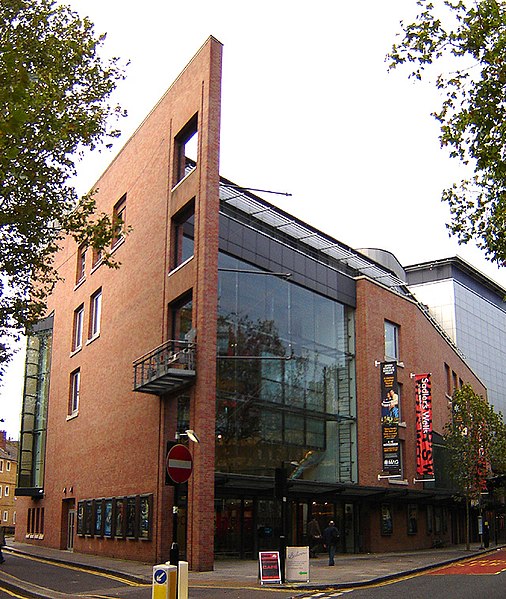
Sadler's Wells, London
Source Wikipedia


Inala, Sadler's Wells, 10 July 2015

Isn't it strange that you can see exactly the same show with exactly the same casts in performances just days apart and yet have two completely different experiences.  I saw Inala in Bradford on 25 June 2015 (see Inala at the Alhambra 26 June 2015). I reported that the show was met with "a standing ovation and a lot of whooping and cheering." There was nothing like that when I saw the show again in London on 10 July 2915. A lot of polite, even enthusiastic clapping but a much more restrained reception.

That does not mean that the London audience was any less appreciative. The differences in audience reactions were discussed by Marcelo Gomes in a recent question and answer session. He explained that a quiet audience in Japan is a good sign because everybody is concentrating. In Brazil it is the reverse because a contented audience would be buzzing. London audiences are very undemonstrative compared to those in the North because they think they have seen everything. .

Although I liked Inala when I saw it in Bradford I enjoyed it rather more second time round. There are a number of reasons for that. Having seen the show before I knew what to look out for. Another reason why I liked it better is that I was able to buy a programme in London and could therefore follow the show. A third reason is that I sat in the second circle in Sadler's Wells and could see the the lighting displays and the patterns of the dancing on the stage which I had missed in Bradford because they were not visible from the stalls.

As in Bradford the best part of the show was Ladysmith Black Mambazo's singing. Except for the last one where the singers waved goodbye it was quite impossible to guess the meaning of the songs because they were sung in Zulu. The advantage of the programme is that the "Score" page summarized the songs . Some of those summaries seem very strange to a modern British audience:
All those cattle I used to pay the dowry should be paid back, When will the cows come back again?
That song was answered by
"The cows will be returned. The bridge has failed. They will  be returned. All of them." 
The dancing expressed the music of each song but did not relate directly to their subject matter  and perhaps that was a missed opportunity. A ballet could have been created for each of those songs and individual dancers could have represented a character in the song.  For instance, the theme of Warmuhle Intombi is
"You are so beautiful young lady! It's time to choose the way you go and the one to be with!"
That suggests a pas de deux or perhaps a pas de trois and that may even have been what we got but my recollection of the dancing is that it was all abstract and that all the dances formed one single choreographic piece.

Although the show is marketed as a Zulu ballet it is more musical theatre than ballet. It is an opportunity to hear a beautiful style of singing which is not often heard in this country and to see some exuberant dancing. If you like that sort of thing then this show is for you. But don't go to the show expecting ballet for that is not what you will get.

Friday, 26 June 2015

Inala at the Alhambra

Bradford Alhambra


Inala, Alhambra, Bradford, 26 June 2015

On 29 Sept 2013 dancers from most of the major companies of the United Kingdom performed in a gala at Sadler's Wells for Yorkshire Ballet Summer School (see More Things I do for my Art - Autumn Gala of Dance and Song 30 Sept 2013). Rambert's contribution was Inala danced by Dane Hurst to the music of Ladysmith Black Mambazo. On that occasion Hurst performed to a recording of the ensemble's music. I remember that it was one of the highlifghts of the show. Less than a year later Hurst and other dancers from his company and elsewhere together with Ladysmith Black Mambazo itself and accompanying musicians appeared at the Edinburgh Festival in a full length performance of song and dance also called Inala.

The full length work was received very well. The artists were invited to the Royal Variety Performance on 13 Nov 2014. They also performed to full houses at Sadler's Wells and other venues in the UK (see About the Show on the Inala website), Earlier this month they performed in Moscow and they are now on the second leg of another UK tour which started in Oxford on 23 June 2015 (see "Tickets and Tour"). Last night I was them at the Bradford Alhambra. I hope to catch them again at Sadler's Wells on the 10 July 2015.

They certainly seem to be very popular. On Tuesday I caught a feature on Inala: Combining music from Ladysmith Black Mambazo and contemporary dance on Radio 4's Front Row in which Albert Mazibuko said that the company received standing ovations "most of the time." In the same interview Pietra Mello-Pitman, the show's executive producer who had danced in the Royal Ballet said that was something she had never received in The Sleeping Beauty no matter how beautiful.

So, what is this show like? You can get some idea from the YouTube trailer and a little more insight from  Introducing INALA - A Zulu Ballet. Singers, musicians and dancers share the same stage. There is a very simple backdrop of a wide sky against a parched landscape with three clouds that reminded me of aircraft vapour trails. The costumes are also simple. The singers appear in long shirts or tunics with geometric dancers. The male dancers are in black. The women are in black tops with different coloured skirts. There were changes of head dress.  There were feathers in the head gear that seemed to indicate different types of fowl. The backdrop changes were generated by the lighting and I have to single out Ben Cracknell for praise for some impressive lighting design.

I can't tell you much about the story because there were no programmes and hence no cast sheets. In an effort to find out why and how I could get one I introduced myself as a blogger to a chap with a North American accent who was selling DVDs in a concession booth. He told me that the programmes had been sent to Oxford. "Well Oxford, Bradford, what's the difference?" remarked my companion ironically, "They are both 'fords'." So far as I could see the show charted a day in rural South Africa with a trip to the city for there was a scene with car horns and searchlights. It ended with a sort of lullaby as the lights dimmed with the singers waving to the audience followed by a final few minutes when each of the dancers did a turn.

I have the same problem in telling you who took part in last night's show though I think I recognized Dane Hurst and some other dancers from Rambert. The best I can do in that regard is to refer you to the "Cast and Creatives" page of the show's website. I hope that the company recover their programmes from Oxford by the time I see the show again in London. I have to say that had I not seen the Yorkshire Ballet Summer School gala or heard Front Row I would have been able to say very little about this show.

The show is advertised as a "Zulu ballet" and there are indeed some balletic jumps and pas de deux but there seemed to me to be rather more contemporary dance than ballet.  There was, for example, no pointe work.  That is of course what I would have expected from a show that was choreographed by Mark Baldwin, Rambert's artistic director. Some of the biggest "oohs" and "ahs" from the audience were for jumps and lifts which you see in almost any ballet. They were well executed but not exactly out of the ordinary.

As had happened the previous night in Sheffield for The Car Man (see Motoring 25 June 2015) there was a standing ovation and a lot of whooping and cheering with which I did not join in. I thought it was good but not all that good. The idea of combining singing and dancing is not new. Bintley's Carmina Burana last Saturday - which I have still to review - was miles better in that regard (see In Praise of Bintley 21 June 2015). Neither is putting the musicians on stage. MacMillan did it more elegantly with Elite Syncopations. I think that this was the first time many members of the audience had seen grands jetés and tours en l'air and ballet could generate that sort of enthusiasm with the public if it were better marketed.

The element of the show that I most enjoyed was the singing which was magnificent. I recommend the show for that alone. There were also touches of humour. There was a sequence when the dancers attempted a jump. One pretended to clutch his thigh in agony. Another just gesticulated his refusal to try something so unwise. It was good entertainment and I shall report on the show again after I see it in London next month.