
Dance News from around the UK and the Rest of the World
Showing posts with label Sadler's Wells. Show all posts
Showing posts with label Sadler's Wells. Show all posts
Friday, 8 November 2019
Beautiful Ballet Black's 2020 Season
Standard YouTube Licence
Beautiful Ballet Black has been so successful that it sold every seat in the house for its performances at Stratford and Leeds. I am on the waiting list at the Stan and Audrey but at #13 I am not holding out much hope of getting one for their show next week.
I shouldn't grumble because I saw their wonderful performance of The Suit at Sadler's Wells on 30 Oct and the triple bill at The Barbican in March which I described as "stunning". Moreover, I have just received an email which I believe to have been sent to all Friends of Ballet Black alerting me to the sale of tickets for the launch of the company's new season at The Barbican between the 26 and 29 March 2020. Two new ballets will be presented by the company's Mthuthuzeli November and the Royal Ballet's Will Tuckett. November created Ingoma which is one of the works on the current tour while Tuckett has contributed Depouillement which attracted me to Ballet Black in the first place.
I also note from the email that Ballet Black has acquired a new dancer, namely Alexander Fadayiro. I am not sure whether I have had the opportunity to see him dance. I do not remember him in The Suit but I could well be mistaken. However, I see that he has danced with New Adventures and that he trained at the Central School of Ballet.
If you love Ballet Black as much as I do I would strongly recommend its Friends Circle. The subscription is only £40 a year which is about the cost of an extra theatre ticket. Friends are invited to rehearsals and often have an opportunity to discuss the work with the artists after the show. I cannot attend many of those events as they take place in London but it is a practical way to support the company, acknowledge its work in the past and promote its values and aspirations.
Finally, there is the merchandise page. I bought the "I ❤ Ballet Black" tee-shirt the first time I saw the company at the Bernie Grant Centre in Tottenham in 2013 and I have worn it proudly everywhere there are balletomanes from Taynuilt in Argyll to Trecate in Piedmont. I have made it my business to make folk aware of the beauty in many senses and at many levels of Ballet Black.

Monday, 1 July 2019
[Un}leashed
Standard YouTube Licence
Birmingham Royal Baller [Un]leashed (Lyric Pieces, Sense of Time and Peter and the Wolf) Sadler's Wells, 25 June 2019, 19:30
I enjoyed Peter and the Wolf so much when I saw it in Shrewsbury on 18 May 2019 that I booked to see it again in London on 25 June 2019. Sadly, that performance clashed with the transmission of Nothern Ballet's Victoria which I believe to have been the first time that Northern Ballet had streamed its output to cinemas. Although I always prefer stage to screen, the big advantage of HDTV is that offers close-ups of the artists, their costumes and the sets. Having seen the show in Leeds and Leicester several curiosities on my part could have been satisfied.
Returning to Peter and the Wolf, it appeared at the end of a triple bill with Jessica Lang's Lyric Pieces and Didy Veldman's Sense of Time. The title of the show was [Un]leashed and I wondered why. I considered whether it was something to do with the wolf. It would explain the letters in square brackets for the animal had been leashed in the sense that it was lassoed by Peter and led off to the zoo. The nearest I got to an explanation in the programme notes was in the welcome from David Bintley. He wrote that "[Un]leashed epitomises Birmingham Royal Ballet's enthusiasm for and commitment to new work." I have to say that it had never previously occurred to me that the Birmingham Royal Ballet's artists had been constrained in any way. With Brill, Holder and Day to name just three, the BRB has always struck me as a prodigiously creative company.
Lyric Pieces is the second of Lang's pieces that I have seen. In 2016 she contributed Wink based on Shakespeare's 43rd sonnet to commemorate the 400th anniversary of his death (see Birmingham Royal Ballet brings Shakespeare to York 18 May 2016). The piece consists of 10 dances set to selected short solo piano compositions by Edward Grieg. With titles like Elves Dance, Peasants Song, Norwegian Melody and March of the Trolls they are clearly connected with Norwegian folklore. The dancers' space is defined or in some cases marked by expandable or contractable black kraft paper. They constructed fan-like props for themselves. I enjoyed all of the pieces, particularly Phantom, a duet by Celine Gittens and Brandon Lawrence, and March of the Trolls by Maureya Lebowitz, Yvette Knight, Yijing Zhang, James Barton and Max Maslen.
Didy Veldman's Sense of Time explores our relationship with time. Possibly because busses, trains and aeroplanes run to timetables the central feature of this piece is a pile of suitcases some of which fall away. Others are removed to reveal cosy boltholes through which artists climb. The piece is not just about the dominance of time. It is also about time as a resource and how we sometimes squander it. In one scene the dancers appear to squint at mobile phones. The score was composed by Gabriel Prokofiev who also created the music for Shobana Jeyasingh's La Bayadere - The Ninth Life. There is a sort of connection with Peter and the Wolf as Gabriel Prokofiev is Sergei Prokofiev's grandson. The music combines the sort of melodies the grandfather could have written with strident electronic sounds. Gittens, Lawrence, Zhang and Knight were in Sense of Time together with Tyrone Singleton, Delia Matthews, Gabriel Anderson, Edivaldo Souza da Silva, Yaogiang Shang, Lachlan Monaghan, Beatrice Parma and Aitor Galende.
Even though I liked Lyric Pieces and Sense of Time very much, the highlight for me was Peter and the Wolf. The cast was the same as it had been in Shrewsbury except that Brooke Ray was able to dance the duck. Laura Day danced Peter as charmingly as she did in Theatre Severn, Matthias Dingman the wold, Tzu-Chao Chou the bird, Samara Downs the cat, James Barton the grandfather and Tori Forsyth-Hacken, Alys Shee and Eilis Small the hunters. As I forecast in my review of their performance in Shrewsbury, the audience at Sadler's Wells loved Peter and the Wolf. I don't think that they danced any better in London than they did in Shrewsbury but a London audience somehow lifts a show. I think that is because a show is a sort of conversation. An audience that sees a lot of dance appreciates a good show and responds accordingly. That, in turn, is picked up by the cast who shine even more. It was a great atmosphere and it was lovely to see the choreographer acknowledging our applause at the reverence.
Peter and the Wolf have more performances in Plymouth in October and children will be introduced to that ballet with a special hour-long, interactive show, called First Steps: Peter and the Wolf. I hope that they will bring it to the Lowry or some other Northern theatre one day. Sadly, we have to wait until March to see them again but as they will bring us their Swan Lake it will be worth the wait. Two shows that I shall try to catch in Birmingham will be Giselle and The Nutcracker. I also recommend The Nutcracker in the Albert Hall.
Monday, 5 June 2017
Hampson!
Standard YouTube Licence
Whenever the London Ballet Circle has a special guest such as Li-Cunxin or a special event such as the Circle's 70th anniversary celebrations last year, the Dancing Times's Gerald Dowler is asked to play a special role. Dowler has a profound knowledge of the ballet and a pleasant interviewing style that can coax the best from a guest. Dowler's services have been called upon tonight as he will interview Christopher Hampson, Scottish Ballet's artistic director and chief executive.
Hampson is a Mancunian like me and he is one of the artists I most admire in the performing arts. His work is also admired by my readers because my reviews of Hansel and Gretel, Cinderella, Storyville and other works attract a lot of page hits. In February of this year, I actually met him in Newcastle and seized the opportunity to tell him how much I admired his work.
For those who would like to learn a little more about Hampson, the London Ballet Circle has published this potted biography on its website:
"Christopher joined Scottish Ballet as Artistic Director in August 2012 and was appointed Artistic Director / Chief Executive of Scottish Ballet in 2015. Christopher trained at the Royal Ballet Schools. His choreographic work began there and continued at English National Ballet (ENB), where he danced until 1999 and for whom he subsequently created numerous award-winning works, including Double Concerto, Perpetuum Mobile, Country Garden, Concerto Grosso and The Nutcracker. Christopher’s Romeo and Juliet, created for the Royal New Zealand Ballet (RNZB), was nominated for a Laurence Olivier Award (Best New Production 2005) and his production of Giselle for the National Theatre in Prague has been performed every year since its premiere in 2004. Christopher created Sinfonietta Giocosa for the Atlanta Ballet (USA) in 2006 and after a New York tour it received its UK premiere with ENB in 2007. He created Cinderella for RNZB in 2007, which was subsequently hailed as Best New Production by the New Zealand Herald and televised by TVNZ in 2009. His work has toured Australia, China, the USA and throughout Europe. Other commissions include, Dear Norman (Royal Ballet, 2009); Sextet (Ballet Black/ROH2, 2010); Silhouette (RNZB, 2010), Rite of Spring (Atlanta Ballet, 2011), Storyville (Ballet Black/ROH2, 2012) nominated for a National Dance Award 2012, and Hansel and Gretel (Scottish Ballet 2013). Christopher is co-founder of the International Ballet Masterclasses in Prague and has been a guest teacher for English National Ballet, Royal Swedish Ballet, Royal New Zealand Ballet, Hong Kong Ballet, Atlanta Ballet, Matthew Bourne’s New Adventures and the Genée International Ballet Competition. Christopher’s work now forms part of the Solo Seal Award for the Royal Academy of Dance. Christopher most recently gave a talk on ‘Creative Thinking’ for TEDx Glasgow and developed and led the inaugural Young Rural Retreat for Aspiring Leaders, in association with Dance East last summer."Even though I really do not have the time to swan off to London today I shall be on the 16:40 from Donny to London and the 22:57 back. I am traipsing down to the Smoke tonight mainly out of respect for Hampson but also partly out of love for Scottish Ballet which I followed even before they became Scottish and also partly as a minor act of defiance to those religious fanatics who have wrought so much harm to my native city and national capital.
Scottish Ballet is making one of its rare and highly valued visits south of the Tweed and Solway this week. Between Wednesday and Saturday, it will dance Emergence and MC 14/22 (ceci est mon corps) at Sadler's Wells. I will be there on Saturday evening.
If you are free tonight, the interview takes place between 19:30 and 20:30 tonight on the 1st floor of the Civil Service Club at 13 - 15 Great Scotland Yard, London SW1A 2HJ. The Club is next to the Nigerian embassy and on several bus routes. The nearest Underground stations are Charing Cross and Embankment.
Friday, 2 June 2017
Ballet Cymru's Shadow Aspect
Standard YouTube Licence
As a sign of increasing confidence of its special place in British Ballet following its Sleeping Beauty Moment at the Millennium Centre in Cardiff before Christmas and its triumphant launch of The Light Princess in Newport last month, Ballet Cymru has announced that it will stage Shadow Aspect a new evening-length work by Tim Podesta starring the Royal Ballet's guest artist Mara Galeazzi at the Riverfront Theatre in Newport on 3 and 4 Nov and at Sadler's Wells on 5 Nov.
According to the Riverfront's website
"Shadow Aspect refers to an unconscious aspect of the personality that the conscious mind does not identify in itself. In short, the shadow is the dark side.The Royal Ballet's website adds:
'To know yourself, you must accept your dark side. To deal with others' dark sides, you must also know your darkside.' Carl Jung"
"Galeazzi was born in Brescia and from the age of ten trained at the school of La Scala, Milan. She was awarded a Cavaliere del Lavoro medal in 2009 and the Positano Prize in 2008. Signature roles with The Royal Ballet included Juliet, Anastasia, Tatiana (Onegin), the Firebird, Giselle and Mary Vetsera (Mayerling), the role in which she made her farewell appearance as a Principal. Since retiring she has returned to The Royal Ballet to create the role of Mother (Ludovic Ondiviela’s Cassandra) and to collaborate in Wayne McGregor’s Woolf Works. Further dance work since leaving the Company includes founding the dance group M&T in Motion with Australian choreographer Tim Podesta. In 2016 she created her first piece of choreography, Remembrance, performed with Covent Garden Dance Company in Hatch House, Wiltshire."Galeazzi is one of the great ballerinas of our age and I am looking forward to seeing her interaction with the brilliant young artists of Ballet Cymru.
Ticket prices in Newport to see a star of this calibre are unbelievable: Red seats - £14.50, concessions £12.50, dance schools £10.50, Yellow seats - £12.50, concessions - £10.50, dance schools £9. These are Eastern Europe - no Cuban - prices, people, in a leading British theatre in the second largest city of Wales. To bag your ticket before the Bristolians, Londoners and your neighbours at the Syddfa Batent cotton on click this link today. You won't get in to see anything like this at these prices in Llundain I'll be bound.
Wednesday, 29 March 2017
Isabelle Brouwers in Kibera
Standard YouTube Licence
Over 4 years have elapsed since I first wrote about Mike Wamaya's ballet class in Kibera (see What can be achieved by a good teacher 3 March 2013). The world took an interest in that class towards the end of last year when The Guardian featured it on its Facebook page and other news outlets followed suit (see Recognition for the Kibera Ballet Class 9 Jan 2017).
Shortly after that feature appeared, dancers and companies in Britain offered help. Birmingham Royal Ballet sent pointe shoes to the class (see Thank you Birmingham Royal Ballet 17 Jan 2017). Yesterday, after being reminded of its blog by Feedspot (see We hate to blow our own trumpet but .... 28 March 2017) I read that Isabelle Brouwers of English National Ballet had actually been to Kibera and given a class there (see Isabelle Brouwers teaches ballet to Kenyan children in Kibera slum 8 Feb 2017 ENB Blog).
I have always had a lot of affection for English National Ballet ever since I attended their Christmas performances of The Nutcracker at the Festival Hall. I have a high regard for that company and their artistic director, Tamara Rojo, not only for their work on stage but also for their work for the community, and in particular, their classes for patients with Parkinson's disease (see ENB's Big Give to Dance for Parkinson's 25 Nov 2016). It came as no surprise to read:
"Backed up by my ever supporting parents, and my wonderful colleagues and Artistic Director Tamara Rojo at the English National Ballet, who helped me gather an incredible amount of dancewear and shoe donations, I was all set for what I knew would be one of the most eye opening and life changing events of my life!"The article on Brouwers's visit is a very good read and I commend it to my own readers.
I also commend the triple bill of ballets by Pina Bausch, William Forsythe and Hans van Manen at Sadler's Wells this week which I wish I could get to see. If any of my readers wants to offer me a review I will be very pleased to publish it.
Saturday, 4 March 2017
"A Many Sided Genius" - Tindall on Casanova
 |
| Kenneth Tindall
(c) 2015 Northern Ballet: all rights reserved
Reproduced wth kind permission of Northern Ballet |
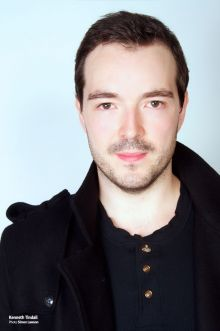
Next Saturday will be the first night of Casanova which Northern Ballet will launch at Leeds Grand Theatre. Between the 11 March and 13 May 2017, the company will dance the ballet at Leeds, Edinburgh, Sheffield, Norwich, Milton Keynes, Cardiff, The Lowry and Sadler's Wells. Last Monday, the choreographer of the ballet, Kenneth Tindall, gave me an exclusive interview in which we discussed the ballet, his interests and hopes for the future.
That enthusiasm was infectious. I must admit to some private concern when I first wrote about Casanova on 24 May 2016. Tindall had created one act ballets like The Architect and Luminous Junc*ture that had appealed to audiences and critics (including Mel, Joanna and me) but, again as he agreed when I put it to him, the jump from one-act to full-length is an exponential and qualitative leap - not merely doubling or tripling of effort. However, after 45 minutes with Tindall my concerns evaporated. I am as confident as I can be of anything in ballet that this production will succeed spectacularly.
“contained a headline that made me root for a tissue - just for a second - before I also raised a smile. The headline was "Kenneth Tindall is retiring" and that was the bit that made me sad for he is one of my favourite dancers but my sadness was tempered with the words ‘award-winning Kenneth is moving on to a career as a Freelance Choreographer after gaining recognition for his work with Northern Ballet and other artists.’"I amplified the reason for my smile in the last paragraph:
“He has an international following which was brought home to me when I visited Amsterdam earlier this month (see The Dutch National Ballet Junior Company's best Performance yet 8 Feb 2015). His name came up whenever I mentioned Northern Ballet or Leeds at the party after the show. Perhaps not so surprising for a choreographer who has already won a fistful of awards and nominations. He is still a young man and his career - though meteoric - has only just begun. I look forward to great things.”I believe that Casanova will be the first of those great things.
At Casanova Unmasked on 15 Feb 2017 Tindall had told us that a ballet on the life of Giacomo Casanova had been one of three ideas that he had pitched to Northern Ballet’s artistic director, David Nixon. Nixon liked the idea and invited Tindall to refine his proposal. Tindall did some reading and came across Ian Kelly’s biography. He approached Kelly for a licence but he and Kelly got on so well that he invited Kelly to help him develop the story. Though Kelly is an actor and dramatist this is the first time he will have worked on a ballet. I asked Tindall how he came to hear of the historical Casanova. He replied that he had seen some film or TV footage and an article in the New York Times.
I had asked Tindall about his collaboration with his composer Kerry Muzzey at Casanova Unmasked recalling historical accounts of Petipa’s collaboration with his composers. Tindall had replied that unlike Petipa’s relationship with his composers his relationship with Muzzey had been a two-way process. In the interview I asked him to elaborate on his answer as he was in Leeds and Muzzey was in Los Angeles. In the early days, Tindall said, there had been Skype calls at least three time times a week. These had tapered off to two a week and were continuing at that rate right up to the present. I asked whether these conversations ever involved Kelly. Tindall replied that they did. He might play some music to Kelly who might reply with an observation such as “I can really feel Venice.” That was important as he and Kelly aimed to create a ballet about the times of Casanova as well as on his life.
Tindall emphasised more than once the importance of the story.
“You need to have a libretto,” he said, “that is everything.”
The plot is based on Kelly’s book but, he explained, yet it is not the book.
That prompted me to ask about one of the main characters in the ballet, Father Balbi. According to the synopsis, the ballet opens with:
“A mass in honour of the new French Ambassador Cardinal de Bernis. Among the church clerics is aspiring priest Giacomo Casanova who has arrived late with his pupils the Savorgnan sisters. In the congregation is Father Balbi who has with him a book forbidden by the church. Balbi gives the book to a curious Casanova. After the mass the Three Inquisitors accost Balbi believing him to be still in possession of the forbidden book”From what I could remember from my own reading, Casanova first met Balbi in gaol. Balbi had facilitated Casanova’s escape from the Piombi (or “the Leads”) prison that adjoins the Doge’s palace. Casanova’s life was surely colourful enough without inventing incidents, I suggested. What about his relationship with his mother? Kelly had told us at Casanova Unmasked that Casanova had been born while his mother was in a play. Immediately after he had been delivered she returned on stage for the next act.
Tindall replied that Balbi had been introduced early in the ballet to illustrate the repression of ideas by the Inquisition, the thought police of 18th century Venice. The book that Balbi handed to Casanova in the ballet was the Kabbalah, the Jewish theological work that had been proscribed by the Venetian authorities. Both Balbi and Casanova had read the Kabbalah, Tindall added. It was quite possible for Casanova to have known Balbi and even for Balbi to have given Casanova a copy of the Kabbalah before they met in prison.
Tindall and Kelly had thought about including Casanova’s relationship with his mother in the context of his treatment of women but had rejected it because this ballet is not just about sex. Sex is important, Tindall continued, because Casanova had written so much about it and so explicitly in his life story, but he was a many-sided genius. The imperative was to show different sides to that life. Tindall noted that Casanova’s conquests averaged 4 a year which was not much for a libertine. Thinking of Leporello’s catalogue of his master’s conquests in Don Giovanni, I could not help but agree:
| “In Italia seicento e quaranta; In Alemagna duecento e trentuna; Cento in Francia, in Turchia novantuna; Ma in Ispagna son già mille e tre.” | “In Italy 640; In Germany 231; 100 in France, 91 in Turkey; But in Spain, 1003 and counting.” |
Casanova’s philanderings had been on quite a different scale. I reminded Tindall of my speculation on whether Casanova might even be regarded as a proto-feminist. Quite possibly, he replied. Casanova said that he had never conquered a woman’s heart. He had always submitted.
That led us to the first of the extracts that we had seen at the preview on the 15 Feb 2017 where Casanova (danced by Giuliano Contadini) had met Bellino (Dreda Blow) and the way Tindall had represented by mime and dance the dropping of the mask and the developing of trust. I remarked that that had reminded me very much of Christopher Gable and Lynn Seymour in the balcony scene from MacMillan’s Romeo and Juliet (see Rachel Thomas Romeo and Juliet Dance Highlight: The Balcony pas de deux 3 Sept 2015 Royal Opera House website). Tindall willingly accepted that possibility. He had after all been trained in Central which had been founded by Gable and Gable had directed Northern Ballet. Gable had been an important influence on his work. “But” he added with emphasis, “so was David Nixon”.
At Casanova Unmasked Nixon had said that “he had been allowed to play with Kenny toys” in that he was acting as Tindall’s ballet master. “Quite a role reversal having been directed by Nixon for 14 years” I suggested. Tindall agreed adding that Nixon was performing the role of ballet master to perfection.
We talked about the role of choreographer which Tindall compared to that of a film director. The roles were similar and maybe even converging as techniques and technology that had been developed for the cinema were increasingly used in ballet. I recalled the filming of The Architect to which project I had contributed (see Tindall's Architect - How to Get a Piece of the Action - Literally! 7 June 2014). I asked whether another film might result from Casanova. Tindall’s eyes sparkled. No concrete plans as yet, he said, but would it not be splendid to film Act I in Venice and Act II in Paris.
“How do choreographers learn their trade?” I asked.
“They ask as they go along” was the reply. “For instance, they ask the lighting designer why he places a spot there? and ‘what would happen if he changed a filter here?”
I was reminded of my conversation with Cristiano Principato in Trecate (my Outstanding Young Choreographer of 2016 28 Dec 2016). He told me that he even had to operate the lighting himself.
“He is quite right,” added Tindall. His message to Principato and any other aspiring choreographer was:
We talked about the role of choreographer which Tindall compared to that of a film director. The roles were similar and maybe even converging as techniques and technology that had been developed for the cinema were increasingly used in ballet. I recalled the filming of The Architect to which project I had contributed (see Tindall's Architect - How to Get a Piece of the Action - Literally! 7 June 2014). I asked whether another film might result from Casanova. Tindall’s eyes sparkled. No concrete plans as yet, he said, but would it not be splendid to film Act I in Venice and Act II in Paris.
“How do choreographers learn their trade?” I asked.
“They ask as they go along” was the reply. “For instance, they ask the lighting designer why he places a spot there? and ‘what would happen if he changed a filter here?”
I was reminded of my conversation with Cristiano Principato in Trecate (my Outstanding Young Choreographer of 2016 28 Dec 2016). He told me that he even had to operate the lighting himself.
“He is quite right,” added Tindall. His message to Principato and any other aspiring choreographer was:
“a choreographer has to know everybody’s job. For instance, I asked Christopher Oram our designer ‘How do you start with scenery or a character’s clothes.”I have never been a dancer but I have done several intensive workshops where we started with floor exercises at 10:00, then 90 minutes class followed by wall to wall rehearsals until cool down at 17:00. That was exhausting enough for me but dancers have to pack in a performance on top and maybe even a matinee as well.
“When you take on a project like this you put your life on hold” Tindall replied. “You are always thinking about it, running scenes through your mind, even in your sleep.”
“But you need to turn it off occasionally” he quickly added, “otherwise you would go insane”
I asked Tindall how he switched off. “Meditation” was the reply, “and the cinema.” Tindall added that he is a great film buff. He even refers to the cinema as “church.”
We talked about the promotion of the ballet. “You see posters for the ballet everywhere in Leeds” I noted. He replied that it had been marketed very cleverly and that advanced ticket sales at all venues had been encouraging.
“This ballet will compare with anything that could have emerged from the Royal Opera’s workshops” but at a fraction of the cost.”I reflected that the sets and costumes have to be robust to be brought out time and time again then packed away in a lorry for another destination, possibly on the other side of the country. I noted that Oram had never designed for the ballet before. Tindall saw that as an advantage. Oram will bring a fresh approach to his task as Kelly has done with the libretto.
“So what’s your next project?” I asked, “if you can tell me without risking commercial confidentiality.”
The answer was a triple bill in Germany 8 days later.
As for the longer term, Tindall would love his work to be performed in America.
“You never know” I replied, “only this weekend we have made contact with a company in Miami that seems to have a lot in common with Northern Ballet (see Miami City Ballet 26 Feb 2017. “I would cross the Atlantic to see your work in the USA” I added.
I asked him whether he aspired to be a resident choreographer somewhere. He replied that he had thought of it.
“How about forming his company or directing an existing one?”
That, too, was a possibility but for now he was content with freelancing.
“And how about film?” I suggested. “You would not be the first choreographer to cross over to that medium? Look at Helpmann, Shearer........”
That, too, was a possibility but for now he was content with freelancing.
“And how about film?” I suggested. “You would not be the first choreographer to cross over to that medium? Look at Helpmann, Shearer........”
“And Gable” he added.
Yet again his eyes lit up.
We discussed the convergence of film and ballet, experiments in 360 and other technologies. I mentioned Peter Leung’s Night Fall and the Royal Ballet’s The Nutcracker (see Virtual Reality in Ballet 13 Sep 2016 We could have explored that topic alone for at least another 45 minutes and maybe longer but Tindall had to prepare for a rehearsal.
Kenneth Tindall is much more than a choreographer. At the risk of embarrassing him, I would say that he, like the subject of his ballet, is a many-sided genius.
I shall be at the premiere next week and my review will appear next Sunday. I wish the casts of this production "chookas", "toi-toi-toi" or whatever greeting theatrical and balletic tradition permits.
Yet again his eyes lit up.
We discussed the convergence of film and ballet, experiments in 360 and other technologies. I mentioned Peter Leung’s Night Fall and the Royal Ballet’s The Nutcracker (see Virtual Reality in Ballet 13 Sep 2016 We could have explored that topic alone for at least another 45 minutes and maybe longer but Tindall had to prepare for a rehearsal.
Kenneth Tindall is much more than a choreographer. At the risk of embarrassing him, I would say that he, like the subject of his ballet, is a many-sided genius.
I shall be at the premiere next week and my review will appear next Sunday. I wish the casts of this production "chookas", "toi-toi-toi" or whatever greeting theatrical and balletic tradition permits.
Monday, 5 December 2016
Ballet Cymru's "Sleeping Beauty Moment"
 |
| The Millennium Centre
(c) 2016 Jane Lambert: all rights reserved
|
Ballet Cymru Little Red Riding Hood and Three Little Pigs Millennium Centre, 4 Dec 2016
Yesterday I was fortunate enough to attend an event which may be as significant for Ballet Cymru as the first performance of The Sleeping Beauty by the Sadler's Wells Ballet in the Royal Opera House on 20 Feb 1946 was for the Royal Ballet. That performance of The Sleeping Beauty made the Royal Ballet. There is every chance that yesterday's performance of Little Red Riding Hood and the Three Little Pigs before a packed house at the Wales Millennium Centre with the entire BBC National Orchestra of Wales will do the same for Ballet Cymru. The performance celebrated two significant anniversaries: the centenary of Roald Dahl's birth in Llandaff and the 30th anniversary of the formation of Ballet Cymru (see Our History on Ballet Cymru's website).
The show took place in the Donald Gordon Theatre which is a massive auditorium as my photograph shows. According to Wikipedia it has 1,897 seats which makes that auditorium significantly larger than The Lowry with 1,730, the Leeds Grand Theatre with 1,550. and the Bradford Alhambra with 1,440 and only slightly smaller than the Royal Opera House and the Coliseum. There was barely an empty seat in the house. With a population of only 346,000, Cardiff is not a massive city. To attract nearly 1,900 people tat 16:00 in the run-up to Christmas speaks volumes for the regard that members of the public have for Ballet Cymru.
I had seen the show at the Riverfront Theatre in Newport on 21 May 2016 and reviewed it in Ballet Cymru's Summer Tour 22 May 2016. David Murley saw it in the Lilian Baylis Studio at Sadler's Wells last week and reviewed it in Little Red Riding Hood comes to London on 2 Dec 2016. On each of those occasions the dancers performed to recorded music. Dancing to a massive symphony orchestra presented logistical questions such as where to put the musicians. They were too numerous for an orchestra pit and part of the attraction was to experience the orchestra playing a new work.
 |
| Donald Gordon Theatre
(c) 2016 Jane Elizabeth Lambert: all rights reserved
|
The role of Little Red Riding Hood had been danced by Lydia Arnoux. I don't know whether Darius James and Amy Doughty had created it for her but she was well suited to it. When I read in David Murley's review that Anna Pujol had danced Little Red Riding Hood in London I was intrigued because Pujol is taller and dances differently. Pujol certainly impressed David Murley:
"Spanish company Artist Anna Pujol portrayed a likeable, empowered, no-nonsense and even glamorous Little Red Riding Hood. Pujol has sass and class. There were moments speckled throughout the piece when she was a budding Cyd Charisse."I was impressed too. She made the role her own. There are a lot of chaînés and other pyrotechnics in James and Doughty's choreography which Pujol executed exquisitely.
All the dancers performed well and it would be unfair to single any out for special praise but I loved Robbie Moorcroft's depiction of the "bad grandma", Dylan Waddell's mean wolf and half pantomime cow and Miguel Fernantes's other half. It was as always good to see Krystal Lowe on stage again as a guest artist.
I met the dancers briefly at a small party after the show. They told me about the thrill they experienced at dancing to a full house in a massive theatre. They also loved dancing to live musicians. They want more of both. They are ambitious. They want to see their company grow. They are looking forward to Farnham Maltings on Thursday but they are ready for bigger things now.
Other Reviews
Mike Smith Little Red Riding Hood and The Three Little Pigs, Ballet Cymru, BBC National Orchestra of Wales, Wales Millennium Centre 5 Dec 2016 Art Scene in Wales
Tuesday, 1 December 2015
Ballet Cymru in London
 |
| Criccieth, one of my favourite places on the planet
Author Ken Bagnall
Source Wikipedia
Creative Commons Licence
|
Ballet Cymru Triple Bill Lilian Baylis Studio, 30 Nov 2015
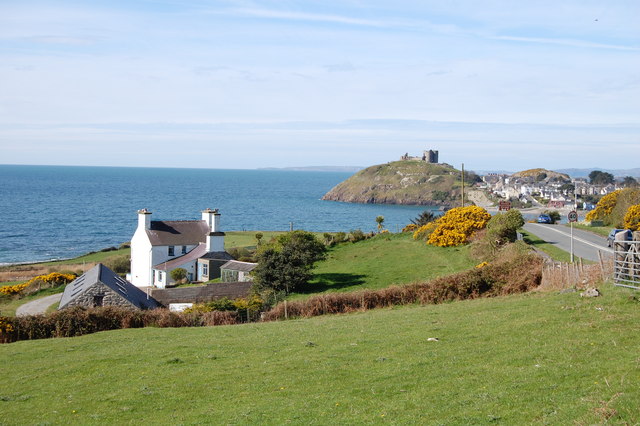
To the best of my knowledge and belief there is not a millilitre of Welsh blood in my veins. Such Celtic heritage as I can claim is Irish and Scottish yet I love Wales as much as anyone who was lucky enough to have been born in the principality. I guess one of the reasons I love Wales so much is that I spent much of my childhood on Black Rock Sands, the banks of the Dwyfor, the slopes of Swowdon and the towers and battlements of Edward I's castles. My parents could not afford continental holidays in the 1950s but Wales was as good as abroad with its own language and distinct landscapes and architecture, but nothing like as far away,
The Welsh language fascinated me and I longed to learn it. I even bought a phrase book called Welsh in a Week and must have tried the patience of every shopkeeper in Portmadoc and Criccieth (many of whom seemed to come from the Midlands or Lancashire) as I tried out my phrases. My mother once told me that my first words were in Welsh which is possible but unlikely as I don't know where I could have picked them up. Later when I learned Latin I saw lots of similarities like ffenestr for window (not too different from fenestra) and eglwys for church (apparently derived from ecclesia). Welsh is a naturally musical language with an "-ion" sound like a peel of bells. The language has lots of sounds that don't exist in English like the double "L" that seems to be produced by placing the tongue at the roof of the mouth and breathing over it.
Cerys Matthews has made an album of folk songs called TIR most of which are in Welsh. I was led to her album by Ballet Cymru's YouTube video and yesterday I actually bought it. Indeed the artiste actually signed it and shook my hand. I think I have become one of her biggest fans though I regret to say I am also one of the most recent ones and I am grateful to Ballet Cymru for introducing her to me. She is a patron of the company. Yesterday she disclosed that she used to study ballet as a child and actually did very well in her RAD exam. She mentioned that fact between the songs that Darius James and Amy Doughty had choreographed for their dancers.
The dancers come from every part of the world other than Wales but they interpreted Matthews's words eloquently. Some bits of the performance were exuberant like Bugeilio’r Gwenith Gwyn while other songs such as Myfanwy (danced by Emily Pimm-Edwards) tugged at our heart strings. The Rev Eli Jenkins's prayer in memory of Mandev Sokhi was particularly moving. Those members of the audience who had seen him dance were close to tears. For the dancers who had worked with Mandev it was so much harder. However, they are pros and though we could see their emotion in their faces they never missed a count or movement. TIR finished with Sosban Fach where each of the dancers did his or her turn. Each and every one of them impressed us but I have to say a special word for Tim Hill who thrilled us with his entrechats.
Ballet Cymru welcomed back Daisuke Miura and Suzie Birchwood as well as Pimm-Edwards for TIR. Birchwood is artistic director of ActOne ArtsBase. I first saw her in Stuck in the Mud where I was impressed by her grace and technique. The beauty of her dancing lies in her port de bras whether lifted in a pas de deux or sitting in a wheelchair. I never tire of watching her and I try to imitate her arm movements in my own dancing. Miura and Pimm-Edwards delighted me in Romeo a Juliet and is was a treat to see them again.
Stuck in the Mud had been choreographed by Marc Brew whom I met in Llandudno. He created Traces Imprinted which I had admired in Newport. I had seen that work from the dress circle at the Riverfornt theatre in Newport where I appreciated its form and the movement of the dancers but missed much of the detail. I caught all that detail yesterday from the second row of the stalls in a much more intimate auditorium. It was though I was seeing a different ballet. There was harshness with one dancer literally treading on the back of another but also tenderness as in the final duet. I think I understood the ballet a little better second time round. Traces Implanted suggests memories and in particular memories of people who are no longer with us. Some of those memories we overwrite - hence the treading - others we keep alive and build upon - as in the duet.
I had missed Celtic Concerto in Newport for various reasons that I explained in The Pride of Newport and the Pride of Wales 8 Nov 2015 which was a shame because this ballet tuned out to be a gem. Choreographed by James and Doughty to a Catrin Finch's it begins with the company on stage and then some delightful solos and duets. You can get the idea from this video. I admired the stained glass projection and the costumes - simple black tutus for the women and shorts and translucent tops for the men.
The evening in Newport was very special but so was yesterday. Matthews asked whether there were any Welsh folk in the audience yesterday and it transpired that they were several. They must have been so proud of their nation's ballet company. Also in the audience were several members the London Ballet Circle who had visited the company in October (see Ballet Cymru at Home 5 Oct 2015). We are certainly proud of our association with the company.
Other Reviews
Judith Mackrell Ballet Cymru review – Cerys Matthews joins dancers for mercurial performance 1 Dec 2015 The Guardian
The evening in Newport was very special but so was yesterday. Matthews asked whether there were any Welsh folk in the audience yesterday and it transpired that they were several. They must have been so proud of their nation's ballet company. Also in the audience were several members the London Ballet Circle who had visited the company in October (see Ballet Cymru at Home 5 Oct 2015). We are certainly proud of our association with the company.
Other Reviews
Judith Mackrell Ballet Cymru review – Cerys Matthews joins dancers for mercurial performance 1 Dec 2015 The Guardian
Friday, 27 November 2015
Remembering Mandev Sokhi
.jpg/170px-Milvus_milvus_R(ThKraft).jpg) |
| A Red Kite
Source Wikipedia
Creative Commons Licence
|
From 18:00 this evening Ballet Cymru will hold a gathering at its studios in Rogerstone to celebrate the life of its dancer and education officer Mandev Sokhi. This event is for "anyone and everyone to come and pay their respects to this wonderful person, who gave such a lot and had so much passion for dance."
As I said in Mandev Sokhi 10 Oct 2015 Mandev was one of my favourite dancers in one of my favourite companies. I particularly admired his performance as the beast in Beauty and the Beast which Mel Wong reviewed for us so aptly in For grown ups who haven't lost touch with their childhoods - Ballet Cymru's Beauty & The Beast 24 June 2014. I am very glad to have made Mandev's acquaintance when the London Ballet Circle visited Rogerstone on 3 Oct 2015 (see Ballet Cymru at Home 5 Oct 2015).
Mandev will be remembered tonight far beyond Newport and indeed well beyond Wales for he danced wth Ballet Cymru in every part of the United Kingdom. Clearly it will not be possible for all his admirers to make their way to Wales tonight but there are two very good ways in which we can show our appreciation of the man. First, there are still a few tickets left for Ballet Cymru's triple bill in London on the 29 and 30 Nov. I saw it in Newport on 6 Nov 2015 and reviewed it in "The Pride of Newport and the Pride of Wales" 8 Nov 2015. I am seeing it again on Monday. Another way to remember Mandev is to become a Friend of the company as I did after my visit to its studios last month. You can also make a donation or sponsor one of its productions or activities. The company has been nominated for a National Dance Award so it is well worth supporting (see Ballet Cymru Am Byth 1 Nov 2015).
Wednesday, 15 July 2015
Inala at the Wells
 |
| Sadler's Wells, London
Source Wikipedia
|
Inala, Sadler's Wells, 10 July 2015
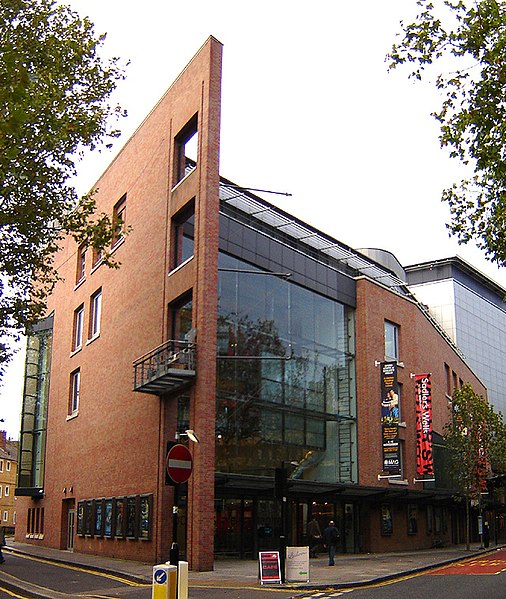
Isn't it strange that you can see exactly the same show with exactly the same casts in performances just days apart and yet have two completely different experiences. I saw Inala in Bradford on 25 June 2015 (see Inala at the Alhambra 26 June 2015). I reported that the show was met with "a standing ovation and a lot of whooping and cheering." There was nothing like that when I saw the show again in London on 10 July 2915. A lot of polite, even enthusiastic clapping but a much more restrained reception.
That does not mean that the London audience was any less appreciative. The differences in audience reactions were discussed by Marcelo Gomes in a recent question and answer session. He explained that a quiet audience in Japan is a good sign because everybody is concentrating. In Brazil it is the reverse because a contented audience would be buzzing. London audiences are very undemonstrative compared to those in the North because they think they have seen everything. .
Although I liked Inala when I saw it in Bradford I enjoyed it rather more second time round. There are a number of reasons for that. Having seen the show before I knew what to look out for. Another reason why I liked it better is that I was able to buy a programme in London and could therefore follow the show. A third reason is that I sat in the second circle in Sadler's Wells and could see the the lighting displays and the patterns of the dancing on the stage which I had missed in Bradford because they were not visible from the stalls.
As in Bradford the best part of the show was Ladysmith Black Mambazo's singing. Except for the last one where the singers waved goodbye it was quite impossible to guess the meaning of the songs because they were sung in Zulu. The advantage of the programme is that the "Score" page summarized the songs . Some of those summaries seem very strange to a modern British audience:
All those cattle I used to pay the dowry should be paid back, When will the cows come back again?That song was answered by
"The cows will be returned. The bridge has failed. They will be returned. All of them."The dancing expressed the music of each song but did not relate directly to their subject matter and perhaps that was a missed opportunity. A ballet could have been created for each of those songs and individual dancers could have represented a character in the song. For instance, the theme of Warmuhle Intombi is
"You are so beautiful young lady! It's time to choose the way you go and the one to be with!"That suggests a pas de deux or perhaps a pas de trois and that may even have been what we got but my recollection of the dancing is that it was all abstract and that all the dances formed one single choreographic piece.
Although the show is marketed as a Zulu ballet it is more musical theatre than ballet. It is an opportunity to hear a beautiful style of singing which is not often heard in this country and to see some exuberant dancing. If you like that sort of thing then this show is for you. But don't go to the show expecting ballet for that is not what you will get.
Friday, 5 June 2015
Wheeldon in Amsterdam and the Dutch National Ballet in London
I mentioned the Dutch National Ballet's triple bill Cool Britannia in Cool Britannia - in Amsterdam on 16 April 2015. The company has just uploaded this fascinating video of the choreographer Christopher Wheeldon's working with the dancers who will perform his ballet this month. I am flying out to Amsterdam to see the show on the 27 June and will report back shortly afterwards.
Meanwhile Ernst Meisner and his wonderful Junior Company of the Dutch National Ballet are at the Linbury today and tomorrow. Joanna Goodman and I will be in their audience tomorrow. They will perform Ballet Classics and Modern Masters which I saw in February (see my review The Dutch National Ballet Junior Company's best Performance yet 8 Feb 2015). Last year I noted quite a difference between the company's opening show in Amsterdam and its show in London. Their show last February was magnificent so I am expecting great things tomorrow.
On my awayday to London for the trade mark attorneys' party yesterday I noticed posters for the Dutch National Ballet's Cinderella in every tube station. This is another Wheeldon ballet which is coming to the Wells next month (see The Dutch National Ballet are coming to London 2 May 2015). Needless to say I shall be seeing that too. So you can expect to hear a lot form me about this great company over the next
Monday, 28 July 2014
Chantry Dance Associates: Lots of Promise
 |
| Sadler's Wells Theatre
Source Wikipedia
|
Both Mel and I have written about Chantry Dance recently (see Jane Lambert "Chantry Dance Company's Sandman and Dream Dance" 10 May 2014 and Mel Wong "July News from Chantry Dance Company" 6 July 2014). One of the company's activities is an associate programme for "young dancers of a pre-vocational or pre-professional level, who aspire to have a career in dance." That programme
"exists to nurture, develop and inspire the country's most talented young dancers, and to encourage them to be courageous with their dancing in order to reach new levels in their technique and interpretative skills."Yesterday, the associates (participants on the programme) showed what they could do in the Lilian Baylis Studio of Sadler's Wells.
Owing to the closure of the M1 between junctions 21 and 22 yesterday (see "M1 motorway closed between junctions 21 and 22 following serious accident" 27 July 2014 Leicester Mercury) my journey was delayed by nearly 2 hours and I arrived towards the end of the show. Gail Gordon, who must have formed a terrible impression of me because I was also late for the Dream Dance workshop, ushered me into a rehearsal studio and perched me on a piano stool in order not to disturb the associates who were dancing to Vivaldi or Paul Chantry who was filming them on an iPad. They were all young women and I spotted immediately one I knew: Fiona who had taught me the dance in the Dream Dance workshop. After the show, Rae Piper told me that the dancers ranged in age from 11 to 24. At least one was at Elmhurst and two others were on their way to Trinity Laban.
The steps that the associates danced were not easy and demanded a lot of energy and stamina. The choreography to which Gail told me she had contributed was intricate. It was executed with lightness, precision and obvious joy. The movement of those artists lifted my spirits and helped me forget my terrible journey.
After the Vivaldi several of the associates performed their own short solos. I had to take notes on the back of a VAT receipt because I had left my notebook in my car in my rush to catch a train at Luton Parkway. Consequently I was able to record my impressions of only a few of those pieces with the result that I am unable to do justice to the others. They were all good and I congratulate all the artists. I enjoyed their work enormously. However, those that I did record made a particular impression on me. An associate whom I know only as Jessica explored steps and movements beyond the positions of classical ballet to create novel and ingenious body shapes. She reminded me of two performances that I had seen recently: first, Ed Watson in the first act of The Winter's Tale where his body contortions represented his jealousy and irrationality; secondly, Daniel Montero's Ballet 101 in the Dutch National Ballet Junior Company's gala. Another dancer whose name I forget interpreted the story of Icarus and Daedalus. A human biology student represented heart beats and blood flows. Yet another one showed considerably dramatic promise in her improvisation.
The performance took place in a part of Sadler's Wells that I had not seen before. There was a plaque to Sir Frederick Ashton on the wall and busts of him as well as Fonteyn, Somes, Dolin, Lillian Baylis and Madam (I do hope real dancers will excuse my presumption in referring to Dane Ninette de Valois in this way) at the entrance. I had seen all of those great men and women except Baylis when they were alive and the flood of memories those busts triggered made my eyes water.
But I was also reminded that ballet is not all magic and involves hard work and sweat. I found myself in a lift with a troupe of Brazilian dancers including one who was naked except for a pair of sweaty underpants. They had obviously been dancing their socks off. Literally. That's about as up close and personal as most of us would care to get.
Talking about sweat, Chantry Dance is a company that works incredibly hard. On Saturday they had been performing The Sandman plus a new work in the Lincoln Drill Hall. Today they are starting a week long summer school in which Mel and Fiona are taking part. Later next month they are meeting local business. In October they will take their latest works which includes The Happy Prince on tour. One of the venues they will visit is The Square Chapel in Halifax on 20 Nov 2014.
Sunday, 18 May 2014
Scottish Ballet's Timeless Romeo and Juliet
Ever since it was in Bristol Scottish Ballet has been exciting and innovative. I suppose that is one of the reasons why I have always admired it. It was works such as Mods and Rockers '63 and Houseparty that first attracted my attention. It continued to innovate and take risks after the company's move to Glasgow with a a steady stream of new works by Peter Darrell, Ashley Page and now Christopher Hampson all of which are reflected in the company's repertoire. Krzysztof Pastor's Romeo and Juliet continues that tradition of adventure and innovation.
I saw that ballet at Sadler's Wells on 17 May 2014. This is the first time it has been seen in London but it has been in Scottish Ballet's repertoire since 2008. It is in fact on its third tour of Scotland or fourth if you count the Up Close tour when parts of the ballet were danced in some of the smaller venues in Scotland during October 2010. After London it will be in Edinburgh between the 21 and 24 May. As Northern Ballet's recent success at The Linbury shows, there is good ballet outside London though that seems to come as a surprise to London audiences.
The story of Romeo and Juliet is well known and has been the translated into ballet by several choreographers. The version with which British audiences are most familiar is probably Kenneth Macmillan's for the Royal Ballet. Ballet Cymru also has a great version for the small auditoriums that it visits which I reviewed in "They're not from Chigwell - they're from a small Welsh Town called Newport" 14 May 2013. Next month we shall see English National Ballet's Romeo and Juliet in the Round and then the Mariinsky's with Xander Parish dancing Romeo.
Shakespeare's play and the other versions of the ballet focuses on the young lovers who are kept apart by family antipathy and rivalry. Pastor's version focuses on the enmity not just in mediaeval Verona but in Italy throughout the ages. It achieves that effect by setting different scenes of the ballet in different periods of modern Italian history:
- between the wars when Fascists struggled with Communists;
- the immediate post war period when Italy was transformed into a consumer society; and
- the recent past when the post-war consumer boom ended precipitously.
There are people in the position of Romeo and Juliet in every age and I read the references to Romeo and Juliet in the ballet as the representatives of such persons in each of those periods.
In every other respect the ballet followed the play. There were strong performances by Christopher Harrison as Romeo, Claire Robertson as Juliet, Daniel Davidson as Mercutio, Owen Thorne as Tybault and Rimbaud Patron as Friar Lawrence. Principal conductor Richard Honner stuck to the Prokofiev score though perhaps with a few tweaks. For instance the percussion seemed to continue a little longer than in other versions after Romeo had killed Tybault. As in Macmillan's version the centre piece of Pastor's ballet were the pas de deux that traced the lovers' relationship: the initial meeting, the balcony scene, in the bedroom and finally the tomb. I noticed how a lift that seemed like an assisted grand jeté expressed diffidence and even struggle in the first pas de deux and joy in the second.
Among the aspects of the ballet that I most liked were Tatyana van Walsum's designs which can be studied on the Romeo and Juliet page of her website. For each of the three periods she set the scene with flickering newsreel clips and the protagonists' uniforms.
For my further reflections on this ballet and the views of others who saw it This ballet is not everybody's cup of tea though it is certainly mine. The initial reactions on BalletcoForum were not exactly encouraging but I have known Scottish Ballet for many years and I was not going to be deterred. I am glad I persevered. After watching Romeo and Juliet at the Wells on Saturday I signed up as a Friend though I have been such for many years.
Further Reading
20 Dec 2013 Scottish Ballet
9 March 2014 Peter Darrell
11 March 2014 Elaine McDonald in her own Words
In every other respect the ballet followed the play. There were strong performances by Christopher Harrison as Romeo, Claire Robertson as Juliet, Daniel Davidson as Mercutio, Owen Thorne as Tybault and Rimbaud Patron as Friar Lawrence. Principal conductor Richard Honner stuck to the Prokofiev score though perhaps with a few tweaks. For instance the percussion seemed to continue a little longer than in other versions after Romeo had killed Tybault. As in Macmillan's version the centre piece of Pastor's ballet were the pas de deux that traced the lovers' relationship: the initial meeting, the balcony scene, in the bedroom and finally the tomb. I noticed how a lift that seemed like an assisted grand jeté expressed diffidence and even struggle in the first pas de deux and joy in the second.
Among the aspects of the ballet that I most liked were Tatyana van Walsum's designs which can be studied on the Romeo and Juliet page of her website. For each of the three periods she set the scene with flickering newsreel clips and the protagonists' uniforms.
For my further reflections on this ballet and the views of others who saw it This ballet is not everybody's cup of tea though it is certainly mine. The initial reactions on BalletcoForum were not exactly encouraging but I have known Scottish Ballet for many years and I was not going to be deterred. I am glad I persevered. After watching Romeo and Juliet at the Wells on Saturday I signed up as a Friend though I have been such for many years.
Further Reading
20 Dec 2013 Scottish Ballet
9 March 2014 Peter Darrell
11 March 2014 Elaine McDonald in her own Words
Saturday, 21 September 2013
Cranko's "Taming of the Shrew": Now's our chance to see one of the Ballets everyone should see before they die
The Stuttgart Ballet is coming to England. Yay! And it is performing John Cranko's "Taming of the Shrew". Yippee! The company will be at Sadler's Wells from the 18 to the 23 Nov 2013.
It is apt that Cranko's company should perform at the Wells because that is where he learnt his art. He was one of the great choreographers of all time. Born in South Africa in 1927 he choreographer Pineapple Poll in 1951 when he was only 23. In 1961 he was placed in charge of the Stuttgart Ballet when only 34. There he created great full length ballets such as Onegin, Carmen and, of course. Shrew. Sadly he died on the way back from New York at the early age of 45. Think what he would have achieved had he survived.
Even after 40 years there are many reminders of Cranko in Stuttgart. Possibly the most important is the John Cranko School which was the first ballet school in Germany and now regarded as one of the best in the world.
Seeing Taming of the Shrew is on my list of things still to do before I die. Visiting Theatre Street and attending a performance at the Mariinsky is another.
Subscribe to:
Posts (Atom)