Showing posts with label Designs and Patents Act 1988. Show all posts

Monday, 15 May 2017

Music Copyright

By User:Milantex (File:DVD-4.5-scan.png) 
[Public domain], via Wikimedia Commons


Yesterday someone asked a very interesting question about music copyright on BalletcoForum. I shall not address the specific question but I shall say a few words about music copyright generally.

What is Copyright?
In the United Kingdom, copyright is defined by s.1 (1) of the Copyright, Designs and Patents Act 1988 as
"a property right which subsists in accordance with this Part in the following descriptions of work--

(a) original literary, dramatic, musical or artistic works,

(b) sound recordings, films or broadcasts, and

(c) the typographical arrangement of published editions."
Although this Act applies only to the United Kingdom, the definition will be very similar in most other countries as most of the world has agreed to bring their copyright laws into line with certain international agreements.

What is a Copyright Work?
The above definition says that copyright can subsist in musical works and sound recordings.  A musical work is essentially a score.  A sound recording is a recording of a performance of a score. Thus there at least two separate copyrights in every DVD or other sound recording.  One copyright will subsist in the work of the composer who wrote out the notes. The other will lie in the work of the recording studio which captured the playing of the work and reproduced it on DVDs or other media. If the music is a song then a separate literary copyright will subsist in the words of the song.  If there is more than one tune on the DVD there will be a separate copyright for each tune. On a typical DVD, there will be lots of different types of copyright works.

What does Copyrught do?
Copyright confers on the copyright owner the exclusive right to do various acts in respect of a copyright work.  These include copying the work and performing and playing the work in public. Unless you are the copyright owner (which is usually the person who created the work or his or her employer) you need the copyright owner's permission to do any of those things. If for instance, you want to play a DVD in public, you will need permission from the owner of the copyright in the score - that is to say the composer or music publisher - and the owner of the copyright in the sound recording.

Where do you get Permission?
Most copyright owners belong to collecting societies which grant permission to play, perform or make available copyright music on behalf of their members and members of collecting societies overseas in return for a fee. For instance, The Performing Rights Society represents songwriters, composers and music publishers and has formed an alliance with the Mechanical Copyright Protection Society.  You can find out whether you need a licence and, if so,  how much you will have to pay, from the Music Users section of the PRS website.

What if you don't get Permission?
Unless you fall within one of a number of exceptions you will infringe the copyright in the work which will entitle the collecting society to sue you for an injunction (an order by a judge to do or not to do a specified act), damages (compensation for your wrongdoing) or an account and surrender of the profits you made from your wrongdoing and an order that you contribute to the other side's legal fees and other expenses in bringing you to court.  Some copyright infringements are also offences which are punishable by long terms of imprisonment and unlimited fines.

Are there any Exceptions?
There is actually one for dance schools and a more limited one for teachers outside dance schools who provide teaching for recognized exams.

Further Advice
Copyright law is complex and if you are in any doubt you should seek specialist professional advice.

Wednesday, 20 January 2016

Dance Law #1: PRS for Music Charging Policies

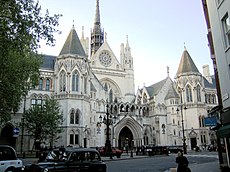
Royal Courts of Justice
Author Anthony M
Creative Commons Licence
Source Wikipedia


Copyright is a property right which subsists in original literary, dramatic, musical or artistic works, sound recordings, films or broadcasts, and typographical arrangement of published editions. It is the exclusive right to do or authorize the following acts in respect of the work:
(a) to copy the work
(b) to issue copies of the work to the public
(ba) to rent or lend the work to the public
(c) to perform, show or play the work in public
(d) to communicate the work to the public
(e) to make an adaptation of the work or do any of the above in relation to an adaptation.
Anyone who does or authorizes any of those acts in the UK without the licence of the owner infringes that right, Such an infringer may be sued in the civil courts or in some circumstances prosecuted in the criminal courts. If found guilty the penalties for copyright infringement are approximately the same as for theft.

As civil litigation can be expensive owners of certain types of copyright works have established organizations known as "collecting societies" to enforce their copyrights. One of those collecting societies is PRS for Music which describes itself as "the home of PRS and MCPS, representing the rights of over 115,000 members in the UK," The PRS and the MCPS are two separate collecting societies representing respectively the rights of the owners of the copyrights in words and music and those of the owners of the copyrights in the sound recordings. PRS for Music offers to license the performance of their  members' works on terms that are regulated by statute. They have reciprocal agreements with collecting societies in other countries to enforce the rights of foreign collecting societies' members' rights here, The foreign collecting societies enforce the rights of British copyright owners elsewhere.

The statute that protects the rights of copyright owners in the United Kingdom is The Copyright, Designs and Patents Act 1988 ("the CDPA"). Section 2 of that Act confers the exclusive tight mentioned above subject to a number of exceptions. One of those exceptions is provided by s,34:
"34 Performing, playing or showing work in course of activities of educational establishment
(1) The performance of a literary, dramatic or musical work before an audience consisting of teachers and pupils at an educational establishment and other persons directly connected with the activities of the establishment--
(a) by a teacher or pupil in the course of the activities of the establishment, or
(b) at the establishment by any person for the purposes of instruction, is not a public performance for the purposes of infringement of copyright. 
(2) The playing or showing of a sound recording, film or broadcast before such an audience at an educational establishment for the purposes of instruction is not a playing or showing of the work in public for the purposes of infringement of copyright.
(3) A person is not for this purpose directly connected with the activities of the educational establishment simply because he is the parent of a pupil at the establishment."
Doubts have arisen over the years as to whether a dance school falls within that exception.  Until the beginning of this year it was the opinion of PRS for Music that it did not. Following representations from the Royal Academy for Dance (see PRS for Music - Educational Exemptions 4 Jan 2016) the collecting society appears to have changed its position. In its PRS for Music Charging Policies the collecting society writes that it has a number of non-charging policies that define circumstances in which it chooses not to make a charge for its licence and one of these is dance schools:
"Section A - Dance Schools that are educational establishments
Where a dance school qualifies as an educational establishment, section 34 of the 1988 Act provides that a public performance licence will not be required from PRS (or any other copyright owner) for performances before an audience of teachers and pupils/students at the school (and other persons directly connected with it) provided that the performance is given
  • by a teacher or pupil in the course of the activities of the dance school; or
  • at the dance school by any person for the purposes of instruction.
Section B - Dance tuition provided by persons other than educational establishments
Where copyright music is used for the purpose of dance tuition, a licence will ordinarily be required by the course provider. However, if the music is performed within the context of and for the purposes of a lesson and/or examination leading to a qualification aligned with Regulated Qualifications Framework (RQF) Level 1 or above, [for the purposes of calculating charges under the dance tuition session of the current DS tariff and proposed new Fitness and Dance Tariff], PRS is willing to treat such performance as if it were given in circumstances to which section 34 of the Copyright, Designs and Patent Act 1988 applies and accordingly will not make any charge respect of that session."
First, it has to be stressed that that is only a position statement from a collecting society - albeit a powerful one - and not a statute, judgment or other authoritative statement of the law. Having said that, I stress that I do not necessarily disagree with it. If anyone wants to challenge that position in respect of charges made in previous years they can still do so though I am not encouraging (or indeed discouraging) them to do so. Secondly, this statement does not bind copyright owners who are not represented directly or indirectly by PRS for Music. Thirdly, this position statement applies only to the United Kingdom and those other territories to which the CDPA applies.

If anyone wants to learn more about copyright in music or relating to dance, exemptions and licences, collecting societies and enforcement he or she should call me on 020 7404 5252 during office hours or use my contact form.