Showing posts with label Amsterdam. Show all posts

Friday, 6 June 2025

Let Amsterdam Dance

Amsterdam


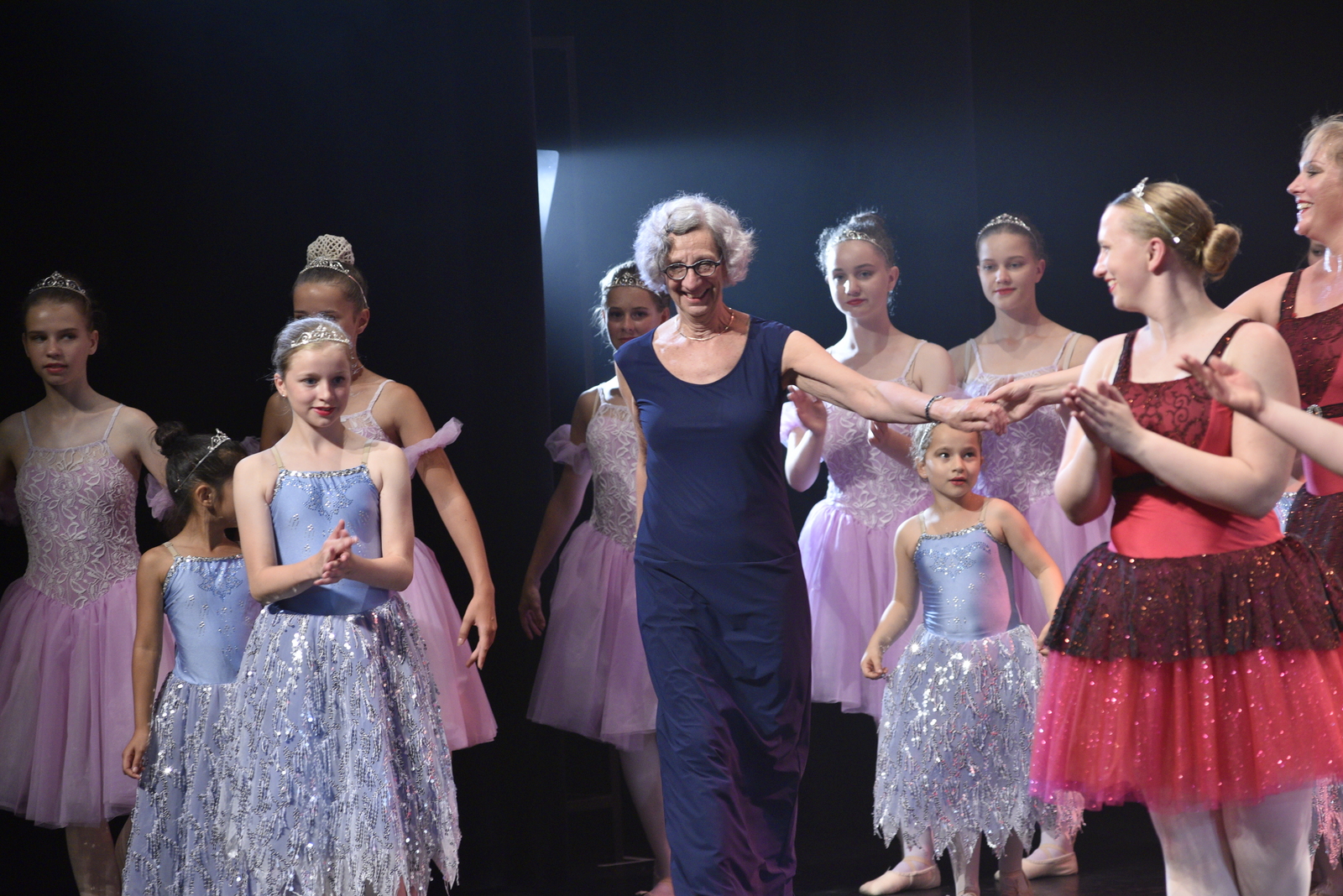
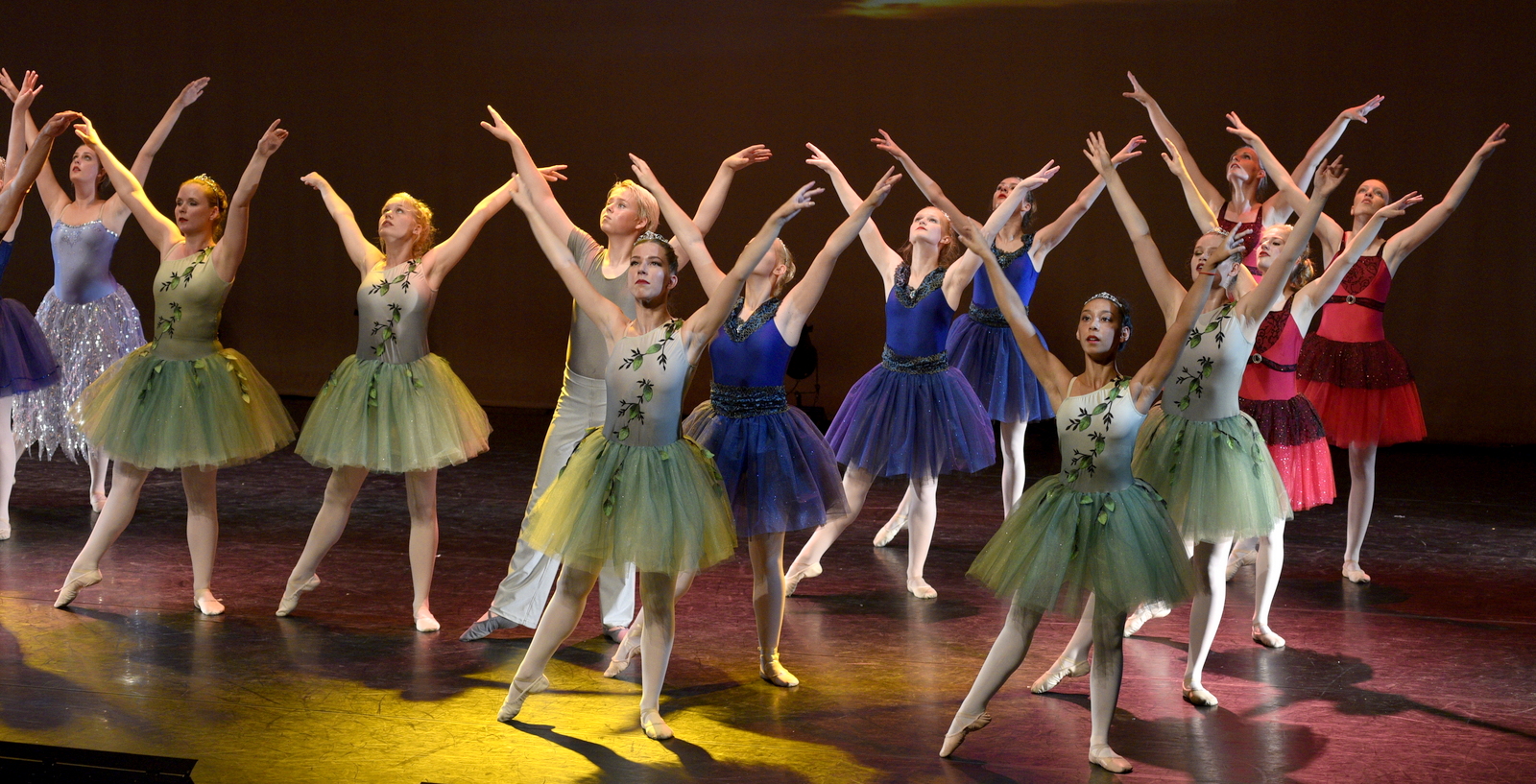
On 27 Oct 2025, the city of Amsterdam will celebrate the 750th anniversary of its foundation.  Just now, it is in the middle of a year-long festival called "Amsterdam 750" which started on 27 Oct 2024.  As part of the festival, the Dutch National Ballet is presenting a programme of dance called "Heel Amsterdam Danst" which ranges from free performances in the city's districts to a spectacular finale in the Music Theatre.

The performance in the Music Theatre is called "Let Amsterdam Dance".   According to the Dutch National Ballet's website:

"From each of Amsterdam’s eight districts, a group of residents—of all ages and backgrounds, with or without dance experience—will learn a section of In C, a ballet by Sasha Waltz that blends improvisation with choreography. Each group will first present its own unique performance at a festive (and free!) event in their district. Then, on 15 June, all groups will unite for one spectacular final performance on the stage of Dutch National Opera & Ballet."

Sasha Waltz is a German dancer and choreographer, and the founder of the company Sasha Waltz & Guests.

One of the company's works is In C, and it is easier for them than me to explain the piece in their own words in the YouTube video  »In C« by Sasha Waltz & Guests - about the projectThere is more information in The Cosmos of »In C« on the company's website.   The Dutch National Ballet adds:

"Sasha Waltz’s In C consists of 53 choreographic ‘figures’ and gives the dancers both the freedom and the responsibility to experiment with them. All dancers start at figure 1 and end at figure 53, but they may repeat any phrase as often as they like, as long as they don’t drift more than a few phrases apart from each other. Waltz: “As a result, every performance is different, and each dancer is also a choreographer at the same time.”

The Dutch National Ballet also states that In C earned Sasha Waltz the Deutscher Tanzpreis, which is Germany's most prestigious dance award.

The score was composed by the US composer Terry Riley.   Wikipedia describes it as "one of the most successful works by an American composer and a seminal example of minimalism."  When one considers the sheer number of distinguished American composers from Bernstein to Copland, that is saying something.  Designs are by Jasmin Lepore.   Of course, the choreography is by Sasha Waltz.

I have spent many pleasant days in Amsterdam, mostly at the Music Theatre but also at its other auditoriums, museums, historic buildings and restaurants.  I wish all its residents, and in particular the National Ballet a happy 750th anniversary.

Monday, 27 March 2023

Next Year in Amsterdam

Standard YouTube Licence

The Dutch National Ballet has just announced its programme from 16 Sept 2023 to 6 July 2024.  It includes new works by Wayne McGregorJuanjo Arqués, Milena SiderovaWubkje Kuindersma and Ted Brandsen as well as GiselleRaymonda and Annabelle Lopez Ochoa's Frida.

Here are the works in chronological order:
  • 16-30 Sep 2023 Four Temperaments  (a mixed bill consisting of The Four Temperaments  by George Balanchine, Frank Bridge Variations by Hans van Manen, The Chairman Dances by Ted Brandsen and a new ballet by Juanjo Arqués)
  • 25 Sep 2023 New Moves (short pieces by up-and-coming choreographers within the company)
  • 12 Oct - 19 Nov 2023 Giselle 
  • 9 Dec 2023 - 1 Jan 2024 Raymomda
  • 3 Feb-17 Mar 2024  Junior Company, Tenth Anniversary Tour  
  • 8-25 Feb 2024  Annabelle Lopez Ochoa Frida 
  • 9-24 Mar 2024 Wayne McGrego Oedipus Rex/Antigon
  • 30 Mar-14 Apr 2024 Dancing Dutch (a mixed bill consisting of contributions by Jiří Kylián, Hans van Manen, David Dawson and Milena Sidorova)
  • 15-25 Jun 2024  Ratmansky Stravinsky Fairy Tales 
  • 28  June 2024 Gala and 
  • 5-6 Jul 2024  Dances of Tomorrow  End-of-year production by the Dutch National Ballet Academy.
Booking information is available on the Ticker Information page,

An event that took place last May which I have only just discovered is  In the Future, a collaboration between the company and dance groups from across the Netherlands.  In the Future is one of Hans van Manen's best-known works and the Junior Company has incorporated it into its repertoire (see "In the Future" - Junior Company's Fifth Anniversary Performance 17 April 2016). The Junior Company danced that piece in a programme that included Irish, Indian, Lindy Hop and many other styles of dance. It must have been a wonderfully exuberant occasion.  The rehearsals and highlights of the show have been captured in a remarkable film entitled  Documentary In The Future: Professionals and amateurs celebrate the future of dance - HNB.   I recommend this film. It shows not only the rich diversity of dance in Amsterdam but is also an introduction to the many communities that live in that city. 
 
I have been coming to Amsterdam for nearly years by train, plane and car.  The quickest and cheapest but also the least comfortable way of getting there is by air.   Some airfares from Leeds, Liverpool and Manchester are very reasonable.  The Eurostar tends to be more expensive and travellers who live outside London have to add the return fare to St Pancras but there are advantages.  There is no need to queue with plastic bags of tiny bottles, mobile phones and laptops. Passport control can be cleared before boarding the train. Even a full standard class carriage is more spacious than any aeroplane. Even with the slow and temperamental onboard wifi, it is possible to keep in touch with the world.

Board and lodging are generally cheaper than in London.  For those on a budget, the Bastion chain of hotels is comparable in tariffs and standards of accommodation with Travelodge and Premier Inns.  There are no Bastion properties in the city centre but the Amstel is close to Overamstel underground station. That is only 2 stops from Waterlooplein, the station for the National Opera and Ballet auditorium.  There are several other Bastion hotels near the airport.  Hotels within walking distance of the auditorium such as the Ibis and Holiday Inn are more expensive but not outrageously so.  When I am in Amsterdam to work my first choice is the Radisson at Rusland. Close to the Radisson and not far from the auditorium is the Hemelse Modder (literally, "Heavenly Mud") which is my favourite restaurant in Amsterdam.  

There is already plenty of information about the Rijksmuseum, the Van Gogh's Museum and Anne Frank's house. Less well known but well worth seeing are the Jewish Museum and the Portuguese Synagogue just across the road from the National Opera and Ballet auditorium.  I spent the best part of a day and a half exploring the complex on my last visit to Amsterdam.

Eeaders can now understand why I visit Amsterdam so often,

Thursday, 7 October 2021

Toer

7th Symphony
Author Hans Gerritsen © 2021 Dutch National Ballet, All rights reserved


Dutch National Ballet  Toer  Streamed from the Music Theatre, Amsterdam, 25 Sept 2021, 19:15  and repeated 6 Oct 2021, 19:00

Toer is a double bill in honour of the celebrated choreographer, artist, designer and former dancer, Toer van Schayk.  It consists of two of his ballets: Lucifer Studies and 7th Symphony    Lucifer Studies is a new work which was premiered on 14 Sept 2021.  7th Symphony is described by the programme as one of van Schayk's most successful ballets.  He created it in 1986 and he was awarded the choreography prize of the Dutch Association of Theatre and Concert Hall Directors for the work within a year.   The programme was streamed over the internet from the Amsterdam Music Theatre on 25 Sept and repeated last night,   I watched both transmissions.

Both works were new to me.   They are very different.  The first contains studies that were intended to form part of a full-length ballet based on Vondel's Lucifer.   Work on the ballet has been interrupted by the pandemic but Van Schayk rightly considered that the studies were worth showing. The second piece is based on Beethoven's 7th symphony.   That symphony is one of Beethoven's most famous compositions.  Contrary to the opinion of an eminent ballet critic who really ought to know better that Beethoven is undanceable, the 7th symphony was crying out to be danced and van Schayk has choreographed it beautifully.  While I had to work hard to digest Joep Frannsens's Echoes for Lucifer Studies I could barely sit still and keep silent as the orchestra romped through Beethoven's exuberant work.

I like to think that I am reasonably well-read but I have to confess that until I saw Lucifer Studies I had never heard of Vondel or his play and I fear that few of my fellow Anglophones could claim otherwise.  There is a beautiful open space in the centre of Amsterdam known as Vondel Park and I wonder whether it was named after him.  Joost van den Vondel lived from 1587 to 1689 which encompassed the life of our great poet, John Milton, who lived from 1608 to 1674. I have now had a chance to acquaint myself with Lucifer. Even in translation, Lucifer is impressive and its subject matter is the same as Paradise Lost.  I know that poem well perhaps because I attended the same secondary school as Milton.  I am told by one of his former classmates that Matthew Rowe attended that school too.  Fragments of Milton's verse flashed through my mind as I watched the ballet. From the way the orchestra played, I sensed that Rowe was also inspired by Milton too and that he had communicated that inspiration to each and every musician.

Lucifer Studies
Author Hans Gerritsen © 2021 Dutch National Ballet, All rights reserved


Lucifer Studies had an all-male cast. As I suspect that each of the studies was intended to be danced by a principal or soloist in the full-length work, van Shayk selected some of the company's ablest young dancers.   They included Timothy van Poucke who has enjoyed a meteoric rise in the company winning the Radius prize within a very short time of graduating from the Junior Company.   Also in the piece was Martin ten Kortenaar whom I featured in 2014.   Others I recognized were Daniel Robert Silva, Nathan Brhane and Giovanni Princic.  That is not a complete list because I cannot recover the cast list for 25 Sept from the company's website.   Each and every one of those excellent young men impressed me greatly. 

Van Shayk designed the sets and costumes for Lucifer Studies.   The most striking feature of the costumes was that each of the dancers wore a differently coloured right sleeve.   Sometimes the colours of those sleeves were projected onto the backdrop focusing the audience's attention on the solo or duet in question.

Though Lucifer Studies lasts no more than 27 minutes it is a very absorbing work.   I had to watch it twice and discuss it with a dancer friend to get the measure of it.   After the world emerges from the pandemic I fervently hope that resources will be found to enable van Schayk to finish the full-length work.

Young Gyu Choi and Nancy Burer
Author Hans Gerritsen
© 2021 Dutch National Ballet: all rights reserved


It is not hard to see why 7th Symphony was an immediate success.  Van Schayk caught the exuberance of the score and amplified it.   The cast was split into two groups lettered "A" and "B".   I regret that I did not record the names of all the dancers on 25 Sept because I thought that the cast list would be available with the repeat   I remember that I admired the performances of Artur Shesterikov and Floor Eimers but there were many others some of whom I did not recognize.   Everyone danced well in that show and I congratulate each and every one of them.   Van Schayk designed the sets and costumes. The women's dresses must have been a joy to wear. 

Of all the online shows that I have seen since the start of the pandemic, this double bill was one of my favourites.  It was a fitting tribute to an extraordinary talent who celebrated his 85th birthday last month.

Saturday, 31 October 2020

The Finale - Dutch National Ballet;s "Dancing Apart Together"

Standard YouTube Licence


Dutch National Ballet Dancing Apart Together Music Theatre, Amsterdam, 20 Sep 2020 14:00


Ib her review, Dutch National Ballet - "Dancing Apart Together", Yvonne Charlton described the show's finale:
"Extending the stage by moving the side curtains and the backcloth, Anna Tsygankova appeared in the centre. Slowly all the other dancers joined her coming from between the stage lightings filling the whole stage with social distance. A sublime grand finale with the whole ensemble of the National Ballet and the Junior Company."

It must have been a wonderful moment.

Happily, I have just found a video of that scene and it seems to have been every bit as impressive as the scene that Yvonne described.   Listen to that applause.   It's deafening.  Yet the auditorium was only a quarter full.  It represents the affection in which Amsterdam - indeed the whole world - holds that magnificent company.

Monday, 25 March 2019

Van Dantzig's "Swan Lake"


Standard YouTube Licence

Dutch National Ballet Swan Lake The Music Theatre, Amsterdam, 24 March 2019, 14:00

Rudi van Dantzig is one of three towering geniuses who have given Dutch ballet its reputation for excellence,  The others are Hans van Manen and Toer van Schayk.  Van Dantzig and van Schayk collaborated in the 1980s to stage one of the best versions of Swan Lake that I have ever seen.

As I entered the auditorium, I saw a screen bearing a likeness of Tchaikovsky, his name and the title of his ballet in Dutch and Russian.  As the house lights faded and the orchestra struck up, the principal characters of the drama appeared behind the screen. The tale of Odette's enchantment by Von Rothbart is sketched out.  The screen rose to reveal the palace gardens where Prince Siegfried's coming of age took place.  From there until the final act the ballet proceeds in the same way as most other versions of Swan Lake until the last act.  There, the story deviates.

According to the programme notes:
"Von Rothbart tries to drive Siegfried away from the lake, but although Siegfried manages to defy him, he drowns in the waters."
That appears to be an accident rather than a deliberate sacrifice by Siegfried and Odette to break von Rothbart's spell as in other versions.   The drowning is represented by a pale blue sheet of silky material suddenly fanned across the stage.  The lifeless Siegfried is carried ashore by his companion, Alexander. The programme concludes:
"In Alexander, Siegfried's ideals will live on."
That is how the ballet ends.   No epilogue of lovers ascending to heaven on a swan-shaped barque as in the versions with which we are familiar.

Every performance of Swan Lake turns on its lead ballerina.  She has to assume two very different personalities in the same work.  There are some who dance Odette well but are less convincing as Odile and vice versa.   The superabundantly talented Maia Makhateli can do both.  She is pure and delicate as Odette and brazen and explosive as Odile. Never have I seen Legnani's 32 fouettés performed with greater aplomb. Her virtuosity is thrilling and her acting was compelling. She was perhaps the best Odette-Odile I have seen since Sibley.

Sibley was partnered in Swan Lake by Sir Anthony Dowell who later created a beautiful version of Swan Lake for the Royal Ballet. Comparisons are odious but Camargo does have a lot in common with Dowell.   He is equally graceful and just as strong.  His solo in the seduction scene was a thrill to watch emphasized by a single fiddler striking out his tune.

Swan Lake is a struggle between good and evil as personified by von Rothbart.  Liam Scarlett portrays von Rothbart as a treacherous courtier as well as a magician. Indeed the costume and makeup department make him look like the real-life head of a nuclear-armed potential adversary.    In that regard, he was truly scary. Van Dantzig dressed his evil one in a suit of green which is the colour of reptiles, slime and decay.  Jared  Wright flapped his wings with menace and paced the floor with foreboding.

Jane Lord, a former principal with the National Ballet who is now with the National Ballet Academy, danced Siegfried's mother.  Tall and elegant she exuded regal authority.  Her role is pivotal.   By insisting on his contemplating marriage and acknowledging his state responsibilities, she started a chain of events that ended with the drowning of her son.  The tragedy is that she brought about this catastrophe out of an abiding sense of duty.  That prompted home thoughts from abroad about another female leader courting catastrophe as a result of such a sense of duty.

Van Danzig has expanded the role of the prince's companion.  The companion is called "Alexander" in this work and the role was danced by Semyon Velichko.  Alexander comforts the prince as he bemoans his approaching adulthood and state responsibility.  He is with the prince when he is asked to choose a bride.  He tries to warn the prince that Odile might not be Odette. Finally, as I observed above, it is he who retrieves Siegfried's body from the water.  Benno plays a similar role in David Dawson's Swan Lake for Scottish Ballet (see Empire Blanche: David Dawson's Swan Lake 4 June 2016).   Since seeing van Dantzig's work I have been wondering just how far his Alexander inspired Dawson's Benno.

I was pleased to see that many of the dancers whose careers I follow closely were in yesterday's show.  Maria Chugai (whom I had featured most recently in Meet Maria Chugai of the Dutch National Ballet on 8 March 2019) appeared with Vera Tsyganova as one of the two lead swans in act two.  Chugai also led the Hungarian dance with Dario Elia. The czardas happens to be one bit of the ballet that I know well (see KNT's Beginners' Adult Ballet Intensive - Swan Lake: Day 1 18 Aug 2015). I watched it particularly intently.

There were some interesting little touches in van Dantzig's ballet that I have not seen elsewhere. I have already mentioned the fiddler in the prince's solo during the seduction scene. Here is another. One of the prospective brides breaks from the others and hides.  She is coaxed back by one of the other girls. When she dances, she does so with flamboyantly and energetically.  On the other hand, no images of Odette fluttered onto the screen during the seduction scene or after the palace is destroyed.

I was delighted to see the pas de six which is often cut from other productions and I must congratulate  Tsyganova, Martin ten Kortenaar, Jingjing Mao, Sem Sjouke, Floor Eimers and Timothy van Poucke on their performances.   I liked all the divertissements but I think we do the Neapolitan dance better than HNB or, at least, Wayne Sleep did.  Here is a clip of Sleep and Rosemary Taylor in that piece.  I am glad to see that English National Ballet retains that choreography.

Yesterday's matinee was a stupendous performance that was aptly rewarded by a standing ovation, but not by many curtain calls.   Had the show taken place in London there may not have been a standing ovation but there would have been umpteen curtain calls many for the lead dancers and the stage would have been covered with flowers. A bouquet certainly for Makhateli and probably also for Lord and several of the other female dancers who richly deserved them.  Amsterdam and London are very close but we have very different ballet traditions.  A ripple of applause meets a principal when he or she appears for the first time.   We count Legnani's fouettés and explode with applause and roars on the 28th turn - never on the 27th nor the 29th. There was applause for Makhateli but it started just as Camargo got into his stride.

I could not say that this is my favourite Swan Lake.  Derek Deane's for English National Ballet is very hard to beat (see English National Ballet's Swan Lake: Kanehara conquers the Empire 25 Nov 2018) and I also love David Dawson's for Scottish Ballet. However, it is certainly up there with them.

This show will continue until 2 June. There are convenient and inexpensive flights to Amsterdam from most British airports.  My seat in the centre of row 14 of the stalls cost a mere €87 and that includes the programme.  I have paid more than that for the amphitheatre before now.   Tariffs for hotel accommodation, food, drinks and public transport are about the same as in Manchester.  It would be a shame to miss this show.

Sunday, 14 October 2018

"Portrait" - Michaela DePrince

Michaela DePrince "Portrait" Dutch National Ballet's Gala 8 Sept 2018
Photo Michel Schnater
© 2018 Dutch National Ballet: all rights reserved
Reproduced with kind permission of the company


Michaela DePrince  Portrait (Opening night gala of the Dutch National Ballet) Stopera 8 Sep 2018 19:30

In my review of the Dutch National Ballet's opening night gala, I wrote that the evening was special for all sorts of reasons:
"Some of those were obvious such as the brilliance of the performances and the sense of occasion. Others were personal reasons like the expression of pride on the face of my former ward (the nearest I have to a daughter) as she spotted Michaela DePrince in the grand defilé. My ward also came from Sierra Leone. Having suffered from civil war and ebola Sierra Leone has not had much to cheer about lately. DePrince's success is an exception. It is unadulterated good news and an enormous source of pride even to Sierra Leoneans who have never seen a ballet. Recently DePrince sustained an injury that has kept her from her public far too long. Seeing her dance again on Saturday in Peter Leung's Portrait was a joy. That alone justified the trip to Amsterdam as far as I am concerned."
I can't really add to that.  Here is another glorious photo of Michaela DePrince in that role.
Photo Michel Schnater
© 2018 Dutch National Ballet: all rights reserved
Reproduced with kind permission of the company

Tuesday, 11 September 2018

Dutch National Ballet's Gala 2018: A very special evening with a very special company

Author: Gebruiker:Iijjccoo  Licence CC BY-SA 4.0  Source Wikimedia Commons


Dutch National Ballet Gala 2018 National Opera and Ballet Auditorium, 8 Sept 2018, 19:30

I described the Dutch National Ballet'a gala in 2015 as "The Best Evening I have ever spent at the Ballet13 Sept 2015.  I meant it even though I had seen some very special performances.  "How could the 2015 gala possibly be equalled?" I asked myself rhetorically. In fact it was surpassed the very next year (see in Dutch National Ballet's Opening Night Gala - Improving on Excellence 8 Sept 2016).  Saturday night's gala was better still  It was a very special evening with a very special company.

It was special for all sorts of reasons.  Some of those were obvious such as the brilliance of the performances and the sense of occasion.  Others were personal reasons like the expression of pride on the face of my former ward (the nearest I have to a daughter) as she spotted Michaela DePrince in the grand defilé.   My ward also came from  Sierra Leone.  Having suffered  from civil war and ebola Sierra Leone has not had much to cheer about lately. DePrince's success is an exception. It is unadulterated good news and an enormous source of pride even to Sierra Leoneans who have never seen a ballet.  Recently DePrince sustained an injury that has kept her from her public far too long.  Seeing her dance again on Saturday in Peter Leung's Portrait  was a joy.  That alone justified the trip to Amsterdam as far as I am concerned.

Another personal highlight was Cristiano Principato and Jessica Xuan in Ernst Meisner's Embers. I fell in love with that piece the first time I saw it at the Stadsshouwburg in 2015 (see The Dutch National Ballet Junior Company's best Performance yet 8 Feb 2015). In 2016 Principato brought his friends in the Dutch National Ballet and other leading companies to a tiny theatre in a small town half way between Milan and Turin to perform a Gala for Africa (see From Italy with Love 1 July 2016).  I flew to Italy to support them. While I was there I had the honour of meeting Cristiano Principato's parents.  It was a beautiful evening which ended with a performance of Embers by Principato and Priscylla Gallo. I wrote:
"Last year Meisner was my joint choreographer of the year for creating Embers. It moves me in a special way. I have now seen it four times and I love it a little more each time I see it. Thomas and Nancy Burer introduced me to the work and they dance it beautifully. I experienced it in a different way when Cristiano and Priscylla danced the piece on Tuesday night. Never has it seemed more beautiful."
In July of this year, Principato and Xuan danced Embers  at the Varna International Ballet Competition. For her performance in that piece, Xuan was awarded first prize.  I am very fond of both of those dancers. When they took their bow on Saturday I felt compelled to rise to my feet.  Wild horses would not have restrained me.

One of the reasons I like Meisner's work so much is that he innovates.   In 2014 he collaborated with Marco Gerris of the ISH Dance Collective to create Narnia, The Lion, The Witch and The WardrobeThat work combined ballet with hip hop for the Junior Company and ISH.   Dancers from both companies performed extracts of that work at the 2016 gala and I was entranced.   Now Meisner and Gerris have collaborated again to produce a new work called Grimm which the Junior Company and ISH danced on Saturday night.  The combination of hip hop and classical dance succeeded brilliantly. The costumes were gorgeously outlandish and the music infectious.  I would love to see the whole work.   I hope it may be performed in the UK one day.

This year's gala was dedicated to Rudi van Dantzig who was one of two towering geniuses of Dutch ballet.  Three of his works were performed on Saturday: Voorbij Gegaan ("Beyond Goodbye")  by Josef Varga and Anna Tsygankova, Autumn Haze by Qian Liu and Constantine Allen and extracts from his Swan LakeThe first extract was from act II where Siegfried meets Odette.   Artur Shesterikov was Siegfried and Anna Ol Odette.  The second was the seduction scene from act III with Legnani's 32 fouettés.  Maia Makhateli was Odile and Daniel Camargo Siegfried.   I have seen some great dancers in that role including Fonteyn and Nureyev but this was one of the most exciting performances  that I had ever seen.  Just before Christmas I joined the autograph queue following their performance in The Sleeping Beauty to ask Camargo and Makhateli to sign  two Christmas cards - one for two promising young ballet students at the Leeds Centre for Advanced Training whose mum is one of my ballet teachers and  another for Helen McDonough, who is the second biggest fan of Camargo and Makhateli from the UK.  Helen was in the audience on Saturday so they danced before their #1 and #2 British fans.

The other towering genius of Dutch ballet is, of course, Hans van Manen.  Three of his works were performed on Saturday.   The first was the Frank Bridge Variations, a pas de deux which was performed exquisitely by Remi Wörtmeyer and Suzanna Kaic.  It was followed immediately by In the Future  from the Junior Company which I had seen at the Stadsshouwburg in their fifth anniversary performance.  Visually Saturday's performance was as impressive as it had been the first time I had seen it but the words that are an integral part of the piece and essential for its appreciation were indistinct.  The last of Van Manen's works was his Symfonien der Nederlanden which was performed by the corps immediately after the first interval.  Van Manen is my favourite living choreographer and this symphony for the Dutch People is now my favourite of his works.  Set to Louis Andriessen's uplifting score, the dancers in costumes that resembled overalls saluted a great nation.  This was the first time that I had seen the Symfonien but I shall make sure that it is not the last.

Wörtmeyer is a talented choreographer.   I was impressed by his Passing Shadows at New Moves 2017:
"Passing Shadows by the company's principal, Remi Wörtmeyer, was another gripping work though more for the choreography than the staging. There was an explosion of applause before the curtain began to fall as Wörtmeyer spun his fellow Australian Juliet Burnett of the Flanders Ballet inches from the floor. This was a work for four dancers to Rachmaninov's Cello Somata in G Minor Op 19 Slow. This was a work for four dancers the other two being Jingjing Mao and Clemens Fröhlich. Wörtmeyer is credited with painting the sets and designing the costumes though they were sourced from the company's wardrobe and props departments."
He has created another beautiful work called You Before Me to Philip Glass's Etudes No 2 .  It was danced on Saturday by Anna Ol and Semyon Velichko.  Their interpretation was a joy to watch, as delicate as it was moving.

Ever since I saw her Streetcar Named Desire  for Scottish Ballet I have been a fan of Annabelle Lopez Ochoa.  Last year I was introduced to her by Cassa Pancho at Ballet Black's performance of her Little Red Riding Hood in Nottingham (see All Hail to the Lone Star Dancer 23 June 2017).  Her NUDE a delightful piece danced by Erica Horwood and Vito Mazzeo in flesh coloured body hugging costumes delighted the crowd.

Another choreographer who has created a major work for Scottish Ballet is David Dawson.  I loved his Swan Lake but I also enjoy his shorter ballets for the Junior Company and the Dutch National Ballet.  One of my all time favourite ballerinas is Sasha Mukhsmedov whose Nikiya delighted me (see Dutch National Ballet's La Bayadère 14 Nov 2016).  On Saturday I saw her in a very different role in Dawson's The Grey Area and she delighted me once more.  In The Grey Area she has partnered gallantly by James Stout who has recently been promoted to principal.

One of the most thrilling virtuosos of any company is Young Gyu Choi.  He excels in such roles as the Bluebird in The Sleeping Beauty and Shiva in Mata Hari.   He was superbly cast for the Soviet era ballet Flames of Paris which was danced for the first time in the Netherlands (and possibly the first time anywhere outside the former Soviet Union by a non-Russian company) on Saturday night. The bit that we saw was a rumbustious pas de deux with Aya Okumura to some catchy tunes by Boris Asafyev.  Okumura partnered Young enchantingly.  "Balletic Les Mis" flashed through my mind as I watched the piece.  I missed Ratmansky's revival of Flames of Paris on the Bolshoi's latest tour of London and in last year's cinema screening so I can't really say much about the work other than that the extract that we saw at the gala was very entertaining.

Another work that we see rarely in the UK is John Neumeier's Lady of the Camellias.   That is probably because we are brought up on Ashton's Marguerite and Armand which was created for Fonteyn and Nureyev some 15 years earlier.   Just as Fonteyn was Ashton's muse Marcia Haydée was Neumeier's.  The role of Marguerite requires a diva and there is probably nobody in the world who could have performed it more convincingly than Igone de Jongh.  Her Armand was Daniel Camargo who was magnificent.  Elegantly constructed and beautifully executed, it was the company at its best.

The show opened with the grand defilé or big parade - row upon row of dancers from the first year students at the National Ballet Academy to the principals presented themselves to the strains of Aurora's wedding from The Sleeping Beauty.   What presence and grace those children possessed.  The orchestra was conducted by our very own Koen Kessels.  That was yet another treat as Kessels is my favourite ballet conductor since John Lanchbery and I was able to tell him that in person as I was about to leave the theatre.  The show ended in a shower of gold confetti that brought the audience to their feet.

Every year the company awards a prize in honour of Alexandra Radius to the outstanding dancer of the year.  Usually it goes to a principal.   Young Gyu Choi won it last year and Artur Shesterikov the year before.  This year it was awarded to Timothy van Poucke, one of the company's youngest dancers who is still in the corps.  Van Poucke's career has been meteoric.  Only last year he and Salome Leverashvili were blogging about the Junior Company (see Missing Amsterdam 18 Feb 2017).

Readers will get some idea of the grandeur of the occasion from the video above. I am in the clip 8 minutes 35 seconds in.   Although it is grand it is not exclusive as it would be in some countries.  Anyone anywhere can buy a ticket through the company's website.  Tickets for the gala are more expensive than for other shows because there is a reception at which food and drink are served liberally.  Even so, our seats in row 9 of the stalls (zaal) were significantly less than the cost of equivalent seats at Covent Garden.

The New York Times ranks the Dutch National Ballet as one of the top 5 in the world and I would respectfully agree with that ranking.   I think the Junior Company has much to do with the Dutch National Ballet's success as recruits from the Juniors refresh and reinvigorate it every year.  According to Ted Brandsen, Junior Company alumni already make up a third of the company and that proportion is likely to rise over time.  I think that is why every year's gala has been better than the last.

Wednesday, 25 July 2018

Yvonne Charlton

Yvonne Charlton
© 2018 Yvonne Charlton: all rights reserved
Licence Reproduced with kind permission of the owner


On my trips to Amsterdam to see the Dutch National Ballet I have made a number of friends and acquaintances. One of them is the teacher and choreographer, Yvonne Charlton.  I met her and two of her students for the first time at the Dutch National Ballet's New Moves last year. We renewed our acquaintance at the Junior Company's fifth anniversary show in April.

Yvonne is head of ballet at the Institute of Dance and Movement Jos Dolstra in IJsselstein (an ancient cathedral city in the province of Utrecht a little under 30 miles from Amsterdam) and has taught there since 1989.   She teaches ballet, including pointe work, and Pilates to adults, children and young people.  She has students at every level of proficiency from absolute beginners to advanced.  She trained at the Nel Roos Ballet Academy which is now the National Ballet Academy and is accredited in the quality register of the Dansbelang NBDO and by the Royal Academy of Dance.

In addition to her classes at IJsselsrein she arranges two special workshops every year in collaboration with the outreach department of the National Ballet. Each workshop focuses on an extract from a ballet in the company's current season.  A dancer from the company demonstrates the piece and Yvonne helps the attendees master it.

Yvonne has also created her own versions of The Nutcracker and Peter and the Wolf for her students in collaboration with the Utrecht symphony orchestra which they perform in December.  The photo below appears to show a curtain call at the end of one of her students' performances.

© 2018 Yvonne Charlton: all rights reserved


The following photo shows some of her students in action.

© 2018 Yvonne Charlton: all rights reserved


One event to which she referred that aroused my curiosity was “Vrouwtje Klein Sprokkelhorst”.  Now I have not yet had an opportunity to study Dutch formally but I can work out a lot because it is first cousin to English and closely related to German which I did study at secondary school. I still use that language in my work when I look up prior art.  I know that "klein" means little in German and is likely to mean the same in Dutch. I remember from Ted Brandsen's Coppelia that the suffix "-tje" is a diminutive in Dutch because his Swanhilde is called "Zwaantje" or "Little Swan".  "Vrouw" is pronounced exactly like "Frau" and must mean "lady". So, as an educated guess, "Vrouwtje" may mean "Fraülein" or "Miss".  The words must mean "Little Miss Sprokkelhorst" but that does not take us very much further,  I googled the words and found that there really was a little Miss Sprokkelhorst who lived in IJsselstein in the 1930s with unusual water devining powers that came to the attention of the Queen of the Netherlands and who is remembered at Christmas for some reason or other (see De Kerstavondvan mevrouw Klein Sprokkelhorst).

Yvonne will be in Liverpool in September and has offered to give Powerhouse Ballet and anyone who wants to train with us us a special repertoire class on the 22 of that month (see A Very Special Class in Liverpool - and Leeds is filling up 22 July 2018 on the Powerhouse Ballet website).  She proposes to teach us two or, if time permits, three of her own works.  The class will take place at Z Studios at 42 Devon Street immediately after our usual company class with Mark Hindle.  There are some lovely dancers in Liverpool (as indeed there are in Manchester, Yorkshire and further afield) who could do justice to Yvonne's choreography.

Registration for Yvonne's class and Mark's on 22 Sept will open immediately after our Leeds class on Saturday. Even though I have hired the largest studio I can find in Liverpool I think we will fill it very quickly.

Friday, 1 June 2018

How to get to the Dutch National Ballet's Gala


Standard YouTube Licence

Tickets for the Dutch National Ballet's gala on Saturday, 8 Sept 2018 have just gone on sale and they are going like hot cakes.  Last year they sold out well before I got round to buying one.  This year I took no chances and ordered mine as soon as I could get onto the company's website. The tickets are not cheap but remember that there is a lovely party afterwards where you may get a chance to shake hands with such gigastars (if not terastars) as Artur Shesterikov and Sasha Mukhamedov.

I described the 2015 gala in The best evening I have ever spent at the ballet 13 Sept 2015 and Dutch National Ballet's Opening Night Gala - Improving on Excellence 8 Sept 2018.

So how to get to the gala.   Well it takes place in the Stopera in Amsterdam which doubles as the town hall and the national opera house.  The word "Stopera" is what we trade mark lawyers call a portmanteau combining the words "stadhuis" (or town hall) with "opera".  Be that as it may, the Stopera is in a splendid position overlooking the Amstel river and there is no better way of spending the interval than gazing out over the river. Every seat commands a good view of the stage which is cavernous. I once stood on that stage as part of a birthday treat in 2015 (see Double Dutch Delights 17 Feb 2015).  There is much less of a crush than at the Royal Opera House because the walkways and stairs are broad.   There is plenty of seating for the intervals. It is also a lot easier to get served at the bar than in the West End and you don't need a second mortgage to buy a round.

The Stopera is next door to Waterlooplein tube station which is served by thee lines all of which go to the Central Station.  From there you can get a train to just about anywhere on the continent and even to St Pancras via the channel tunnel nowadays.  It also serves the airport which is a major hub from where you can travel to just about anywhere in the world.

When I am in Amsterdam for business I like to stay at the Radison Blu which is on a street called "Rusland" that I think means "Russia".  It is a short walk from the Stopera.  It is also close to a the Hemelse Modder (literally "Heavenly Mud") which Ted Brandsen once told me is his favourite restaurant and it is certainly mine.   It is important to get a good meal inside you because there is no restaurant in the Stopera.   There is a pub next door but it is not particularly special and service is slow.  I recommend the Heavenly Mud and I have already reserved my table there.

If I am in Amsterdam for leisure I stay at one of the hotels in the Bastion chain. They are very like Travelodges, Fairly cheap and cheerful but not always in the best locations.  Probably the most convenient is at Duivendrecht which is about 6 stops on the underground from Waterlooplein.

To get around Amsterdam you can buy a combined bus, rail, tram, underground and ferry card known as an Amsterdam Travel Ticket starting at €16 for one day and  €21 for the weekend.  Remember to check in and check out every time you use a public transport service.

You can fly to Amsterdam from Leeds with Jet2 or from Liverpool and Manchester with easyJet.  There are probably more services from  London than you can shake a stick at and there is also a through train to Amsterdam from St Pancras.  I am sure there are good connections from Scotland, Newcastle, East Midlands, Birmingham, Bristol and Cardiff but I have never flown from any of those cities.  There are some excellent bargains from both airlines and Eurostar if you book far enough ahead.

The Dutch National Ballet is one of the most beautiful, friendly, innovative and thrilling companies that I know with some of the world's best dancers.   I do hope you can join me on 8 Sept.

Wednesday, 9 May 2018

Michaela DePrince to return to London

Michaela DePrince in "A Million Kisses to my Skin"
Author Angela Sterling
(c) 2015 Dutch National Ballet, all rights reserved
Licensed with the kind permission of the company


Danceworks has just announced that Michaela DePrince will teach at its studios in London between 23 July and 3 Aug 2018.  According to the studio's press release:
"Michaela will be teaching our young dancers at the Danceworks Ballet Academy Summer Intensive, a two-week programme that offers young dancers from ages 6 up to pre-professional, the chance to be coached by leading ballet stars. Students will perform at the prestigious Lilian Baylis Studios, Sadler's Wells on the final day of the course."
She visited the studios in 2015 and 2016 and on each occasion Lesley Osman sent me some lovely photos of her with her students, including an account by one of them who showed a talent for journalism as well as dance (see Michaela's Masterclass 8 July 2015 and Michaela DePrince revisits Danceworks 7 Aug 2016).  If you or one of your offspring would like to attend one of Michaela DePrince's classes you should email balletschool@danceworks.com for further information.

I first heard about Michaela DePrince when she was still in America.  I was interested to learn that she was born in Sierra Leone because my late spouse and daughter manquée also came from that country.  When she joined the Junior Company of the Dutch National Ballet I attended its first performance at the Stadsshouwburg in Amsterdam.   In my review of that performance I described her as  "quite simply the most exciting dancer I have seen for quite a while" (see The Junior Company of the Dutch National Ballet - Stadsshouwburg Amsterdam 24 Nov 2013 25 Nov 2013).  Michaela led me to the Junior Company who in turn led me to the mighty Dutch National Ballet which has been a source of great pleasure for me.

If you want to meet Michaela but are too old for her class at Danceworks you might do so at the opening night gala of the 2018/2019 ballet season.  The evening consists of a performance followed by a party in the Stopera and it was at that party that I encountered her (see The best evening I have ever spent at the ballet  13 Sep 2015).   Now there is quite a crowd at that party and I can't guarantee that you will meet Michaela as I did but you would be very unlucky not to make the acquaintance of at least one or two members of that brilliant company. 

Tickets for the gala will be on sale from the beginning of June and they are usually snapped up like hot cakes.  If any of my readers from anywhere in the world would like to join me at the Stopera on opening night do let me know and maybe we can form a party. If there are enough of us we may even be able to get some discounts and so some other fun things like take a day trip to IJsselstein for an adult ballet class at the Jos Dolstra Dance Institute.

Thursday, 1 March 2018

A Day of Superlatives - Dutch National Ballet's Don Quixote


Standard YouTube Licence

Dutch National Ballet Don Quixote 28 Feb 2018 20:00 Music Theatre, Amsterdam

Wednesday was a day of superlatives. I don't think Amsterdam has ever looked lovelier than it did that night in the clear, crisp air with a full moon and the lights of the buildings, street lights and traffic twinkling in partly frozen canals and the river. I don't think I have ever seen a better Don Quixote even though I have seen artists like Isabella Boylston and Marianela Nuñez dance Kitri and Carlos Acosta dance Don Basilio. Above all, I don't think I have ever seen the Dutch National Ballet dance better.

One reason why I enjoyed that show so much was that nearly all the leading rôles were performed by dancers who graduated from Ernst Meisner's Junior Company.   Sho Yamada, who danced Don Basilio, had partnered Michaela DePrince in an extract of Diana and Acteon the first time I saw the Junior Company (see The Junior Company of the Dutch National Ballet - Stadsshouwburg Amsterdam 24 Nov 2013 25 Nov 2013). Riho Sakamoto was Kitri on Wednesday night. Jessica Xuan, who also joined the Junior Company in 2013, was queen of the Dryads. Yuanyuan Zhang, danced Juanita. Many more of their contemporaries including Cristiano Principato and Thomas van Damme supported them in the show,

Wednesday's show was their opportunity to impress and each of them grabbed it readily.  They danced with exuberance and verve.  Combined with imaginative sets that included a winking moon, costumes for ambulatory cacti and monsters more outlandish than Hieronymus Bosch's, the stage exploded with energy, movement and colour. Don Quixote had never been my favourite ballet because the story is so confusing.  Basically La Fille mal gardée except that it is dad rather than mum pushing daughter into an arranged marriage.  What has that to do with Cervantes? Or cactus men and beaked monsters for that matter?  The answer is "not much but who cares so long as the ballet flows".  Wednesday did flow to Minkus's jaunty score with spectacular choreography such as one armed lifts and daring fish dives. Ratmansky's production helped me understand the ballet and to appreciate it properly.

Yamada danced Don Basilio with style and swagger.  Tall, slender and athletic he commanded the stage.  Sakamoto charmed me with her coquetry and impressed me with her technique, especially with her fouettés in the final act. Though it is probably unfair to single out any artist for special praise, there were captivating performances by Xuan as queen of the Dryads, Suzanna Kaic as Cupid and Zhang as Juanita.  There was fine character dancing from Nicolas Rampaic as the slightly dotty Don Quixote and hilarious clowning by Frans Schraven as his squire.

I have already mentioned the imaginative sets and costumes.  I was not surprised to learn that they had been designed by Jérôme Kaplan who had impressed me several years ago with his designs for David Nixon's Gatsby. I have also mentioned Minkus's jaunty score.  Its interpreter on Wednesday night was Marzio Conti.  As I was seated directly behind the conductor only 5 rows back I experienced the music as he must have done. Perhaps that was yet another reason why I enjoyed the show so much.

Usually I come to Amsterdam for the day arriving on the first flight out of Manchester and returning on the last.  This time I had come to give a talk on patent litigation  at the Radisson Blu hotel in Russia.  Not really Russia, I should explain, but the street where the hotel stands is called "Rusland" which is Dutch for "Russia". On the way back from the theatre I felt transported to Petipa's Russia as I followed the frozen canals with the music resounding in my ears. That is just how I imagine St Petersburg to be.  One day, perhaps, I will find out whether I was right.

Talking of translations, a partner of the Dutch office of a leading international law firm invited me to dinner on Tuesday night at Hemelse Modder which translates as "Heavenly Mud".  The meal was scrumptious. I had croquettes of mussels, fennel and tarragon, lamb stew and a delicious lemon pudding with an excellent German red. I mentioned it on Facebook to which Ted Brandsen commented that it was his favourite restaurant.  I can quite see why.  It is now one of mine.   It is not far from the Music Theatre and I strongly recommend it.

Monday, 4 September 2017

Shanghai Ballet - "The Greatest Swan Lake in the World"


Standard YouTube Licence

Shanghai Ballet Swan Lake, Theater Carré, Amsterdam, Wed 30 Aug 2017.

Remco Van Grevenstein 

Last Wednesday. I saw Swan Lake for the first time on stage. I had seen it a couple of times before on YouTube and other sites with performances by the Kirov (Mariinsky) Ballet and the Paris Opera Ballet. This was also the first time I had sees a ballet company from China. It was fabulous. It was billed as the ''Greatest Swan Lake in the World'' and with 48 swan's it was pretty big. If you have ever been to the Carré Theatre you will know that the stage is not as big as those of most Opera Houses, but they somehow made it work.

With 48 swans as well as Princess Odette and Baron von Rothbart on stage, there were a lot of people. Choreographer Derek Deane made it possible. Perhaps they should have called this ballet Swan Sea - but who is counting?

The role of Odette/Odile was danced by Qi Bingxue. According to an interview on Dutch TV, this was the first time that she had danced in this ballet as a principal dancer. She did a great job. The role of Siegfried was danced by Wu Husheng. While I think he is a good dancer, I did not like his hesitation in the PDD.  His dance did not seem to flow. The rhythm was staccato: move - break - move - break. I did not appreciate that.*

What I did like at the end was the standing ovation for the corps de ballet. It was the first time that I had seen that in a ballet or indeed any other show. After the whole company had appeared on stage the principals stepped aside so that the corps could receive their own standing ovation.  Indeed the public clapped even harder for them.

According to their website the Shanghai Ballet have been touring the globe for a year, so perhaps they will show up some day at an auditorium near you.

Rothbart was performed by a chap called Wu. I can't remember his family name or find it on the Internet, but he was great in that role both as the baron and as the sorcerer.

What I missed was the lovers' sacrifice at the end. In this ballet, both Siegfried and Odette got into a small barque and sailed away into the future. A bit too tame for my taste

* Readers may like to see Graham Watts's interview with Wu Husheng and Qi Bingxue on DanceTabs on 14 Aug 2016 (Ed).

Saturday, 12 August 2017

Welcoming the Mariinsky: Looking Forward to the Original Bayadere


Standard YouTube Licence


The Mariinsky have been in London since the 24 July but this afternoon's matinee performance of La Bayadere will be the only time I shall get to see them on this visit. I usually get to the ballet at least once a week and sometimes much more often, but, unless you count Citrus Arts' Savage Hart and Northern Ballet's preview of The Little Mermaid, today's performance of La Bayadere will be the first show that I will have attended since the Dutch National Ballet's New Moves in Amsterdam at the end of June. I have gone to a few classes but that has been just about it.

The reason I have seen and done so little ballet for the last few weeks is that I have been invited to address the Cambridge IP Law Summer School on Thursday. I don't get a fee but I do get a chance to attend the week's conference which normally costs £3,498 to hear some of the leading practitioners in my field. The topic on which I have been asked to speak is a controversial one on a jurisdiction that allows companies and other private investors to claim compensation from foreign governments in certain circumstances.  There have been two big arbitration decisions on claims brought under this jurisdiction, one of which was decided just a few months ago. As I want to do a good job I have focused all my time and energies on legal research over the last 6 weeks.

I have now written my hand out and sent my Powerpoint to the conference organizer.  I can now concentrate on today's performance.  It should be good. The Mariinsky are the successors to the Imperial Russian Ballet which first performed the work in St Petersburg just over 140 years ago. I will get the chance to see three of the company's rising stars, namely Nadezhda Batoeva, Timur Askerov and Yekaterina Chebykina. I shall watch the ballet with my classmate and friend, Yoshie, who also attended Jane Tucker's La Bayadere intensive at KNT last year (see La Bayadère Intensive Day 1: There's Life in the Old Girl Yet 16 Aug 2016,  La Bayadere Intensive Day 2: Idols and Disembodied Shades 17 Aug 2016 and La Bayadere Intensive Day 3: No Snakes 17 Aug 2016). We shall watch and learn what we should have done from the experts.

La Bayadere is not performed very often in this country.  Most of the versions that we see trace their origins to the Mariinsky by one route or another. One big exception is Stanton Welch's for the Houston Ballet. There was an appeal last year for funds to bring that ballet to Birmingham (see A Birmingham Bayadere 24 Nov 2016). Alas, that project was scuppered when the local authority's reduced its subvention to the company (see How Nikiya must have felt when she saw a snake 21 Jan 2017). I have  seen the trailer for Welch's ballet and several extracts but it is the following parody that really whets my appetite for his show:


Standard YouTube Licence

And I used to think Americans lacked a sense of humour.

Jane Tucker will offer another intensive on Coppelia the week after next for which I have to get back into shape quickly. I am packing my ballet bag in the hope of finding some drop in adult ballet classes in or around Cambridge next week.  Do any of my readers have any suggestions?  I should like to take a class in the East of England but if there are none London is not too far away.