Showing posts with label Mariinsky. Show all posts

Tuesday, 8 February 2022

The Dutch National Ballet's "Raymonda"

Copyright 2021 Dutch National Ballet Standard YouTube Licence

As I said in my review of the live-streaming of the Bolshoi's performance on 27 Oct 2019, Raymonda is not performed in this country very often.  Indeed, as English National Ballet noted on its website, no local company had performed the work in its entirety until its production opened at the Coliseum last month.  As ENB's version is set in the 19th-century Crimean war rather than the medieval crusades, it could be argued that we still have to wait for a British company to dance the whole work.

But if we want to see a full-length performance of the traditional ballet, we do not have to go very far or wait very long to see one.  That is because the Dutch National Ballet will premiere a new production of Raymonda at the company's auditorium in Amsterdam on 3 April 2022.   It has been created by the company's assistant artistic director, Rachel Beaujean, in collaboration with the artistic director, Ted Brandsen, and Grigori Tchitcherine of the National Academy.  Beaujean produced Giselle which impressed me greatly when I saw it at Heerlen on 9 Nov 2018 (see Mooie! 10 Nov 2018). Tchitcherine gained a thorough knowledge of Raymonda first as a student at the Vaganova, later as a dancer with the Mariinsky and most recently from his research into the original and subsequent productions of the ballet.   As the sets have been created by Jérôme Kaplan who also designed the sets for David Nixon's The Great Gatsby and as the orchestra will be conducted by Boris Gruzin I have very high hopes for this production.  

Although Beaujean will depart from Countess Pashkova's libretto in one regard in order to "devise a crown and setting that are relevant to today" HNB's website emphasizes that the "choreographic splendours" will be retained. Further reassurance in that regard is provided in an interview with Beaujean and Tchitcherine. They describe how they delved into the history of the ballet over the last two years. They examined the records of the original choreography that had been made by Vladimir Stepanov. He devised one of the earliest systems of ballet notation which he explained in Alphabet des mouvements du corps human, essai d'enregistrement des mouvements du corps humain au moyen des signes musicaux published in Paris in 1892.  They also examined Konstantin Sergeyev's choreography for the Kirov's revival in 1948 and concluded that it was probably closest to Petipa's. A member of HNB's cast who also knows the Mariinsky's version well tells me that it follows tradition.    

Beaujean's modification to the story is to characterize Raymonda as "a young woman who makes her own choices on the path of love" rather than tamely accepting her marriage to Jean de Brienne as inevitable.  She justifies the change on the ground that Petipa and Glazunov were not happy with the original libretto and made changes to it.  That is altogether different from writing a story about a different war, in a different country in a different century.

In making these observations I do not disparage Tamara Rojo's version in the least.   I missed the season at the Coliseum only because of pressing professional commitments and soaring omicron infections in London.   I am a Friend of English National Ballet and have attended its performances regularly ever since I was enchanted by one of its performances of The Nutcracker in the Festival Hall.  New versions of familiar ballets can work as David Dawson has shown with his Swan Lake for Scottish Ballet.  I look forward to watching Rojo's version when English National Ballet brings its Raymonda to Manchester or Liverpool.

I will see ENB's Raymonda after HNB's.  I have my ticket for the centre of the stalls 6 rows from the stage, a return rail ticket to Amsterdam via St Pancras and a reservation at my favourite hotel in Amsterdam.   I shall publish my review in early April.

Saturday, 12 August 2017

Welcoming the Mariinsky: Looking Forward to the Original Bayadere


Standard YouTube Licence


The Mariinsky have been in London since the 24 July but this afternoon's matinee performance of La Bayadere will be the only time I shall get to see them on this visit. I usually get to the ballet at least once a week and sometimes much more often, but, unless you count Citrus Arts' Savage Hart and Northern Ballet's preview of The Little Mermaid, today's performance of La Bayadere will be the first show that I will have attended since the Dutch National Ballet's New Moves in Amsterdam at the end of June. I have gone to a few classes but that has been just about it.

The reason I have seen and done so little ballet for the last few weeks is that I have been invited to address the Cambridge IP Law Summer School on Thursday. I don't get a fee but I do get a chance to attend the week's conference which normally costs £3,498 to hear some of the leading practitioners in my field. The topic on which I have been asked to speak is a controversial one on a jurisdiction that allows companies and other private investors to claim compensation from foreign governments in certain circumstances.  There have been two big arbitration decisions on claims brought under this jurisdiction, one of which was decided just a few months ago. As I want to do a good job I have focused all my time and energies on legal research over the last 6 weeks.

I have now written my hand out and sent my Powerpoint to the conference organizer.  I can now concentrate on today's performance.  It should be good. The Mariinsky are the successors to the Imperial Russian Ballet which first performed the work in St Petersburg just over 140 years ago. I will get the chance to see three of the company's rising stars, namely Nadezhda Batoeva, Timur Askerov and Yekaterina Chebykina. I shall watch the ballet with my classmate and friend, Yoshie, who also attended Jane Tucker's La Bayadere intensive at KNT last year (see La Bayadère Intensive Day 1: There's Life in the Old Girl Yet 16 Aug 2016,  La Bayadere Intensive Day 2: Idols and Disembodied Shades 17 Aug 2016 and La Bayadere Intensive Day 3: No Snakes 17 Aug 2016). We shall watch and learn what we should have done from the experts.

La Bayadere is not performed very often in this country.  Most of the versions that we see trace their origins to the Mariinsky by one route or another. One big exception is Stanton Welch's for the Houston Ballet. There was an appeal last year for funds to bring that ballet to Birmingham (see A Birmingham Bayadere 24 Nov 2016). Alas, that project was scuppered when the local authority's reduced its subvention to the company (see How Nikiya must have felt when she saw a snake 21 Jan 2017). I have  seen the trailer for Welch's ballet and several extracts but it is the following parody that really whets my appetite for his show:


Standard YouTube Licence

And I used to think Americans lacked a sense of humour.

Jane Tucker will offer another intensive on Coppelia the week after next for which I have to get back into shape quickly. I am packing my ballet bag in the hope of finding some drop in adult ballet classes in or around Cambridge next week.  Do any of my readers have any suggestions?  I should like to take a class in the East of England but if there are none London is not too far away.

Sunday, 18 June 2017

Natalia Kremen Ballet Foundation Gala "I Have a Dream"

Giovanni Princic in Ballet 101
Photo Michel Schnater
Copyright 2016 Dutch National Ballet
All rights reserved
Reproduced with kind permission of the company


In you are in, or can get to. London this evening, you may wish to see two fine young dancers. Giovanni Princic and Melissa Chapski of the Dutch National Ballet. They are taking part in the Natalia Kremen Ballet Foundation Gala, I Have a Dream at the Cadogan Hall at 19:00 this evening. I am a big fan of Giovanni and Melissa. I know it is short notice but I have only just learned about this gala from Facebook.  Had I known of it sooner I would have contrived to be there or would have arranged for someone to attend and review the show for this blog at the very least.

I googled "Natalia", "Kremen", "Ballet" and "Foundation" and found this page on the NK Ballet School website.  The author, whom I assume to be Ms Kremen, writes:
"NK Foundation is a non-profit organisation that provides financial support to ballet students of exceptional talent but limited means. 
The principal goals of NK Foundation are:
  •  to assist children and young peopled with a talent for classical ballet and dance in their technical, artistic and creative development in the UK and abroad;
  • to preserve and develop cultural values and traditions of classical ballet, including through providing financial support to students with a potential for excelling in this art form.
Our scholarships and bursaries give students a chance to attend ballet classes as well as to perform in stage productions, participate in examinations, attend numerous ballet events organised by Natalia Kremen Ballet School (NKBS) and cover expenses for ballet uniforms and equipment."
The website lists the trustees one of whom is Ms Kremen who danced with the English National Ballet after several years with the Stanislavsky Ballet in Moscow while another describes herself as the co-founder of BalletCo Forum.

Giovanni and Melissa will appear with two more of my other favourite dancers, Brandon Lawrence from Bradford and Delia Mathews of the Birmingham Royal Ballet. Other performers include Kristina KretovaMarianna Ryzhkina and  Andrei Merkuriev from the Bolshoi and Igor Kolb and Andrei Batalov of the Mariinsky and there will also be artists from the Vienna State Ballet, the Berlin City Ballet, the Paris Opera Ballet, La Scala and  Kyiv Modern Ballet.

Ticket prices range from £15 to £70. If you think £70 is a bit steep for a Sunday night performance in a concert hall, please remember that the object of the exercise is to raise money to enable talented kids of limited means to learn ballet.

I wish Giovanni, Melissa, Brandon, Delia and all the other artists toi-toi and chookas for this evening. I also wish Ms Kremen and her staff and students well with their school and foundation. If anyone who attends tonight's show would like to review it for me, I shall be pleased to consider his or her review for publication.

Wednesday, 3 May 2017

Hampson & Parish

Hampson & Parish sound like a firm of patent agents but they are not, They are two fo the biggest names in ballet and they are coming to the London Ballet Circle on the 5 June and 2 Aug 2016 respectively.

Christopher Hampson will be there for Scottish Ballet's performance of Emergence and MC 14/22  (Ceci est mon Corps) at Sadler's Wells between 7 and 10 June while Xander Parish will be in town for the Mariinsky's season at Covent Garden.

Both events are open to the public. They will take place on the first floor of the Civil Service Club  at 13-15 Great Scotland Yard, Westminster, London SW1A 2HJ near Charing X and Embankment and right next door to the Nigerian embassy (identifiable by their green and white flag and pictures of Nigeria in the windows). Members pay £5 and non-members £8.


Wednesday, 4 January 2017

Taking Stock of 2016 and Looking Forward to 2017


Standard YouTube Licence


I have been comparing what I had tipped last year in Looking Forward to 2016 which I posted on 30 Dec 2015 with The Year of the Swans: My Review of 2016 27 Dec 2016 to see how many of my forecasts turned out to be correct. It seems that most of them were.

I featured a clip of Jean-Christopher Maillot's version of The Taming of the Shrew to Looking Forward to 2016 which was uncannily prescient as I did not get a chance to see it in the cinema until a month later.  As you know, it was my ballet of the year (see The Terpsichore Titles: Ballet of 2016 30 Dec 2016). I was also right about Mata Hari (see Brandsen's Masterpiece 14 Feb 2016), Ballet Bubbles and David Dawson's Swan Lake (see Empire Blanche: Dawson's Swan Lake 4 June 2016) for Ted Brandsen, Ernst Meisner and David Dawson were my choreographers of 2016 (see Terpsichore Titles: Best Choreographers 30 Dec 2016). Also, I was right about Kate Flatt's Undivided Loves because Phoenix ended up as my contemporary company of the year.

On the other hand I missed David Bintley's new work The Tempest and Cathy Marston's Jane Eyre. Like a lot of bloggers and journalists I expected far too much of Akram Khan's Giselle.

Looking forward to this year, I am very excited by the return of the Mariinsky to Covent Garden between 24 July and 12 Aug 2017. They are bringing Ekaterina Kondaurova, Oxana Skorik, Viktoria Tereshkina, Diana Vishneva, Timur Askerov, Yevgeny Ivanchenko, Kimin Kim Vladimir Shklyarov and of course good old Xander Parish. Not so much of the old perhaps even though the Mariinsky's visit will fall on the 10th anniversary of the first time I saw that remarkable young artist. I saw him and his sister Demelza dance in Christopher Hampson's Echoes at the Grand Opera House in York on my 25th wedding anniversary on the 29 July 2007.  I did not blog about ballet in those days but Charles Hutchinson of The Press reviewed the show in A Summer Gala of Dance and Song, Grand Opera House, York, Sunday 31 July 2007. Incidentally, Xander will be dancing Albrecht in English National Ballet's Giselle later this month.

Returning to the Mariinsky, they will perform Don Quixote on 24, 25, 26 July and 5 Aug at 19:30 and also at 14:00 on 5 Aug, Swan Lake on 27, 28, 29, 31 July and 1,2, 7 Aug at 19:30 and 14:00 on 29 July, Anna Karenina on 3, 4 Aug at 19:39, Contrasts a triple bill consisting of Carmen Suite, Infra and Paquita Grand Pas on 8, 9 Aug at 19:30 and La Bayadere on 10, 11, 12 August at 19:30 and also at 14:00 on 12 Aug. Tickets will be on sale from 7 March for Friends of Covent Garden and 28 March for everyone else.

Other treats coming to Covent Garden are Wayne McGregor's Woolf Works which I missed first time round, a mixed bill consisting of David Dawson's The Human Seasons, Christopher Wheeldon's After the Rain and a new ballet by Crystal Pite, Balanchine's Jewels which is unmissable and three of my favourite Ashton works, The Dream, Symphonic Variations and Marguerite and Armand. I may be reaching for a tissue as memories of Fonteyn and Nureyev, Sibley and Dowell come flooding back.

just down Long Acre and right at St Martin's Lane lies The Coliseum where English National Ballet will stage Mary Skeaping's Giselle (see English National Ballet's other Giselle 22 Oct 2016). English National will run Akram Khan's Giselle at Sadler's Wells from the 20 to 23 Sept 2017. As a van Manen fan I am looking forward to the company's Pina Bausch, William Forsythe and Hans van Manen triple bill between 23 March and 1 April 2017.  Having grown up with Festival Ballet's Nutcracker at the Festival Hall it will be good to see them reclaim that space with their Romeo and Juliet between 1 and 5 Aug 2017. I saw that production when they were in Manchester on 28 Nov 2015 (see Manchester's Favourite Ballet Company 29 Dec 2015). A special treat for me as I have been following her ever since she danced in Leeds was Sarah Kundi's performance as Lady Capulet.

The show from Birmingham to which I am most looking forward is Ruth Brill's Arcadia and I explained why in Ruth Brill's Arcadia  16 Dec 2016, It will be performed with The Moor's Pavane and Wink on the company's tour of the South (Cheltenham, Poole and Truro) and at the Hippodrome with Cranko's Pineapple Poll and Macmillan's Le Baiser de la Fee.  Talking of Cranko, the Dutch National Ballet (which was my company of the year in 2016) will dance Onegin in April, That will be unmissable as will Juniors Go Dutch  at the Meervaart.  Crossing back to the Hippodrome, the Birmingham Royal Ballet's Coppelia is another "must see."

I shall be in the audience for Scottish Ballet's Hansel and Gretel in Newcastle next month and also for their visit to Sadler's Wells in June with Emergence and MC14/22 (ceci est mon corps). I shall gladly travel to Glasgow or Edinburgh for Christopher Hampson's new Rite of Spring as well as another Baiser de la Fee in Scottish Ballet Dances Stravinsky. Finally, the company will re-stage Peter Darrell's version of The Nutcracker for Christmas in Edinburgh, Glasgow, Aberdeen and Inverness.  Having seen  The Nutcracker two years ago I  recommend it highly (see Like meeting an old friend after so many years 4 Jan 2015).

Other shows I hope to see will be Kenneth Tindall's new Casanova. Daniel de Andrade's The Boy in the Striped Pyjamas and David Nixon's The Little Mermaid for Northern Ballet, Ballet Black's triple bill with new works by Martin Lawrance, Michael Corder and Annabelle Lopez Ochoa and Alexander Ekman's Swan Lake for the Norwegian Ballet in Paris. The Norwegians impressed me considerably on World Ballet Day.

Friday, 23 December 2016

So what is the rest of Europe watching over Christmas?

Author Ssolbergj
 Source Wikipedia
Creative Commons Licence


"Christmas wouldn't be Christmas without the Royal Ballet's Nutcracker" exclaims the Royal Ballet's trailer. The Birmingham Royal Ballet and English National Ballet seem to agree for they are staging the ballet too (see The Good Nutcracker Guide 31 Oct 2016). There are, of course, alternatives. The Royal Ballet itself is staging The Sleeping Beauty from today as well as The Nutcracker on other days and there is also The Red Shoes at Sadler's Wells which I reviewed when it was at the Lowry in the metropolitan borough of Salford in the county of Greater Manchester (see Red Shoes Bourne Again 3 Dec 2016) and The Red Shoes Second Time Round 4 Dec 2016).

Outside London Scottish Ballet are dancing Hansel and Gretel in Edinburgh which will be wending its way around Scotland early in the New Year before making an appearance in Newcastle where I hope to see it and Belfast in February. I saw the ballet in 2013 and enjoyed it very much (see Scottish Ballet's Hansel and Gretel 23 Dec 2013). Elsewhere in England Northern Ballet's Beauty and the Beast is in Leeds (see Much Less Beastly - Indeed Rather Beautiful 18 Dec 2016) and Ballet Theatre UK will resume their tour of England with Romeo and Juliet after Christmas.

From my Pennine eyrie just to the east of Manchester the great continental cities are nearly as accessible as London and in many cases rather less expensive when you get there.  I have already expressed the view that the Dutch National Ballet's Coppelia at the Music Theatre in Amsterdam is the best Christmas show within reasonable travelling distance of Manchester (see Brandsen's Coppelia 12 Dec 2016 and Pictures of Coppelia 15 Dec 2016).

Both the Bolshoi and the Mariinsky are staging The Nutcracker over the Christmas and New Year holiday season (see the Bolshoi's Schedule of Performances and the Mariinsky Theatre's Playbill) but the Royal Danish Ballet offer Christopher Wheeldon's Alices Adventures in Wonderland, the Paris Opera Jiri Kylian at the Garnier and Nureyev's Swan Lake at the Bastille, the Stuttgart Ballet Don Quixote and La Scala Macmillan's Romeo and Juliet.

Two other bits of news.  

Our contributor Mel Wong who has spent the last 15 months in Hungary is now back in the UK - for the time being at any rate. She is working on an article on Ballet Eifman which we look forward to reading.

In a circular announcing that today is the fifth anniversary of the formation of BalletcoForum, Simonetta Dixon of that forum wrote proudly that "a real community has been established" and "friendships have been forged through BalletcoForum."  I can certainly attest to that. Mel is one of those I met in that way. Linda Morris is another. Aileen is a third.  Helen or Don Q Fan is one more.  Michelle Richer yet another. And, of course, last but not least, Janet McNulty. There are several others who are friends on Facebook and followers on twitter. Today also happens to be the third anniversary of my subscribing to the forum. Although I have had the odd run-in with a moderator and a heated exchange of views with subscribers from time to time I always read my daily email from BalletcoForum with interest. Well done them and long may they continue.

Wishing all my readers around the world a merry Christmas and happy New Year. 

Wednesday, 10 August 2016

International Mariinsky Far East Festival in Vladivostok


Standard YouTube Licence

On the 31 March 2016 I wrote about The Mariinsky Theatre's Primorsky Stage which appears to be a little bit of that famous opera house 4,067 miles from St. Petersburg. That theatre came to my attention a few days ago when I learned through Facebook that Xander Parish and Hannah O'Neill were there. They have been taking part in the International Mariinsky Far East Festival in Vladivostok which ends today which ends today with a concert featuring  Leonidas Kavakos and Yeol Eum Son and the combined orchestras of the Mariinsky Theatre and the Primorsky Stage  under the direction of Valery Gergiev.

Vladivostok is one of those places that I have always dreamt about but never quite got round to visiting. I must add that I have not yet been to Russia even though I have long admired its literature, music and. of course, its ballet though not always its governments - particularly not during the cold war. I hope to put that right some day while I am still able to travel. I had always imagined Vladivostok to be a rather romantic city though descriptions in Wikipedia, Wikitravel, Lonely Planet and even the local tourist board website suggested that it might have a lot in common with Hull as it is a major fishery or perhaps Portsmouth as it is an important naval base. This YouTube video by two local students show some interesting architecture that reminds me a little of both San Francisco and Vancouver while the surrounding hills look very much like those on the coast of Northern California.

Returning to the Festival it appears from the Primorsky stage website that there have been 25 operas, ballets, and concerts over the last 12 days featuring
"the most brilliant soloists of the Mariinsky Theatre as well as leading guest artists from Japan, China, Taiwan, South Korea, Mongolia, Germany, Greece, The United Kingdom, The United States, and Puerto Rico."
For some reason the website has omitted New Zealand, the country of O'Neill's birth, and France, the land where she now works, from that list.

Be that as it may, O'Neill danced with Parish in Giselle on 6 Aug 2016 and again on 8 Aug 2016 in a Ballet Gala with Ulyana Lopatkina, Soo Bin LeeEkaterina KondaurovaKonstantin Zverev, Danila KorsuntcevOksana Skorik and Renata Shakirova in a programme that consisted of works by Ilya ZhivoiMaxim Petrov, Eldar AlievAnton Pimonov and Asaf Messerer as well as the pas de deux from Petipa's The Talisman which is not well known in this country. Interestingly. it is not based on Sir Walter Scott's novel but is set in India like La Bayadere. Another example of Russia's fascination with India that I mentioned in La Bayadere - where it all took place on 24 July 2016. More familiar works in the programme were the pas de deux from Swan Lake, Fokine's The Dying Swan and Lavrovsky's Romeo and Juliet which Parish danced with O'Neill. I should mention in passing that I saw Parish dance that role in London with Viktoria Tereshkina two years ago and he was jolly good (see Reet Gradely: Romeo and Juliet, Mariinsky Ballet, Royal Opera House 29 July 2014 31 July 2014).

As the score to Romeo and Juliet was written by Sergei Prokofiev it is also worth mentioning that the Festival was dedicated to the 125th anniversary of that composer's birth. His opera Betrothal in a Monastery (which I have to confess I do not know) was performed on 30 July 2016. If you click the link I have just given you, you will find a recording of some great music. I believe that opera would go down very well here if only someone would stage it.  Also in honour of Prokofiev, the violinist Clara-Jumi Kang and pianist Sergei Redkin played his Violin Concerto No 2 in G Minor, Op. 63 and his Piano Concerto No. 3 in C major, Op. 26 in concert on 1 Aug 2016.

Kondaurova and Lopatkina also took part in a triple bill on 3 Aug 2016 called Ballet Stars of the Mariinsky Theatre which consisted of Alicia Alonso's Carmen Suite, Jerome Robbins's In the Night and Balanchine's Symphony in C. The blurb on the website states:
"Diversity of talents of the Mariinsky Ballet Company will be presented at the festival with the program of one-act ballets. In the legendary Carmen Suite by Bizet-Shchedrin that was created specifically for Maya Plisetskaya by choreographer Alberto Alonso, today’s dancers create their own version of independent Carmen.
Choreographic stories of love, united in In the Night by Jerome Robbins, present three totally different by temperament pairs of soloists. Hypnotic thoughtfulness and tenderness of a first date in the adagio, performed by first couple is followed by restrained manifestation of feelings of the second duo. And third pair shows true culmination of love passions.
Evening’s final piece Balanchine’s Symphony in C is perfectly suited to demonstrate the best assets of the company: four parts of the ballet are shared by four pairs of soloists. This ballet allows the company to display its multivalent talents, from the most technically demanding movements in the allegro, to the proud and regal grace required in the adagio."
It must have been lovely.

Alonso's Carmen Suite and Balanchine's Symphony in C were performed the next time in Ballet Stars of the Mariinsky Theatre but in this programme Hans van Manen's The Old Man and Me was substituted for In the Night.  The programme notes state:
"Hans van Manen’s ballet The Old Man and Me is a story of the emotional turmoil people experience when they are drawn to one another but cannot be together. The tenderness of this story is revealed by the dancers’ remarkable transformation into the characters they portray, and the depth, with which they feel their partner's every movement."
 Kondaurova danced Carmen as she had the night before but in this triple bill she was joined by Diana Vishneva, Vladimir Malakhov, and Yekaterina Osmolkina.

Vishneva also attended a screening of a documentary on her life after which she answered questions from members of the public and signed autographs in a special Evening with Diana Vishneva in the chamber hall on the 5 Aug.

The last ballet of the Festival was  Sergeyev's Swan Lake which was first staged in 1950. I am pleased to note that in this production Rothbart is called Rothbart and not the "Evil Genius" as in Grigorovich's version which the Bolshoi have performed in London on their current tour.  When I complained gently in Grigorovich's Swan Lake in Covent Garden on 31 July 2016 that this renaming was change for change's sake though not on the same scale as David Nixon who created an entirely new libretto. introduced new characters such as Simon, Anthony and Odilia and opened with chaps riding bikes somewhat unsteadily onto the stage (see Up the Swannee 17 March 2016) I was put firmly in my place by Amelia of BalletcoForum. She wrote:
"Poor Yuri Grigorovich has been rebuked enough for many “sins” committed by him against “Swan Lake”. Please allow me to clear him of the "Change for change's sake” charge.
Dear Terpsichore, as long as I remember there were no German names in the Bolshoi’s cast lists since 1940s.
Ziegfrid was called Prince and Rothbart was Evil Genius. The reason for that was that German names stirred strong negative feelings at that time. No need to remind about what the German army did on the Russian soil. The worst abusive word to a person at that time was not an ‘idiot’ or ‘bastard’ or… but “Fritz”, an allied name for Germans, like “Jerry” in English. The Russians were shuddering from German names for a long time after the end of the 2WW.
Grigorovich was still at school then. So let’s exonerate him from changing the names."
I had not heard that explanation and I thanked her for it.  I added that I thought that the Bolshoi had missed a trick. The code name for the German invasion was Barbarossa which means Red Beard in Italian which is almost the translation of Rothbart from German. St Petersburg, which was besieged for nearly two and a half years had even more reason than Moscow to dislike the Germans but the Mariinsky (or Kirov as it would then have been called) does not appear to have changed the names of the characters in its version. Anyway, getting back to the ballet Skorik was Odette-Odile, Yevgeny Ivanchenko was Siegfried and Sergei Umanetc was the wicked baron.

There was lots of other good stuff which I don't have time or space to discuss:
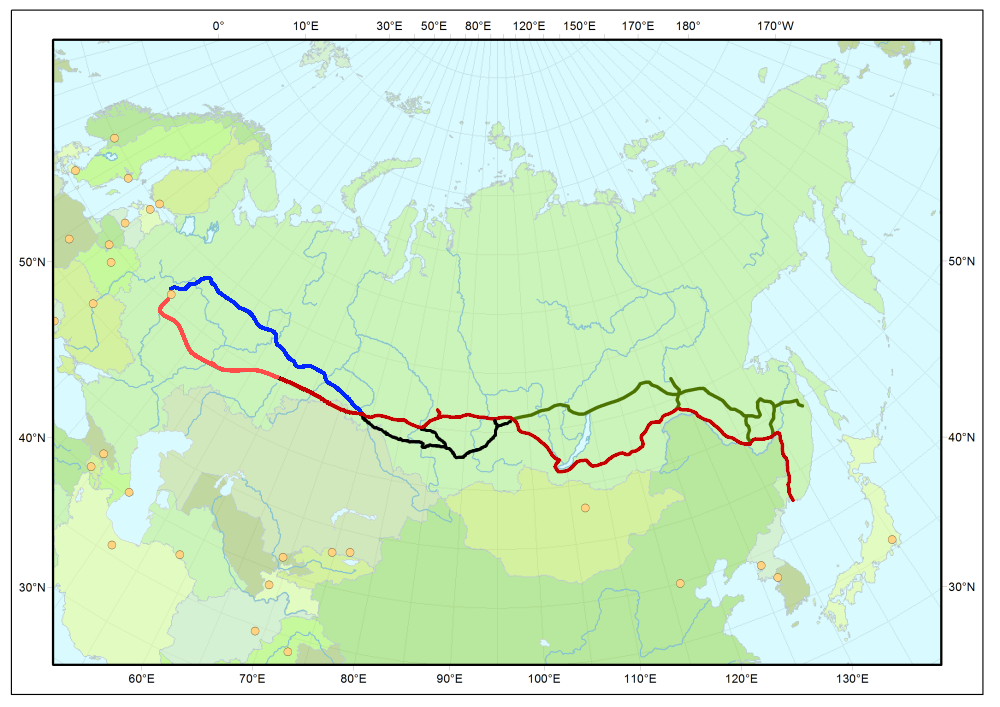
Apparently this is the first such festival by the Mariinsky in Vladivostok. If they ever do it again I shall save my kopeks and take the Trans-Siberian Railway.

Thursday, 31 July 2014

Reet Gradely: Romeo and Juliet, Mariinsky Ballet, Royal Opera House 29 July 2014

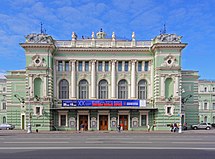
Mariinsky Theatre, St Perersburg
Photo Wkipedia


In Tuesday's Evening Standard Lyndsey Winship wrote:
"For Londoners used to Kenneth MacMillan’s masterful version for the Royal Ballet, this Romeo and Juliet seems flabbier and hammier — especially smugly arrogant Tybalt (Yuri Smekalov), seemingly modelled on Prince Charming from Shrek, and Vladimir Ponomarev’s theatrical Lord Capulet (even his eyebrows are up to something dastardly)."
Well that may be how Londoners see it but for this Northern lass Tuesday's performance of Romeo and Juliet by the very company that had created the ballet was reet gradely. Xander Parish who danced Romeo ought to know what that commendation means for he was born in God's own county. For those who weren't. here's a definition and etymology.

I am a bit of a connoisseuse of Romeo and Juliet having seen English National's, Scottish Ballet's and Ballet Cymru's in a little over a year. I also know the Royal Ballet's very well. Indeed, I have actually seen Seymour and Fonteyn dance Juliet. In my humble, provincial opinion the Mariinsky's  version towers above any I had previously seen.

I had expected a lot from this show. I had come to see Xander Parish whom I had last seen at the Yorkshire Ballet Summer School gala in York on my silver wedding anniversary 7 years ago ("We still have some of the best dancers in Yorkshire" 20 July 2014). Even though he and his sister were very young they impressed me with their athleticism and grace  Xander Parish displayed those same qualities yesterday. That alone would have been enough to justify a 440 mile round trip at the height of summer with the motorways in a mess but there were two others who stood out.

First, Viktoria Tereshkina who danced Juliet. Even more than Parish, she was the star of the show. I was bowled over by her from her first few playful steps with her nurse. She is a powerful dancer with considerable elevation which she demonstrated frequently but she is also an accomplished actress projecting sensitivity and vulnerability. The crucial part of any production of Romeo and Juliet takes place in Juliet's bedroom. First, there is the newly weds' pas de deux. This is the most beautiful part of the ballet and it is on that sequence that the whole work hangs.  Parish and Tereshkina were magnificent. After Romeo leaves her parents enter with Paris in tow with news that she is to marry Paris. So many emotions are unleashed in this poor young woman which she has to project in dance.  Again, Tereshkina excelled. For the last 40 years Seymour had been my Juliet. From now on it will be Tereshkina

The other dancer who impressed me greatly was Kimin Kim. He danced Mercutio. He has a beautifully expressive face conveying every type of feeling. He interpreted the role brilliantly with boyish swagger as he provokes Tybalt (also danced well by Kamil Yangurazov). The sword fight with Tybalt was one of the most exciting and realistic I have ever seen on stage.  "It's as if they are fighting with real swords" whispered my daughter manquée. Though we all knew how this fight would end how our hopes soared when Romeo seemed to separate the swordsmen and how they were dashed after Tybalt's sword punctured Mercutio's body. I could barely restrain a tear as Kim staggered around the stage rising to his feel, slumping, getting up again and eventually collapsing. This is one of the great death scenes in ballet. It stings Romeo into action overcoming temporarily even his love for Juliet. How we clapped and cheered as Kim took his curtain call at the end of Act II so relieved by the assurance that he was indeed alive.

There were sterling performances by Elena Bazhenova as Lady Capulet, Valeria Karpina as the nurse, Yuri Smekalov as Paris and Andrei Yakovlev who danced Friar Lawrence and Lord Montague. The whole company danced well but the cast is so long that it would be impossible to do justice to them all.  The Martiinsky's orchestra conducted by Boris Gruzin played magnificently.

I need to say a few words about the sets and costumes. These were credited to Pyotr Williams whose biography in itself. Intrigued by the Welsh surname and Russian forename and found that he was the son of an American scientist who had become a Russian citizen in 1896. The very time that so many Russians were emigrating to the United States. Somehow this son of an American émigré survived Stalin's purges when so many other artists perished.  The sets we saw on Tuesday must be reproductions of Williams's sets for the original 1940 performance. They were impressive particularly the opening scene of Verona with an estuary in the background, the Capulets' balcony and the burial ground. An interesting feature was the use of a second gold curtain which was no doubt intended to simulate the historic stage of the Mariinsky theatre.

"What's so special about the Russians?" my daughter manquée asked me when I invited her to the show. It is a question I had often asked myself. After all there are so many other fine companies around the world - not least our own Royal Ballet. Well after Tuesday's performance both my daughter manquée know the answer to that question. Despite revolution, purges, war and crisis the Mariinsky - the successor to the Imperial Russian Ballet - continues to set the standard to which everybody else aspires.

Tuesday, 8 October 2013

Galina Rakhmanova


I learned from the Mariinsky's Facebook page the very sad news that Galina Rakhmanova has died at the age of 49. 

I never got the chance to see her on stage and now I never shall but we can still appreciate something of her art from a video that someone has uploaded to YouTube in her memory. 

My sincere commiserations to her fellow artists, students, friends and relations.

Friday, 7 June 2013

Swan Lake from St Pertersburg


High definition television has created new opportunities for theatre and music lovers in outposts like Holmfirth to see the world's great opera, ballet and theatre companies without the expense and inconvenience of traipsing down to London - or indeed other metropolises such as St. Petersburg and New York. Doubtless it has also created opportunities for those companies to develop new income streams and indeed new audiences.

Over the last 12 months I have watched performances of the Bolshoi and the Met streamed live from Moscow and New York to the National Media Museum in Bradford (a great national asset threatened with closure that we really must save), the Royal Ballet's Nutcracker in Wakefield and, yesterday, the Mariinsky Ballet in Swan Lake in Huddersfield.  It is not the same as watching the companies on the stage.   As Tamara Rojo said when interviewed on BBC Radio's Broadcasting House just before Christmas "It's a different experience." But not necessarily an inferior one.  The cameras go where audiences don't such as the orchestra pit when the maestro waves his raises his baton or in the case of Valery Gergiev his hands. They interview the stars and, in some cases, the composers, conductors, designers, directors and technicians behind the production which provides valuable insights not only into the show but also the work. The New York Met deserves particular commendation in that regard.

Yesterday the ballet was streamed to some audiences in 3D. I got to see it in 2D but that was still good enough. The transmission opened with an interview with Gergiev and Yekaterina Kondaurova (Odette-Odile) from the new Mariinsky about which I blogged last month.   The ballet was danced on the original stage but an audience in the new auditorium watched it in 3D. It is a rare pleasure to hear a ballerina speak, especially Kondaurova who has a good command of English.   The transmission then switched across the road to the Mariinsky foyer where Yorkshireman (not everybody and everything of value in British ballet comes from London, Cheryl) Xander Parish was interviewed.  He danced one of Siegried's friends.

The Mariinsky had rolled out its top team for the world's admiration.  Kondaurova was magnificent as was his partner Timur Askerov. Odette-Odile is a split role requiring considerable dramatic as well as balletic skill to transform from sweet swan to shameless imposter. Not every ballerina can combine those roles but Kondaurova is one who can. My favourite bit of any Swan Lake is Legnani's 32 fouettés and Kondaurova executed them exquisitely. Special praise also go to Vasily Tkachenko who danced the jester. The Mariinsky has produced the legendary male dancers Nijinsky, Nureyev  and Baryshnikov.  In Tkachenko I think we will see another.

Having been brought up on the Royal Ballet's version I missed Fred Ashton's charming Neapolitan divertissement but the end of the Mariinsky's Swan Lake was so much more satisfying than most versions.  Instead of the lovers jumping into the lake and sailing off to Heaven Siegfried tore a lump out of Von Rothbart (danced brilliantly by Andrei Yermakov) who writhed convincingly on the floor as the swans broke free.

St Petersburg is one of the great cities of Europe I have still to visit and the clips of the city in the two intervals were stunning. "We have to go there" I whispered to my foodie friend.  And although borsht isn't doesn't appeal to either of us are now saving our pennies to see Theatre Square for ourselves.

Saturday, 4 May 2013

The New Mariinsky


The Mariinsky Theatre in St. Petersburg has a special place in the history of ballet. It was where the art developed and from where it spread to Paris, London, America and the rest of the world.    For those who don't know that history "The History of the Theatre" on the Mariinsky's website is a good place to start. Those who want to learn more should read Tamara Karsavina's "Theatre Street".

The title of Karsavina's book is the theatre's address and now it has a neighbour, Mariinsky II. This is a massive new opera house beside the existing one and according to the pictures on the BBC website it is very impressive. It opened this week to a special performance on May Day for "the Mariinsky Theatre’s older members of staff, WW II veterans and respected figures from St Petersburg’s artistic and research intelligentsia."   According to a report on the BBC website there has been some criticism of the expense and also of the building's aesthetics but if I were Russian I'd be as proud as Punch.

Thinking of Karsavina I am reminded of this passage from Arnold Haskell's Balletomania. Her brother, Platon Karsavin, a distinguished scholar, was arrested and interrogated by the secret police. On being asked his name the interrogator enquired whether he was related to the dancer. When he said that she was his sister the interrogator exclaimed: 
"Your sister! That is wonderful! Absolutely my favourite ballerina. I find her Giselle unsurpassed." 
Karsavin then asked what the interrogator thought of her performance in Swan Lake and the two spent the rest of the evening discussing the ballet.   Haskell speculates that Kasavin owed his life to the fact that he came before a balletomane because "what balletomane could sentence La Karsavina's brother?"  Quite so! As one who grew up during the cold war I could not imagine that the nation that continued to nurture the Kirov (the Soviet name for the Mariinsky) and the Bolshoi could be all bad - even if its missiles were trained on London.

Sunday, 31 March 2013

Olga Preobrajenska


Olga Preobrajenska was appointed prima ballerina of the Mariinsky Theatre in 1900. She spent 25 years with that company where she created many roles. Important though she was as a dancer she was even more influential as a teacher first in St Petersburg and later at the Salle Wacker near the Place de Clichy in Paris.

I was lucky enough to step inside the Salle Wacker on my first trip to Paris in September 1969 less than 7 years after that great dancer and teacher had died.  My guide was one of her former students, Pamela Tipton (now Mrs. Carl Newton) who was then a graduate student at St. Andrews. Pamela, who is an American, had come to Europe when she was a little girl to study ballet.

I asked Pamela whether she could write something about Preobrajenska and this is what she sent me:
"Haven’t forgotten about your Olga P. request….don’t really know what to say except that she was a tiny and fierce little lady who believed in physical punishment and commanded the utmost respect from her students.  I was 9 years old and terrified of her.  I grew to love her and when she died, mother and I attended a benefit and somewhere I have one of her linens that we purchased.  There was a gentleman at the studio who acted as her manager…he appeared to be slavishly devoted to her.  As a child I did not know what their relationship was other than he also collected money for the dance lessons.  I remember the time that Maria Tallchief came to the studio.  She was beautiful.  Many famous dancers came to her for instruction." 
Tallchief was the first native American ballerina, the wife of George Ballanchine and one of his greatest dancers.  Preobrajenska's other students included Margot Fonteyn, Maurice Béjart and many other stars.

Nick Wallace-Smith has uploaded some clips of Preobrajenska to YouTube, one of the her walking through the streets of Paris and another of her teaching at the very time Pamela was her pupil.

Happy Easter everybody!