Showing posts with label Matthew Rowe. Show all posts

Tuesday, 9 August 2022

The Dutch National Ballet's Sixtieth Anniversary Gala

Standard YouTube Licence

Dutch National Ballet  Sixtieth Anniversary Gala National Opera and Ballet Auditorium Amsterdam 30 June 2020 19:30

One of the high points of my year is the Dutch National Ballet's annual gala.  It consists of extracts from some of the company's work over the previous year and ends with a reception in which the dancers and musicians mingle with the audience.  In other years it has taken place in early September but this year it was on 30 June.  It is always a special occasion but this year's gala was particularly important because it was the company's 60th anniversary.  It also celebrated Hans van Manen's 90th birthday and the company's emergence from covid restrictions.  To underscore the significance of the occasion, the event was attended by King Willem-Alexander and Queen Maxima of the Netherlands.  

As usual, the evening began with the Grand Défilé, a parade of artists from the youngest students of the Dutch National Ballet Academy in their smartest leotards to the principal ballerinas in dazzling white classical tutus accompanied by the premiers danseurs nobles to the strains of Aurora's wedding from The Sleeping Beauty.   That was a tune that I often played in 2020 and 2021 in the hope that the pandemic would one day come to an end and the world's theatres would reopen.  This visit was my first trip to the Netherlands since 17 Nov 2019 when I saw The Best of Balanchine at the Zuiderstrandstheater in The Hague.

The Grand Défilé was followed by Hans van Manen's Solo, a spectacular piece to the music of Johann Sebastian Bach's Violin Partita which had come pretty close to stealing the show the previous evening. Henrik Erikson of the Stuttgart Ballet who had entertained us the night before thrilled us once more. This time, he was joined on stage by Fabio Adorisio and Christian Pforr.  Once again the applause was tumultuous.

At this point, the company's artistic director Ted Brandson usually walks on stage to welcome the crowd in Dutch and English. This year it was a little different for he spoke only in Dutch.  Presently a screen appeared and this film was run.  Now I have never learnt any Dutch - I regret to say that there are not many opportunities to learn that language in this country except for diplomats and a few academics - but I do speak German and my ears caught something that sounded like "Ritter" which means knight in that language.  Dutch is a language that English speakers with a good knowledge of German can actually get the drift because it is close to both languages.  The ceremony was nothing like a British investiture at which Her Majesty or nowadays Prince Charles dubs the candidate with a sword.  A decoration was presented by the Deputy Mayor of Amsterdam. But it was clearly a very high honour at least equal to any of our knighthoods for service to the arts as the company's news release makes clear.  I met Brandsen after the show and congratulated him on his knighthood. I asked him whether we had to call him "Sir Ted" from now on.  Brandsen thought that perhaps we should but I have to say that his view was not shared by any of my Dutch friends. 

The preeminence of Dutch ballet rests largely on the work of three outstanding choreographers, Hans van Manen, Rudi van Dantzig and Toer van Schayk. The company actually refers to them as the three Vans on the History page of its website.  Van Schayk is a distinguished sculptor, painter and stage designer as well as a choreographer and many of the sets for the Dutch National Ballet's productions were designed by him.  

The next work on the programme was De Chimaera van LA, an extract from van Schayk's ballet Het mythische voorwendsel which means "the mythical pretext".  According to the programme notes, the title of the ballet was inspired by a quotation from Salvador Dali who said, "the subject of art is a pretext." The music for the piece was by Bela Bartok but van Schayk created just about everything else. He choreographed the work and designed the set, costumes and lighting.  It was performed by Anna Tsygankova and Giorgi Potskhishvili.  I know Tsygankova very well having seen her for the first time as Cinderella at the Coliseum in 2014 but Potskhishvili was new to me.  He is clearly a rising star having entered the Junior Company as recently as 2020. Their ballet master, incidentally, was Caroline Sayo Iura who danced in the first performance of the ballet.  

The French composer Erik Satie inspired Sir Frederick Ashton to create Monotones and Hans van Manen Trois Gnossiennes. Van Manen's work was the next in the programme. It is a duet but one in which the pianist and piano have a role at least to the extent that they are on castors and moved around the stage. Having never heard the word "Gnossiennes " outside the context of this music I looked it up and found that it had been coined by Satie and that he had never explained what it means.   The word is reminiscent of the Greek word γνῶσις and as the music has a sacerdotal quality I offer "The Three Initiates".  The dancers were Anna Ol and James Stout and the pianist Olga Khoziainova.

Had he lived Wojciech Kilar would also have been 90 this year.  One of his most exciting works is Toccata which Krzysztof Pastor, Director of the Polish National Ballet and former dancer and choreographer with the Dutch National Ballet, used to create a fast-moving ballet.  It was performed by Chinara Alizade, Jaeeun Jung, Ryota Kitai, Paweł Koncewoj and Patryk Walczak of the Polish National Ballet.  Toccata was the next work of the evening.

The Staatsballett Berlin presented the following ballet  It had commissioned David Dawson (the Dutch National Ballet's Associate Artist) to create Voices during the lockdown.  According to the programme notes the piece reflects that time.  Dawson is reported to have said:
“The difficult times caused by the pandemic have given us an opportunity to reflect and progress, and help us to see the world again in its truth. I believe this is when change can really happen. VOICES aims to visualise the awakening of a new era where we can create the world we want to live in. A new place for humanity to have the chance to be the best it can be as we all learn more about our infinite capacity and potential.”

This piece is quite different from any of his previous works.  It was performed on stage by Polina Semionova and Alejandro Virelles.

One of van Manen's best known works is 5  Tangos to the music of Astor Piazzolla.  Perhaps the most thrilling part of that ballet is Voyamos a Diablo.  This is a male solo which requires a dancer of considerable strength and equal grace. Artur Shesterikov danced that role with characteristic flair.  

The contribution to the evening from Van Dantzig's repertoire was  Voorbij Gegaan.  The title has never been translated but I think it means "Gone By".  Van Dantzig created it for Alexandra Radius and Han Ebbelaar as they approached the peak of their careers.  A lyrical piece to a piano composition by Chopin it was danced delightfully by Qian Liu and Semyon Velichko.

One of my favourite moments of the evening was Joel a short solo by Remi Wӧrtmeyer that he had created for himself to the music of Jacques Offenbach.  It was a humorous piece but also one that required strength, stamina and enormous skill.  The company has recently announced Wörtmeyer's retirement,  In his valedictory, Brandsen said:

"Remi’s positive energy, fabulous technique and engaging personality onstage and off have made him one of the most beloved dancers in our company. I will miss Remi and his dancing enormously and I wish him lots of success with his new artistic adventures.”

I shall also miss him and I add my best wishes.

My other favourite piece was Riho Sakamoto's My One and Only from Balanchine's Who Cares. I interviewed her when she joined the Junior Company and have marvelled at her meteoric rise. This is a solo that charms her audience.  The applause loved her and exploded in applause.

I had seen van Manen's Variations for Two Couples the previous night and discussed it in my review of that performance.  Jozef Varga, who has also announced his retirement, had appeared in the first performance of that ballet. He was joined by Tsygankova who had also been in the first show, The other dancers were Jessica Xuan and Constantine Allen.  This performance is likely to have been Varga's last with the company.  He will also be missed and I wish him well.

The last piece before the interval was Grand Pas Classique by Viktor Gsovsky. It is not performed very often if at all in the United Kingdom and the only time that I had seen it before was as part of the Dutch National Ballet's Christmas Gala which was live streamed on 19 Dec 2021.  The work is spectacular even on screen but it is even better on stage. The dancers were Jakob Feyferlik who had performed the work in the Christmas Gala and Olga Smirnova.

There was an interval after Grand Pas Classique.  After we had returned to our seats, Matthew Rowe, the Director of Music, rose and addressed the King and Queen of the Netherlands.  He said that the Dutch Ballet Orchestra had commissioned some music from the Dutch composer, Jacob ter Veldhuis, as a 60th anniversary present for the company.  Mr Ter Veldhuis was in the audience and a spotlight picked him out immediately after the conductor's announcement. The piece that Mr ter Veldhuis had written was entitled  Luce Divina inspired by Dante's Divine Comedy on which he had already written an oratorio.  The orchestra then played the commissioned work. 

Although Rowe conducted the orchestra for most of the evening, he handed the baton to Jonathan Lo for De Chimaera van L.A and the finale.   Lo is the Director of Music of Northern Ballet and I have also seen him at Covent Garden.  Lo was with Brandsen when I congratulated him on his honour and Brandsen kindly introduced me to Lo.  I expressed my delight that through Lo there was now a personal link between Leeds and Amsterdam. I was even happier when Lo told me that Northern's new Director, Federico Bonelli, had also attended the gala which means that there is now a direct link with my local company at the highest level.

Every year an award is presented by Alexandra Radius to the year's most outstanding dancer.  This year it was won by Salome Leverashvili.  She came to my attention when she and Timothy van Poucke published a vlog which I featured in Missing Amsterdam on 17 Feb 2017.   Those talented young artists have risen through the company's ranks very quickly. Van Poucke won the Radius prize as early as 2018.  Leverashvili accepted her prize with a short but witty speech in English which may well have won her even more fans.

A part of any gala to which the audience particularly looks forward is the Junior Company's piece. This year the Junior Company danced the last part of In the Future. I discussed the piece in detail in my review of the previous night's performance.  The Junior Company did not disappoint their fans.  They were as exciting and vivacious as always.  Yet another triumph for their artistic coordinator, Ernst Meisner.  The programme did not name them individually but I have done so in my review of the previous night's show.

The evening's finale was part of the last act of Raymonda.   Rachel Beaujean's new production was perhaps the main achievement of this anniversary year.  I had intended to see it in Amsterdam on 6 April but was prevented from attending by injury.  Nevertheless, I saw it on screen on 8 May 2022 (see Live Streaming of Beaujean's Raymonda 8 May 2022).  The extracts that were danced at the gala included the Pas Hongrois and the Pas Classique Hongrois.  Floor Eimers and Jan Spunda led the Pas Hongrois and they were joined by Emma Mardegan and Luca Abdel-Nour, Khayla Fitzpatrick and Rafael Valdez, Wendeline Wijkstra and Nathan Brhane,  Arianna Maldini and Alejandro Zwartendijk, Luiza Bertho and Dustin True, Hannah de Klein and Sander Baaij, Lore Zonderman and Conor Walmsley, Kira Hilli and Leo Hepler.  Maia Makhateli and Young Gyu Choi accompanied by Connie Vowles and Edo Wijnen, Yuanyuan Zhang and Sho Yamada, Nina Tonoli and Davi Ramos, Salome Leverashvili and Martin ten Kortenaar, Chloë Réveillon and Joseph Massarelli, Maria Chugai and Timothy van Poucke, Elisabeth Tonev and Sem Sjouke and Jingjing Mao and Daniel Robert Silva performed the Pas Classique Hongrois. Chloë Réveillon the variation and Edo Wijnen, Sho Yamada, Martin ten Kortenaar and Timothy van Poucke the male variation.

After the performance, the audience spilt out onto the lobby and terraces for the reception.  The reception welds the company and its audience into a family which does not happen with most other companies. It is one of the reasons why I love the Dutch National Ballet.  Of course, I have a lot of respect for the world's other great companies and I am a member of many of their Friends' schemes and support them in every way I can.  But, with the exceptions of Scottish Ballet, Ballet Cymru and, very recently, Northern Ballet, I do not feel as close to them as  I do to the Dutch National Ballet.  It was at the reception that I met van Manen.  My brief handshake and greeting enabled me to express my admiration and gratitude for his lifetime's work.  I doubt that I could have done that in any other way.

Thursday, 7 October 2021

Toer

7th Symphony
Author Hans Gerritsen © 2021 Dutch National Ballet, All rights reserved


Dutch National Ballet  Toer  Streamed from the Music Theatre, Amsterdam, 25 Sept 2021, 19:15  and repeated 6 Oct 2021, 19:00

Toer is a double bill in honour of the celebrated choreographer, artist, designer and former dancer, Toer van Schayk.  It consists of two of his ballets: Lucifer Studies and 7th Symphony    Lucifer Studies is a new work which was premiered on 14 Sept 2021.  7th Symphony is described by the programme as one of van Schayk's most successful ballets.  He created it in 1986 and he was awarded the choreography prize of the Dutch Association of Theatre and Concert Hall Directors for the work within a year.   The programme was streamed over the internet from the Amsterdam Music Theatre on 25 Sept and repeated last night,   I watched both transmissions.

Both works were new to me.   They are very different.  The first contains studies that were intended to form part of a full-length ballet based on Vondel's Lucifer.   Work on the ballet has been interrupted by the pandemic but Van Schayk rightly considered that the studies were worth showing. The second piece is based on Beethoven's 7th symphony.   That symphony is one of Beethoven's most famous compositions.  Contrary to the opinion of an eminent ballet critic who really ought to know better that Beethoven is undanceable, the 7th symphony was crying out to be danced and van Schayk has choreographed it beautifully.  While I had to work hard to digest Joep Frannsens's Echoes for Lucifer Studies I could barely sit still and keep silent as the orchestra romped through Beethoven's exuberant work.

I like to think that I am reasonably well-read but I have to confess that until I saw Lucifer Studies I had never heard of Vondel or his play and I fear that few of my fellow Anglophones could claim otherwise.  There is a beautiful open space in the centre of Amsterdam known as Vondel Park and I wonder whether it was named after him.  Joost van den Vondel lived from 1587 to 1689 which encompassed the life of our great poet, John Milton, who lived from 1608 to 1674. I have now had a chance to acquaint myself with Lucifer. Even in translation, Lucifer is impressive and its subject matter is the same as Paradise Lost.  I know that poem well perhaps because I attended the same secondary school as Milton.  I am told by one of his former classmates that Matthew Rowe attended that school too.  Fragments of Milton's verse flashed through my mind as I watched the ballet. From the way the orchestra played, I sensed that Rowe was also inspired by Milton too and that he had communicated that inspiration to each and every musician.

Lucifer Studies
Author Hans Gerritsen © 2021 Dutch National Ballet, All rights reserved


Lucifer Studies had an all-male cast. As I suspect that each of the studies was intended to be danced by a principal or soloist in the full-length work, van Shayk selected some of the company's ablest young dancers.   They included Timothy van Poucke who has enjoyed a meteoric rise in the company winning the Radius prize within a very short time of graduating from the Junior Company.   Also in the piece was Martin ten Kortenaar whom I featured in 2014.   Others I recognized were Daniel Robert Silva, Nathan Brhane and Giovanni Princic.  That is not a complete list because I cannot recover the cast list for 25 Sept from the company's website.   Each and every one of those excellent young men impressed me greatly. 

Van Shayk designed the sets and costumes for Lucifer Studies.   The most striking feature of the costumes was that each of the dancers wore a differently coloured right sleeve.   Sometimes the colours of those sleeves were projected onto the backdrop focusing the audience's attention on the solo or duet in question.

Though Lucifer Studies lasts no more than 27 minutes it is a very absorbing work.   I had to watch it twice and discuss it with a dancer friend to get the measure of it.   After the world emerges from the pandemic I fervently hope that resources will be found to enable van Schayk to finish the full-length work.

Young Gyu Choi and Nancy Burer
Author Hans Gerritsen
© 2021 Dutch National Ballet: all rights reserved


It is not hard to see why 7th Symphony was an immediate success.  Van Schayk caught the exuberance of the score and amplified it.   The cast was split into two groups lettered "A" and "B".   I regret that I did not record the names of all the dancers on 25 Sept because I thought that the cast list would be available with the repeat   I remember that I admired the performances of Artur Shesterikov and Floor Eimers but there were many others some of whom I did not recognize.   Everyone danced well in that show and I congratulate each and every one of them.   Van Schayk designed the sets and costumes. The women's dresses must have been a joy to wear. 

Of all the online shows that I have seen since the start of the pandemic, this double bill was one of my favourites.  It was a fitting tribute to an extraordinary talent who celebrated his 85th birthday last month.

Thursday, 2 January 2020

Review of 2019

Alexander Campbell, Male Dancer of 2019
Author Wild21swan

Licence CC BY-SA 4.0


The year that has just ended was a particularly good one for dance. Two of the world's greatest ballet companies, the Bolshoi and the San Francisco Ballet visited London. There were excellent productions of Carlos Acosta's Don Quixote by the Royal Ballet, Rudi van Dantzig's Swan Lake by the Dutch National Ballet, Christopher Wheeldon's Cinderella by English National Ballet and Giselle and The Nutcracker by the Birmingham Royal Ballet.  Phoenix Dance Theatre excelled itself with its Rite of Spring performed as part of a double bill with Opera North at the Lowry.  There was some great choreography by David Dawson, Cathy Marston, Mthuthuzeli November and Ruth Brill. Scottish Ballet, the first company that I got to know and love, celebrated the 50th anniversary of its déménagement from Bristol to Glasgow, Northern Ballet the 50th anniversary of its first performance at the University Theatre in Manchester and Chelmsford Ballet, the amateur company in Essex on which Powerhouse Ballet is modelled its 70th.  Incidentally and on a much more parochial level but very importantly for me, our little transpennine amateur company gave its first performance at the Dancehouse Theatre in Manchester in May as part of the KNT Dancework's 10th-anniversary gala in a work that was choreographed by Terence Etheridge who had been one of the original members of what is ow Northern Ballet.

With all this activity, readers might think that this would be a particularly difficult year to pick performances, performers, companies and choreographers of the year and for the most part, they would be right.  But there was once performance that stood head and shoulders above the rest and that was the Bolshoi Ballet's Spartacus at the Royal Opera House on 10 Aug 2019.  This is what I wrote about the show:
"Ever since I saw a streaming of the ballet from Moscow nearly 6 years ago I have longed to see it on stage. I have had a long wait because few if any Western companies seem to perform the work and certainly no British ones. This year, however, the Bolshoi included Spartacus in its London season so I traipsed down to London yesterday to see it. The ticket in the centre of row G of the stalls wasn't cheap. Neither was the rail fare. The rail network was all over the place as a result of the high winds and the aftermath of Friday's power outage. Nevertheless, I can think of no better use of my time or a better way to spend my money. I have been going to the ballet for nearly 60 years and see about 50 shows a year. Rarely have I been more excited by a performance than I was yesterday by the Bolshoi's performance of Spartacus."
One of the reasons why the show was so good is that Igor Tsvirko and Ruslan Skvortsov danced the male leads and Margarita Shrayner and Ekaterina Krysanova the female ones.  They were so good that I had shortlisted Tsvirko and Skvortsov for premier danseur noble and Shrayner and Krysanova for ballerina for 2019.

Male dancer of the year was very difficult this year because there were so many to choose from.  In addition to the two from the Bolshoi, I had listed Xander Parish of the Mariinsky whom I saw at the Dutch National Ballet's gala in September, Daniel Carmargo of the Dutch National Ballet and my ballerina of the year's partner Brandon Lawrence,  In any other year, any of those fine artists would have been my male dancer of the year but this was the year of Alexander Campbell. He won my heart for his Don Basilio in Don Quixote on 30 March 2019.  Here is what I wrote about him in Campbell and Magri in Royal Ballet's Don Quixote on 2 April 2019:
"My enjoyment of the show was facilitated greatly by the casting of Alexander Campbell as Don Basilio. A year or so ago I read about his taking part in a scheme by the RAD and MCC to encourage kids to take up ballet and cricket. Perfectly natural in my view as I have always had a passion for the two. I think it was Arnold Haskell who observed that cricket had predisposed the British to ballet pointing out many parallels between the two. Like another of my favourites, Xander Parish, Campbell had been a promising cricketer as a boy. I had long surmised that that might be the case before I had read that article for Campbell commands the stage like a batsman at the crease. There is something about his manner - perhaps his grin - that makes it impossible not to like him. He wielded his guitar while wooing the coquettish Kitri as an extension of himself just as a batsman holds his bat. As he seized her fan in the same scene I imagined his diving for a catch. In his jumps and lifts, he is much an athlete as an artist. It may be a figment of my imagination as it may be have been years since he last played the game, but I think that his youthful cricketing prowess has contributed more than a little to his appeal as a dancer."
I have never met Campbell but his personality bubbles as readers can see from this interview with him by Guerilla Cricket.

I had the same difficulty in choosing a ballerina of the year because of the abundance of talent. In addition to Shrayner and Krysanova, there was Maia Makhateli whom I described as "perhaps the best Odette-Odile I have seen since Sibley" and the ultra-talented Celine Gittens.  I have seen Gittens in many roles including Sugar Plum in the Albert Hall this year and last,  Swanilde in Coppelia and Juliet in MacMillan's Masterpiece but it was her performance as Giselle on 29 Sept 2019 that touched my heart:
"Gittens was outstanding in the title role. An accomplished actor as well as virtuoso, it was hard to stay dry-eyed as she glided inexorably towards her fate. First, the plucking of the petals, the heart murmurs, the warning from her mother, feeling the hem of Bathikde's garment and finally the deception as Hilarion produced Albrecht's sword and Albrecht acknowledged his posh betrothed."
My acknowledgement of Gittens's excellence is long overdue.  After I saw her in Romeo and Juliet I wrote:
Because of MacMillan's focus on Juliet's transition I can't help comparing the ballerina who dances that role with Seymour. I have never seen a performance that has impressed me as much as Seymour's over the last 50 years but some have come close. Last night's exquisite performance by Celine Gittens came closest of all. She taught me new things about the ballet. Her realization of her womanhood as she tossed aside her toy. The look that she gives Romeo before they dance a step. No doubt that is part of the choreography but somehow I had missed them all the other times that I have seen the work. In Gittens I saw Juliet rather than a representation of Juliet. Just as I had with Seymour all those years before.
After reading those words, Gittens reminded me on twitter that she like Seymour also came from Vancouver.

I saw some brilliant new works this year:  David Dawson's Requiem in Amsterdam, Jeanguy Saintus's The Rite of Spring, Cathy Marston's Snowblind as well as her Victoria and The Suit, Mthuthuzeli November's Ingoma and Ruth Brill's Peter and the Wolf.  Dawson and Marston are two of my all-time favourite choreographers.  I love Dawson's Swan Lake and admire Marston's Snowblind enormously November's Ingoma moved every emotion but there was just one work that I just had to see twice, That work was Peter and the Wold. When I saw it in Shrewsbury I wrote:
"Peter and the Wolf is just so well known and well-loved it could not possibly fail to appeal. I first heard the score and dialogue on Children's Favourites with Uncle Mac on the Light Programme in the early 1950s and I have seen countless performances in various genres on different mediums at different levels of performance ever since. So, no doubt, would a lot of other people in the audience,
Yet Brill created something new. First, she set it in the urban wilderness and not a rural one. The set was scaffolding. A tree only in a child's imagination. There was a pond for a duck that was probably a burst water main or a crater. And the wolf was very much of the two-footed kind as in Annabelle Lopez Ochoa's Little Red Riding Hood. Secondly, she cast Day as Peter, Tori Forsyth-Hecken, Alys Shee and Eilis Small as the hunters and Tzu-Chao Chou as the little bird. I have to be careful here for I once got into trouble with several of the company's dancers by discerning a dimension that upset them but I detected a feminist twist here. If Peter is a boy and the hunters are men, as they usually are, it is the female duck that is eaten by the male wolf (Mathias Dingman) it is the makes who remove the pest and lead him into captivity. Whether intended or not there was a strong feminist twist Brill made it clear that women can take care of threats without the need for heroes thanks very much.
Day may have been cast as a boy but she danced like a girl and one with spirit - particularly when her granddad (Barton) scooped her from the meadow (building site) and lectured her about keeping safe. Like a girl, she showed ingenuity in catching the wolf and I think also like a girl she interceded with the hunters to save its life. Downs made a great cat. I loved the way she probed the air with her paw just like a real moggy. And there was a lovely performance of the duck by Shee taking the place of Brooke Ray. I enjoyed her riposte to the bird's taunt: "What sort of bird are you if you can't fly?"
Peter and the Wolf will be danced in Birmingham and London as well as other places and I think audiences will love it."
I liked it even better when I saw it again in London:
"Even though I liked Lyric Pieces and Sense of Time very much, the highlight for me was Peter and the Wolf. The cast was the same as it had been in Shrewsbury except that Brooke Ray was able to dance the duck. Laura Day danced Peter as charmingly as she did in Theatre Severn, Matthias Dingman the wold, Tzu-Chao Chou the bird, Samara Downs the cat, James Barton the grandfather and Tori Forsyth-Hacken, Alys Shee and Eilis Small the hunters. As I forecast in my review of their performance in Shrewsbury, the audience at Sadler's Wells loved Peter and the Wolf. I don't think that they danced any better in London than they did in Shrewsbury but a London audience somehow lifts a show. I think that is because a show is a sort of conversation. An audience that sees a lot of dance appreciates a good show and responds accordingly. That, in turn, is picked up by the cast who shine even more. It was a great atmosphere and it was lovely to see the choreographer acknowledging our applause at the reverence."
I notice from her twitter stream that Brill has been appointed artistic director of the London Children's Ballet.  All I can say about that is that the kids are very fortunate to work with such a fine choreographer at an early point in their lives. I wish Ruth Brll every success in that endeavour and I will support it any way I can.

Brill used to dance for the Birmingham Royal Ballet and Gittens still does. Over the year that company has offered some great shows such as the Seasons in our World and Peter and the Wolf double bill, [Un]leashed,  Giselle and The Nutcracker at the Royal Albert Hall. Its former director has just been awarded a knighthood.  It has done tremendous outreach and educational work throughout the country and particularly in the West Midlands. It is starting a new era with Carlos Acosta as its artistic director.  There can be no doubt to acknowledge the Birmingham Royal Ballet as the company of the year.

My character artist for 2019 is Sarah Kundi for her performance as Hortensia in Christopher Wheeldon's Cinderella.  In Cinders in the Round I wrote:
"The second act is the prince's ball where the step mum and her daughters turn up with Cinders's dad but no Cinders wearing quite the wrong outfits and generally making fools of themselves. Things got worse when the drink was served because the stepmother drank just a teeny weeny bit too much and had to be lifted off the floor and carried to a couch. That role was performed by Sarah Kundi who is one of my favourite dancers. I have followed her ever since she was with Northern Ballet in Leeds. She used to remind me of a famous dancer of my youth whom she still resembles in many ways. Since she joined ENB I have begun to appreciate her for her own qualities. Kundi stole the second act if not the show and she raised more than a few laughs in the third act when she showed up at the breakfast table with one almighty hangover."
I concluded my review as follows:
"Erina Takahashi was a lovely Cinders and Joseph Caley was a great prince. Good to see Gavin Sutherland from Huddersfield conducting the orchestra, But the star for me on Sunday was definitely Kundi."
In most years Gary Avis would win character artist of the year hands down. Alas, I can't give him that accolade this year as I saw him live only once as Don Quixote.  He is a charming man who excels in every role.  He deserves special recognition for a brilliant career.  He is certainly the best character artist of his time.  With the possible exception of Wayne Sleep, he is probably the best I have ever seen.

Finally, conductor of the year and there are some worthy contenders:  Koen Kessels, Boris Gruzin, Gavin Sutherland, Matthew Rowe and Jonathan Lo.  My choice for 2019 is Maestro Rowe for his work as director of music and principal conductor of the orchestra of the Dutch National Ballet.

Summary

Ballet of the Year   
Bolshoi Ballet, Spartacus, Royal Opera House, 10 Aug 2019
Male Dancer of the Year   Alexander Campbell, the Royal Ballet
Ballerina of the Year  Celine Gittens, Birmingham Royal Ballet
Choreographer of the Year  Ruth Brill, London Children's Ballet
Company of the Year  Birmingham Royal Ballet
Character Artist of the Year  Sarah Kundi
Conductor of the Year  Matthew Rowe
Best Character Artist of his Time Gary Avus

Friday, 12 July 2019

Dancers of Tomorrow


Dutch National Ballet Academy and the Dutch National Ballet Junior Company Dansers van Morgen Theatre of the Dutch National Opera and Ballet, 9 July 2019, 20:00

On 13 Sept 2018 Ernst Meisner was appointed artistic director of the Dutch National Ballet Academy (see Ernst Meisner appointed as interim artistic director of the Dutch National Ballet Academy and René Vlemmix as business manager 13 Sept 2013 Amsterdam University of the Arts).  He combined that appointment with his existing role as artistic coordinator of the Dutch National Ballet's Junior Company. I featured Meisner and the Junior Company in Ernst Meisner’s Work with the Dutch National Ballet on 2 Dec 2014.  On Tuesday 9 July 2019, Meisner's students from the academy and his artists from the Junior Company united to perform Dansers van Morgen (Dancers of Tomorrow)

The performance took place in the principal auditorium of the Dutch National Ballet with the company's own orchestra under the direction of Matthew Rowe, its director of music. Seven works were presented:
  • Part of Paquita by Marius Petipa
  • Together(E) by Wubkje Kuindersma
  • Part of Wayne McGregor's Atomos
  • Revelry by Ernst Meisner
  • Made in Holland by Didy Veldman
  • Ode aan Fred by Iva Lešić, and
  • Bolero by Gregor Seyffert and Larisa Dobrozhan.
I enjoyed all of those pieces, particularly Revelry. Ode aan Fred ("Ode to Fred") and Bolero.

If I understood the programme notes correctly, Meisner created Revelry for the 2017 gala for which I had been unable to get a ticket.  Set to Lowel Liebermann's composition of the same name  An infectiously exuberant work it is perfect for dance and particularly well suited for the individual personalities of the members of the Junior Company.  Guests arrive at a party and throw themselves into the celebration with gusto.  Clearly, they have a good time.  So much so that when the music ends the audience see each and every one of them prostrate on the floor.  This was the first time that I had seen Revelry but it is already one of my favourites.  It is a work that they could easily have taken to London last week and I am sure the audience would have loved it.

I am guessing that "aan" means "to" in Dutch.   When I saw Ode aan Fred  I thought this would be an ode to Ashton and that we would see lots of developpés, arabesques, pas de bouré and pas de chat.  In fact, this Fred was a well-loved instructor at the National Ballet Academy.  The music started with what sounded to me like didgeridoos and I wondered whether Fred Berlips was an Australian. On consulting the programme notes I found that the opening had been Andrea Geraks Jews Harp Music and that there was also music by Goran Bregovic. I understand from friends who know him that Berlips specialized in teaching younger students.  He was invited onto the stage for the curtain call and auditorium exploded in applause.  Meisner came on stage and made a short speech.  Berlips was presented with an enormous bouquet.  The affection for the man was palpable.

The last work was set to Ravel's Bolero and was quite different from Maurice Béjart's which I had seen at the Coli or the Wells many years ago. It began with a spotlit single dancer but in this version, it was a young woman on the floor.  The arc widened to reveal more women on the floor and then more. As the music gathered pace so did the dancers.  The stage cleared and another group of dancers performing ever more energetically than the last.   As the music reached its conclusion the stage erupted in colour and movement.   It was the perfect way to end a perfect evening,

The show started with Paquita cannot be the easiest work for students. It includes a pas de deux which requires a lot of lifting, some spectacular jumps and turns and 32 fouettés which seem to be at least as difficult as Kitri's in Don Quixote or Odile's in Swan Lake.  There were several difficult solo bits for both men and women as well as work for the corps.  In the absence of a cast list, I cannot identify the dancers otherwise than by the colours of their costumes but I have to commend Yellow for her jumps.  White, of course, was also impressive.

Set to Anthony Fiumara's haunting Aerial for piano and orchestra, Together(E) featured the academy's younger students.  The music reminds me of waves breaking on a beach and that was reflected in the precise movements of the students,   With its bar of red light and almost sculpted dancers, the hand of Wayne McGregor was unmistakable.   Another difficult piece which was executed well by the students.
Having seen Sense of Time in [Un]leasted just a few days earlier I was curious to see more.  Set to Simeon ten Holt's Canto Ostinato which is another work for a single pianist Made in Holland was a beautifully crafted work.

Meisner appeared on stage immediately after Paquita with the academy's business manager.  As his speech was in Dutch (a language I have never formally studied) I did not pick up every word but he explained that he was the artistic director and described the works that were to follow. He said that several of the pieces had been written especially for last Tuesday's show, that the programme included one of his own works and that Wayne McGregor and Didy Veidman had contributed works for the performance.  He also introduced the National Ballet's Orchestra and its illustrious conductor.  The manager mentioned the need for funding and tight management, He and Meisner had worked well together and he looked forward to their future collaboration.

I have made it my business to see student shows ever since 2007 when I saw Xander Parish and his sister Demelza and his sister steal a gala that included Marianela Nuñez and Samara Downs (see Charles Hutchinson Review: A Summer Gala of Dance and Song, Grand Opera House, York, Sunday 31 July 2007).  I have seen many great shows in that time but I think last Tuesday's was in a class of its own.

Thursday, 28 February 2019

Dawson's "Requiem"


Standard YouTube Licence

Dutch National Ballet Requirem Music Theatre (Stopera) Amsterdam, 27 Feb 2019, 20:15

David Dawson's Requiem is a double bill of two of that choreographer's recent works: Citizen Nowhere which was first staged in 2017 and Requiem which was premiered on 12 Feb 2019.  These are formidable works which were performed to a packed house that gave them a standing ovation.

The first of those works was Citizen Nowhere.  I am not sure whether to describe it as a solo or a duet.  There was only one artist on stage, namely Joseph Massarelli but an outside image of Sasha Mukhamedov appeared on screen and there was certainly a dialogue between Massarelli and the screen throughout the show. According to the programme notes, one of Dawson's sources of inspiration was Antoine de Saint-Exupéry Le Petit Prince.  However, in the weeks before my nation is dragged with at least half our population including me kicking and screaming out of the European Union against our will, I could not occlude from my mind the shameful speech of our Prime Minister to the 2016 Tory party conference that a citizen of the world is a citizen of nowhere.  The programme hints that that speech may have been in the choreographer's mind:
"For Dawson, an Englishman by birth who has been living and working in Europe for a long time, this famous story has gained extra meaning because of some of the political issues the world faces today due to nationalism, the building of walls, and the displacement of people who find themselves far from home."
It was clear from the guffaw that May's speech was in the mind of my audience when I invited my audience for my talk on developments on English law at C5's Pharma & Biotech Patent Litigation to follow we down to the Stopera to see this double bill by one of the world's greatest dance companies.

Though a very short work Citizen Nowhere was demanding both for artist and audience.  Massarelli, stripped to the waist, circled the stage like a colt stallion. Powerful but constrained by the screen much like Winston Smith in Orwell's 1984.  On to the screen bounced letters which gathered and were swept away like autumn leaves. Occasionally quotations from Saint-Exupery's book appeared like "One sees clearly only with the heart. The essential is invisible to the eye" from Fox.  "Why in English?" I asked myself.  If people here read Saint-Exupery at all it would be in Dutch or perhaps in the original French which most schoolchildren in the Netherlands master at the same time as they as they study English and German.  Be that as it may, it was spectacular and breathtaking as was  Szymon Brzóska's score with Matthew Rowe's interpretation.  Congratulations to Altin Kaftira who made the film and indeed all who collaborated on this multidimensional and absorbing creation.

Requiem is more than a work of art.  It is an act of worship.  Surprisingly, perhaps, in this day and age. Living, as I do, close to Huddersfield with its famous Choral, I related immediately to this work. Especially to the Kyrie and Agnus Dei. This is a choral work upon which I felt dance was but a commentary.  I loved Gavin Bryars's music and even though one of my very, very, very, very special and very favourite ballerinas, Mukhamedov, was performing ethereally before my eyes I felt them closing as I focused on the sound.  "How could I do that?" I kept saying to myself for it was not just Mukhamedov that I was missing but also other favourites such as Floor Eimers, Yuanyuan Zhang, Riho Sakamoto, Nancy Burer, Clara Superfine, Thomas van Damme and Nathan Brhane whose careers I follow closely and whom I greatly admire.  There was just so much to see, so much to hear, so much for intellect and spirit to absorb that I felt overwhelmed.  This is a work that requires multiple visits to understand and, alas, this is my only opportunity to see it this season.

This double bill is the sort of programme that makes the Dutch National Ballet special.  Perhaps Hampson's Scottish Ballet could do it too but I can think of few other companies in the world who would do it justice and even fewer audiences who would value it as much as those in the Stopera who stood and cheered.

Thursday, 15 September 2016

Dutch Nationl Ballet Gala - Le Grand Défilé

Le Grand Défilé
Photo Michel Schnater
(C) 2016 Dutch National Ballet: All rights reserved
Licensed by kind permission of Richard Heideman


Dutch National Ballet, Gala, Stopera, 7 Sept 2016 


Nothing gives a better impression of the strength of the Dutch National Ballet and the Dutch National Ballet Academy than the Grand Défilé or big parade that begins the gala that opens the Amsterdam ballet season. As the curtain rises the first year students of the Academy present themselves to the audience. The girls are in light blue leotards and the boys in white t-shirts. They give way to the second year and so on until the Junior Company appear. They in turn give way to the élèves who are succeeded by the corps  and each and every other rank in the company until the ballerinas and premiers danseurs nobles.  All to the strains of the polonaise from Tchaikovsky's The Sleeping Beauty.

Compared to the Paris Opera Ballet, the Royal Danish Ballet and the Mariinsky the Dutch National Ballet is very new. It will celebrate its 70th anniversary next year. But it has achieved much in its 69 years as the timeline on the company's website indicates. In his speech at last year's gala Ted Brandsen remarked that there had been no balletic tradition in the Netherlands before 1947 (see The best evening I have ever spent at the ballet 13 Sept 2015). The Dutch can and do take enormous pride in those achievements.

Of course, like all great companies the Dutch National Ballet is international. Artists of many nationalities have contributed to its success including some from our country. Wayne Eagling was the company's artistic director between 1991 and 2003. David Dawson is one of its associate artists. Matthew Rowe is, its director of music and principal conductor. Judy Maelor Thomas, who assisted Ted Brandsen with the choreography of the Grand Défilé, is the company's ballet mistress. More than a few of the dancers trained at the Royal Ballet School including its great ballerina, Igone de Jongh and the artistic coordinator of the Junior Company, Ernst Meisner.

The links between the Netherlands and the United Kingdom go back a very long way. David Bintley mentions the tour of the Vic-Wells Ballet to the Netherlands on the eve of the German invasion in Dancing in the Blitz: How World War II made British Ballet. The links are not all one way. Meisner, for example, was a very popular dancer at the Royal Ballet. He continues to contribute to British ballet through the New English Ballet Theatre and the Royal Ballet School summer programme. According to Bintley, the flower throw which I had always regarded as a quintessentially English tradition was invented by the Dutch who showered the Vic-Wells dancers with flowers on their visit in 1940.

The company's press officer, Richard Heideman, has sent me some lovely pictures of the gala of which this is only the first. My next post will be on the extract from La Bayadere.

Monday, 29 August 2016

Now that we have had a go at La Bayadere let's see the Experts do it properly


Standard YouTube Licence


Earlier this month a dozen adult ballet students at KNT Danceworks in Manchester took part in a three-day workshop on La Bayadère. We did a little show at the end which you can see in La Bayadere Intensive Day 3: No Snakes 17 Aug 2016. While I don't think I would be wise to give up the day job just yet I enjoyed the workshop enormously.

I think the main benefit of the workshop will be the insight into the ballet that I have gained from attempting the shades and golden idol dances.  I have lost count of the number of times I have seen Swan Lake in Covent Garden and other theatres around the world over the last 55 years or so but I learned so much more about the ballet from Jane Tucker in her three day intensive last year that I did in a lifetime of watching performances of it from the stalls or reading about it in the books.

The next opportunity for most of us in the UK to see La Bayadère will be the Dutch National Ballet's production in Amsterdam between 8 Oct and 13 Nov 2016. That is Makarova's version which must be similar to the one she did for the Royal Ballet that was last performed in 2013. We in Team Terpsichore have already got our tickets. We are flying out from Ringway on 12 Nov and returning in the evening of the 13. We shall see the matinee on the 13. If Floor, Cristiano, Emilie, Thomas, Giovanni or any of our other Facebook friends will be in  that show do let us know.

As there are still plenty of tickets for the matinee it would be super duper if some of our classmates could meet us in Amsterdam.  The above video shows two of the dances we learned in Manchester, namely the golden idol and the entry into the kingdom of the shades. It would be a wonderful opportunity to see the experts do those dances properly.

We could also perhaps make a side trip to the Hague to see our dear teacher, Mark Hindle, lead the gazelles in the Lion King at the AFAS Circustheater.  The only problem is that the ticket prices for this musical which has been running in London since Adam was a boy start at 29 euro and go up to 100 euro. That is far more than the cost of the equivalent seats in the Stopera to see one of the greatest ballet companies in the world with some of its biggest stars and a full orchestra. And that is for a show in the Hague - not Amsterdam. However, it may be possible to negotiate a discount if we could organize a party.

Whether or not we get to see Mark on this occasion the ballet is a must.  If you have not seen the Dutch National Ballet it is very like our own English National Ballet. It has many connections with this country.  One of its leading ballerinas, Igone de Jongh trained in London.  Its magnificent choreographer and artistic co-ordinator of the Junior Company, Ernst Meinser, danced with the Royal Ballet for many years and is one of out own (see Meet Ernst Meisner and his talented young dancers 6 Dec 2014). Matthew Rowe, the company's musical director and principal conductor, comes from London. Indeed, he may even have attended my old secondary school for there is a tantalizingly oblique reference to him in the latest issue of our alumnus magazine.

The company performs in the Stopera which is a lovely theatre. I was lucky enough to be given a tour of the building on my last visit to Amsterdam (see Double Dutch Delights 17 Feb 2016). It is one of the most modern auditoriums in the world with a good view of the stage from every seat.  There is a terrace on every floor which overlooks the square and canal below. There is no better way of spending an interval than standing on the terrace and reflecting on the show.

Amsterdam has become a little more expensive for us since the recent fish dive of the pound after the referendum but it is still cheaper than London. There are lots of reasonably priced restaurants offering a wide range of national cuisines. My favourite is rijjsttafel which comes from Indonesia, a country that used to be administered by the Netherlands. It seems to be as popular in Amsterdam as curry in Rusholme and for very similar reasons. There are convenient flights from Ringway and Speke by easyJet. Transport around Amsterdam is very easy. Nearly everyone seems to speak at least some English and Dutch is the closest relation to our language.

I admire the Dutch National Ballet very much for many reasons not least of which is the opportunity that the Junior Company gives to outstanding young dancers from many parts of the world.  There is a Friends' scheme of which I am a member.  If you come with me to Amsterdam and fall in love with these beautiful artists as most do, I do hope you will consider joining it.

Wednesday, 22 June 2016

Terpsichore votes "Remain"

Τερψιχόρη
Jean-Marc Nattier


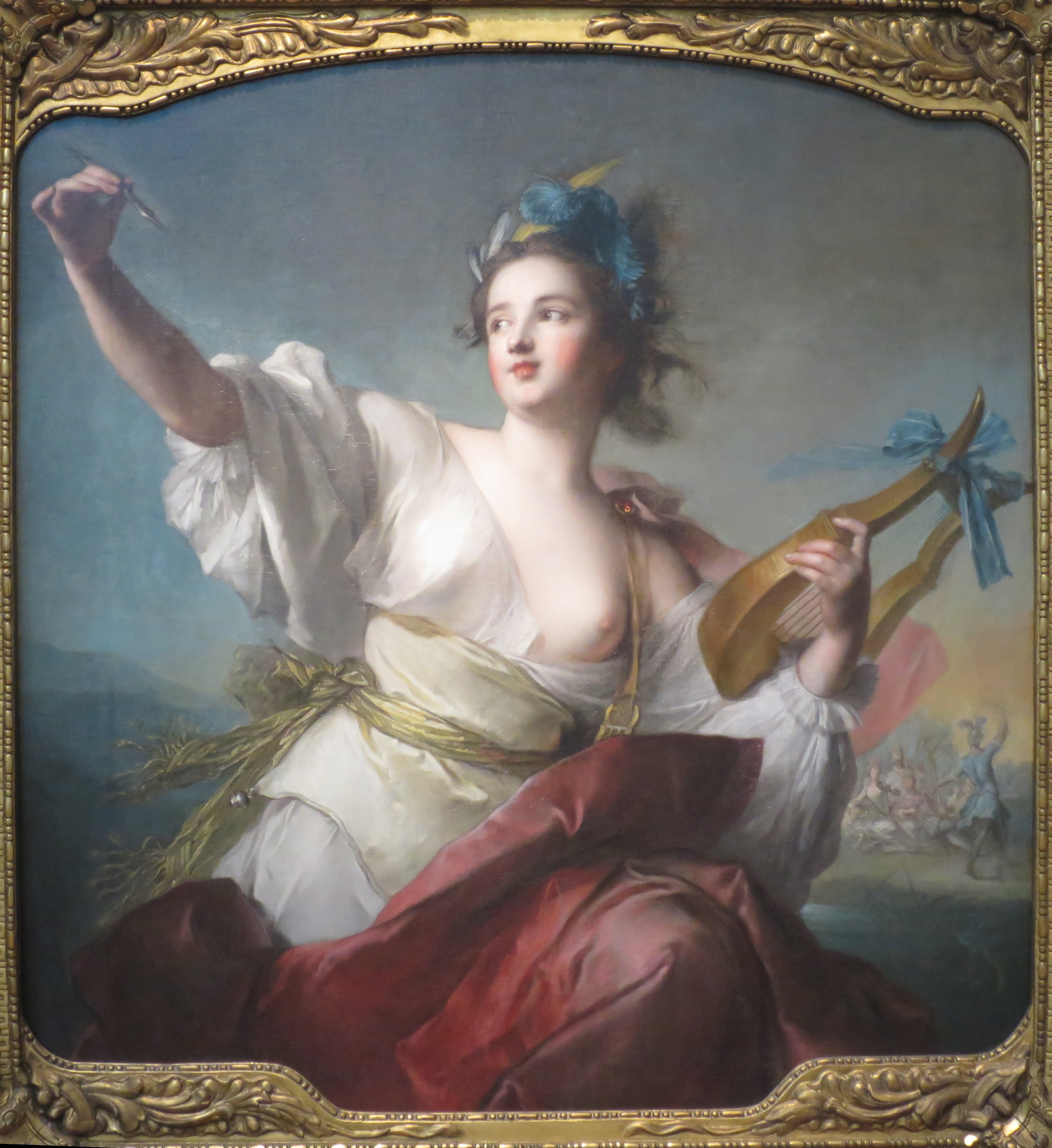
Tomorrow I will vote "Remain" and one of the reasons why I shall do so is that I care about the arts and creative industries in general and the performing arts and ballet in particular.

The case for Remain was made eloquently by members of the Creative Industries Federation in their briefing note Why is EU membership so important for the health of UK’s arts, creative industries and cultural education?  It was echoed  in Ismene Brown's article The Royal Ballet and Sadler’s Wells explain how Brexit will hurt dance 13 June 2016 and supported by Jessica Duchen's I'm IN, and here's why you should be too 25 May 2016 JDCMB which I mentioned in my own article Should we stay or should we go? 30 May 2016.

Much of the steam for the Leave campaign has been generated by concern about immigration. There is some outright xenophobia in that sentiment but I believe that it is mainly a worry about shortages of housing, healthcare, education and other public services which could be overcome with proper planning and resourcing.

For the arts, free movement of labour is essential.  Let me give just one example. Earlier this month the Scottish Ballet delighted audiences throughout Scotland and the North of England with David Dawson's Swan Lake (see Empire Blanche: Dawson's Swan Lake 4 June 2016). Dawson was born in London and trained at Tring Park and the Royal Ballet School but he has spent much of his career with the Dutch National Ballet where he is now an associate artists. He is not the only Brit there. The company's artistic director is Matthew Rowe who is another Londoner (in fact as there is a reference to him in the latest issue of The Pauline he may even have attended my old school).

Conversely many of Scottish Ballet's finest dancers come from France: Constance Deverney recently promoted to principal, Sophie Martin, Marge Hendrick, and Laura Joffre to name just a few. The same is true of our other leading companies. Where would the Royal Ballet be without Laura Morera or Federico Bonelli? The Birmingham Royal Ballet without Koen Kessels?  English National Ballet without Tamara Rojo or Alina Cojocaru?

There are dancers from the EU also in our splendid regional companies like Giuliano Contadini and Kevin Poeung with Northern Ballet and Allegra Vianello and Andrea Battagia with Ballet Cymru. I could go on.

Those artists delight us. Let's continue to make them feel welcome tomorrow.