Showing posts with label Maureya Lebowitz. Show all posts

Friday, 6 March 2015

Sensational

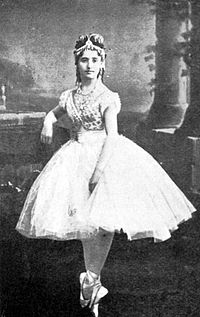
Giuseppina Bozzacchi., the first Swanilde
Photo Wikipedia
Outside London ballets are like buses. You wait for ages for a show and then three come along at once. In Leeds Northern Ballet were dancing Jean-Christophe Maillot Romeo and Juliet last night.  In Southport Richard Alston Dance Company were performing at The Atkinson. At The Lowry the Birmingham Royal Ballet brought us Peter Wright's Coppelia.

Which to see? Northern Ballet is almost family to me. I know many of its dancers. I take classes in its studios. Its new production received rave reviews from the Scottish press. But it is on for over a week though until yesterday nobody knew the casting. Richard Alston was in the North for only one day but Southort is not close and his company will be back. Coppélia is a ballet I know well and love and Tyrone Singleton and Céline Gittens were cast as Franz and Swanilde. These are two of my favourite dancers and while  I had seen them individually many time before I had never before seen them dance in principal roles together. Yesterday was almost the 20th anniversary of its entering the Birmingham Royal Ballet's repertory, In the end it was the prospect of seeing two of my favourite dancers dance in one of my favourite ballets with sparkling choreography and Peter Farmer's designs that proved irresistible.

I am so glad I chose Salford because yesterday's performance was sensational.  It takes a lot to get an English audience to its feet, particularly in Manchester because we Mancunians have a distressing habit of cutting the tall poppies down to size. Especially anything from Birmingham which has the preposterous temerity to claim to be the second city when everybody else acknowledges Manchester's superiority in just about everything except ballet. But there were members of the audience other than me standing and clapping at the end of the show. Not everybody it is true and the theatre was by no means full but the buzz and chatter in the foyer and on the tram back to town indicated that everybody loved the show and that we had seen the company at its best.

Why was that? Much of the credit must go to the principal dancers, Singleton and Gittens, who danced magnificently.  Tall and slender and almost indecently good looking Singleton is one of the best male dancers this country has produced. Athletic and accomplished he is a thrill to watch and the choreography provides ample scope for his virtuosity. Particularly the pas de deux in the last act. Gittens was an adorable Swanilde. Spirited and feisty, how we burned with indignation as she watched her fiancé eye up the talent just before their wedding day.  And how our hearts almost missed a beat as she and her mates prowled around Dr Coppélius's workshop setting off one automaton after another.  Brave girl.  Alone in the presence of a madman intent on sucking the life force out of the drugged and slumbering Franz she mimicked the movements of the robot wearing its clothes as she tried to revive him.

Yesterday morning I had tweeted:
And indeed they were but so was everybody else.   Maureya Lebowitz (another favourite as you can see from my review of her Lise in La Fille mal gardée) was a gorgeously sexy gypsy. Small wonder that Franz could not keep her eyes off her. Samara Downs, Angela Paul, Feargus Campbell and Mathias Dingman danced a great mazurka and czárdás in Act I. Rory Mackay was a fine burgomeister and Jonathan Payn a doughty publican rescuing poor old Dr Coppélius from his muggers.

Act III is one long divertissement around the tolling of the bell - hence the title Dance of the Hours. Brandon Lawrence, yet another favourite, danced Father Time, Karla Doorbar Dawn, Yijing Zhang Prayer, Ruth Brill (one of three very special dancers in different companies who are not yet principals but who nevertheless somehow make my spirits soar) led Work, Laura Purkis and Max Maslen danced Betrothal and Oliver Till led War.

But the character who dances in all three Acts and holds the ballet together is Dr Coppélius. His role was performed brilliantly by Valentin Olovyannikov. Coppélius is a complex character - part villain, part clown, part victim - brilliant but just a little mad, tragic but in the end redeemed riding immediately behind the happy couple on the cart as they and the bell leave the stage. Olovyannikov portrayed his character beautifully.

Having seen English National Ballet's Coppélia in Oxford recently I thought I might compare them but I can't because they are such different works and I can't say that I like one more than the other. Each production has its own strengths and delights and in each company there are some very special dancers. Coppélia is not danced anything like as often as it should be because it has an interesting plot and stunning choreography. The ballet going public have been treated this year to two magnificent productions.

Wednesday, 29 October 2014

Shadows of War - the Other Ballets


Because the restoration of A Miracle in the Gorbals is so special I reviewed it separately in A Second Miracle 23 Oct 2014 but MacMillan's La Fin du Jour and Bintley's Flowers of the Forest are important works that should not pass unnoticed.  I saw those works with Miracle at Sadler's Wells in the matinee performance on the 18 Oct 2014.

The MacMillan was striking in many ways. Spurling's set with stylized human faces. The jerky puppet like movements of the dancers in the opening and closing scenes, the women in swimsuits and the men in golfing attire, Ravel's Concerto in G Major. The work was created in 1979 towards the end of MacMillan's career and contains some spectacular choreography. The tossing into the air and catching of the leading women Nao Sakuma and Maureya Lebowitz. The apparent levitation of the men several feet into the air. This is not everybody's favourite ballet but I enjoyed it if only for the music. But the choreography is good too and, as I said above, the sets are striking.  I think I will find fresh things to appreciate in it next time I see it.

The connection with war was not obvious. The note on the MacMillan website observes that the ballet ends as the door to a garden is closed on the world. Quoting Clement Crisp the note concludes:
"It is a requiem for the douceur de vivre of an era, and it is nostalgically grateful for the 1930’s wayward charm.”
Well, perhaps. The war brought full employment and opportunity for many as well as destruction. I don't think there was anything douce or charming about the 1930s. With dictators and depression they are best forgotten.

The Flowers of the Forest is an old Scottish folk song:
"I've heard the lilting, at the yowe-milking,
Lassies a-lilting before dawn o' day;
But now they are moaning on ilka green loaning;
'The Flowers of the Forest are a' wede away'"
Like our own Pratty Flowers the song berates the futility of war. Bintley, who comes from Huddersfield, must have heard that air many times. It is fitting that he chose the pacifist Benjamin Britten to contribute much of the score.

The ballet is two works in one. Four Scottish Dances to Malcolm Arnold's music with Sakuma and Lebowitz again and then the much more serious Scottish Ballad to the Britten. Two bits of the choreography stand out. A wonderfully rhapsodic tour en l'air by the lover in the second dance reminding me of Burns's lyric verse and then the dance of the two drunks who stagger around the stage collapsing in a heap with the women dancing the Huntley (or something very like it) over their spread eagled bodies,

Again there was no express connection with war but the connotations were much more marked in the Bintley. Created in 1985 Flowers of the Forest is one of Bintley's early works and for what my opinion is worth I rate it one of his best. The show is at the Theatre Royal Plymouth tomorrow. If there are any tickets left do go and see it.

Friday, 27 June 2014

Fille bien gardée - Nottingham 26 June 2014


Birmingham Royal Ballet - La Fille mal gardée trailer from Rob Lindsay on Vimeo.

La Fille mal gardée is the oldest ballet that is still performed regularly. It was first staged in the Grand Theatre of Bordeaux two weeks before the storming of the Bastille, the event that precipitated the French Revolution. In another sense it is a very modern ballet. It has no shades or wilis, no wicked magicians who transform girls into swans, no kings or queens, princes or princesses. It takes place not in some mythical or exotic land but in rural France. Normandy judging by Osbert Lancaster's backdrops, It is about a young man and a young woman in love who find a way to be together despite the best efforts of the young woman's mother to marry her off to the wealthy but in every other way unsuitable village idiot. For those who have yet to see the ballet, here's the story guide,

The version of the ballet with which British audiences are most familiar was choreographed by Sir Frederick Ashton in 1960 to an arrangement of the music of Ferdinand Hérold by John Lanchbery with sets and costumes by Lancaster. He created powerful roles for the lovers in which he cast Nadia Nerina and David Blair but he also created amusing character roles for Stanley Holden as the social climbing mother and Alexander Grant as the halfwitted suitor. I never saw Nerina but I did see Merle Park and Doreen Wells in the title role as well as Holden and Grant.  Ashton's ballet contains some of the best known and best loved scenes such as the clog dance and the "Fanny Elssler pas de duex".

The Birmingham Royal Ballet has taken La Fille mal gardée on a summer tour which David Bintley describes as part of a "small celebration" of the work of the Royal Ballet's founder Frederick Ashton. I caught it at the Theatre Royal in Nottingham which is a delightful building with a more than passing resemblance to the Grand Theatre in Bordeaux. The lovers were danced by Maureya Lebowitz and Chi Cao, the mother by Rory Mackay, the halfwit by Kit Holder and his dad by Jonathan Payn.

Lebowitz was a delightful Lise - witty and pretty - just like Park as I remember her.  It took me longer to warm to Chi Cao.  He is a powerful dancer and I loved his turns and jumps. But Colas has a funny side. For example he likes his drink and he's also a  bit cheeky. Chi Cao played it very straight which is by no means wrong as there are some who would like that interpretation. As for the character dancers I loved them all, particularly MacKay as widow Simone.

Leaving the theatre, everyone seemed to smile or grin. It's a feel good ballet that I have already seen many times and hope to see many times again. Nobody - not even the London Royal Ballet does Ashton as well as Birmingham. They are Ashton's heirs and they have kept their Fille very well indeed.