Showing posts with label Kenneth MacMillan. Show all posts

Monday, 23 June 2025

Northern Ballet's Romeo and Juliet Revisited

Standard YouTube Licence

Northern Ballet Romeo and Juliet Leeds Playhouse 20 Jun 2025 19:30

Few people, if any, understood Romeo and Juliet better than Christopher Gable.  He and Lynn Seymour had been selected by Kenneth MacMillan to premiere the title roles in MacMillan's new ballet.  They were replaced by Rudolph Nureyev and Margot Fonteyn only because the US impresario Sol Hurok thought that American audiences would flock to see Nureyev and Fonteyn in preference to Gable and Seymour. I saw both Nureyev and Fonteyn and Gable, and Seymour in the late 1960s or early 1970s. While I admired Nureyev and Fonteyn very much, I preferred Gable and Seymour in MacMillan's Romeo and Juliet.

Many years after the premiere of MacMillan's Romeo and Juliet, Gable became the Artistic Director of the company now known as Northern Ballet.  He commissioned a new version of Romeo and Juliet for his company, choosing Massimo Moricone as his choreographer and Lez Brotherston OBE as his designer. Unlike the productions of Krzysztof Pastor and Sir Matthew Bourne, Gable's Romeo and Juliet follows Shakespeare pretty closely, though it has its own features.  Each act begins with a clap of thunder.  The second act ends with the fall of a beaded curtain representing a hailstorm.  Gangs of Capulets dance as cats making soft mewing sounds, while the Montagues present as birds. Mercutio's death throes are quite different in Gable's ballet from his agonies in MacMillan's, where he mistakes a sword for a musical instrument. Juliet witnesses the sword fight between Romeo and Tybalt in Gable's version.  I saw Gable's ballet in Sheffield on 4 Apr 2024 and reviewed it in Moriconi and Gable's Romeo and Juliet the next day

I watched Gable's Romeo and Juliet again at Leeds Playhouse on Friday, 20 Jun 2025.  One big difference between the performance that I saw in Sheffield last year and last Friday's is that the cast danced to Northern Sinfonietta last year, but to a recording by the Orchestra of the Slovak National Theatre on Friday.  I have to say that I liked the sound of the Slovak orchestra very much.  If a company has to dispense with live musicians, a recording of the Slovak National Theatre musicians was probably the next best choice.  But ballet is a three-way communication between dancers, musicians and audience.  Something is lost when a conductor and orchestra are absent.
    
Romeo was danced by Joseph Taylor on Friday.  He is currently the company's only premier dancer.  It goes without saying that he would have understood his role well.   He performed it with virtuosity and flair.  Juliet was Alessandra Bramante, who happens to be Italian.   She brought a freshness and energy to that role.   Mercutio was danced again by  Jun Ishi.   He first came to my attention in that role last year.   I was impressed with him then, and I remain impressed this year.   Harry Skoupas was a menacing Tybalt this year.  Last year he had been Paris.  Harriet Marden was a passionate Lady Capulet, 

At the reverence, several members of the audience rose to their feet.   I counted 20 dancers at the curtain call.   That's not a big cast, but they gave the impression of a big full-length production. 

Monday, 4 March 2024

Manon

Standard YouTube Licence

Royal Ballet Manon Royal Opera House Covent Garden, 2 March 2024 13:00

While watching Manon on Saturday I was struck by the similarities to MacMillan's Romeo and Juliet.   Not so much with the libretti perhaps though Manon loses Lescaut and Juliet loses Tybalt and both sets of lovers come to a sticky end.  The similarities I had in mind were the choreography with its spectacular duets including one around a bed and great sword fights.  Also, Nicholas Georgiadis created the sets and costumes for both ballets.

Although this was an original thought as far as I was concerned  I doubted that it was novel.   I ran a Google search on "similarities between MacMillan's Manon and Romeo & Juliet"  The only comparison that came to light was Robert Gottlieb's Manon and Romeo and Juliet.   Mr Gottlieb does not seem to have been at all impressed.  He described Manon as "a piece of junk" and complained that Romeo and Juliet was "tedious at times" though "relatively stage-worthy."  

Some pretty uncomplimentary things have been said about the ballet by such critics as Mary Clarke and Jane King but the public seem to like it.  It will celebrate its half-century in a few days and it has been performed by the world's leading ballet companies.  The House was packed to the gunwales on the afternoon of 2 March 2024 when I saw it.  Not a few patrons rose to their feet at the curtain call which does not happen for every show.   I agree that the leading characters, Manon, des Grieux, Lascaut and Monsieur GM are morally flawed and the story is pretty sordid but that did not make it a waste of the lovely Antoinette Sibley or any of her successors.

For those who do not know the ballet it is summarized on the Royal Opera House website.   It is based on the novel  Histoire du Chevalier des Grieux, et de Manon Lescaut by Antoine François Prévost which had already been dramatized, made into several films, at least one other ballet and Puccini's popular opera Manon Lescaut.  MacMillan did not adapt Puccini's score even though it would have been familiar to many members of his audience.  Instead, he commissioned Leighton Lucas to compile a score from Jules Massenet's collected works

The advertised dancers for the lead roles were to be Sarah Lamb and Steven McRae.  McRea was unavailable on Saturday so the role of des Grieux was danced by Ryoichi Hirano.  Lamb reminds me a little of Antoinette Sibley who first danced Manon and Hirano is the sort of chap who could be expected to handle the eye-catching lifts and fish dives with ease.   James Hay danced Lescaut, not an easy role as he had to project a range of emotions.  In one scene he is drunk manhandling his mistress Meaghan Grace Hinkis in one of the few comic scenes from the show. Shortly afterwards, he is dragged in chains and roughed up by Monsieur GM,   That role was danced by the venerable Christopher Saunders who has been dancing in the Royal Ballet for almost as long as I have been following it.

As for the creatives, Koen Kessels conducted the orchestra, Laura Morera staged the performance and Christopher Saunders was the rehearsal director.

I lost count of the number of curtain calls. Sarah Lamb received enough flowers to set up in business as a forest. There were also some for Hirano which would never have happened in Dame Anroinette's day, She used to select one of her choicest blooms and present it to her partner who would sniff the perfume in gratitude. In a reversal of the old tradition, Hirano presented one of his flowers to Lamb.

There are now two different versions of this ballet in this country: the Royal Ballet's version with Georgiadis's designs and English National's that I mentioned but did not review in French Revelation: "The Three Musketeers" on 9 Oct 2018. The main difference between the two is that ENB's came from Denmark and uses the designs of Mia Stensgaard.

Tuesday, 21 March 2023

Lynn Seymour - A Personal Recollection

Standard YouTube Licence

I am sad to learn of the death of Lynn Seymour.  I never met her or had any dealings with her but I saw her several times on the stage of Covent Garden when she would have been at the height of her career.  I saw her in many roles but the one that I remember best is Juliet.   Kenneth Macmillan created that role for her.  While I have seen many other Juliets I always associate that role with her and none other.  

Although she would have been in her early thirties when I first saw, her she could shed the years to become the excited teenager looking forward to her first grown-up ball.   I could sense her excitement at meeting Romeo on the balcony, her conflicting passions on learning of the death of Tybalt at the hands of that same Romeo, her despair on being forced to marry Paris and her apprehension on taking Friar Lawrence's potion,  Seymour's performance is still the yardstick by which I measure every other Juliet 

As there have been many obituaries I won't add another.   Jane Pritchard's for The Guardian is as good as any other.  There is also a tribute to her on the Royal Opera House's website.,

Wednesday, 16 February 2022

Last Monday's Romeo and Juliet - a Cinematic as well as a Balletic Triumph

Author Russ London Licence CC BY-SA 3.0 Source Wikimedia Commons


Royal Ballet Romeo and Juliet Cinema 14 Feb 2022 19:30

Last Monday's screening of the Royal Ballet's Romeo and Juliet was quite different from previous ones and all the better for it.  Gone were the gushing tweets from cinema audiences around the world and the presenters' platitudes.  In its place were interviews with Edward Watson and Leanne Benjamin with Dame Darcey passing on her wisdom and experience to Anna Rose O’Sullivan. Exactly how I want to see one of the greatest ballerinas of my lifetime.

Not only that but there was very clever camera work that caught O'Sullivan's ecstasy in the balcony scene or James Hay's pain after his stabbing by Tybalt. I noticed details in the screening that I had missed before. Consequently, I learned a lot about the ballet on Monday even though I had been watching MacMillan's Romeo and Juliet on screen as well as on stage since the 1960s. 

Although I must have seen them many times I had never really noted Anna Rose O'Sullivan or Marcelino Sambé until now,  but I am a fan of both of them now.  There is something about O'Sullivan that reminded me of Antoinette Sibley.  Sambé is very different from Dowell but I think we may have seen on Monday the start of a partnership between him and O'Sullivan which will be remembered like that of Sibley and Dowell.

There were two other dancers who particularly caught my eye who happen to be my all-time favourite Drosselmeyers.  One was Thomas Whitehead who danced Tybalt with menace earning what appeared to be isolated pantomime villain boos at the reverence as well as cinema vibrating roars. The other was Gary Avis who danced Juliet's well-meaning dad, puzzled and exasperated by his teenage daughter's apparent inability to grasp in Paris a dishy, decent husband and a comfortable future. 

All in the cast danced brilliantly, James Hay as Mercutio, Nicol Edmonds as Paris, Kristen McNally as Lady Capulet, Philip Mosley as Friar Lawrence, Romany Pajdak as the nurse.    There were also Prince Escalus, harlots, mandolin dancers, knights and their ladies and the street folk of renaissance Verona.  All deserve commendation but if I mentioned more names this would look less like a review and more like a telephone directory.

Nevertheless, my review must acknowledge three of the creatives: Laura Morera who staged the show, the conductor Jonathan Lo who first came to my notice at Northern Ballet, and the late Nicholas Georgiadis whose designs remind me of the work of Leon Bakst.  If there was a weakness in the screening it was that the richness of Georgiadis's sets did not always come through. That always seems to be a problem with ballet on film.

Last Monday happened to be my birthday.  It was a delightful day with calls and cards and presents.  But the screening was definitely a high point.  So many thanks for that, Royal Ballet.  

Readers who missed the performance have a second chance on Sunday.   

Sunday, 17 March 2019

A Great Send-off for a Great Lady


Standard YouTube Licence

Northern Ballet Victoria, Leeds Grand Theatre, 16 March 2019, 19:30

Victoria may have been the title rôle but the star of last night's show was Pippa Moore who danced Princess Beatrice. That is not because the ballet is really about someone other than the character in the title like Coppelia or Don Quixote.  Queen Victoria has a very substantial role in Cathy Marston's ballet and it was danced beautifully by Abigail Priudames whom I admire greatly. But last night was the night the company and its audience said goodbye to Moore who is, for the time being, Northern Ballet's last remaining female premier dancer and one who enjoys great respect and affection.

At the end of the performance, Moore was presented with an enormous bouquet of flowers. Something that does not happen very often outside London (see Flowers for Dreda 9 June 2018). David Nixon came on stage and gave the best speech that I have ever heard him make (I have heard more than a few from him over the years) and handed Moore a picture of herself as Beatrice. I am a hard-bitten patent lawyer and I have seen some great moments in the theatre but I could feel the tears welling up inside me. Several members of the audience including yours truly rose to out feet.  Just as well that the curtain fell when it did because I am not sure for how much longer I could have contained my emotions.

The show in which Moore and Prudames danced was Cathy Marston's Victoria, a co-production between Northern Ballet and the National Ballet of Canada. The score was by Philip Feeney and the sets and costumes were designed by Steffen Aarfing.  There was some stunning choreography in the ballet of which the duets between the queen and John Brown, danced by Mlindi Kulashe, and the queen and Prince Albert (Joseph Taylor) were perhaps the most striking. I was particularly struck by the invocation of the saltire as the queen splayed her arms in open fifth and legs second in defence of Brown.  There were other touches that I loved like the relevés to convey excitement when Victoria met Albert for the first time.

However, regular readers of my blog will by now have sensed a "but" coming.  I cannot deny it is there but I don't want to exaggerate it.  Victoria was still a work of considerable merit.  I am a great fan of Cathy Marston even though I have not seen much of her work on stage. Most of her works that I have seen have been on YouTube.  When I saw Jane Eyre in Richmond in 2016 I described it as "the best new ballet from the company in 20 years." I think I was even more impressed with The Suit when I saw it for the first time (see Excellence - Ballet Black's Double Bill 17 March 2018). Though I admired it very much, Victoria did not have the same effect on me as Jane Eyre or The Suit.

I have asked myself "why?" as there was a lot of good in this ballet.  I think the weakness lies in the libretto.  This was a very complex story but I don't think that was the main problem.  It is never easy to create a ballet around a recent historical figure as Sir Kenneth MacMillan's Anastasia shows.  The only choreographer to have pulled it off in my humble opinion is Ted Brandsen with his Mata Hari  (see Brandsen's Masterpiece 14 Feb 2016). I think he succeeded because he kept the story simple with hardly any flashbacks, unlike Anastasia and Victoria.  Had I not read the synopsis I would not have had a clue as to what was going on and I think that would have lost me.

My only other criticism (and it is a minor one) is of the costumes for the corps.  They were clad in a stripey top and what appeared to be a red skirt for dancers of both genders.  From row P of the stalls, they looked like a crocodile of schoolgirls on an outing.  When I read the programme properly on the train to London later this morning I shall probably discover the significance of that apparel.  All I can say that it was less than obvious yesterday.

But this was still a magnificent evening. I would not have missed it for the world.  It is still a fine ballet and Cathy Marston is still one of my favourite choreographers.  I saw Anastasia when it was first staged in 1971 and have never had a desire to see it again. Unlike Anastasia, I am going to give this ballet a second view.   I am sure it will go down well at Sadler's Wells. It has already had a good press.  I have very heterodox tastes having no time whatsoever for The Favourite despite its many awards and nominations.  So see Victoria for yourself. Don't let my niggles at the plot and costume designs put you off

Monday, 16 July 2018

Half a show is better than none

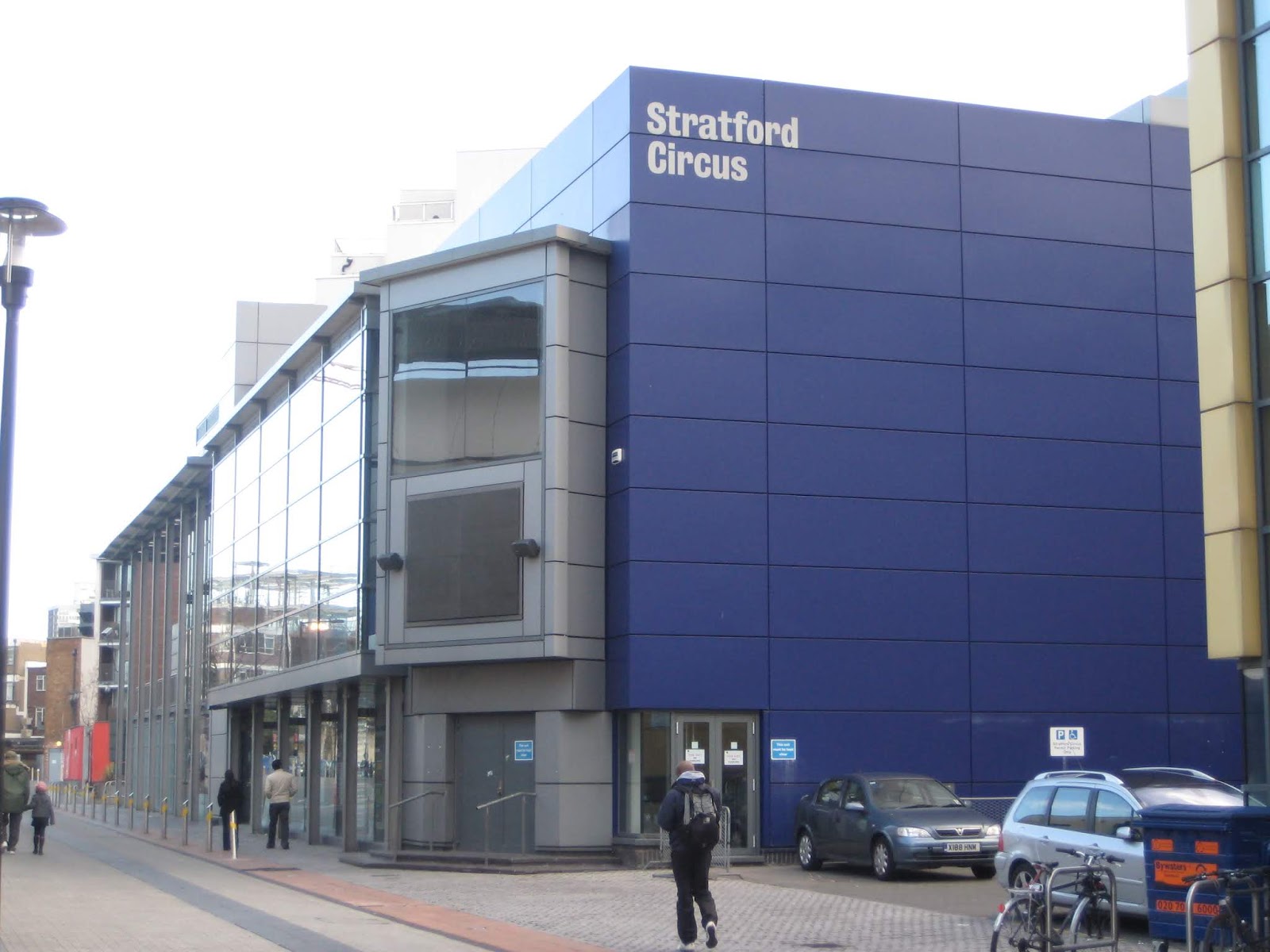
Stratford Circus Theatre
Author Andy Roberts
Licence Creative Commons 2.0 Generic


Ballet Central Black Swan et cetera  14 July 2018 19:30 Stratford Circus Theatre, Stratford, East London 

Ballet Central is the touring company of Central School of Ballet.  Its members are final year students on the degree course. Many of my favourite dancers and two of my favourite living British choreographers, Chris Marney and Kenneth Tindall, trained there.  Its tour of the UK during the second quarter of the year is one of the highlights of my calendar.

The lucky old South saw a lot of Ballet Central this year.  But their only appearance north of the Trent this year was in Leeds on 29 April and that was the day that Scottish Ballet danced Highland Fling in Gurn and Effie Land and the evening before I had a once-in-a-lifetime chance to attend class with Ballet West in Taynuilt and the 50th anniversary gala of the St Andrew's Dance Club which I helped to found many years ago.  I couldn't possibly miss all that even for Ballet Central.

I had hoped to see Ballet Central in London but alas alack the last train north by our wonderful, renationalized railway now leaves King's Cross at 22:00.  I tried ticking them off on twitter and you can see where it got me:

The Stratford Circus Arts Centre is a delightful theatre which reminds me of the Linbury but it is at least half an hour's trek to King's Cross whether you take HS1 from Stratford International or the tube. The tube was particularly awkward on Saturday because Bank was closed.  I looked into minicabs and black cabs but they could have been help up in traffic.   The only safe way to make the rattling Donny Choo-Choo was to
leave the Circus at 20:29 
without the chance of a shine.
Never mind!  Half a show was better than none and the but of the show that I did see was well worth the journey.

Wendy McDermott described the show in an excellent review when it visited Leeds (see Ballet Central in Leeds 31 May 2018).  I saw Jenna Lee's Black Swan and the extracts from Wayne McGregor's FAR and Kenneth MacMillan's Valley of Shadows.   I missed Christopher Gable's Cinderella which is one of my favourites in Northern Ballet's repertoire that I long to see again.  I felt so cheated as I left the theatre during the interval.   I have never walked out of a show before. Not even a bad one. To leave a good show was nothing short of heartbreaking. Although I am not a big fan of Sir Matthew Bourne's The Sleeping Beauty - the curtain climbing baby gives me the creeps - I would have loved to have seen the fairies' prologue once more.  

I comforted myself with the thought that I had at least seen Jenna Lee's Black Swan.   I like Lee's work a lot. I had enjoyed her ballroom scene from Romeo and Juliet  last year (see Triumphant 1 May 2017).  Her Black Swan combining scenes from the film and the ballet is even more ambitious.  It opened with a bad tempered ballerina banging her pointe shoes on a table thereby interrupting Philip Feeney who was at the piano playing Tchaikovsky.  The ballet continues with rehearsals and performance and ends with the removal of yesterday's black swan by her successor.   An interesting touch which might be followed in other Swan Lakes is the presentation of a white feather.  Even more dramatic perhaps than the flickering Odette in the seduction scene.

Like Wendy I saw Ayca Anil as the black swan. Wendy was impressed by Anil's technique and I agree with everything that Wendy said about that.  However I also thought she was a pretty good dance actor as was her prince, Saul Kilcullen-Jarvis.  He represented a very complex character, a bit like the prince in David Dawson's version.  The action flashed back to the ballet with clips from act 1 and act 3.  Echoes of familiar choreography and music as well as some innovation.  The entrance of the black swans with their arms in open 5th was particularly effective.  

Dante Baylor's costume designs, especially the red headdress for the women and the geometric piping of the prince's doublet were impressive.   There was a lot - probably too much - for the senses to take in on seeing this ballet for the first time.  I would love to see it again.

 In FAR - Company Wayne McGregor - 2010 - Behind the Scenes McGregor explains how he drew inspiration from Diderot's Encyclopedia and, in particular, his drawings of the human nervous system. Diderot showed how it was the brain that made the body work.  The brain is represented in McGregor's piece by an array of tiny lamps representing neurons.  Those neurons control movements of the body which are sometimes convulsive.  Ballet Central showed two scenes from an hour long work.  There was a duet by Rita Lee and Aitor Viscarolasaga Lopez and a group scene with Rishan Benjamin, Aoibh Ní Riain Broin,  Hitomi Nishizawa,  Hikari Uemura, Olivia Van Niekerk, Harris Beattie, Thomas Harden and Kevin Memeti.  Not an easy piece to dance, I should have thought, particularly with Ben Frost's multilayered score.  Again, I need to see this work again - and perhaps more than once - to appreciate and understand it fully.

The extract from Valley of Shadows was a beautiful dance for four: Mical Klara Coxill, Saul Kilcullen-Jarvis, Jamie Wallis and Scot Baldie set to Tchaikovsky's Souvenir de Florence. This scene shows the Finzi-Contini family in the seclusion of their garden before their lives are shattered by deportation to a concentration camp in Germany.  Wendy referred to sad and dark undertones and that is because we know what happened to the family.

Knowing that I would have to leave early to catch the rattling Donny choo-choo I booked a seat in the balcony which would have allowed me to slip out before the end of the performance with minimum noise and fuss.  It allowed me to spot who was in the audience and I spotted more than a few friends and acquaintances.  That made it even harder to leave the theatre.

Finally a message for Heidi Hall and Chris Marney.  There are approximately 25 million people who live north of the Trent and we can't all squeeze into the Stan and Audrey on a Sunday night.  We have some lovely theatres such as the Keys and Aldridge at the Lowry, the Atkinson at Southport, the Waterside in Sale, the Cast in Doncaster, the Library in Sheffield and indeed the Lawrence Batley here in Huddersfield.  Do stay with us a little longer when you go on tour next year.

Thursday, 31 May 2018

Ballet Central in Leeds


Standard YouTube Licence


Wendy McDermott

Ballet Central  2018 Tour 29 April 2018, 19:30 Stanley and Audrey Burton Theatre, Leeds

It’s been a turbulent time for Ballet Central since their unimaginable announcement via social media that their tour vehicle and its contents had been stolen. The vehicle contained everything from their production equipment to over 100 unique handmade costumes. Being able to see the tour and how much work had gone into making this a professional production then to hear of their plight was pretty shocking. Since then those that follow Ballet Central will know that much of what was stolen had been retrieved and also, thanks to the generosity of many they’ve managed to raise several thousands to help pay for replacements.

I saw Ballet central perform, for the first time I might add, at the Stanley & Audrey Burton theatre in Leeds.

The show was made up of five pieces in two Acts: ‘Black Swan’ by Jenna Lee, ‘Far’ by Wayne McGregor,Valley of Shadows’ by Kenneth MacMillan, ‘Sleeping Beauty’ by Matthew Bourne and finally ‘Cinderella’ by Christopher Gable.

I think it’s fair to say that many will know of Swan Lake even if never having had the pleasure of seeing it. What Jenna Lee gave us in Black Swan was something very different, yet still referencing the classical ballet loved by so many with Tchaikovsky’s music and the beautiful swans (who looked marvellous in their black tutus). The mood was much darker, echoing the film The Black Swan. In this version however, it was not the ballerina that experienced the hallucinations, it was the Prince, confused and a little disoriented by what he was experiencing. Ayca Anil danced the principal role. Her technique seemed solid, the développés clean with extensions reaching the heights that we see in professional ballet companies of today. I thought her ports de bras were lovely, as were the swans' dancing in the corps, with their elegant swan arms, and I thought the acting of her character expressed the sultriness befitting of a temptress.

The second piece in the programme was a complete contrast of contemporary choreography. At times there was so much happening on the stage between the 10 dancers I didn’t know who to watch however there were dancers that stood out with their stage presence alone. As with most, if not all art, it’s subjective; contemporary is not a style that I personally favour, however if its premise is to showcase the movement of body and mind in fusion then this choreography does that. The Guardian (Luke Jennings to be precise) wrote of the piece when it appeared on stage:
“Muse too intently on notions of embodiment and you stop seeing the living bodies in front of you. They're the story, ultimately.”
It was a challenging piece for young dancers but on comparing clips from the original, they all performed with confidence and flare, speed and agility given that these students are on the cusp of their professional careers, potentially joining companies with both classical and contemporary repertoire, they need to be able to show their depth and breadth of skill in both styles. This choice of piece allowed them to do just that. There were three dancers that, for me anyway, particularly shone. Again, it was as much about their stage presence as their technique and quality of movement. Luckily one of those dancers has their photograph in the programme so easy to identify.

Act I closed with Valley of Shadows by MacMillan. Yet another personally unknown piece, though reading the synopsis it has very sad and dark undertones, the programme describing it as “the fate of an Italian Jewish family under fascism, Nazi occupation and the horrors of the death camps.”
Being a cast of four, the spotlight was on all the dancers. The cast had the fantastic fortune of being coached by Alessandra Ferri and Guy Niblett, who were original cast members when it was first performed at Covent Garden in March 1983. What a luxury for these dance students to inherit the experience and knowledge of these dancers to have it passed down to them. We had already seen Ayca Anil in the opening excerpt so her performance was assured, this time it allowed the male dancers the chance to show off their skills, in particular their partnering skills and they all performed with aplomb.

After the interval of 20 minutes, Act II opened with an excerpt of The Sleeping Beauty (Fairies Prologue). Gone were the tutus of the classic work, instead we saw costumes worthy of comic superheroes, of beautiful colour and imagination. It was a showcase indeed for the six dancers on stage and each deserved and duly received acknowledging applause from the audience, appreciative of the individual performances. Even the Princess Aurora as a baby in her cradle received applause in her own right as the crying baby which only added to the characterisation, humour and lightness of the whole piece.

The finale of the night was Christopher Gable's Cinderella and the audience were treated to a 30 minute shortened piece of this well known fairy tale. Despite the story depicting the ill treatment of Cinderella by her step mother and children, the performance felt just as much a celebration and in some ways echoed the journey that a dancer takes throughout their student life. The celebratory dance by the cast of apple pickers and wedding guests was light, airy and quite joyous to watch. In particular the green colour in the costumes reflecting the fresh apples that they had harvested that day expressed the emotion and worked well on stage, as if to say that the whole cast had now come of age in their early training careers and ready to advance into professional performers and spread their wings far and wide. Both the young and older Cinderella were emotive and expressive and i’m sure they, and all the touring company of 2018 will have careers to be proud of.

I’d like to give a mention to Rishan Benjamin and Harris Beattie as my own personal ones to follow in the future. There was another young woman in Far that unfortunately i’m unsure of her name. Looking at the cast list it was possibly Hikari Eumura (but perhaps Ballet Central would like to confirm?).

Finally, congratulations to all the performers and all those behind the scenes for making a thoroughly enjoyable evening of dance theatre.

Sunday, 6 May 2018

Manon in the Cinema


Standard YouTube Licence

Royal Ballet Manon 3 Nay 2018, 19:30  Royal Opera House (streamed to cinemas)

Although Manon is probably Sir Kenneth MacMillan's most popular ballet after Romeo and Juliet I have yet to see it live on stage.  I have seen a recording of it once before in the cinema (Manon Encore at the Huddersfield Odeon 20 Oct 2014).

I missed the ballet when it first appeared in 1974 because I was at graduate school in Los Angeles but the reports that I read in the British press to which my university subscribed were not particularly encouraging.  As Wikipedia reports:
"Critical responses to the opening night performance were mixed. The Guardian newspaper stated, "Basically, Manon is a slut and Des Grieux is a fool and they move in the most unsavoury company", while the Morning Star described the ballet as "an appalling waste of the lovely Antoinette Sibley, who is reduced to a nasty little diamond digger". The opening night audience gave the ballet a standing ovation."
I doubt that they would have put me off as I often find myself in disagreement with ballet critics.  I think it is more a question of inertia.  I don't live in London. My time and means are not unlimited. There has always been something I have wanted to see more. Right now, it is Liam Scarlett's Swan Lake.

I leaned a little bit about the ballet from Dame Antoinette Sibley in an interview that she gave to Clement Crisp at the Royal Ballet School in 2014 (see Le jour de gloire est arrive - Dame Antoinette Sibley with Clement Crisp at the Royal Ballet School 3 Feb 2014). Dame Antoinette produced a copy of the book by Abbé Prévost which Sir Kenneth had sent to her and she read from his note in the cover. Kevin O'Hare mentioned that story in an interview that he gave to Ore Oduba and Darcey Bussell before the show. The libretto does not follow the novel exactly but it is close enough in essentials.

MacMillan created some striking choreography for this ballet.  Vadim Muntagirov who danced Des Grieux referred to lifting the ballerina behind his back. Particularly memorable, in my view, was a pas de trois  in the first act in which Sarah Lamb (as Manon) appeared to be contorted into positions from which I feared she would never recover. More contortions in the party scene at which Manon's brother, Ryoichi Hirano,  who is very drunk, attempts to dance with his mistress.

One of the advantages of watching ballet in the cinema are the closeups of the dancers' facial expressions.  For the first time I appreciated Lamb's genius as an actor.  She expressed every emotion, every state of mind, almost every thought through her eyes.  The character that she dances is not a nice woman.  Greedy, capricious and deceitful, she richly deserves her comeuppance, yet she somehow wins the audience's sympathy. What greater proof could there be of her dramatic qualities.

Tall, slender, athletic, dreamy, passionate and at times explosive, Muntagirov is exactly as I would imagine Des Grieux. Also impressive were Gary Avis as the louche aristocrat who first makes and then breaks Manon, destroys her brother and disgraces her brother and Yorkshire's very own Thomas Whitehead as Manon's thuggish and lascivious gaoler.

Anyone who has seen his Romeo and Juliet will agree that MacMillan does fights better than almost any other choreographer.  There is one good sword fight in Manon in the second act but the knife fight in which Des Grieux dispatches the gaoler is particularly exciting.

The sets and costumes were designed by Ncholas Georgiadis who also designed the sets and costumes for Romeo and Juliet.  I am sure that on the stage they must have been magnificent but except for vines of the mangrove swamp in the very last scene they were barely visible which is a pity.

I doubt that Manon will ever be my favourite ballet but I have resolved to see it live next time it is staged which I did not do after the last screening of this work.

Saturday, 4 November 2017

Northern Ballet's MacMillan Celebration


Standard YouTube Licence

Northern Ballet A Celebration of Sir Kenneth MacMillan Alhambra Theatre, Bradford, 7 Oct 2017, 19:30

Kenneth MacMillan died on 29 Oct 1992. On the 25th anniversary of his death, Birmingham Royal Ballet, English National Ballet, Northern Ballet, The Royal Ballet, Scottish Ballet and Yorke Dance Project have joined in a national festival of his work. The focus of this celebration was a special season at Covent Garden to which each of those companies contributed.

Before going to London, Northern Ballet performed three of MacMillan's works at the Alhambra Theatre in Bradford between the 5 and 7 Oct 2017:
The company will dance them again in Leeds on 16 and 17 March 2018. 

These were not the jolliest of works for a Saturday night. One ended with a suicide.  Another was about the First World War.  Concerto was abstract but it can hardly be described as a bundle of laughs. MacMillan did create more cheerful ballets such as Elite Syncopations.   It would have been good to have included something like that in the programme.  There may have been some in the audience who had never seen MacMillan's work before.  Those audience members would have gained a better impression of the extent of his genius had some of his lighthearted work been included.

Las Hermanas means Sisters in Spanish and it was based on La casa de Bernarda Alba by Federico Garcia Lorca which is subtitled Drama de mujeres en los pueblos de España ("Drama about women in rural Spain"). Though set in Andalusia on the eve of the Spanish civil war it was first performed in Argentina just before Juan Domingo Perón came into power. Melancholy runs through this work like the name of a seaside resort through a stick of rock.

As in Lorca's play, there are five sisters who range in age from 20 (Adela) to 39 (Angustias) plus their mother (Bernarda) but, unlike the play, there is a powerful male role for Angustias's fiancé, Pepe. Bernarda is in mourning for her second husband and she insists that her daughters mourn too. They sit at home without companionship as their lives tick by. Pepe enters the home,  He dances first with Angustias but she is tight and tense. Adela is more receptive but she is spotted by one of he sisters who betrays her.  Overcome with shame, Adela hangs herself. 

MacMillan created the work for the Stuttgart Ballet. His cast included Marcia HaydéeBirgit KeilRay Barra and Ruth Papendick who were among the most celebrated dancers of their time.  Appropriately,  Northern Ballet deployed its "A" team. Hannah Bateman was the eldest sister and Javier Torres her fiancé. Minju Kang was the wilful Adla, Pippa Moore the spiteful jealous sister and Victoria Sibson the tyrannical mother. Rachael Gillsepie and Mariana Rodrigues were the fourth and fifth sisters.  

Another impressive feature of this performance was the elaborate set by Nicholas Georgiadis, Georgiadis collaborated with MacMillan on many of his ballets including his Romeo and Juliet which is a masterpiece of theatre design. According to Kenneth MacMillan's website, it was Nicholas Georgiadis, who suggested the balletic possibilities of Lorca’s play.

I would be lying if I said I enjoyed the work. It is chilling, depressing and very dark. But I was very impressed by the dancers, the technicians who recreated and assembled Georgiadis's magnificent designs, the lighting staff and everyone who was involved in the production. Artistically and technically it was one of the best performances by Northern Ballet that I have ever seen.

Concerto was another work that MacMillan created while in Germany. This time it was for the Berlin Opera Ballet. His dancers included Didi Carli, Falco Kapuste, Lynn Seymour, Rudolf Holz and Silvia Kesselheim. Its score is Shostakovich's Piano Concerto No. 2.  The work consists of three movements. The first consists of a leading lady, a leading man and six soloists. The second movement is a pas de deux. The third movement has a leading lady and the corps. According to MacMillan's website, the original performance was danced against a plain background the dancers in tunics of olive and ochre. Northern Ballet's sets and costumes were redesigned by Lady Deborah MacMillan with the dancers in brighter colours.  On 7 Nov 2017 Antoinette Brookes-Daw and Matthew Koon were the leading dancers in the first movement, Abigail Prudames and Joseph Taylor danced the pas de deux and Dominique Larose was the leading lady of the third movement.

MacMillan created Gloria for the Royal Ballet in 1980 after he had ceased to be its artistic director. It is an elegy to the youth who died or were injured in the first world war. Inspired by Vera Britten's Testament of Youth with music by Poulenc it is a highly emotional, haunting and intensely spiritual work. The males are soldiers (or perhaps spirits of soldiers) clad in khaki and very insubstantial looking helmets. If the men could be taken for ghosts the women are unambiguously ghostlike glad head to foot in white or grey. The dancers rise over a ridge as though clambering out of a trench to charge the enemy lines. On World Ballet Day, David Nixon contrasted the stage of the Alhambra with that of the Royal Opera House where the ridge looked real.  Lorenzo Trosello danced a solo, Mimju Kang and Giuliano Contadini a pas de deux. Sarah Chun, Ashley Dixon, Nichola Gervasi and Sean Bates a pas de quatre and Dreda Blow joined Hannah Bateman, Abigail Prudames and Dominique Larose in a dance for four women.

Sadly, the Alhambra was less than full on 7 Oct 2017 and I think that was because of the programming. While audiences do not expect to be jollied every time they go to the theatre there is only so much doom and gloom a body can take - especially with all the other horrible things that are happening in the world. It would also have been nice to have had a programme. I received a cast list eventually but only after I had hunted down a duty manager.

But these are niggles. Anybody who stayed the course was rewarded by some exquisite dancing. My standing order for another year's sub to the Friends of Northern Ballet went through last week. It is money well spent.

Monday, 22 May 2017

Photos from Birmingham Royal Ballet's Northern Tour

Robert Parker as Captan Belaye in Birmingham Royal Ballets Pineapple Poll
Photo Roy Smiljanic
© 2017 Birmingham Royal Ballet: all rights reserved
Reproduced with kind permission of the company


I reviewed the Birmingham Royal Ballet's performance of Solitaire, 5 Tangos and Pineapple Poll at York on 12 May 2017 in Birmingham Royal Ballet's Northern Tour 2017 13 May 2017. I now have some lovely photos of scenes from the triple bill which I am delighted to share with you thanks to Mr Lee Armstrong. the company's design executive. I should stress that the photos were not taken at the performance that I reviewed but they will give you a good idea of the costumes, scenery and choreography.

The artist who danced Captain Belaye in York was Matthias Dingman. The artist in the photograph above is Robert Parker who is the Artistic Director of Elmhurst Ballet School.  Parker would be very well cast for the role of a sea captain as he is qualified in real life to be an airline captain. According to his biography, he acquired a commercial pilot's qualification in 2008. Last week Northern Ballet and Phoenix hosted a dancers' career development workshop at Quarry Hill helping dancers explore their career options when they retire from the stage (see Evolve in Leeds 4 May 2017). Even though he has returned to dance as Artistic Director of a leading ballet school, his qualification shows that dancers really can do anything.  I would quite happily board a 747 in the knowledge that its captain has reliably supported high flying and fast moving ballerinas through countless fish dives. Incidentally, I last saw Parker at the 25th anniversary of the Birmingham Royal Ballet's move to the Hippodrome and David Bintley's 20th anniversary as the company's Artistic Director (see In Praise of Bintley 21 June 2015).

In my review of Solitaire I mentioned how much I enjoyed "Desmond Heeley's gorgeous costumes - especially the red bodice of Baselga's tutu - and his draping golden sun backcloth design" which you can see in the photo below

Miki Mizutani in Solitaire
Photo Bill Cooper
r
© 2017 Birmingham Royal Ballet: all rights reserved
Reproduced with kind permission of the company


Readers will recall that Dame Ninette de Valois asked Sir Kenneth MacMillan to create Solitaire at very short notice using sets and costumes that had been designed for The Angels by Cranko.

Finally, two glorious shots from 5 Tangos also taken by Bill Cooper:


Birmingham Royal Ballet 5 Tangos
Photo Bill Cooper
r
© 2017 Birmingham Royal Ballet: all rights reserved
Reproduced with kind permission of the company


Birmingham Royal Ballet 5 Tangos
Photo Bill Cooper
r
© 2017 Birmingham Royal Ballet: all rights reserved
Reproduced with kind permission of the company

Saturday, 13 May 2017

Birmingham Royal Ballet's Northern Tour 2017


Standard YouTube Licence


Birmingham Royal Ballet, Solitaire, 5 Tangos and Pineapple Poll, York Theatre Royal, 12 May 2017, 19:30

As I mentioned in Doing the Splits 8 May 2017, the Birmingham Royal Ballet splits into two. One group of dancers visits theatres in the North of England and North Midlands which this year includes Durham, York and Nottingham while the other goes to Cheltenham, Poole and Truro. Yesterday, I caught the dancers on the Northern Tour at York Theatre Royal in a splendid triple bill consisting of MacMillan's Solitaire, van Manen's 5 Tangos and Cranko's Pineapple Poll.

Each of those works was created by one of the greatest 20th-century choreographers. John Cranko was only 24 when he staged Pineapple Poll in 1951. Kenneth MacMillan was slightly older in 1956 when Ninette de Valois asked him to create Solitaire at very short notice using sets and costumes that had been designed for The Angels by Cranko. While in retrospect in looks like an early work because his career has lasted so long, Hans van Manen had already been working for over 20 years when he made 5 Tangos for the Dutch National Ballet in 1977.

I had already seen 5 Tangos performed by the Birmingham Royal Ballet in High Wycombe (see Birmingham Royal Ballet in High Wycombe 31 May 2015) and Scottish Ballet in Glasgow (see No Mean City - Accessible Dance and Ballet 26 April 2015). I had also seen two performances of Pineapple Poll, one of which was by the Birmingham Royal Ballet when it was still known as the Royal Ballet Touring Company at a matinee at Sadler's Wells together with Ashton's Les Rendezvous and Facade, and the other by the Chelmsford Ballet (see A Delight Indeed 27 March 2015). Solitaire, however, was new to me and what a treat it turned out to be.

According to the Kenneth MacMillan website, Solitaire was subtitled  "A kind of game for one".  The site describes it as  "a sequence of dances knit together by Malcolm Arnold’s Eight English Dances and by the continuity provided by Margaret Hill’s appearance in each one."  Margaret Hill danced the lead role in the original production.  Referred to only as "the girl", she opens and closes the work appearing in one capacity or another in every scene. The other dancers are her playmates though it is hinted that they may not be real. They enter the stage, dance a scene and disappear as suddenly as they came on. Yesterday "the girl" was danced delightfully by Arancha Baselga who was joined on stage by 16 other dancers in various scenes. My enjoyment of the ballet was greatly facilitated by Arnold's music which included much that was familiar including the signature tune to "What the Papers Say" on Radio 4 on Sunday night. I also enjoyed Desmond Heeley's gorgeous costumes - especially the red bodice of Baselga's tutu - and his draping golden sun backcloth design,

Yesterday, the Dutch National Ballet's online magazine ran a feature on van Manen entitled Hans van Manen: een levende legende the meaning of which is obvious. A link appeared on Facebook which has already attracted 426 likes, 29 shares and lots of comments including this one from me:
"Just seen Birmingham Royal Ballet dance van Manen's 5 Tangos in York this evening. It was great. Jenna Roberts, Matthias Dingman and Maureya Lebowitz were in the cast. They did the great man justice."
That just about says it all. I love this work, the designs and Piazzolla's music, the choreography, the vigorous and expressive dancing and all the connotations with Argentina, one of my favourite countries, and the Netherlands where van Manen is a national living treasure and the subject of a great deal of blogging by me.

Pineapple Poll with its synopsis based on W S Gilbert's ballad The Bumboat's Woman's Story, Charles Mackerras's arrangement of a selection of Gilbert and Sullivan's favourite tunes and Osbert Lancaster's intricate designs was a wonderful way to round off a wonderful evening. Yesterday it occurred to me that this work may well have inspired Ashton to create Fille and Balanchine to create Union Jack. There is certainly a link in Osbert Lancaster in that he created the designs for both Poll and Fille and the exuberance of Mackerras's arrangement finds resonance in Hershey Kay, Maybe my imagination but why not. Matthias Dingman was the gallant Captain (later Admiral) Belaye. Easy to see why the girls' hearts were aflutter. Laura Kay (who had earlier delighted the audience as a playmate in Solitaire) danced his sweetheart Blanche. Laura Purkiss was her interfering aunt, Mrs Dimple, who doubles as Britania at the end. Nao Sakuma danced Blanche's rival, Pineapple Poll.  Kit Holder was the hero of the piece rising from pot boy to naval officer and Poll's husband without even having time to remove his apron. There were lots of other favourites in the cast including the magnificent Valentin Olovyannikov who delighted me in The Taming of the Shrew last year (see Birmingham Royal Ballet performs my favourite ballet at last 23 June 2016).

Birmingham Royal Ballet are giving two more performances today plus a talk and they are also opening their company class to the public. Next week, they move on to Nottingham. I would have been back today had I not been dancing in my own ballet this evening. If you can get a ticket for the matinee or evening performance in York tonight or Nottingham next week I strongly recommend the show.

Monday, 8 May 2017

Doing the Spits


Standard YouTuve Licence

This is the time of the year when the Birmingham Royal Ballet splits into two. One lot goes to Durham, York and Nottingham while the other goes to Cheltenham, Poole and Truro. I like to see both shows whenever I can but Cheltenham clashed with my only chance to see Northern Ballet's Casanova again before it goes to London. Also, the show in the southern tour's repertoire that I most want to see is Ruth Brill's Arcadia and that will come back to Birmingham as part of Three Short Story Ballets between the 21 and 24 June 2017.

For once I think the North will get the better end of the deal because it brings Pineapple Poll by John Cranko, my all time favourite choreographer ever, and 5 Tangos by Hans van Manen, my favourite living choreographer as well as Sir Kenneth MacMillan's Solitaire.

Pineapple Poll, created for the Sadler's Wells Ballet in 1951 as part of the celebrations for the Festival of Britain when Cranko was only 24, shows the genius of the man. With the possible exception of Graduation Ball (see Please, pretty please, will somebody revive this lovely ballet 2 Jan 2016) it is the happiest, jolliest, prettiest one act ballet ever and a personal favourite. I have only seen it twice. Once quite recently by the Chelmsford Ballet as part of their double bill with Marney's Carnival of the Animals (see A Delight Indeed 24 March 2015). And once at Sadler's Wells with what was then the Royal Ballet Touring Company in the late 1960s and 1970s.

The first occasion was the one and only time my mother and I could ever persuade my father to attend the ballet. An erudite and urbane Mancunian and a fine economist he regarded the ballet with a mixture of suspicion and contempt. Suspicion because he regarded it as an instrument of Soviet soft power which was certainly one of the reasons for the Bolshoi's first tour of London in 1956 and contempt because he regarded the classical tutu and gentlemen's tights as bordering on the indecent. He sat very quietly through the show with a half benign and half sarcastic grin. At the end of the performance, my aunt asked him whether he had enjoyed it. "Up to a point", he replied. With Union Jacks everywhere Pineapple Poll was far subversive and there are no tutus in sight. He admitted to a certain admiration for the athletic prowess and nimbleness of the dancers and indeed the beauty of the women but he was less kind about the middle-aged matrons who made up the audience. "I should like to see them try to do some of the jumps that those girls cam do" he added.

Like Graduation Ball, Pineapple Poll is a wonderful period piece with sets and costumes by Osbert Lancaster and music by Sir Arthur Sullivan. Enjoy the YouTube clip which would have been made not long after the ballet was created with such stars as Merle Park, David Blair, Stanley Holden, BrendaTaylor and Gerd Larsen. Birmingham Royal Ballet will dance it at the Theatre Royal York this Friday and Saturday and then in Nottingham on the 16 and 17 May. It really is a treasure.

Monday, 13 March 2017

What can possibly follow Tindall? Nothing less than MacMillan


Standard YouTube Licence


I think everyone who was in the Leeds Grand Theatre on Saturday night would agree that Casanova was a great success (see Casanova - "it has been a long time since I enjoyed a show by Northern Ballet as much as I enjoyed Casanova last night" 12 March 2017). What could possibly follow a work like that? Nothing less than a master like Sir Kenneth MacMillan I would say.

Happily, that is exactly what we can expect for Northern Ballet will dance three of Sir Kenneth's works at the Bradford Alhambra between the 5 and 7 Oct 2017. An excellent venue for the Alhambra is arguably Yorkshire's finest theatre by a country mile. The ballets that the company will perform are:
Concerto and Las Hermanas were originally created for German companies though Las Hermanas found its way into the repertoires of Western Theatre Ballet (now Scottish Ballet) and The Royal Ballet where I first saw it.  Gloria was created for The Royal Ballet shortly after he had ceased to be that company's artistic director.

Nothern Ballet also plans to dance the triple bill in Leeds next year.

Thursday, 1 December 2016

Thoughts on St Andrew's Day


Standard YouTube Licence


Yesterday was St Andrew's Day and my thoughts turned to Andrew Laing's Almae Matres as they often do at this time of year:
"St Andrews by the Northern Sea,
A haunted town it is to me!
A little city, worn and grey,
The grey North Ocean girds it round,
And o’er the rocks, and up the bay,
The long sea-rollers surge and sound.
And still the thin and biting spray
Drives down the melancholy street,
And still endure, and still decay,
Towers that the salt winds vainly beat.
Ghost-like and shadowy they stand
Dim mirrored in the wet sea-sand."
St Andrews was my alma mater as it was Laing's. It was there that I first got to know Scottish Ballet and discovered Stravinsky. I don't know whether that great composer ever visited the "little city, worn and grey" but his spirit certainly haunts that town for me. It was his music that I played when I had revision or essays to write. Firebird, Petrushka, Pulcinella and above all The Rite of Spring accompanied me through those four glorious years as my gown slipped from bejant shoulders to magistrand wrists.

Next Autumn, Scottish Ballet will present two contrasting Stravinsky's ballets - MacMillan's Le Baiser de la Fée and a new version of The Rite of Spring by Christopher Hampson. The double bill will be performed first at Glasgow between the 5 and 7 Oct and will progress to Aberdeen and Inverness. Sadly it will not visit England, Wales or Northern Ireland - or even Edinburgh, A shame because this may well be one of the highlights of the year and I cannot be the only Sassenach who is tempted.

According to Scottish Ballet's website the company will be working with the Benesh notator, Diana Curry, and designer Gary Harris to recreate Sir Kenneth's production. I saw a little bit of Curry's work at Ivy House which had been Pavlova's home (see A Minor Miracle - Bringing Le Baiser de la fée back to Life 2 Jun 2014). With the help of James Hay and Donald MacLeary a short snippet of MacMillan's beautiful ballet took shape before our very eyes.

The Rite of Spring will be a complete reinterpretation of Stravinsky's score:
"Christopher Hampson, uses only three dancers to convey a present day story of two brothers destined for different paths to enlightenment. Hampson has created a version that is relevant to our time; his The Rite of Spring is a brutal and physical response to the Stravinsky score. An exploration of rivalry, betrayal and sacrifice, Scottish Ballet’s The Rite of Spring is at times violent, intense and thought-provoking."
I don't know who penned those words but they caught my curiosity. Hampson can't put a foot wrong so far as I am concerned and the trailer looks intriguing,

There was no Scottish Ballet when MacMillan and MacLeary were in their prime. Indeed, there was hardly any ballet except for visits by English touring companies and an occasional exotic visitor to the Edinburgh Festival. Now there are lots of companies in different styles of dance as well as conservatories and schools for the young,  A lot has been achieved since Western Theatre Ballet moved North in 1969.

Thursday, 21 May 2015

Birmingham Royal Ballet in York


Grand Opera House, York, 20 May 2015

This month the Birmingham Royal Ballet split in two. One part is touring York, Nottingham, Durham and Shrewsbury ("the Northern tour"). The other Truro, Poole, Cheltenham and High Wycombe ("the Southern tour"). The Northern tour is dancing Les Rendezvous, Kin and Elite Syncopations which I believe the Southern tour danced last year. I caught the Northern tour at the Grand Opera House in York yesterday.

I had been to the Grand Opera House once before. My late spouse and I celebrated our silver wedding anniversary by watching the Yorkshire Ballet Summer School gala there on the 29 July 2007. I remember that evening for all sorts of reasons. I had already started a course of endocrinology that was already changing my appearance. I was about to change my name and dress under clinical supervision which was likely to add all sorts of complexities to our marriage. My late spouse was already tiring and faltering for no apparent reason. Symptoms of an illness that was eventually diagnosed as motor neurone disease. It was a lovely evening which we knew would be our last as a conventional couple. We had intended to continue celebrating the anniversary come even after I had changed my name and status. What we did not know was that it would be our last anniversary celebration ever.

I did not keep this blog in 2007 but I have located a review of the gala by Charles Hutchinson which appeared in The Press on 31 July 2007. It was the first time I saw Xander and Demelza Parish and they stick in my memory because their performance in Christopher Hampson's Echoes was outstanding. I expected them both to go far but I did not expect that the next time I would see Xander would be in the title role of Romeo and Juliet with the Mariinsky at Covent Garden (see Reet Gradely: Romeo and Juliet, Mariinsky Ballet, Royal Opera House 29 July 2014 31 July 2014). There were many other stars that night such as Warne Sleep, Lauren Cuthbertson, Marianella Núñez, Samara Downs and of course Marguerite Porter.  It was altogether a wonderful evening.

I saw the delightful Downs again last night dancing the Calliope rag sexily and sultrily in Kenneth MacMillan's Elite Syncopations. We had also expected to see her in Alexander Whitley's Kin but sadly that was not to be. Towards the end of the first and as it happened only interval Marion Tait squeezed through the curtains and welcomed us to the show. "If only that was all I had to say", she continued, but alas we learned that Delia Mathews had sustained an injury in Les Rendezvous and had to be rushed to hospital. As she was to be the lead female dancer in Kin it could not be performed without her. So the stage had to be set for Elite Syncopations which Tait said that she knew we would enjoy.

Had such an announcement been made at a rock concert, football match or some other entertainment the audience would have taken it badly but ballet is different. We know that every performance is subject to the artist's availability, that injury is a constant worry for dancers and that sometimes there have to be cast changes or even cancellations. Throughout the auditorium there was a surge of sympathy for Mathews. Ballet is like a family even for the audience and everyone was concerned for her as we would be concerned for a family member. We couldn't help noticing the incident which came towards the end of the ballet but it was over in a trice. Brave lady and pro that she is, she picked herself up in a trice and continued to dance gracefully off stage even though she must have been in considerable pain. Although Tait said the injury was serious I was relieved to learn from a manager that it was muscular and there was no damage to a tendon. There is every hope that she will make a full recovery. Like everyone who was in the theatre I send her my love and wish her well.

While the evening was shorter than I had expected it was every bit as good as I had hoped for. Ahston's Les Rendezvous to Auber's music as arranged and orchestrated by Constant Lambert was delightful. Sadly no programmes were on sale last night because someone had sent the wrong ones to York but I had seen the ballet before and knew that it was one of Ashton's first works. According to Wikipedia it was first performed by the Vic-Wells Ballet in 1933. The costumes and the backdrop had a period feel and I thought they must have been the original designs until I read that they had been created by Anthony Ward. I loved the women's dresses with large polka dots and the men's blazers in different colours. Quite like the Stewards enclosure at Henley. Mathews danced beautifully in Les Rendezvous as indeed did everyone. But if I have to single out anyone it has to be Brandon Lawrence, a Bradford lad who clearly relished his return to God's own county. He danced proudly and magisterially. There was no doubt that he was glad to be back on home turf.

Though they must have been concerned for their colleague the dancers and orchestra gave Elite Syncopations their all. For those who have not seen it,this ballet was created by Kenneth MacMillan a few years after he had succeeded Ashton as principal choreographer at Covent Garden. The music is by Scott Joplin and it is delivered by the musicians on stage. Each of the dancers does a turn. I have already mentioned Downs's Calliope which everyone loved but there were more delights: Reiina Fuchigami and Oliver Till in The Golden Hours, Yvette Knight's Stoptime Rag, James Barton and Yijing Zhang in The Alaskan Rag, Chi Cao's exuberant Friday Night and the whole cast's joyful entry and exit.

Like the 2007 gala I shall remember yesterday as an evening of great ballet. The company had a good audience. There was thunderous applause at the end including some serious amphitheatre style whooping from a gent in one of the rows behind me. York has an opera house that is grand in more than name only.

Wednesday, 29 October 2014

Shadows of War - the Other Ballets


Because the restoration of A Miracle in the Gorbals is so special I reviewed it separately in A Second Miracle 23 Oct 2014 but MacMillan's La Fin du Jour and Bintley's Flowers of the Forest are important works that should not pass unnoticed.  I saw those works with Miracle at Sadler's Wells in the matinee performance on the 18 Oct 2014.

The MacMillan was striking in many ways. Spurling's set with stylized human faces. The jerky puppet like movements of the dancers in the opening and closing scenes, the women in swimsuits and the men in golfing attire, Ravel's Concerto in G Major. The work was created in 1979 towards the end of MacMillan's career and contains some spectacular choreography. The tossing into the air and catching of the leading women Nao Sakuma and Maureya Lebowitz. The apparent levitation of the men several feet into the air. This is not everybody's favourite ballet but I enjoyed it if only for the music. But the choreography is good too and, as I said above, the sets are striking.  I think I will find fresh things to appreciate in it next time I see it.

The connection with war was not obvious. The note on the MacMillan website observes that the ballet ends as the door to a garden is closed on the world. Quoting Clement Crisp the note concludes:
"It is a requiem for the douceur de vivre of an era, and it is nostalgically grateful for the 1930’s wayward charm.”
Well, perhaps. The war brought full employment and opportunity for many as well as destruction. I don't think there was anything douce or charming about the 1930s. With dictators and depression they are best forgotten.

The Flowers of the Forest is an old Scottish folk song:
"I've heard the lilting, at the yowe-milking,
Lassies a-lilting before dawn o' day;
But now they are moaning on ilka green loaning;
'The Flowers of the Forest are a' wede away'"
Like our own Pratty Flowers the song berates the futility of war. Bintley, who comes from Huddersfield, must have heard that air many times. It is fitting that he chose the pacifist Benjamin Britten to contribute much of the score.

The ballet is two works in one. Four Scottish Dances to Malcolm Arnold's music with Sakuma and Lebowitz again and then the much more serious Scottish Ballad to the Britten. Two bits of the choreography stand out. A wonderfully rhapsodic tour en l'air by the lover in the second dance reminding me of Burns's lyric verse and then the dance of the two drunks who stagger around the stage collapsing in a heap with the women dancing the Huntley (or something very like it) over their spread eagled bodies,

Again there was no express connection with war but the connotations were much more marked in the Bintley. Created in 1985 Flowers of the Forest is one of Bintley's early works and for what my opinion is worth I rate it one of his best. The show is at the Theatre Royal Plymouth tomorrow. If there are any tickets left do go and see it.