Showing posts with label David Bintley. Show all posts

Wednesday, 11 June 2025

Local Hero

Author Tim Green Licence CC BY 2.0 Source Wikimedia Commons
Huddersfield Station


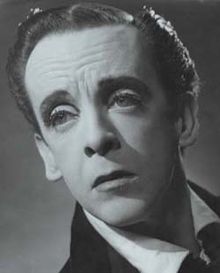
The Birmingham Royal Ballet's website and programmes used to state: "Huddersfield is not as famous in the world of classical dance as St Petersburg, Paris or London, but it was the birthplace of David Bintley - one of the most consistent and significant forces in British ballet."  After attending  Deborah Weiss's online interview of Andrew McNicol for the London Ballet Circle on 7 May 2025, I looked up the McNicol Ballet Collective and found that it was based in Huddersfield.   IMHO the Collective counts as another significant contribution from Huddersfield to the world of classical dance.

Andrew McNicol is a freelance British choreographer and Artistic Associate at English National Ballet School.  He has created work for companies and ballet schools around the world, including the Royal Ballet, Northern Ballet, the Royal Ballet of Flanders, the Joffrey Ballet, the Tulsa Ballet, the Royal Ballet School and the English National Ballet School.   He founded the McNicol Ballet Collective in 2021.

The McNicol Ballet Collective describes itself as "a creation-based ensemble of extraordinary artists at the peak of their creative powers, alongside emerging talent primed to showcase their brilliance and artistry."  They create works for the stage and screen and have launched a learning programme called "Compositions and Configurations."

I discovered that the Collective has a mailing list, so I subscribed to it.  Yesterday, I received my first newsletter.  It started with a note of thanks from McNicol to those who had attended the Collective's shows, made donations or engaged with it on social media.  Since its formation, the Collective had presented 4 ballets to critical acclaim, premiered a new ballet called Liquid Life and commissioned a new score from Jeremy Birchall. There is also a link to the Collective's Insight Event with the Royal Academy of Dance.   

For those who want to learn more about McNicol and his project, I recommend Trevor Rothwell's write-up of Deborah Weiss's interview on the London Ballet Circle website and the Insight Event video.  Apart from asking McNicol why he chose Huddersfield as his base during that interview, my only contact with him was at the Tell Tale Steps Choreographic Laboratory  10 years ago.  I remember struggling to get a word in edgeways at the panel discussion.   I welcome McNicol's initiative in setting up the Collective and I will do my best to support it.

Sunday, 26 January 2025

The Other Christmas Carol

Standard YouTube Licence

Finnish National Ballet A Christmas Carol YouTube Arte Concert 23 Dec 2024

In this country, we hear much about the Royal Danish Ballet and the Royal Swedish Ballet, but not much about their neighbours across the Gulf of Bothnia.  One of the artists I saw on my recent visit to Tallinn was Francesca Loi who danced Cinders's stepmother in Cristiano Principato's CinderellaI looked her up and found that she was with the Finnish National Ballet.  I explored her company's website and discovered it was founded just over 100 years ago.  It performs in a beautiful modern opera house.  It has a very interesting repertoire and its Artistic Director is Javier Torres,  Mr Principato, a soloist with the Estonian Ballet, has urged me to break my journey in Helsinki and watch the Finnish National Ballet on stage the next time I am in his area. 

One of its productions that I would love to have seen is David Bintley's A Christmas CarolIt was performed in Helsinki between 30 Nov and 30 Dec 2024.  The next best thing to a live performance is watching them on TV.  That has just become possible because a recording of their performance will be hosted on Arte Concdert's YouTube channel until 27 Feb 2925.  I watched the video last night less than a month after seeing Northern Ballet's production at the Leeds Grand Theatre.  As I said in A Christmas Carol - A Reflection of a Golden Age 19 J\n 2025, Northern Ballet's production is one of my favourite ballets.  It is impossible to compare a video with a work on stage but if I could see Bentley's work in a theatre I believe I would admire it just as much.

Apart from the similarities that are to be expected in a ballet that is inspired by the same novella and shares the same leading characters Bintley's ballet is quite different from Gable and Moriconi's.  The score is by Sally Beamish who also wrote the music for David Bintley's The Tempest and David Nixon's The Little Mermaid.  I described her score for The Tempest as "enchanting" in my review of that ballet and I think her score for The Little Mermaid is one of the reasons for my headline Nixon's Little Mermaid - Perhaps His Best Work Yet in my review of Nixon's work.  Beamish discusses her score for A Christmas Carol in From a Sinister Atmosphere to Joyful Christmas Sounds.  The sets, costumes and projection design were by Anna Fleischle and some of the scenes were arresting.  The Christmas Yet To Come scene was literally spine-chilling even on a flat-screen telly.  Mark Henderson designed the lighting which was mood-changing even in the recording and would have been even more so in the theatre,

Bentley followed Dickens's story faithfully but he introduced some additional scenes such as Ali Baba, Long John Silver and Dox Quixote from Scrooge's childhood imaginings.  In his flashbacks to Scrooge's childhood and youth, Bintely explains how Scrooge developed as he did.  Something that I never fully appreciated from the original text.  Bimntley weaves in interesting new characters like three Jack Tars who are introduced by Tiny Tim's "I Saw Three Ships,"   Bintley's divertissements are often the strongest features of his ballets and they certainly distinguished this ballet.

In the film, Paul Murphy of Birmingham Royal Ballet conducted the Finnish National Opera Orchestra but I think Aku Sorensen directed them most other nights,  Scrooge was danced by Johan Pakkanen, Young Scrooge by Martin Nudo, Belle by Abigail Sheppard, Bob Cratchit by Frans Valkama and Tiny Tim by Janne Kouhia. I surmise that he is a student at the National Opera and Ballet School.  He discharged a very demanding role for a young artist with flair.  It included singing the first lines of a traditional English carol and calling for a blessing in a foreign language,  No doubt that is why he warned one of the loudest cheers at the curtain call. 

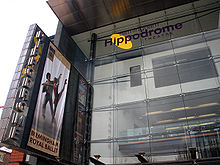
I strongly recommend this recording to my readers and I hope that the powers that be will bring this interesting company to London one of these days. There are some great photos and videos on the National Ballet's website including a short talk by Bintley.  Bintley comes from the next village but one from mine in the Holme Valley and I have twice had the pleasure of meeting him at the London Ballet Circle.  I was a frequent visitor to the Hippodrome when he was the Birmingham Royal Ballet's Director, and I am probably one of his biggest fans.

Sunday, 24 September 2017

Birmingham Royal Ballet's Aladdin nearly Five Years on


Standard YouTube Licence


Birmingham Royal Ballet Aladdin The Lowry, 23 Sept 2017, 19:30

Shortly after I started this blog I reviewed Birmingham Royal Ballet's Aladdin (see my review of 1 March 2013). I saw it just after I had started taking ballet lessons with Fiona Noonan several months before I entered the over 55 class at Northern Ballet. Although I had seen a lot of ballet before 2013 I had not actually done very much. I have since learned that however much ballet you see from the stalls or dress circle you really don't know what you are talking about until you try your hand at it. Then your admiration for those who make their living from the art soars beyond bounds.

In March 2013 I wrote:
"Having developed my love of ballet while Frederick Ashton was the Royal Ballet's choreographer I am very hard to please. But pleased I was. The pas de deux that Bintley created for Aladdin and the Princess danced yesterday by Jamie Bond and Jenna Roberts reminded me a lot of Ashton. So did the powerful roles for the djinn (Matthias Dingman), Mahgrib and Sultan (Rory Mackay). Also, the sweet role for Aladdin's mother danced delightfully by Marion Tait - no Widow Twankey she. Other lovely touches - and very familiar to Manchester with our famous Chinese quarter - were the lion and dragon dances. It is probably unfair to single out any of the other dancers because all excelled but I was impressed particularly by Céline Gittens who danced Diamond. Finally, Davis's score with its oriental allusions was perfect for Bintley's choreography."
I saw many of the same dancers in the same roles last night. Would I still like it especially as I had been looking forward to Stanton Welch's La Bayadère which had to be axed when Birmingham City Council reduced its grant to Birmingham Royal Ballet? (see A Birmingham Bayadère 26 Nov 2016 and How Nikiya must have felt when she saw a snake 31 Jan 2017)

Well, I am glad to say that I liked Aladdin even more last night and I think I have to thank my teachers in Leeds, Manchester, Huddersfield, Sheffield, London, Liverpool, Cambridge, Budapest and, half a century ago, St Andrews for that as they taught me how to appreciate ballet. As before I loved Carl Davis's score. I was impressed by Sue Blane's costumes, Dick Bird's sets and Mark Jonathan's lighting. I was thrilled by David Bintley's choreography. Most of all I was dazzled by the dancing.

César Morales was a perfect Aladdin alternating from an awkward adolescent to the sultan's splendid sun in law. Jenna Roberts was as lovely as she had been when I had last seen her in that role. Iain Mackay was a magnificent magician (why does Salford feel it has to boo him at the curtain call just because he is cast as a baddie?)  Aitor Galende. clad and coloured from head to toe in blue was a noble djinn. Tom Rogers was every inch a sultan.  Marion Tait is always a delight. One of my all-time favourites. It was appropriate that many of my other favourites appeared as jewels for gems they are. The incomparable Céline Gittens, glittered as a diamond, Chi Cao glowed as an emerald, Samara Downs and Alys Shee gleamed as gold and silver, Yasuo Atsujii and Yijing Zha radiated as rubies, Karla Doorbar shone as onyx as indeed did the whole cast.

I attended the performance with a friend who has seen a lot of ballet and attended a lot of classes though she likes the other performing arts and other dance forms at least as well. She also saw the 2013 show with me and said she enjoyed last night's performance even more. Sitting next to us were a couple for whom ballet was still a new experience. In fact, for one them it was his first live show. I was curious to see whether he would take to it. He told me that he found difficulty with the first act but enjoyed the second and third very much. On balance he enjoyed the whole experience.

I hope to see Stanton Welch's La Bayadère one day even if I have to fly to Texas to do so.  As one of my favourite young dancers has just moved from HNB to the Houston Ballet I hope to do so soon, I was sad to learn that the company had suffered so much from Hurricane Harvey.  As I said in Houston Ballet  30 Aug 2017 we in the North know the damage flood water can do. I am sure that company will emerge stronger than ever as Northern Ballet did. I shall look out for the Houston Ballet on World Ballet Day and give it a special cheer.

Thursday, 2 March 2017

Bintley's Best

David Bintley
Author 捨石.
Source Wikipedia
Creative Commons Licence


Birmingham Royal Ballet, Cinderella Lowry, 1 March 2017, 19L30

This will be a very short post because I have just driven across the Tops through a snowstorm and I have to get up at the crack of dawn tomorrow to attend a conference and site view somewhere just outside Preston. However, I could not go to bed tonight without congratulating Birmingham Royal Ballet for their performance of Cinderella at the Lowry this evening.

I've followed this company from the time it was known as the Touring Company and I have seen many of its shows. Its dancers always dance well but never have I seen them dance better than they did tonight. Mancunians don't often stand up for anyone - especially not Brummies who have the effrontery to call themselves the second city - but they did tonight. That ovation was richly deserved.

I like everything I have ever seen of Bintley's choreography but I think Cinderella is the work I like best. I might add that I am a bit of a connoisseur of Cinderellas having seen many different versions but this is definitely one of the best. It opens on the funeral of Cinderella's mother. Her father tries to console her with a mighty hug but they are separated by the woman who is soon to be his second wife. Cinderella is left sobbing at the graveside. Poignant or what!

The new wife, danced by the magnificent Marion Tait has two grown-up daughters of her own. One is all skin and bones (Samara Downs) and the other is fat and greedy (Laura Purkiss), Skinny and Dumpy bully Cinderella (Jenna Roberts) mercilessly. Happily, the girl's got spirit and would only stand so much. At one point she set about her tormentors with a broom handle and put them to flight. I started clapping and was surprised that nobody joined me. She held her own again when Skinny and Dumpy tried to grab her little box of mementoes. Of course, the two bullies were backed up by their mother who was as cruel as Aunt Reed in Jane Eyre. If the first scene was a study of grief, the second was a study of child abuse lightened only by the hilarious dance lesson and the sisters' ridiculous antics.

As everyone knows, Cinderella gets to the ball despite her stepmother's and sisters' meanness in withholding her invitation. As she is being kitted out there is a gorgeous divertissement from four of my favourite ladies in ballet. Miki Mizutani as Spring, Céline Gittens as Summer. Maureya Lebowitz as Autumn and Delia Matthews as Winter. Her Cindersmobile appears and what a set of wheels.  I was impressed by Northern Ballet's (see Northern Ballet's Cinderella - a Triumph 27 Dec 2013) but these are so much better. Off she goes to the ball attended by her frogs and mice.  Jane, if you are reading this, Isabella Chandler was delightful as were all the kids.

The ball continued after the interval. Dumpy and Skinny made complete idiots of themselves and had to be ticked off by their mum. The prince, William Brancewell, arrived. He fended off the attentions of the two sisters but then spotted Cinderella and the rest, as they say, is fairy tale. The whole cast was good but I need to say a special word about Yvette Knight who was a beautiful fairy godmother and Valentin Olovyannikov who doubled as the hairdresser and major domo.  Tzu-Chao Chou was a great ballet teacher.

I should also mention John Macfarlane's designs which were among the bestI have ever seen.

The company will perform the ballet in the Lowry until Saturday. Thereafter it moves to Plymouth and Sunderland and other major towns.  If you live near any of those cities then you should go.

Tuesday, 28 February 2017

Bintley's Cinders


Vimeo Licence


Between tomorrow and Saturday, the Birmingham Royal Ballet will make the first of its two annual visits to The Lowry. We always look forward to it. Like snowdrops and crocuses, it is a harbinger of Spring. The advancement of the clocks (one hour's less sleep that we never grumble about) and slightly warmer days, Pennine lambs, Easter eggs are and the first trips to the seaside are just weeks away. So welcome dear BRB to our region.

This week the company will perform David Bintley's Cinderella which he created in 2010. Like Hampson and Wheeldon but unlike Nixon or James, Bintley uses Prokofiev's score. The production won the best classical choreography award of the Critics' Circle National Dance Awards in 2011.

The company will present four shows at 19:30 each day it is here as well as matinees on Thursday and Saturday. On Friday there will be a pre-performance talk at 18:30 on Friday. Sadly, the company is competing for my patronage with Beautiful Ballet Black at the Barbican and Sergei Polunin's Dancer so I will only get one chance to see Cinderella on this visit.   I shall see the Wednesday evening performance in which Jenna Roberts will dance the title role, William Bracewell the price, Marion Tait the stepmother and Samara Downs and Laura Purkis her daughters. Sadly I shall miss Delia Matthews, Tyrone Singleton, Celine Gittens and Ruth Brill this time as I shall be in the Barbican on Saturday when they are on stage but I wish them toi, toi and chookas and hope they all enjoy their stay in my native city.

This is one of the highlights of the year for balletomanes in the North of England. Tey are assured of a very warm welcome.

Friday, 30 December 2016

The Terpsichore Titles: Ballet of 2016


Standard YouTube Licence


John Cranko is my all time favourite choreographer and my favourite of his ballets is and has always been The Taming of the Shrew (see Cranko's "Taming of the Shrew": Now's our chance to see one of the Ballets everyone should see before they die 21 Sept 2013). But in January I was introduced to another ballet also called The Taming of the Shrew to which I took an immediate shine (see Competition for Cranko: The Bolshoi's Taming of the Shrew streamed from Moscow 25 Jan 2016);

When the Bolshoi visited Covent Garden I was in the audience for the British premiere. It was an extraordinary night and the applause exploded. Especially when Jean-Christophe Maillot appeared to take his curtain call. In Bolshoi's Triumph - The Taming of the Shrew 4 Aug 2016 I wrote:
"The Bolshoi Ballet has always been respected in this country but until last night I don't think it has ever been loved. There are many reasons for that, not least the fact that the company was seen as an instrument of Soviet soft power during the cold war coming to London as it did in the year the tanks rolled into Budapest. That may have changed with the London premiere of Jean-Christophe Maillot's The Taming of the Shrew for the audience really warmed to the show. Standing ovations are quite rare in the Royal Opera House but when Maillot appeared to take a bow several members of the audience (including yours truly) felt compelled to rise."
Cranko remains my all time favourite choreographer and Shrew had my favourite of his works but, as I said in my review, there are features of Maillot's production that I think I prefer.Cranko's work and Maillot's are very different but each has its strengths.

There have been so many fine new ballets this year. The Tempest by David Bintley,  David Dawson's Swan Lake, Ted Brandsen's Mata Hari and Cathy Marston's Jane Eyre not to mention shorter works such as Chris Marney's To Begin, Begin, Wayne McGregor's Multiverse and Carbon Life. In any other year I would have chosen any of them as my ballet of the year. But Jean-Christophe Maillot's Taming of the Shrew made a special impression on me and it would have been unjust not to recognize it.

Sunday, 1 November 2015

Ballet Cymru Am Byth


Embedded pursuant to a standard YouTube licence


It is not often that my heart leaps when I see the nominations for the National Dance Awards but it did this time when I read that Ballet Cymru has been nominated for the best independent company award (see Judith Mackrell's National Dance Awards 2015 nominations: ice dance, flamenco and independent companies celebrated 29 Oct 2015 Guardian Dance Blog). I am very fond of that company. Last month I visited them at their studios in Newport (see Ballet Cymru at Home 5 Oct 2015). Next Friday I will be in Newport for the première of Traces Imprinted, the new work by Marc Brew, which will be performed with TIR and Celtic Concerto.

One of the reasons why I like Ballet Cymru is that they worked with wheelchair dancers and others in Stuck in the Mud. Marc Brew choreographed that work to a score by Jack White who has composed the music for Cinderella which you can hear above. Brew has also created work for Candoco Dance Company which has been nominated for the Outstanding Company award. That is another company that admire. Founded in 1991 it describes itself as "the company of disabled and non-disabled dancers". This is a company with first class productions which also manages to provide first class outreach opportunities for the general public. It is up against English National Ballet, New Adventures and Northern Ballet for that award. Even though I would normally support any of those three companies for that award I am rooting for Candoco on this occasion.

Three of my favourite male dancers, Steven McRae, Vadim Muntagirov and Ed Watson are up for the best male dancer category and I am conflicted because I cannot choose between them as I like them all. I have seen superb performances by all of them this year but the one that touched my heart was Muntagirov's pas de deux from Swan Lake with Daria Klimentova at Northern Ballet's Sapphire gala in Leeds on 14 March 2015 (see Sapphire 15 March 2015). I never thought I would ever see them dance together again and they were the highlight of my evening.

The choice is slightly easier for best female dancer. After seeing her Juliet in the Albert Hall last year it has to be Alina Cojocaru (see Romeo and Juliet in the Round - Saturday 14 June 2014 20 June 2014) though I am also a great fan of Alessandra Ferri and Marianela Nuñez. I am delighted to see Laura Morera in the outstanding female performance category for her role as Lise (see The Best Fille Ever 18 April 2015 and my flat footed attempt to congratulate the ballerina in Laura Morera 25 Aug 2015). I am also pleased for Eve Mutso to be nominated for her performance in A Streetcar Named Desire. I saw Luciana Ravizzi dance the role when I saw the ballet (see Scottish Ballet's Sreetcar 2 April 2015) but I have seen Mutso in other works this year and she never fails to delight me.

I would have expected Streetcar to have been nominated for best classical choreography as well as Darius James's Cinderella but what do I know? However, I was delighted to see nominations for David Bintley's The King Dances and William Bracewell's performance in that work. For me the performance of that work to celebrate Bintley's 20th anniversary as artistic director of the Birmingham Royal Ballet and its 25th anniversary in Birmingham was was one of the highlights of the year (see In Praise of Bintley 21 June 2015).

I am conscious that I have not mentioned a lot of people who deserve mention. As I come from the North of England I take particular pleasure in Kenneth Tindall's nomination for two categories as well as Northern Ballet's and Tobias Batley's for outstanding company and best male dancer respectively. I congratulate everyone and every company that has been nominated, I thank them all for their work and wish them all well for the future.

Tuesday, 30 June 2015

Oh Fortuna


Birmingham Royal Ballet - Carmina burana trailer from Birmingham Royal Ballet on Vimeo.

Birmingham Royal Ballet, Carmina Burana, Hippodrome, 20 June 2015

David Bintley comes from Honley which is almost next door to mine (see My Home and Bintley's 12 May 2015). It is not possible to grow up in this part of the world without coming across The Choral. It performs at least three series of concerts to full houses in Huddersfield Town Hall every year. In The Choral 19 Dec 2013 I reviewed one of its concerts and wrote:
"So what's all this got to do with ballet or even dance?" I hear you say. Well I did reserve the right to go off topic occasionally for an exceptional concert and this was certainly exceptional. And we dance in Huddersfield as well as sing (see "The Base Studios, Huddersfield"). We produced David Bintley of the Birmingham Royal Ballet. I don't know whether he had any connection with the Choral or even attended a concert but you can't live in this part of Yorkshire without knowing about it. The Choral must have been part of Bintley's cultural heritage."
I asked Bintley about his cultural influences when he addressed the London Ballet Circle last month and he confirmed that my suspicion was right. However, my suspicions would also have been confirmed by the performance of Carmina Burana at the Hippodrome on 20 June 2015 to celebrate Bintley's 20th anniversary as artistic director of the Birmingham Royal Ballet and the 25th anniversary of the company's move to Birmingham.

That was a very special evening which I have already described In Praise of Bintley on 21 June 2015. Two works were performed that day:  Bintley's latest ballet The King Dances, which I reviewed in A Special Ballet for a A Special Day 23 June 2015 and Carmina Burana the very first that he created after he was appointed artistic director of the company. I had come to see The King Dances but Carmina Burana was a treat. A multimedia spectacular. A feast as much for the ears as for the eyes. This was the first time I had seen the ballet and how and why I had missed it all those years is a mystery.

Carl Orff's score has always been popular, particularly O Fortuna. Bintley translated her into the Empress of the World, a blindfolded woman in black shift on high heels representing blind fortune. She danced alone completely oblivious to human merit and indeed the human condition. On 20 June 2015 she was danced brilliantly by Céline Gittens. I have seen quite a lot of that dancer this year and my admiration for her has grown in every performance. Incidentally, I was delighted to read about her promotion in the company. I offer my congratulations to her and the other dancers who have been promoted to the enormous number that she and they must already have received (see End of Season Announcements 29 June 2015).

In the Carmina Burana Orff set to music several secular poems about medieval life. Bintley created what are effectively 6 mini-ballets around each of those poems. O Fortuna was an encounter between lady luck (the Empress Fortuna) and seven seminarians. Spring celebrates the fertility of the earth but also of womankind. It is set in a maternity ward with women who are either about to give birth or who have given birth against a backdrop of drying sheets and nappies with the hapless father or naive body danced by Jamie Bond. The next scene is bucolic with village lads in their colourful jackets and the village lasses in their pony tails competing for the attention of Elisha Willis. The second seminarian, Matthias Dingman (who has also been promoted) in a boiling rage seeks solace in the tavern where he and five gluttons in fat suits are served Daria Stanciulescu in a tureen. Finally, the third seminarian, Tyrone Singleton, returns to Fortuna in the Court of Love where he is stripped to his underpants. One of the most effective and affecting endings to a ballet that I have ever seen.

But there are three other stars to this ballet: the designer Philip Prowse who designed the magnificent and spectacular sets and costumes, Philip Mumford for his lighting and the singers of Ex Cathedra. We in Huddersfield like to think that the Choral has a unique sound which you can best appreciate in the Dies Irae of Verdi's Requiem. Birmingham's magnificent choir Ex Cathedra came closer to that sound than any choir I have heard before or since.

Carmina Burana is of course 20 years old but to me it was as fresh and vibrant as if it had been created yesterday.

Tuesday, 23 June 2015

A Special Ballet for a Special Day

Louis XIV as Appollo in Le Ballet de la Nuit
Source  Wikipedia


Birmingham Royal Ballet, The King Dances, Birmingham Hippodrome, 20 June 2016

As I noted In Praise of Bintley 21 June 2015, last Saturday was a very special day. It was the 25th anniversary of Birmingham Royal Ballet's move from London and the 20th anniversary of David Bintley's appointment as artistic director of that company. A special day deserves a special ballet and what could be more special than one inspired by Louis XIV's appearance as Apollo in Le Ballet de La Nuit.

We know quite a lot about that ballet as I indicated in The King Dances 23 May 2015. We have the score, pictures of the dancers and eye witness accounts of performances of Le Ballet de la Nuit. The ballet could easily be re-staged if anyone wanted to do that. However that wouldn't be great box office. The ballet went on all night and nearly all the roles were danced by men. In The King Dances Bintley has created a new ballet with a new score that lasts no more than 35 minutes. Nevertheless it gives modern audiences a very good idea of what Le Ballet de la Nuit must have been like.

The curtain rises to a set lit only by naked torches held by Les Messieurs: Yasuo Atsuji, Fergus Campbell, Matthias Dingman and Brandon Lawrence. This is the first watch from 18:00 to 21:00 as Night displaces Day. Night  represented by La Nuit (Ian Mackay) gradually assets his authority.

The second watch between 21:00 and midnight represents the pleasures of the night. The king (William Bracewell) enters and dances with the ladies.  But are Mesdames really ladies? From my seat towards the front of the stalls they seemed feminine enough but I knew that from my reading on Le Ballet de la Nuit not to mention the cast list and a tweet the night before from Ruth Brill that almost all the roles were danced by men. They turned out to Alexander Bird, Jonathan Caguioa, Tzu-Chao Chou and Max Maslen. So good was the dancing and indeed the wardrobe that I was confused.

The king then spots an image of Selene (the goddess of the moon) in the disc and that is the only bit that did not quite work for me. She came to life as Yijing Zhang and there was a lovely duet between them. That is the only female role in the ballet that is actually danced by a woman.

The scariest and most memorable portion of the ballet is the third watch between midnight and 03:00 where nightmares occur. First there are devils besporting themselves like monkeys. It is at this point that Stephen Montague's score is most effective for the music resembled the calls of cackling monkeys. The decision to commission a score from a modern composer was not appreciated by the lady who sat next to me and one of the subscribers to BalletcoForum wrote that the scariest three words in ballet were "specially commissioned score." Having listened to a little bit of Philidor on YouTube I am very glad that Bintley turned to Montague. His score may be 21st century but for me it worked.  The devils were danced by Kit Holder, Lachlan Monaghan, Benjamin Soerel and Oliver Till. They were followed by witches (Bird and Tzu-Chao), werewolves (Caguioa and Maslen) and finally Satan himself danced by Mackay.

The fourth watch between 03:00 and 06:00 when Day returns was such a relief. Day was represented by an enormous disc that parted to reveal the King as Apollo this time clad in gold. He was joined by the original torch bearers who transformed into Honour (Atsuji), Grace (Lawrence), Renown (Campbell) and Valour (Dingman). Night (Mackay) is revealed as Cardinal Mazarin. I am not sure of the significance of that. Mazarin was Louis XIV's chief minister during his minority and early adulthood and he was not well liked partly because he was Italian and partly because of his ruthlessness and personal extravagance. Le Ballet de la Nuit was danced in 1653 while the cardinal was still alive and at the heart of his power so I don't think his appearance can be regarded as satire.

Bintley is to be congratulated on this production. I had to give up a lot to see this ballet - English National Ballet's Choreographic and two new works by Tindall and Vigier who are two of my favourite young choreographers (see Three into Two won't go 20 June 2015). Today at class I was told by folk who had stayed in Leeds that the choreographic sharing was wonderful. I can't say that I didn't feel a tinge of regret when Gita told me that there were opportunities to meet Vigier and Hampson. But on Saturday the Hippodrome was probably the best place in the universe for a ballet fan and I think I would have kicked myself for ever had I not been there.

Sunday, 21 June 2015

In Praise of Bintley

Yesterday was my first visit to the Hippodrome but it won't be the last


It seems only yesterday that I read in About the House or it may have been the Dancing Times that the Sadler's Wells Royal Ballet would move to the Birmingham Hippodrome and be known as the "Birmingham Royal Ballet". I was bemused. As a Mancunian I have never had much time for Birmingham. "If they want to move out of London" I said to myself "there are far better cities. How about Manchester? The second city though we Mancunians say that honour actually belongs to London. Or if not Manchester another town with character, history and fine architecture with lovely countryside nearby. Edinburgh, perhaps, Bristol, Newcastle or even Liverpool which, despite a century of relative economic decline, still has the magnificent Pier Head as well as the Phil with its exquisite gents' loo. Mais pourquoi Birmingham!"

Although I have followed the Birmingham Royal Ballet ever since it was known as the touring company and never miss a season when it visits The Lowry I had never been to The Hippodrome before. I have been to opera houses  all over the world including The Teatro Colón in Buenos Aires, the Sydney Opera House, the Semperoper in Dresden, Lincoln Center and, of course, Palais Garnier in Paris.  I had seen the Birmingham Royal Ballet on its trips to its old home at Sadler's Wells but it never occurred to me to visit the company in its new home until a year ago.

It was Ruth Brill who put me right. She gave a talk to the London Ballet Circle. She spoke about the Hippodrome and its audience and how they cherish the Birmingham Royal Ballet. I listen to her because I admire her dancing so. She is such fun. She loves to dance and she communicates her joy to her audience. So I made a mental note to see the Birmingham Royal Ballet in the Hippodrome one day.

That day arrived yesterday because it was the 25th anniversary of the company's move to Birmingham and the 20th anniversary of David Bintley's appointment as the company's artistic director. Earlier in the day I had been in Leeds watching the Northern Ballet in class and listening to a discussion on narrative ballet by a panel that included Christopher Hampson and Graham Watts (see Three into Two won't go 20 June 2015). Sadly I had to miss the choreographic sharing with new works  by Kenneth Tindall and Constant Vigier which I had expected to be (and Gita confirmed was) the best part of a very long day. But it was worth it for I would not have missed last night's show in Birmingham for the world.

The advertised performance was a double bill - The King Dances which I had discussed in my post of the 23 May 2015 and Carmina Burana which was Bintley's first work after his appointment as artistic director. I will review the performance of those works but not here because they each deserve a post of their own. The evening began with an unfamiliar overture which we learned was Prospero's theme. It is part of a new score by Sally Beamish for The Tempest and it had never been performed in public before. The curtain rose with Robert Parker standing by a lectern. "I wish I could say that that fanfare was for me" said Parker who flies aeroplanes as well as being artistic director of Elmhurst but it was for another. A photo of Bintley flashed on screen to thunderous applause. For the next few minutes Parker summarized Bintley's life and career with pictures of scenes from his ballets. The summary ended with a photo of the great man in Aston Villa's colours. Birmingham is where he has made his home and brought up his children, explained Parker, and it is where where he supports one of the city's great football teams.

There was a pause of a minute or so before the curtain rose on The King Dances and to say that that was special is an understatement.  It was one of the most enthralling performances I have ever experienced in the theatre. As I said above I will save the details of the review for another day but I don't think I have ever experienced anything more chilling than the images of hell conjured up in The Third Watch or anything more dazzling than the sight of William Bracewell glimmering in gold before the rising sun.

The evening continued with Carmina Burana and the company danced their hearts out. Although Bintley has made his home in Birmingham he comes from Honley which is almost the next village to mine (see My Home and Bintley's 22 May 2015). I long suspected that he had been influenced by the Choral. I actually asked about the artistic influences on his life when he visited the London Ballet Circle last month. Carmina Burana confirmed my suspicion for much of the glory of that ballet comes from the soaring voices to Orff's score.

After the curtain fell the crowd went wild. The applause was deafening. They yelled. They cheered.  They whooped. They clapped till their palms were sore. Several in the audience, including me, felt compelled to rise.  There was the usual reverence with its succession of curtain calls for the principals and then Michael Clarke, chair of the company's directors, walked on stage. He gestured to us to stop clapping. "That applause wasn't bad" he said "but the next round will be thunderous for I have found David Bintley," He beckoned Bintley onto the stage and the crowd erupted even louder than before. Bintley joined hands with the conductor and dancers and the applause exploded like a cannonade. Clarke told us that Peter Wright was in the audience. It was a very special moment.

I was a bit dazed after exiting the theatre. It is in the Chinese quarter of Birmingham which I think must be the fun part of town. There were crowds in the streets.  Everyone seemed to be having a great time. The Hippodrome is a lovely theatre. There are plenty of bars serving all kinds of refreshments. I ordered an espresso before the show and a very interesting soft drink consisting of squeezed apple juice and cinnamon for the interval and had plenty of change out of a fiver.  The seats were comfortable. The acoustics were good. The staff were courteous.  I found free street parking a few hundred yards from the theatre. Would you believe that they charge for parking on waste ground up to 22:00 in Leeds even on a Sunday. I can quite see why the Birmingham Royal Ballet made its home at the Hippodrome. Yesterday was my first visit to that theatre but it will certainly not be the last.

Saturday, 23 May 2015

The King Dances


Between the 17 and 20 June 2015 Birmingham Royal Ballet will dance David Bintley's latest ballet, The King Dances at the Birmingham Hippodrome. It will be part of a double bill to celebrate Bintley's 20 tears as the company's artistic director. The other ballet will be Carmina Burana which Bintley created in 1995.

According to the company's website:
"In 1653 the 14-year-old Louis XIV of France danced the role of Apollo the sun god in Le Ballet de la nuit, and earned himself forever the soubriquet the Sun King. In The King Dances, David Bintley re-imagines the very beginnings of ballet, when men were quite literally, the kings of dance."
The dance is also imagined in Gérard Corbiau's film Le Roi danse an extract of which appears above.

Le Ballet de la nuit was the subject of the 6th Annual Oxford Dance Symposium which took place at New College on 21 April 2004.  Papers of that symposium have been compiled and edited by Michael Burden and Jennifer Thorp and published under the title Ballet De La Nuit by Pendragon Press (see europeanbookstore.com).  The book appears to be out of print but the following abstracts can be viewed on New College's website:
Although Jennifer Thorp says in her abstract that no choreography from the actual Ballet de la Nuit survives we do know that its purpose was to impress. 

The image of the young Louis dressed in gold as Apollo rising through the stage was intended to be an allegory of the political and religious doctrine of the divine right of kings. To understand why it was asserted in 1653 it should be remembered that France's neighbour to the North was a republic or Commonwealth having executed its own king in 1649 and France was just emerging from its own civil wars known as the Frondes in which royal authority had been challenged by the commons (le fronde parlementaire) and nobility (le fronde des nobles). Because of its concentration of music, colour, drama and movement ballet has long been seen as an instrument of state power which perhaps explains why France acquired a royal ballet in 1689 - the year of the glorious revolution in England and Wales - while England had to wait under 1956 for the equivalent institution.

There was however another style of ballet in France known as the comédie-ballet which appears in several Molière plays. In Le Malade Imaginaire the hypochondriac Argan is admitted as a medical man in a song and dance routine to the following chorus of bad Latin and worse French:
"Vivat, vivat, vivat, vivat, cent fois vivat,
Novus doctor, qui tam bene parlat!
Mille, mille annis, et manget et bibat,
Et seignet et tuat!"*
Now that is something I would really like to see on stage. I wonder whether any choreographer will rise to the challenge.

* Long live, long live, long live, long live, 100 times long live the new doctor who speaks so well. May he eat and drink for a thousand, thousand years. May he prescribe and kill."

Tuesday, 12 May 2015

My Home and Bintley's


I arrived home from London in the early hours of the morning, I had gone to London specifically to hear David Bintley. He spoke to the London Ballet Circle yesterday evening. I would have wanted to hear him had he been born in Tierra del Fuego or Stewart Island as I admire his work so much but, as it happens, he comes from Honley in the Holme Valley which is almost the next village from mine.

We have a rich musical tradition in this part of Yorkshire with silver bands, brass bands, choirs, the annual contemporary music festival and above all The Choral. Here they are singing Hallelujah from  Handel's Messiah. At one time every pub in every village held a sing at Harvest time. Sings usually ended with a rousing chorus of Pratty Flowers which us sometimes called the Holmfirth anthem. Though sings are rarely held nowadays you can see from the film there are still folk who remember the words of that song.

Ever since I first learned that Bintley came from this area I had imagined that he would be influenced by that tradition so I asked him.  I can't tell you what he said because I have been asked not to do so but a summary of his talk will be available in due course on the London Ballet Circle website.  As the Circle says on its Facebook page: "We had a lovely, very interesting and informative evening with David Bintley!" The Ballet Circle thanked everybody for coming but I would not have missed that talk for the world.

Lots of other good talks and visits are planned as you can see from the Events page of the Circle's website. I am coming down again to hear Ernst Meisner whom I featured at the end of last year and Li Conxin, artistic director of the Queensland Ballet. Membership of the London Ballet Circle costs only £12 a year and it helps to support young dancers and students. This year we are sending a dancer from London to Amsterdam to attend a workshop with the Dutch National Ballet. So it is very worthwhile becoming a member.

Friday, 20 March 2015

Eh up!


Yesterday I wrote about Wuthering Heights. On Saturday we heard how the first Yorkshire pudding was made (see Sapphire 15 March 2015), Continuing the Yorkshire theme the Royal Academy of Dance has just announced the judges for the finals of the Genée and two of the three have very strong connections with Yorkshire.

David Bintley was actually born in God's own county:
"Huddersfield is not as famous in the world of classical dance as St Petersburg, Paris or London, but it was the birthplace of David Bintley - one of the most consistent and significant forces in British ballet."
Mr Bintley will be pleased to know that ballet is taught well in his home town (see  Team Hud Adult Ballet Class 22 Jan 2014 and The Base Studios, Huddersfield 13 March 2013) and that the Choral continues to flourish there (The Choral 19 Dec 2013).

David Nixon OBE was born in Canada but he is Artistic Director of the Northern Ballet which is based in Leeds. Nothing shows his feel for this county better than Wuthering Heights. As I said yesterday in my review of that ballet:
"I have lived in the Pennines for 30 years among the royds, below enormous skies and know the sudden and sometimes dramatic changes of colour of heath and sky. Rarely have I seen such faithful re-creation of nature on the stage."
The Genée is to return to London between the 10 and 19 Sept 2015. The programme is set out in the RAD's website. Both the semi-finals, which take place at Stratford Circus Arts Centre between the 16 and 17, and the finals, which take place at Sadler's Wells on the 19, will be open to the public. Although those events take place in London there will be associated events in other parts of the UK (see Creative Spaces on the RAD website). Applications to take part in the event will be open from the 1 May 2015. The RAD offers financial support to candidates through its Darcey Bussell bursary scheme and other initiatives.

Many of the greats of British ballet have launched their careers at The Genée - Doreen Wells, David Drew, David Edwards and Leanne Benjamin to name just a few and more recently Céline GittensXander Parish, Francesca HaywardSean Bates and Mlindi Kulashe. One school that has done well at The Genée over the years is Ballet West in Taynuilt (see Ballet West: - You Can't Argue With Success 2 Feb 2015).

The RAD appeals for funds to support the event and those who wish to do so can find out how on the Support The Genée page of the RAD's website.

Saturday, 28 February 2015

London Ballet Circle's Guests

Ernst Meisner
Photo Robin DePuy
(c) Dutch National Ballet 2014
Reproduced with kind permission of the Dutch 
National Ballet


One event that I am not going to miss come hell or high water or even a brief to the Court of Justice of the European Union is the visit by Ernst Meisner of the Dutch National Ballet to the London Ballet Circle at The Dining Room, 1st Floor, Civil Service Club, 13-15 Great Scotland Yard, SW1 on 20 July 2015 at 19:30.

I have written a lot about Ernst and earlier this month I had the pleasure of meeting him in Amsterdam; but here is some more information about him, some of which I didn't know:
"After winning the Eurovision competition (no, not the song contest!) Ernst gained a place at The Royal Ballet Upper School then joined the company in 2000. After 10 happy years with The Royal Ballet dancing soloist roles Ernst put together a gala show for Kent County Council in Dartford, an experience he much enjoyed. He later got the chance to participate in the Rural Retreat for future leaders and got the opportunity to shadow Ted Brandsen, artistic director of Dutch National Ballet. Ernst left Covent Garden in 2010 and danced several seasons with Dutch National Ballet and when the company decided, two years ago, to set up a Junior Company, Ernst was appointed its Artistic Co-ordinator. He now choreographs works not just for the Junior Company but also for the main company.
Ernst, who also teaches at the Amsterdam International Summer School, has been inspired by LBC's work with student dancers and has very generously given us a two week scholarship to the Amsterdam International Summer School to award to a talented young dancer. We record our gratitude to Ernst and his colleagues for their kindness and greatly look forward to our evening with him and to hearing more about his work and life in dance."
I admire Ernst Meisner most for his choreography. Embers which was danced by Thomas van Damme and Nancy Burer on 6 Feb 2015 is a real gem (see The Dutch National Ballet Junior Company's best Performance yet 6 Feb 2015). There is a video of the pas de deux in Amsterdam Central Station which is beautiful until someone announces a train departure over the tannoy or perhaps a late departure of an incoming service, leaves on the line, the wrong sort of snow or even a cow on the line in the closing seconds of the ballet just as they would at Waterloo. Ernst's Junior Company are dancing at the Linbury in June. Don't miss them!

Another must see event will be the talk by David Bintley, artistic director of the Birmingham Royal Ballet, who comes from Huddersfield.  I'm coming all the way from Huddersfield to see Mr Bintley too.  It was after all his company's Miracle in the Gorbals which was my favourite ballet in 2014 (see My Personal Ballet Highlights of 2014 28 Dec 2014) and it has some of my favourite dancers. He is speaking at the same venue on 11 May 2015 at 19:30.

There are also talks by Li-Cunxin on 2 Aug 2015 and Sir Peter Wright on 13 April 2015 at the same time and in the same place.

Two trips I would love to make if I lived in London are to Chelmsford Ballet's rehearsal of Pineapple Poll and Carnival of the Animals at CYGAMS HQ Recreation Ground, Meteor Way, Chelmsford CM1 2RL on 8 March 2015 between 10:15 and 12:30 and to Central School of Ballet at 10 Herbal Hill, Clerkenwell Road, EC1 on 19 May 2015, 13.45 for 14:00. Central is where Kenneth Tindall and Chris Marney trained as well as Paul Chantry and Sarah Kundi so it is very special for me.

But the best reason for supporting London Ballet Circle is the help that it gives young dancers and I can do no better than quote the treasurer:
"The Circle has made four visits to various ballet schools for both rehearsals and performances, and also the annual visit to the Yorkshire Ballet Summer School, a visit to the ROH workshop at Purfleet and one to Ballet Rambert. It has made donations to the schools for general purposes and has also provided scholarships for two students to attend The Yorkshire Ballet Summer School and one to attend the Ballet Cymru Summer School. The Circle also continues to award the De Valois and Broderick Prizes to students of The Royal Ballet School. This year was the first year the Sir Peter Wright Prize was awarded to a student at Elmhurst School.

The total of all the above mentioned was £6155.00, scholarships amounting to £2930.00 and donations, following members’ visits, to £3225.00 (English National Ballet School, Rambert, Central School of Ballet, Yorkshire Ballet Summer School, Ballet Cymru, Dance Teachers’ Benevolent Fund following the visit to the ROH workshop at Purfleet)."
The Circle's beneficiaries have included Xander Parish and his sister Demelza, two of Yorkshire's finest, so it is not just a London institution.

Wednesday, 7 January 2015

Back to Africa


One of my most popular articles when I started this blog was What can be achieved by a good teacher 3 March 2013. It was about the classes given by the remarkable Mike Wamaya to kids in one of the poorest and toughest neighbourhoods of Nairobi.

I am returning to the topic again because of a news item on the class on the RAD website. It is headed "Former Faculty of Education student, Amy Shelton, gives a fascinating insight into her personal experiences of teaching ballet to children in Kenya in this month’s edition of Dancing Times," The students are up to date with the new RAD syllabus and as you can see from the film above and those in my earlier post they are as diligent and ambitious as any in the world. I have high hopes that some of  Wamaya's kids will perform one day at Covent Garden and the Met.

What Wamaya has done in Kenya could be repeated elsewhere in Africa including Sierra Leone. That country has already produced Michaela DePrince. It is going through a terrible trial right now just as it did two decades ago when DePrince was born. Sierra Leone survived the civil war and it will survive ebola but, as I said in  Could the Arts not do something about this horrible Scourge 8 Oct 2014,  "Sierra Leone and its neighbours will need massive help in rebuilding their economic, social and cultural institutions when the immediate crisis is over."

A ballet school for Freetown may seem an odd priority for a country that needs to be rebuilt but men's minds and souls need feeding as well as their bellies and dance provides some of that food. We know that from our own experience for it was the Vic-Wells Ballet that kept us going during the Second World War (see David Bintley's Dancing in the Blitz: How World War 2 made British Ballet BBC website) just as it helped generations of Russians survive decades of famine, war and oppression. Look what Wamaya has achieved in Kenya. Why not the same in Kroo Town, Kissy or Kenema?

Further Reading
28 Nov 2014  Michaela DePrince at TEDx Amsterdam

Wednesday, 29 October 2014

Shadows of War - the Other Ballets


Because the restoration of A Miracle in the Gorbals is so special I reviewed it separately in A Second Miracle 23 Oct 2014 but MacMillan's La Fin du Jour and Bintley's Flowers of the Forest are important works that should not pass unnoticed.  I saw those works with Miracle at Sadler's Wells in the matinee performance on the 18 Oct 2014.

The MacMillan was striking in many ways. Spurling's set with stylized human faces. The jerky puppet like movements of the dancers in the opening and closing scenes, the women in swimsuits and the men in golfing attire, Ravel's Concerto in G Major. The work was created in 1979 towards the end of MacMillan's career and contains some spectacular choreography. The tossing into the air and catching of the leading women Nao Sakuma and Maureya Lebowitz. The apparent levitation of the men several feet into the air. This is not everybody's favourite ballet but I enjoyed it if only for the music. But the choreography is good too and, as I said above, the sets are striking.  I think I will find fresh things to appreciate in it next time I see it.

The connection with war was not obvious. The note on the MacMillan website observes that the ballet ends as the door to a garden is closed on the world. Quoting Clement Crisp the note concludes:
"It is a requiem for the douceur de vivre of an era, and it is nostalgically grateful for the 1930’s wayward charm.”
Well, perhaps. The war brought full employment and opportunity for many as well as destruction. I don't think there was anything douce or charming about the 1930s. With dictators and depression they are best forgotten.

The Flowers of the Forest is an old Scottish folk song:
"I've heard the lilting, at the yowe-milking,
Lassies a-lilting before dawn o' day;
But now they are moaning on ilka green loaning;
'The Flowers of the Forest are a' wede away'"
Like our own Pratty Flowers the song berates the futility of war. Bintley, who comes from Huddersfield, must have heard that air many times. It is fitting that he chose the pacifist Benjamin Britten to contribute much of the score.

The ballet is two works in one. Four Scottish Dances to Malcolm Arnold's music with Sakuma and Lebowitz again and then the much more serious Scottish Ballad to the Britten. Two bits of the choreography stand out. A wonderfully rhapsodic tour en l'air by the lover in the second dance reminding me of Burns's lyric verse and then the dance of the two drunks who stagger around the stage collapsing in a heap with the women dancing the Huntley (or something very like it) over their spread eagled bodies,

Again there was no express connection with war but the connotations were much more marked in the Bintley. Created in 1985 Flowers of the Forest is one of Bintley's early works and for what my opinion is worth I rate it one of his best. The show is at the Theatre Royal Plymouth tomorrow. If there are any tickets left do go and see it.

Thursday, 23 October 2014

A Second Miracle

Sir Robert Helpmann
Photo Wikipedia
In Dancing in the Blitz: How World War 2 Made British Ballet David Bintley spoke of Sadler's Wells Ballet's contribution to maintaining morale during the second world war. Much of the credit belongs to Sir Robert Helpmann who was one of the few male dancers to avoid conscription. He was also a considerable choreographer creating  ComuHamlet, The Birds and Miracle in the Gorbals during that period. The last of those ballets was a particular favourite possibly because it was a story about the conflict between good and evil which would have reminded the public why they were fighting.

The story is based on Jerome K. Jerome's Passing of the Third Floor Back which is a Christian allegory. Jerome's work is set in London and is about the efforts of a Christ figure ("the stranger") to improve the lives of the residents of a boarding house that had been made miserable by a grasping landlady and a well off businessman. The residents listen to the stranger and follow his advice. That upsets the businessman who bribes the residents to turn against the stranger.

Jerome's short story was transposed to Glasgow by Helmpann's partner Michael Benthall who wrote the scenario for the ballet. A young woman throws herself in the river and is dragged out unconscious. A clergyman tries unsuccessfully to revive her.  He covers her with a shroud and leaves her for dead. A stranger appears and revives her. The crowd acclaims the stranger as a miracle worker much to the annoyance of the clergyman whose shortcomings are revealed when he follows a prostitute to her lodging.  He encourages some local gangsters to set about the stranger who is left to die alone on stage with only the a beggar for company.

The music for the ballet was provided by Sir Arthur Bliss a recording of which you can hear on YouTube.   The sets and costumes were designed by Edward Burra (see Pallant House Gallery's Painting the Stage). The cast of the first performance on the 26 Oct 1944 at The Prince's theatre (now the Shaftesbury) included Moira Shearer, Leslie Edwards, Celia Franks, Gerd Larsen, Stanley Holden, Gillian Lynne and Helpmann himself who danced the stranger.

The ballet was included in the repertoire every year between 1944 and 1950 and was taken on tour. It then disappeared from the Sadler's Wells Ballet's repertoire though critics were still referring to it when I first took an interest in ballet in the late 1960s. For some reason the public forgot it in contrast to Martha Graham's Appalachian Spring which was first performed in Washington just four days later and which has much in common with Helpmann's work. No doubt that is because Helpmann developed his acting career though I have seen him dance with Sir Frederick Ashton in Cinderella in the early 1970s. He also compeered Sir Frederick's retirement gala on 24 July 1970 which I was lucky enough to attend.

It was therefore something of a second miracle to see the revival of this work at Sadler's Wells on 18 Oct 2014. Revival is perhaps not quite the right word for as Dame Gilian Lynne said in The Inspiration which was reprinted in the programme: "There are very few people left alive from that 1944 creation and not one of us remembers a step." Lynne has re-created the ballet to Bliss's music in the style of Helpmann and it certainly looks authentic to me. It appears that Burra's set and costume designs did not survive but Adam Wiltshire seems to have come close. The sense of period was conjured by the sounds of an air raid - the drone of an aircraft, explosions, anti-aircraft fire and a siren - all in total darkness before the first few bars of Bliss's score.

Miracle was sandwiched between MacMillan's La Fin du Jour and Bintley's Flowers of the Forest as part of Birmingham Royal Ballet's Shadows of War programme. Each of those ballets is an important work in its own right and therefore merits a separate review. The company had cast some of its strongest dancers for the performance. The stranger was danced by César Morales, the clergyman by Iain Mackay, the prostitute by Elisha Willis and the suicide victim by Delia Matthews.   Even some of the minor roles were danced by accomplished dancers - Marion Tait and Ruth Brill as two of the old ladies - and Yatsuo Atsuji, Brandon Lawrence, Rory McKay and Valentin Olovyannikov as gangsters.

The only other work of Lynne's that I have seen is "A Simple Man" which she choreographed for Northern Ballet to mark the centenary of L S Lowry's birth nearly 30 years ago (see "Northern Ballet's 'A Simple Man'" 14 Sept 2013). That is another ballet set in the back streets of another great industrial city in times gone by. There is much in Miracle that reminds me of A Simple Man. I wonder how much of Simple Man derives from Helpmann.

Other Reviews

Robert Hugill  Miracle in the Gorbals 18 Oct 2014 Planet Hugill