Showing posts with label Kenneth Tindall. Show all posts

Saturday, 12 March 2022

Casanova Revived

Standard YouTube Licence

Northern Ballet Casanova  Leeds Grand Theatre 11 March 2022 19:30

I saw Northern Ballet on stage for the first time since its 50th anniversary gala on 4 Jan 2020.  It was very good to see them again.   Although I try not to be partisan and support the other classical and contemporary companies of the United Kingdom, the Dutch National Ballet and great companies around the world as well as I can, Northern Ballet is my home company.  I live 25 miles from Leeds. I have attended whenever possible Northern Ballet's over 55 and evening classes since 2013. I have seen most of its shows since I was captivated by Dame Gillian Lynne's A Simple Man. Through those connections, I have got to know and like many members of the company.

Several of those artists were in last night's performance of Casanova.  It was a particular pleasure to see Hannah Bateman as Madame de Pompadour.  I had taken part in a virtual flower throw for her early in the lockdown because it had not been possible to attend the Grand for a real flower throw in what I had understood to be her final performance for Northern Ballet. Bateman has long been my favourite female artist in that company.  She founded The Ballet Retreat which I have always promoted but never attended largely because I fear I would not be good enough for her.  She is in the very restricted sense that I use the term a true ballerina.

Other dancers in the show whom I know well and like a lot included Abigail Prudames as Bellino, Ashley Dixon as Senator Bragadin and Gavin McCaig as an inquisitor and other roles. The title role, however, was danced by Lorenzo Trosello. Yesterday was the first time I had noticed him in a major role and I was impressed.  I particularly admired his interaction with Prudames who danced Bellino.  That appears to me to be the most demanding female role.  She was also impressive.  They certainly excited the crowd most of whom rose to their feet at the reverence.

Casanova is not a particularly easy story to follow.  I had seen it several times and written quite a lot about it in Casanova Second Time Round in the articles linked to that post, but even I had to refer to the synopsis in the programme at times.  Tindall is a dramatic choreographer - perhaps most remarkable for his work with groups and the corps than for his solos and duets.  He makes his dancers create shapes that are almost sculptural.  His narrative is cinematic. Christopher Oram's designs are breathtaking as is Muzzey's score.  The success of this ballet is down to the choreographer's eye for talent and ability to bring it all together.

The house was less than full last night but the folk who did attend were vociferous and enthusiastic. Perhaps more used to Elland Road, I thought, than the theatre. When the Ukrainian national anthem was announced my friend and I stood up. Though we were joined by one or two others as the playing continued most seemed content to sit it out.  It was quite a contrast to the audience at The Lowry last week.  They did however stand and even ululate at the curtain call.  It was certainly a good show though not good enough for me to lose my sense of proportion.

The show will remain at the Grand until 19 March.  It opens at the Lyceum in Sheffield on 22 March and then moves on to Sadlers Wells and The Lowry in May.  It is one of the best works in Northern Ballet's repertoire and if you can get to any of those theatres you should see it.

Thursday, 3 June 2021

Nixon - An Appreciation

Standard YouTube Licence


On 28 May 2021, Northern Ballet announced the retirement of its artistic director, David Nixon (see David Nixon OBE steps down as Artistic Director of Northern Ballet after 20 years 28 May 2021 Northern Ballet).  He has already held that job longer than any other director of the company. When he stands down at the end of the year he will have been with the company for over 40% of its history.  

Good things have happened to Northern Ballet during that time. The company's move to Quarry Hill will have been appreciated by the artists and technicians but it has also enabled ordinary folk like me to dance in the same studios and occasionally even upon the same stage as the artists. The work of the Academy and the Leeds Centre for Advanced Training are other significant achievements.  There are, of course, adult ballet classes and centres of advanced elsewhere but one of the distinctions of the Academy and the Leeds Centre is whether aiming for a career in dance or simply dancing for fun, all students are trained under the Ichino Technique:
"Under this method, young dancers learn how to cope with the physical and emotional demands of dancing through preventative conditioning, a clear understanding of their individual strengths and limitations and a detailed knowledge of dance technique."

Yoko Ichino, the deviser of that technique, is also Mrs David Nixon.

Nixon is highly regarded as a choreographer.  While I can't say that I have liked all his work he is the author of two masterpieces. One is A Midsummer Night's Dream  which I reviewed as follows in Realizing Another Dream on  15 Sept 2013:

"Perhaps the best way to start this review is at the end. I could not help rising to my feet as the cast took their bows. And I was not the only one. The English, unlike Americans, are very slow to give standing ovations (except at party conferences) and I have only seen other in my lifetime. That was a special evening for Sir Frederick Ashton at Covent Garden in July 1970 when he retired as director of the Royal Ballet. It seems from the tweets and video that Northern Ballet's short season at West Yorkshire Playhouse (6 to 14 Sept 2013) has also been very special."

Nixon's other masterpiece is Madame Butterfly.  In my review I wrote:

"it took my breath away. I have seen a fair selection of Nixon's work and in my humble opinion Madame Butterfly is his masterpiece.
To his credit, Nixon has commissioned major works from his own artists and I have enjoyed these better than many of his outside commissions.  Particularly successful was Kenneth Tindall's Casanova and Daniel de Andrade's The Boy in the Striped Pyjamas.

There has been a lot of speculation about who will succeed Nixon and what he will do next.  I have no idea about either but I know whom I would like to see apply for the role.  I think dance education is very important and two of my favourite candidates are artistic directors of great ballet schools, one in mainland Europe and the other in London.  Both have worked with exceptionally gifted young dancers in the important years between finishing vocational education and joining a company. The other candidate has already been an artistic director.  She has created sensations in San Francisco and London and also worked for Northern Ballet.  As for Nixon, someone on BalletcoForum suggested an important role for him in North America. 

Whether Nixon takes up a new appointment or retires I wish him all the best for the future.

Friday, 19 July 2019

Central School of Ballet's Summer Performance


Standard YouTube Licence


Central School of Ballet Summer Performance 18 July 2019, 19:30 Bloomsbury Theatre & Studio

Central School of Ballet has trained some excellent dancers.  They include Sarah Kundi who stole the show as far as I was concerned with her hilarious performance as Cinderella's stepmother in the Albert Hall (see Cinders in the Round 13 June 2019).  Hannah Bateman was at Central too.  She is my favourite at Northern Ballet.  So, too, was Rachael Gillespie whom I also admire greatly.  The School trained Kenneth Tindall whom I described as "a many sided genius", and, of course, its current artistic director, Christopher Marney, who is my favourite living British choreographer.  Central was founded by Christopher Gable whom I first saw as Romeo with Lynn Seymour ar Covent Garden.  I saw him again many years later in A Simple Man and it was that performance that attracted me to Northern Ballet as it is now called.  His term as artistic director was that company's golden age.

Yesterday, I got a chance to see some of those who will follow in the footsteps of those great names in Central School of Ballet's Summer PerformanceThat is not the same as the annual tour that the performing company, Ballet Central, make each spring and summer.  The Summer Performance offers a chance to see the first and second-year students as well as those in the third year.  Though there is some overlap, the programmes are different.  Ballet Central visits about 20 theatres up and down the country between March and July,  The Summer Performance takes place only at the Bloomsbury Theatre & Studio on the 18 and 19 July.

Heidi Hall, the Director, opened the show with a talk about the School and the performance.  She reported that the £9 million appeal had been successful and that the School hoped to move into its new premises after Christmas.  Funds were still needed, she reminded us, and she invited everyone in the audience to join its "Friends" scheme.  She promised a great show and that was exactly what her young artists, the choreographers, staff and technicians delivered.

The show consisted of seven works divided into two acts:
  • Jenna Lee's Rock 'n' Roll  
  • Calvin Richardson's Dying Swan
  • Louse Bennett's Twin Figures
  • Sandrine Monin's Hidden
  • Thiago Soares's Vossa Sinfonia
  • Leanne King's All in Four, and
  • Christopher Marney's Carousel Dancers.
I liked all of the works, particularly Lee's Rock 'n' Roll, Richardson's Dying Swam, Monin's Hidden, Soares's Vossa Sinfonia, King's All in Four and Marney's Carousel Dances most of all.

I became a fan of Lee when I saw her ballroom scene from Romeo and Juliet in 2017 (see Triumphant 1 May 2017) and my admiration of her work grew still more when I saw Black Swan at Stratford last year (see Half a Show is Better than None 16 July 2018). I enjoyed her Rock 'n' Roll best of all.  Set in a 1950s US diner or maybe a high school hop, the girls wore the most gorgeous full-skirted dresses with yards of tulle petticoats while the boys wore white tops and black bottoms.  The action revolved around a jukebox that played the fifties pop of my childhood.  It was fun to watch a turns on pointe to Little Richard.  I hope and suspect that it was fun to do those turns.

Next came Richardson's Dying Swan danced by Joseph Beretta.  Like Michel Decombey's which was danced elegantly by Javier Torres in Northern Ballet's 45th-anniversary gala (see Sapphire 15 March 2015), this was a solo for a male. Pavlova died nearly 20 years before I was born so I never saw her dance Fokine's work but my mother did when she was 3 years old and it made such an impression on her that she could describe every detail of the choreography up to the day she died (see In Leeds of all Places - Pavlova, Ashton and Magic 18 Sep 2013).  I have seen it performed twice by a modern ballerina - once by Elena Glurdjidze in the Gala for Ghana and a few years earlier by Marianela Nuñez of which I have no recollection at all.  Though I like Decombey's work as performed by Torres, Richardson's work was closer in spirit to Fokine. He took no liberties with the score.  Had Fokine created a version for a man I think it would have been like Richardson's.

Twin Figures by Louise Bennett was set to Boreslav Martinu's concerto for piano and cello.  A very energetic work, it offered plenty of opportunities to the first-year students to demonstrate their virtuosity. Some 20 dancers took part.  Clad in blue and green the effect was quite mesmeric.  It was a good piece to take us through to the interview.  At that point I tweeted:
I dubbed Sandrine Monin as "Leeds's own" because I first got to know her work through Phoenix Dance Theatre for whom she created Calyx from Baudelaire's Fleurs du Mal in 2018.  Deep currents ran through Calyx as they did for Hidden which she created for the second years.  Figures move about the stage their heads slightly bowed as though they were automatons.  I got the impression that the work was inspired by Fritz Lang's Metropolis because that was the feel of the piece and the narrative that was communicated to me - but I could well be wildly wrong.  The music which was contributed by Rusconi and Martinu added to the sense of mechanistic desolation.  A very thoughtful piece that needs to be seen again and probably more than twice.

Thiago Soares's Vossa Sinfonia was delightful.  It started with Beethoven, continued with Ernesto Nazareth, then Heitor Villa Lobos and Noel Rosa and finally back to Beethoven.  Its juxtaposition of Beethoven with recent composers reminded me a little of Arthur Pita's Dream within Midsummer Night's Dream.  The piece was the nearest we got to a classical work and in that regard, it would have done credit to Balanchine.

Leanne King's All in Four for the first years was a joyous work.  The girls were barefoot.  They wore long flowing skirts their hair in ponytails. They danced to Monteverdi's Beatus Vir (which I think means "blessed man" rather than "blessed be" as stated in the programme) arranged by Philip Feeney.  Feeny actually played the piano accompaniments with a keyboard and took a bow at the end. As a work of dance, it was my favourite of the evening.

Ballet is, of course, more than just dance.  It combines dance with drama, music, costumes, sets and more.  It grabs all the senses. That is why I described Carousel Dances as the piece de resistance in my tweets.  I saw several dancers who I think will go far.  The man who played the male lead, the female lead and the mistress of ceremonies to note just three.  There were plenty of circus thrills such as snake charmers, men crashing through hoops and acrobatics all forming the background to a romance.  Choreographed to tunes by Rogers and Hammerstein that we all know, it was the perfect end to a great show.

There will be one more performance tonight at 19:30.  If you are anywhere near Bloomsbury tonight and there are any tickets to spare go see this show.  It is one of the highlights of my year so far.

Friday, 21 September 2018

Northern Ballet's Mixed Programme


Standard YouTube Licence

Northern Ballet  Mixed Programme (The Kingdom of Back, Mamela, The Shape of Sound) Stanley and Audrey Burton Theatre, Leeds 15 Sep 2018, 19:30

A triple bill should be balanced and varied like a good meal.  The Dutch National Ballet Junior Company got it right in their fifth anniversary performance earlier this year (see "In the Future" - Junior Company's Fifth Anniversary Performance 17 April 2018). They started with a bit of Bournonville, continued with Juanjo Arqués's Fingers in the Air and finished with some vintage van Manen.  In contrast Northern Ballet's Mixed Programme was samey and far too long. 

That was a shame because each of the works in the Mixed Programme was worthy enough but they  would have been appreciated more had there been a little more variety.   Northern Ballet has plenty of works in its repertoire that it could have used - Mark Godden's Angels in the Architecture, Hans van Manen's Concertante and Jonathan Watkins's Northern Trilogy to name just threeHad any of those works been sandwiched between say a Watkins and a van Manen the evening would have been much better.

Of the three works in the programme I liked Kenneth Tindall's The Shape of Sound  best.  His score was Vivaldi's Four Seasons recomposed by Max Richter.  There were some spectacular moments such as when his male dancers bounded onto stage in unison almost in silhouette.  There were also quieter moments when the dancers seemed to become architecture.  There was clever lighting some of which appears to have been designed by Tindall himself.  There were curious touches like linear makeup intersecting the eye line at angles of 90 degrees.  Tindall's cast included Hannah Bateman, Antoinette Brooks-Daw,  Ashley Dixon and Abigail Prudames,

Mlindi Kulashe is an exciting dancer so I had expected some exciting choreography from him.  His piece, Mamela.....  which means "listen" in Xhosa, turned out to be pensive and restrained - subdued even.  That may be because the programme states that it encompasses frustration, escapism and imprisonment though he left it to each member of the audience to create his or her own narrative.  I am mot sure how many of those themes came over. Imprisonment perhaps but only because of the greyish blue dungaree style costumes and the absence of women until some way into the piece.   Kulashe chose a score by Jack Edmonds which opens and ends with the human voices.  The movements were jerky with sudden turns and stretches.  Kulashe used 9 dancers of various levels of seniority from first soloists Joseph Taylor and Abigail Prudames to members of the corps.  One dancer who stood out for me was Ommaira Kanga Perez and I shall look out for her in future.

The Kingdom of Back by Morgann Runacre-Temple offered the only levity in the evening.  It opened with Wolfgang Amadeus Mozart's elder sister bearing an elaborate 18th century hair piece on her head which she removes at her brother's behest.  The piece focused on the relationship between the siblings relationship with their father and each other.   Some of my favourite dancers were in the piece including Javier Torres who was my male dancer of the year last year and Mlindi  Kulashe, Antoinette Brooks-Daw and Rachael Gillespie.  A lot of composers contributed to the score including Wolfgang Amadeus and Leopold Mozart and David Bowie.  The ballet grabbed my attention with its start but I had to work hard to follow it towards the end.  A good idea but it was rather long.

The Mixed Programme will be performed again at the Cast theatre in Doncaster tonight and tomorrow and in Newcastle in April. It is worth attending though I have seen better work including better triple bills from Northern Ballet.

Monday, 16 July 2018

Half a show is better than none

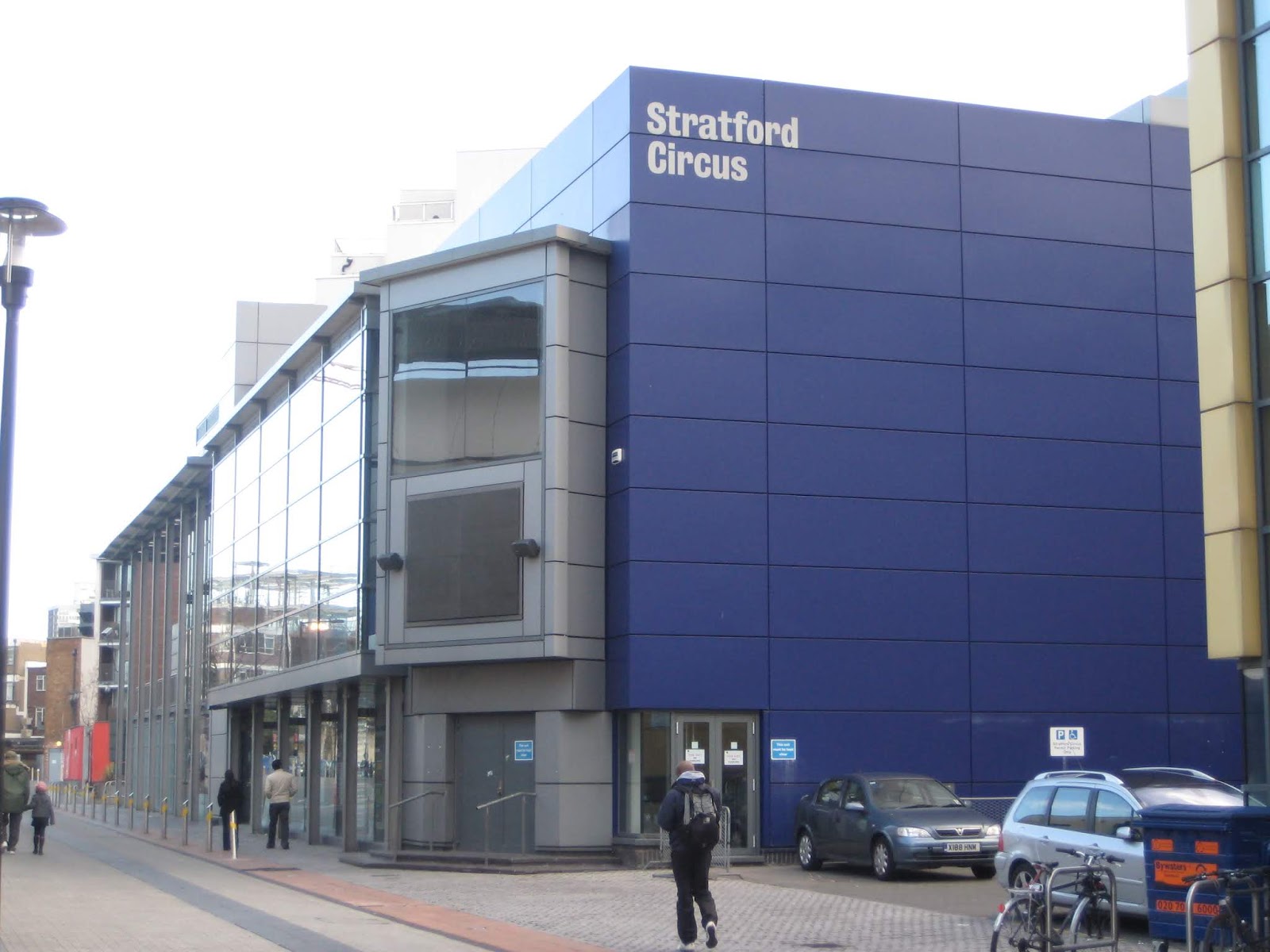
Stratford Circus Theatre
Author Andy Roberts
Licence Creative Commons 2.0 Generic


Ballet Central Black Swan et cetera  14 July 2018 19:30 Stratford Circus Theatre, Stratford, East London 

Ballet Central is the touring company of Central School of Ballet.  Its members are final year students on the degree course. Many of my favourite dancers and two of my favourite living British choreographers, Chris Marney and Kenneth Tindall, trained there.  Its tour of the UK during the second quarter of the year is one of the highlights of my calendar.

The lucky old South saw a lot of Ballet Central this year.  But their only appearance north of the Trent this year was in Leeds on 29 April and that was the day that Scottish Ballet danced Highland Fling in Gurn and Effie Land and the evening before I had a once-in-a-lifetime chance to attend class with Ballet West in Taynuilt and the 50th anniversary gala of the St Andrew's Dance Club which I helped to found many years ago.  I couldn't possibly miss all that even for Ballet Central.

I had hoped to see Ballet Central in London but alas alack the last train north by our wonderful, renationalized railway now leaves King's Cross at 22:00.  I tried ticking them off on twitter and you can see where it got me:

The Stratford Circus Arts Centre is a delightful theatre which reminds me of the Linbury but it is at least half an hour's trek to King's Cross whether you take HS1 from Stratford International or the tube. The tube was particularly awkward on Saturday because Bank was closed.  I looked into minicabs and black cabs but they could have been help up in traffic.   The only safe way to make the rattling Donny Choo-Choo was to
leave the Circus at 20:29 
without the chance of a shine.
Never mind!  Half a show was better than none and the but of the show that I did see was well worth the journey.

Wendy McDermott described the show in an excellent review when it visited Leeds (see Ballet Central in Leeds 31 May 2018).  I saw Jenna Lee's Black Swan and the extracts from Wayne McGregor's FAR and Kenneth MacMillan's Valley of Shadows.   I missed Christopher Gable's Cinderella which is one of my favourites in Northern Ballet's repertoire that I long to see again.  I felt so cheated as I left the theatre during the interval.   I have never walked out of a show before. Not even a bad one. To leave a good show was nothing short of heartbreaking. Although I am not a big fan of Sir Matthew Bourne's The Sleeping Beauty - the curtain climbing baby gives me the creeps - I would have loved to have seen the fairies' prologue once more.  

I comforted myself with the thought that I had at least seen Jenna Lee's Black Swan.   I like Lee's work a lot. I had enjoyed her ballroom scene from Romeo and Juliet  last year (see Triumphant 1 May 2017).  Her Black Swan combining scenes from the film and the ballet is even more ambitious.  It opened with a bad tempered ballerina banging her pointe shoes on a table thereby interrupting Philip Feeney who was at the piano playing Tchaikovsky.  The ballet continues with rehearsals and performance and ends with the removal of yesterday's black swan by her successor.   An interesting touch which might be followed in other Swan Lakes is the presentation of a white feather.  Even more dramatic perhaps than the flickering Odette in the seduction scene.

Like Wendy I saw Ayca Anil as the black swan. Wendy was impressed by Anil's technique and I agree with everything that Wendy said about that.  However I also thought she was a pretty good dance actor as was her prince, Saul Kilcullen-Jarvis.  He represented a very complex character, a bit like the prince in David Dawson's version.  The action flashed back to the ballet with clips from act 1 and act 3.  Echoes of familiar choreography and music as well as some innovation.  The entrance of the black swans with their arms in open 5th was particularly effective.  

Dante Baylor's costume designs, especially the red headdress for the women and the geometric piping of the prince's doublet were impressive.   There was a lot - probably too much - for the senses to take in on seeing this ballet for the first time.  I would love to see it again.

 In FAR - Company Wayne McGregor - 2010 - Behind the Scenes McGregor explains how he drew inspiration from Diderot's Encyclopedia and, in particular, his drawings of the human nervous system. Diderot showed how it was the brain that made the body work.  The brain is represented in McGregor's piece by an array of tiny lamps representing neurons.  Those neurons control movements of the body which are sometimes convulsive.  Ballet Central showed two scenes from an hour long work.  There was a duet by Rita Lee and Aitor Viscarolasaga Lopez and a group scene with Rishan Benjamin, Aoibh Ní Riain Broin,  Hitomi Nishizawa,  Hikari Uemura, Olivia Van Niekerk, Harris Beattie, Thomas Harden and Kevin Memeti.  Not an easy piece to dance, I should have thought, particularly with Ben Frost's multilayered score.  Again, I need to see this work again - and perhaps more than once - to appreciate and understand it fully.

The extract from Valley of Shadows was a beautiful dance for four: Mical Klara Coxill, Saul Kilcullen-Jarvis, Jamie Wallis and Scot Baldie set to Tchaikovsky's Souvenir de Florence. This scene shows the Finzi-Contini family in the seclusion of their garden before their lives are shattered by deportation to a concentration camp in Germany.  Wendy referred to sad and dark undertones and that is because we know what happened to the family.

Knowing that I would have to leave early to catch the rattling Donny choo-choo I booked a seat in the balcony which would have allowed me to slip out before the end of the performance with minimum noise and fuss.  It allowed me to spot who was in the audience and I spotted more than a few friends and acquaintances.  That made it even harder to leave the theatre.

Finally a message for Heidi Hall and Chris Marney.  There are approximately 25 million people who live north of the Trent and we can't all squeeze into the Stan and Audrey on a Sunday night.  We have some lovely theatres such as the Keys and Aldridge at the Lowry, the Atkinson at Southport, the Waterside in Sale, the Cast in Doncaster, the Library in Sheffield and indeed the Lawrence Batley here in Huddersfield.  Do stay with us a little longer when you go on tour next year.

Monday, 4 June 2018

Screen-Stage Interface


Standard YouTube 

One of the most interesting press releases to have emanated from Northern Ballet recently was the announcement of the appointment of Kenneth Tindall as artistic director digital and choreographer in residence (see Northern Ballet appoints Kenneth Tindall to Artistic Staff 31 May 2018). Many congratulations to Kenneth!  It could not have happened to a nicer fellow. And congratulations also to Northern Ballet.  A very savvy decision.  I am sure that Kenneth will do an excellent job.

Kenneth is, of course, very well established.  Two young dancers who are beginning to rise in their careers are Thomas van Damme and Yuanyuan Zhang of the Dutch National Ballet. Thomas and Yuanyuan have their own YouTube channel called "The Ballet Couple".  I first wrote about them last September in The Ballet CoupleSince then, Yuanyuan has been promoted to grand sujet and Thomas from élève to the corps

Every week they offer some tips about dancing.  Last Friday, for instance they discussed the ideal age to take up and the time to retire from ballet.  On when to start ballet they said that it is possible to begin at any age unless you want to dance professionally. For adult ballet students - particularly for those of us who have taken it up or resumed it very late in life - that is very encouraging. But it is also good to know that you don't have to start too early even if you want to go on stage.

As for when to retire Thomas and Yuanyuan said that it is very much a personal matter and they discussed some of the factors that dancers consider. When I asked Yuanyuan about her long term ambitions five years ago she said that she said her immediate aim was to get into the main but company but in the future she could see herself as a ballet master.

In other clips Yuanyuan talks about pointe shoes and there is a lovely film on the opening night gala.

However, it is not all about ballet.

On Tuesday for example they suggested using a pint class as a loud speaker. It does work Thomas.  It's the same principle as a megaphone. I am a bit more dubious about hanging a second hanger from the aluminium ring pull of a drinks can. I can think up all sorts of problems like collapsing wardrobe rails and scrunched up clothes. Probably cheaper and easier to buy Probably cheaper and easier to get another wardrobe or at least a clothes rail from Ikea. I preferred the previous film about an elegant way of opening a packet of corn chips and I guess it would also work for crisps.

There are also some charming videos about celebrating a national holiday, food that dancers really eat, opening a package of Chinese goodies and a really soppy one "Yes together until we die."

Sunday, 7 January 2018

2017 in Retrospect


Standard YouTube

This is when I review the past year and nominate the best ballet, the best dancers, the best choreographer of 2017 and so on.  I have had less time for blogging than in previous years as I have had to focus on the day job, but I have seen almost as many shows as I ever do.

As a Mancunian living in Yorkshire I was delighted by the renaissance of Northern Ballet, our regional company.  That company has taken a few big hits recently with the floods that destroyed the costumes of some of its best loved ballets and the departure of two of its premier or principal dancers, Tobias Batley and Martha Leebolt, to San Diego (see Lisa Deaderick Making the leap from dancer to artistic director 10 Dec 2017 San Diego Tribune 2017). However, it had a very good year last year with three new full length ballets.

These were Kenneth Tindall's Casanova which I had expected to be good and was not disappointed (see Casanova - "it has been a long time since I enjoyed a show by Northern Ballet as much as I enjoyed Casanova last night" 12 March 2017 and Casanova Second Time Round 7 May 2017). Daniel de Andrade's The Boy in the Striped Pyjamas which I did not expect to like at all but was moved deeply (see The Boy in the Striped Pyjamas - "an impressive work that was danced splendidly by Northern Ballet" 10 Sept 2017) and David Nixon's The Little Mermaid which I have yet to review but is, perhaps, his best work yet.  I also enjoyed the company's MacMillan triple bill in Bradford (see Northern Ballet's MacMillan Celebration 4 Nov 2017).

For most of the year I thought Tindall's Casanova would be my ballet of the year but it was pipped at the post on 17 Dec 2017 by Sir Peter Wright's The Sleeping Beauty performed by the mighty Dutch (see The Dutch National Ballet's "The Sleeping Beauty" - I have waited nearly 50 years for this show 20 Dec 2017). That show with Maia Makhateli as Aurora and Daniel Camargo as Florimund was outstanding. Also, if I had not seen The Sleeping Beauty I would have had to choose Paris Opera House ballet's Don Quixote with Isabella Boylston as Kitri at the Bastille auditorium on Christmas day as my ballet of the year (see Paris Opera's Don Quixote 26 Dec 2017).

Now although I can't say that Casanova was my ballet of the year I can at least say that Tindall was my choreographer of the year.  I must add that it was no walkover. He faced fierce competition from Ruth Brill with her Arcadia which was certainly my one act ballet of the year (see Birmingham Royal Ballet's Three Short Ballets: Le Baiser de la fée, Pineapple Poll and Arcadia 22 June 2017) and Annabelle Lopez Ochoa for her Reversible for Danza Contemporanea de Cuba and Little Red Riding Hood for Ballet Black (see Danza Contemporanea de Cuba at the Lowry 19 Feb 2017 and Ballet Black Triumphant 7 March 2017). At this point I need to say that the Dutch National Ballet displayed a wealth of choreographic talent in New Moves 2017.  I was particularly impressed for the second year running with Cristiano Principato and Thomas van Damme. We will hear a lot about both of them before long though I have to say that Tom is showing as much promise as a film maker as he is as a choreographer and there is a lot of overlap between the two.

My ballet of the year (as I have already indicated) was the Dutch National Ballet's The Sleeping Beauty. Makhateli would have been my ballerina of the year had I not seen Boylston in Paris a week later.  Now she really is a superb virtuoso and dramatic figure and I was so lucky to see her.  Nobody really stood out as male dancer of the year in quite the way that Boylston did but Javier Torres was excellent in Casanova and devastating in Las Hermanas.  Here's what I wrote about him:
"As I noted above, we had a very strong cast. Giuliano Contadini was the poster boy of the show and deservedly so for he danced Casanova very well but Torres was cast perfectly for the role. Powerful, athletic and passionate, he was how I had always imagined the historical Giacomo Casanova. There is a point towards the end when he has to hold a very uncomfortable pose for what must seem like an age. That was when I appreciated just how good he was."
He is also Northern Ballet's sole remaining male premier dancer.

Northern Ballet has more than enough flatterers and fawners not all of whom ever bother to see any other company.  I have never held back from criticizing it when I have felt that criticism was due.   So when I say that it was my company of the year it will know that my compliment is sincere.  I have followed the company ever since its golden age when Christopher Gable was at the helm.  His successor, David Nixon, has also produced fine work such as Madame Butterfly, A Midsummer Night's Dream, Cinderella, Gatsby and now The Little Mermaid as well as commissioning Tindall and Cathy Marston.  The company may have lost two premier dancers but it still has first rate artists such as Torres, Hannah Bateman, Dreda Blow and Ashley Dixon not to mention emerging stars like Mlindi Kulashe. Rachael Gillespie and Abigail Prudames.

Finally a very special, self-indulgent award for my best adult ballet experience of 2017.  Being a bit of a show off I love to perform and one of the highlights of my year was dancing in Move It at The Dancehouse on 13 May 2017. The other was taking part in Martin Dutton's Nutcracker intensive on 16 Dec 2017. That was the weekend that I saw a preview of Sharon Watson's Windrush which I expect to be my leading work of 2018 and Peter Wright's The Sleeping Beauty in Amsterdam. "Weekends don't come any better than that" I tweeted. I don't expect another like it in my lifetime.  As both of those events were organized by Karen Sant of KNT I have to grant her the adult ballet teaching award of 2017.

Sunday, 7 May 2017

Casanova Second Time Round

The Lowry
Photo Andrew Dunn
(c) 2004 Andrew Dunn: Creative Commons Attribution-Share Alike 2 Licence
Source Wikipedia


Northern Ballet, Casanova. The Lowry, 6 May 2017, 19:30

I was pretty complimentary about Kenneth Tindall's Casanova when it opened in Leeds on 11 March 2017 (see Casanova - "it has been a long time since I enjoyed a show by Northern Ballet as much as I enjoyed Casanova last night" 12 March 2017). I liked last night's show at the Lowry even better.

I think there are three reasons for that.

The first is that we had a very strong cast that included both of Northern Ballet's remaining premier dancers, Javier Torres and Pippa Moore as well as personal favourites like Hannah Bateman, Abigail Prudames, Antoinette Brooks-Daw and Mlindi Kulashe in important roles.

The second reason for last night's success is that the dancers will have grown used to their roles over the last two months and danced in the confidence that audiences around the country and most of the critics like the show.

Thirdly, I think the dancers were lifted by the venue. The Lowry is a great auditorium, certainly for audiences because seating is comfortable commanding good views of the stage from just about every part of the house, but I think also for performers as the stage is large and it is well equipped for scenery changes and special effects.

The company danced before a receptive crowd and though the house was less than full the warmth of the applause at the end when more than a few rose to their feet more than made up for it. Manchester audiences may be a little bit more critical than Leeds ones as they see Birmingham Royal Ballet, English National Ballet and visiting companies from abroad such as the National Ballet of China and Alvin Ailey as well as Northern Ballet. If a show does well in the second largest conurbation of the United Kingdom it will probably do well anywhere. As the old saying goes, "what Manchester does today, the world does tomorrow."

As I have written a lot about Casanova already, I won't bore readers with a rehash of the plot or the work of the various contributors. They can get all that from Northern Ballet's website and the bibliography below. I will concentrate on the dancers and what made last night's performance even better than the first night.

As I noted above, we had a very strong cast. Giuliano Contadini was the poster boy of the show and deservedly so for he danced Casanova very well but Torres was cast perfectly for the role. Powerful, athletic and passionate, he was how I had always imagined the historical Giacomo Casanova. There is a point towards the end when he has to hold a very uncomfortable pose for what must seem like an age. That was when I appreciated just how good he was.

Another inspired bit of casting was Prudames as Bellino. One of the most touching scenes of the ballet - touching in both senses  - is where Contadini gradually winds her confidence. It was demonstrated at the preview with a commentary from Tindall by Contadini and Dreda Blow (see Casanova Unmasked 16 Feb 2017). Prudames made it work even better for she showed the vulnerability of her character and the sensitivity of their encounter given the disparity in power.

Yet another powerful performance came in the first act where MM (described in the blurb as "an aristocratic nun" and danced by Bateman) seduces Casanova thereby giving the inquisition the excuse they need to throw him into the Leads, the prison on the other side of the Bridge of Sighs.

Constraints of time and space prevent my commending everyone individually, All, dancers and musicians, did well last night.  I congratulate everyone who took part in the show.

As the orchestra pit of the Lowry is a bit more spacious than most I was able to glimpse the orchestra occasionally as it tackled Kerry Muzzey's score. Percussion is important particularly towards the end of the show and I was drawn to the percussionist seated on the back row of the pit as he sounded out the change of mood. Thr Northern Ballet Sinfonia was conducted by Daniel Parkinson last night who interpreted the music well. I am not sure that I appreciated the score as much as I did last night the first time round. Yesterday I particularly liked the first act where there were hints of the 18th century without pastiche.

I also appreciated the sets and lighting more and noticed things like the sort of white smoke that rises from the Sistine Chapel when a new pope is found which opened the show. I am not sure of its significance. I assume it was used in the Grand but, for the life of me, I just can't remember it.  It was, however, very effective owing moe than a little to the cinema which I know to be Tindall's passion (see "A Many Sided Genius, Tindall on Casanova 4 March 2017). Not everything worked quite so well. If, as I hope, this ballet has a second run, t I hope that Tindall takes another look at the flashback scene with its falling pages reminiscent of the snow scene at the end of Nixon's Wuthering Heights. A fine bit of choreography deserves a stronger and more original ending.

It was very good to see Northern Ballet west of the Pennines where the company began. As a Mancunian, I took pride in Northern Dance Theatre's existence long before I ever saw them dance. And when I did see them dance I saw them first in Manchester which is where they performed some of their best work. It would be good to see more of them in our city and there is no reason why they should not do so. After all, the Australian Ballet has a strong base in Sydney as well as Melbourne and the Miami City Ballet has homes in Fort Lauderdale and West Palm Beach as well as Miami. As I have said many times, the company is called Northern Ballet, not Leeds City or even Yorkshire Ballet. If Birmingham Royal Ballet can manage two seasons a year in our city region I see no reason why Northern Ballet could nit do the same if it really wanted to do so.

Bibliography: Reviews and Insights


Monday, 13 March 2017

What can possibly follow Tindall? Nothing less than MacMillan


Standard YouTube Licence


I think everyone who was in the Leeds Grand Theatre on Saturday night would agree that Casanova was a great success (see Casanova - "it has been a long time since I enjoyed a show by Northern Ballet as much as I enjoyed Casanova last night" 12 March 2017). What could possibly follow a work like that? Nothing less than a master like Sir Kenneth MacMillan I would say.

Happily, that is exactly what we can expect for Northern Ballet will dance three of Sir Kenneth's works at the Bradford Alhambra between the 5 and 7 Oct 2017. An excellent venue for the Alhambra is arguably Yorkshire's finest theatre by a country mile. The ballets that the company will perform are:
Concerto and Las Hermanas were originally created for German companies though Las Hermanas found its way into the repertoires of Western Theatre Ballet (now Scottish Ballet) and The Royal Ballet where I first saw it.  Gloria was created for The Royal Ballet shortly after he had ceased to be that company's artistic director.

Nothern Ballet also plans to dance the triple bill in Leeds next year.

Sunday, 12 March 2017

Casanova - "it has been a long time since I enjoyed a show by Northern Ballet as much as I enjoyed Casanova last night"


Standard YouTube Licence

Northern Ballet Casanova Grand Theatre, Leeds, 11 March 2017, 19:30

I started to take an interest in Northern Ballet when I first read about it in Dance and Dancers in 1969. I seem to remember that it was called Northern Dance Theatre in those days.  The first performance by that company that I actually saw was Gillian Lynn's A Simple Man in 1987 (see Northern Ballet's "A Simple Man" 14 Sep 2013). I have followed the company ever since - remaining loyal to it even after it moved to Halifax. I have therefore seen a lot of performances by Northern Ballet over the years. It is a very long time since I saw a show by Northern Ballet that I enjoyed as much as I enjoyed Casanova last night. It is certainly the best I have seen from Northern Ballet since the company crossed the Pennines.

Casanova is Kenneth Tindall's first full length ballet. He had already impressed the public and critics with his such works as The Architect and Luminous Junc•ture but as he agreed in his interview with me "the jump from one-act to full-length is an exponential and qualitative leap - not merely doubling or tripling of effort" (see "A Many Sided Genius" - Tindall on Casanova 4 March 2017). In my judgment Tindall has landed successfully in making that leap.  I liked every aspect of the production: Tindall's choreography, the story that he created with Casanova's biographer Ian Kelly, Kerry Muzzey's score, Christopher Oram's designs and, of course, the dancers.

The ballet focusses on two episodes of Casanova's life. The first is his youth in Venice where he is introduced by Father Balbi to the Kabbalah, a proscribed text, which brings him to the attention of the Inquisition or secret police. They imprison him in the Piombi. The second episode is his exile in France where he meets Madame de Pompadour and Voltaire. At various times women flit in and out of his life - two young girls Nanetta and Marta Savorgnan, a nun known as MM, Bellino and Henriette. Sex is in the story - it could hardly be avoided in view of the detail in which Casanova wrote about it and his popular reputation - but it is not the only story. The politics of the time, the repression of women of which Bellino and Henriette were victims, and other issues were also addressed.

Oram had cleverly projected Venice and Versailles in his set designs. I was reminded of the richness of St Mark's with a brief appearance of the Bridge of Sighs and the confines of the prison house crashing down on Casanova in the last scene of the first act. I was reminded of the Hall of Mirrors of Versailles in the second. Although it was not referred to as such in the programme, there was actually an epilogue representing his employment as a librarian in Prague, There he wrote his life story at the behest of his shrink as a therapy for depression. That episode was represented by a shower of falling paper and the entry of the characters he had encountered in his life.

Muzzey's score suited the story and decor well. It was rhythmic. I noticed several of those around me silently tapping out the beat with their fingers. I even caught myself doing it too at times. It was emphatic.  I particularly admired Muzzey's use of percussion. It was lyrical. In some of the softer scenes, he would repeat a refrain. Maybe not an earworm but nevertheless quite beautiful and memorable.

At the preview, Casanova Unmasked on 15 Feb, I realized that there was great depth and quite a lot of detail to Tindall's choreography. Not all of it is immediately obvious. The duet between Casanova and Bellino where Bellino tests Casanova and learns to trust him might well have escaped me had Tindall not explained it in the preview. However, there were some bits of the choreography that were eloquent. The binding of Bellino's breasts so that she could pose as a castrato and the joy of her womanhood that she expressed once those bandages had been removed. Of course, Bellino was not trans but it is a relief all trans-folk know.

Casanova was danced by Giuliano Contadini. A good choice, I thought. He is tall, athletic, muscular and, of course, Italian. I am not sure that he resembled the historical Casanova whose portrait accompanies my article but he was the right chap for Tindall's ballet. At the end of the performance, he was presented with flowers - a gesture that rarely happens in England but was entirely appropriate on this occasion. My only regret is that his leading ladies, Dreda Blow who danced Bellino, and Hannah Bateman, his Henriette, did not get any for they deserved flowers as well.  So, too, did the other women in Casanova's life such as Abigail Prudames and Minju Kang, Casanova's young initiators and Ailen Ramos Betancourt who danced the nun, MM. There were powerful performances by Javier Torres as Casanova's patron, Brigadin, and Mlindi Kulashe as his persecutor.  As I said earlier today in Facebook, at another time and in another place, yesterday's performance might well have earned a flower throw.

There has been a lot of hype for Casanova as there was last Autumn for Akram Khan's Giselle but in this case, the hype was entirely justified. All my expectations were met. All my hopes fulfilled. Northern Ballet danced in a way that I had not seen them dance for many years. I was not in the most receptive mood for ballet when the show started as I had run from Quarry Hill in my least comfortable but most fashionable heels over slippery pavements having languished for 45 minutes in a traffic jam caused, so far as I could see, quite gratuitously by appalling traffic management on the part of the local authority. It is to the artists' credit that I left the theatre on a high.

Saturday, 4 March 2017

"A Many Sided Genius" - Tindall on Casanova

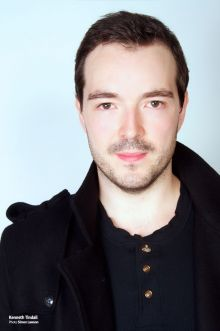
Kenneth Tindall
(c) 2015 Northern Ballet: all rights reserved
Reproduced wth kind permission of  Northern Ballet


Next Saturday will be the first night of Casanova which Northern Ballet will launch at Leeds Grand Theatre. Between the 11 March and 13 May 2017, the company will dance the ballet at Leeds, Edinburgh, Sheffield, Norwich, Milton Keynes, Cardiff, The Lowry and Sadler's Wells. Last Monday, the choreographer of the ballet, Kenneth Tindall, gave me an exclusive interview in which we discussed the ballet, his interests and hopes for the future. 

What impressed me most in my conversation with Kenneth Tindall was not so much what he said but the way he said it. Though he spoke softly he did so confidently, with a clear vision, and a determined focus. Tindall is still a young man and Casanova is his first full-length commission. It is obvious from the costumes on display at the Casanova Unmasked preview and from the number of venues in which this ballet is to be performed that a lot rides on this production. Tindall readily acknowledged the risks when I put it to him that this project could make or break Northern Ballet. Yet where others might see risk he sees opportunity. He emphasized the strengths of his dancers and of his creative team. He spoke enthusiastically of their capacity to deliver a quality of performance and production to be surpassed by none.

That enthusiasm was infectious. I must admit to some private concern when I first wrote about Casanova on 24 May 2016. Tindall had created one act ballets like The Architect and Luminous Junc*ture that had appealed to audiences and critics (including Mel, Joanna and me) but, again as he agreed when I put it to him, the jump from one-act to full-length is an exponential and qualitative leap - not merely doubling or tripling of effort.  However, after 45 minutes with Tindall my concerns evaporated. I am as confident as I can be of anything in ballet that this production will succeed spectacularly.

Tindall is used to overcoming odds. He was one of 8 children to be selected from 250 candidates at his audition for the Central School of Ballet. The nation’s ballet schools are full of talented students but only a handful find employment in a top regional ballet company. Of that handful only a few become principals (or, as Northern calls them, “premier dancers”). As a premier dancer, he had a considerable following. He was especially admired for his roles as Wadjet in Cleopatra and Heathcliff in Wuthering Heights. When his retirement was announced in the Friends of Northern Ballet newsletter. I wrote in Kenneth Tindall on 28 Feb 2015 that it:
“contained a headline that made me root for a tissue - just for a second - before I also raised a smile. The headline was "Kenneth Tindall is retiring" and that was the bit that made me sad for he is one of my favourite dancers but my sadness was tempered with the words ‘award-winning Kenneth is moving on to a career as a Freelance Choreographer after gaining recognition for his work with Northern Ballet and other artists.’"
I amplified the reason for my smile in the last paragraph:
“He has an international following which was brought home to me when I visited Amsterdam earlier this month (see The Dutch National Ballet Junior Company's best Performance yet 8 Feb 2015). His name came up whenever I mentioned Northern Ballet or Leeds at the party after the show. Perhaps not so surprising for a choreographer who has already won a fistful of awards and nominations. He is still a young man and his career - though meteoric - has only just begun. I look forward to great things.”
I believe that Casanova will be the first of those great things.

At Casanova Unmasked on 15 Feb 2017 Tindall had told us that a ballet on the life of Giacomo Casanova had been one of three ideas that he had pitched to Northern Ballet’s artistic director, David Nixon. Nixon liked the idea and invited Tindall to refine his proposal. Tindall did some reading and came across Ian Kelly’s biography. He approached Kelly for a licence but he and Kelly got on so well that he invited Kelly to help him develop the story. Though Kelly is an actor and dramatist this is the first time he will have worked on a ballet. I asked Tindall how he came to hear of the historical Casanova. He replied that he had seen some film or TV footage and an article in the New York Times.

I had asked Tindall about his collaboration with his composer Kerry Muzzey at Casanova Unmasked recalling historical accounts of Petipa’s collaboration with his composers. Tindall had replied that unlike Petipa’s relationship with his composers his relationship with Muzzey had been a two-way process. In the interview I asked him to elaborate on his answer as he was in Leeds and Muzzey was in Los Angeles. In the early days, Tindall said, there had been Skype calls at least three time times a week. These had tapered off to two a week and were continuing at that rate right up to the present. I asked whether these conversations ever involved Kelly. Tindall replied that they did. He might play some music to Kelly who might reply with an observation such as “I can really feel Venice.” That was important as he and Kelly aimed to create a ballet about the times of Casanova as well as on his life.

Tindall emphasised more than once the importance of the story. 
“You need to have a libretto,” he said, “that is everything.” 
The plot is based on Kelly’s book but, he explained, yet it is not the book. 
That prompted me to ask about one of the main characters in the ballet, Father Balbi. According to the synopsis, the ballet opens with:
“A mass in honour of the new French Ambassador Cardinal de Bernis. Among the church clerics is aspiring priest Giacomo Casanova who has arrived late with his pupils the Savorgnan sisters. In the congregation is Father Balbi who has with him a book forbidden by the church. Balbi gives the book to a curious Casanova. After the mass the Three Inquisitors accost Balbi believing him to be still in possession of the forbidden book”
From what I could remember from my own reading, Casanova first met Balbi in gaol. Balbi had facilitated Casanova’s escape from the Piombi (or “the Leads”) prison that adjoins the Doge’s palace. Casanova’s life was surely colourful enough without inventing incidents, I suggested. What about his relationship with his mother? Kelly had told us at Casanova Unmasked that Casanova had been born while his mother was in a play. Immediately after he had been delivered she returned on stage for the next act.

Tindall replied that Balbi had been introduced early in the ballet to illustrate the repression of ideas by the Inquisition, the thought police of 18th century Venice. The book that Balbi handed to Casanova in the ballet was the Kabbalah, the Jewish theological work that had been proscribed by the Venetian authorities. Both Balbi and Casanova had read the Kabbalah, Tindall added. It was quite possible for Casanova to have known Balbi and even for Balbi to have given Casanova a copy of the Kabbalah before they met in prison.

Tindall and Kelly had thought about including Casanova’s relationship with his mother in the context of his treatment of women but had rejected it because this ballet is not just about sex. Sex is important, Tindall continued, because Casanova had written so much about it and so explicitly in his life story, but he was a many-sided genius. The imperative was to show different sides to that life. Tindall noted that Casanova’s conquests averaged 4 a year which was not much for a libertine. Thinking of Leporello’s catalogue of his master’s conquests in Don Giovanni, I could not help but agree:
“In Italia seicento e quaranta;
In Alemagna duecento e trentuna;
Cento in Francia, in Turchia novantuna;
Ma in Ispagna son già mille e tre.”
“In Italy 640;
In Germany 231;
100 in France, 91 in Turkey;
But in Spain, 1003 and counting.”

Casanova’s philanderings had been on quite a different scale. I reminded Tindall of my speculation on whether Casanova might even be regarded as a proto-feminist. Quite possibly, he replied. Casanova said that he had never conquered a woman’s heart. He had always submitted.

That led us to the first of the extracts that we had seen at the preview on the 15 Feb 2017 where Casanova (danced by Giuliano Contadini) had met Bellino (Dreda Blow) and the way Tindall had represented by mime and dance the dropping of the mask and the developing of trust. I remarked that that had reminded me very much of Christopher Gable and Lynn Seymour in the balcony scene from MacMillan’s Romeo and Juliet (see Rachel Thomas Romeo and Juliet Dance Highlight: The Balcony pas de deux 3 Sept 2015 Royal Opera House website). Tindall willingly accepted that possibility. He had after all been trained in Central which had been founded by Gable and Gable had directed Northern Ballet. Gable had been an important influence on his work. “But” he added with emphasis, “so was David Nixon”. 

At Casanova Unmasked Nixon had said that “he had been allowed to play with Kenny toys” in that he was acting as Tindall’s ballet master. “Quite a role reversal having been directed by Nixon for 14 years” I suggested. Tindall agreed adding that Nixon was performing the role of ballet master to perfection.

We talked about the role of choreographer which Tindall compared to that of a film director. The roles were similar and maybe even converging as techniques and technology that had been developed for the cinema were increasingly used in ballet. I recalled the filming of The Architect to which project I had contributed (see Tindall's Architect - How to Get a Piece of the Action - Literally! 7 June 2014). I asked whether another film might result from Casanova. Tindall’s eyes sparkled. No concrete plans as yet, he said, but would it not be splendid to film Act I in Venice and Act II in Paris.
“How do choreographers learn their trade?” I asked.
“They ask as they go along” was the reply. “For instance, they ask the lighting designer why he places a spot there? and ‘what would happen if he changed a filter here?”
I was reminded of my conversation with Cristiano Principato in Trecate (my Outstanding Young Choreographer of 2016 28 Dec 2016). He told me that he even had to operate the lighting himself.
“He is quite right,” added Tindall. His message to Principato and any other aspiring choreographer was:
“a choreographer has to know everybody’s job. For instance, I asked Christopher Oram our designer ‘How do you start with scenery or a character’s clothes.”
I have never been a dancer but I have done several intensive workshops where we started with floor exercises at 10:00, then 90 minutes class followed by wall to wall rehearsals until cool down at 17:00. That was exhausting enough for me but dancers have to pack in a performance on top and maybe even a matinee as well. 
“How do you fit all that in?” I asked.
“When you take on a project like this you put your life on hold” Tindall replied.  “You are always thinking about it, running scenes through your mind, even in your sleep.”
“But you need to turn it off occasionally” he quickly added, “otherwise you would go insane”
I asked Tindall how he switched off. “Meditation” was the reply, “and the cinema.” Tindall added that he is a great film buff. He even refers to the cinema as “church.”

We talked about the promotion of the ballet. “You see posters for the ballet everywhere in Leeds” I noted. He replied that it had been marketed very cleverly and that advanced ticket sales at all venues had been encouraging.
“This ballet will compare with anything that could have emerged from the Royal Opera’s workshops” but at a fraction of the cost.”
I reflected that the sets and costumes have to be robust to be brought out time and time again then packed away in a lorry for another destination, possibly on the other side of the country. I noted that Oram had never designed for the ballet before. Tindall saw that as an advantage. Oram will bring a fresh approach to his task as Kelly has done with the libretto.

“So what’s your next project?” I asked, “if you can tell me without risking commercial confidentiality.”
The answer was a triple bill in Germany 8 days later.

As for the longer term, Tindall would love his work to be performed in America.
“You never know” I replied, “only this weekend we have made contact with a company in Miami that seems to have a lot in common with Northern Ballet (see Miami City Ballet 26 Feb 2017. “I would cross the Atlantic to see your work in the USA” I added.
I asked him whether he aspired to be a resident choreographer somewhere. He replied that he had thought of it.
“How about forming his company or directing an existing one?”
That, too, was a possibility but for now he was content with freelancing.

“And how about film?” I suggested. “You would not be the first choreographer to cross over to that medium? Look at Helpmann, Shearer........”
“And Gable” he added.
Yet again his eyes lit up.
We discussed the convergence of film and ballet, experiments in 360 and other technologies. I mentioned Peter Leung’s Night Fall and the Royal Ballet’s The Nutcracker (see Virtual Reality in Ballet 13 Sep 2016 We could have explored that topic alone for at least another 45 minutes and maybe longer but Tindall had to prepare for a rehearsal.

Kenneth Tindall is much more than a choreographer. At the risk of embarrassing him, I would say that he, like the subject of his ballet, is a many-sided genius.

I shall be at the premiere next week and my review will appear next Sunday.  I wish the casts of this production "chookas", "toi-toi-toi" or whatever greeting theatrical and balletic tradition permits.