Showing posts with label Ballet Central. Show all posts

Monday, 16 July 2018

Half a show is better than none

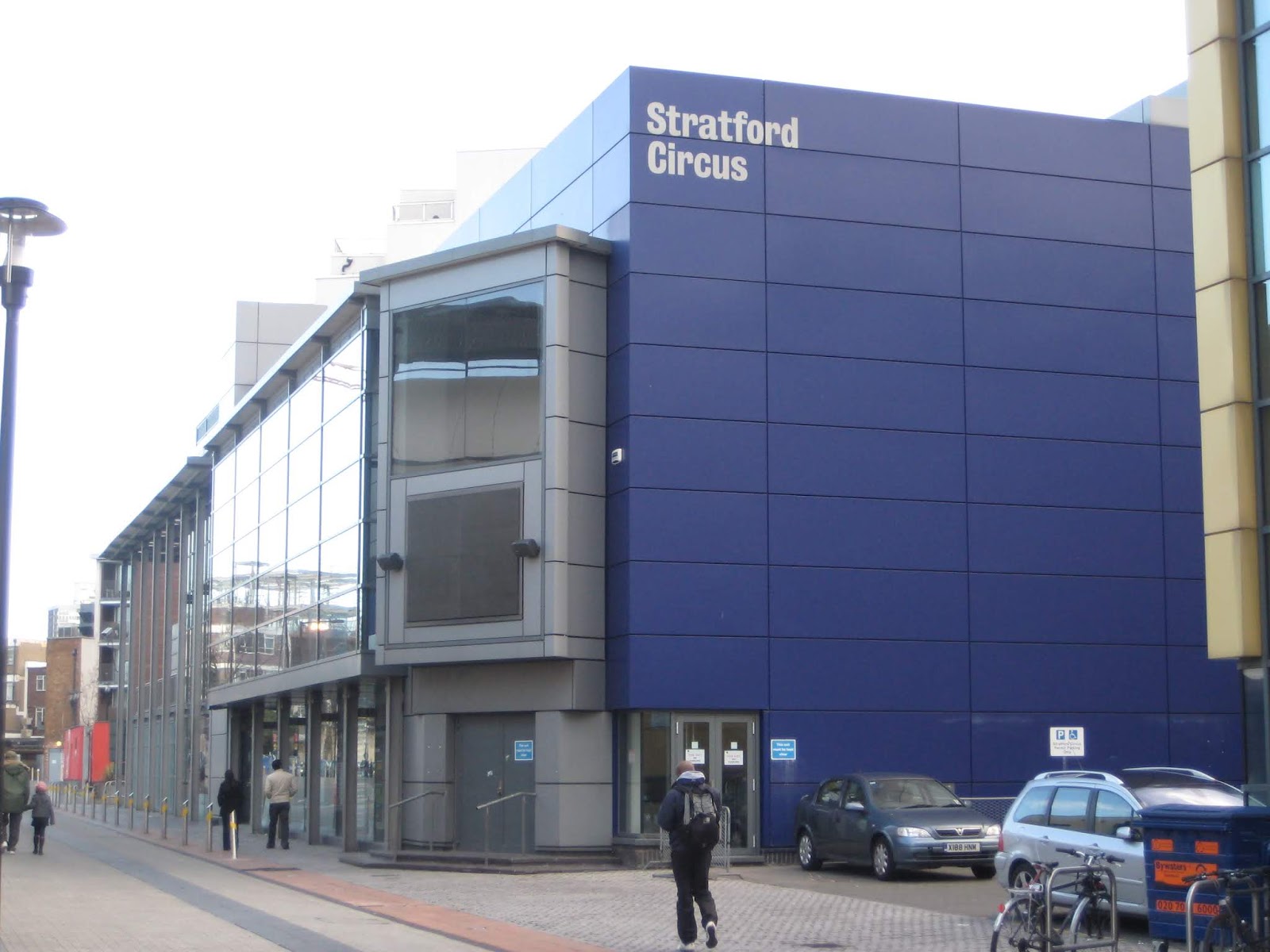
Stratford Circus Theatre
Author Andy Roberts
Licence Creative Commons 2.0 Generic


Ballet Central Black Swan et cetera  14 July 2018 19:30 Stratford Circus Theatre, Stratford, East London 

Ballet Central is the touring company of Central School of Ballet.  Its members are final year students on the degree course. Many of my favourite dancers and two of my favourite living British choreographers, Chris Marney and Kenneth Tindall, trained there.  Its tour of the UK during the second quarter of the year is one of the highlights of my calendar.

The lucky old South saw a lot of Ballet Central this year.  But their only appearance north of the Trent this year was in Leeds on 29 April and that was the day that Scottish Ballet danced Highland Fling in Gurn and Effie Land and the evening before I had a once-in-a-lifetime chance to attend class with Ballet West in Taynuilt and the 50th anniversary gala of the St Andrew's Dance Club which I helped to found many years ago.  I couldn't possibly miss all that even for Ballet Central.

I had hoped to see Ballet Central in London but alas alack the last train north by our wonderful, renationalized railway now leaves King's Cross at 22:00.  I tried ticking them off on twitter and you can see where it got me:

The Stratford Circus Arts Centre is a delightful theatre which reminds me of the Linbury but it is at least half an hour's trek to King's Cross whether you take HS1 from Stratford International or the tube. The tube was particularly awkward on Saturday because Bank was closed.  I looked into minicabs and black cabs but they could have been help up in traffic.   The only safe way to make the rattling Donny Choo-Choo was to
leave the Circus at 20:29 
without the chance of a shine.
Never mind!  Half a show was better than none and the but of the show that I did see was well worth the journey.

Wendy McDermott described the show in an excellent review when it visited Leeds (see Ballet Central in Leeds 31 May 2018).  I saw Jenna Lee's Black Swan and the extracts from Wayne McGregor's FAR and Kenneth MacMillan's Valley of Shadows.   I missed Christopher Gable's Cinderella which is one of my favourites in Northern Ballet's repertoire that I long to see again.  I felt so cheated as I left the theatre during the interval.   I have never walked out of a show before. Not even a bad one. To leave a good show was nothing short of heartbreaking. Although I am not a big fan of Sir Matthew Bourne's The Sleeping Beauty - the curtain climbing baby gives me the creeps - I would have loved to have seen the fairies' prologue once more.  

I comforted myself with the thought that I had at least seen Jenna Lee's Black Swan.   I like Lee's work a lot. I had enjoyed her ballroom scene from Romeo and Juliet  last year (see Triumphant 1 May 2017).  Her Black Swan combining scenes from the film and the ballet is even more ambitious.  It opened with a bad tempered ballerina banging her pointe shoes on a table thereby interrupting Philip Feeney who was at the piano playing Tchaikovsky.  The ballet continues with rehearsals and performance and ends with the removal of yesterday's black swan by her successor.   An interesting touch which might be followed in other Swan Lakes is the presentation of a white feather.  Even more dramatic perhaps than the flickering Odette in the seduction scene.

Like Wendy I saw Ayca Anil as the black swan. Wendy was impressed by Anil's technique and I agree with everything that Wendy said about that.  However I also thought she was a pretty good dance actor as was her prince, Saul Kilcullen-Jarvis.  He represented a very complex character, a bit like the prince in David Dawson's version.  The action flashed back to the ballet with clips from act 1 and act 3.  Echoes of familiar choreography and music as well as some innovation.  The entrance of the black swans with their arms in open 5th was particularly effective.  

Dante Baylor's costume designs, especially the red headdress for the women and the geometric piping of the prince's doublet were impressive.   There was a lot - probably too much - for the senses to take in on seeing this ballet for the first time.  I would love to see it again.

 In FAR - Company Wayne McGregor - 2010 - Behind the Scenes McGregor explains how he drew inspiration from Diderot's Encyclopedia and, in particular, his drawings of the human nervous system. Diderot showed how it was the brain that made the body work.  The brain is represented in McGregor's piece by an array of tiny lamps representing neurons.  Those neurons control movements of the body which are sometimes convulsive.  Ballet Central showed two scenes from an hour long work.  There was a duet by Rita Lee and Aitor Viscarolasaga Lopez and a group scene with Rishan Benjamin, Aoibh Ní Riain Broin,  Hitomi Nishizawa,  Hikari Uemura, Olivia Van Niekerk, Harris Beattie, Thomas Harden and Kevin Memeti.  Not an easy piece to dance, I should have thought, particularly with Ben Frost's multilayered score.  Again, I need to see this work again - and perhaps more than once - to appreciate and understand it fully.

The extract from Valley of Shadows was a beautiful dance for four: Mical Klara Coxill, Saul Kilcullen-Jarvis, Jamie Wallis and Scot Baldie set to Tchaikovsky's Souvenir de Florence. This scene shows the Finzi-Contini family in the seclusion of their garden before their lives are shattered by deportation to a concentration camp in Germany.  Wendy referred to sad and dark undertones and that is because we know what happened to the family.

Knowing that I would have to leave early to catch the rattling Donny choo-choo I booked a seat in the balcony which would have allowed me to slip out before the end of the performance with minimum noise and fuss.  It allowed me to spot who was in the audience and I spotted more than a few friends and acquaintances.  That made it even harder to leave the theatre.

Finally a message for Heidi Hall and Chris Marney.  There are approximately 25 million people who live north of the Trent and we can't all squeeze into the Stan and Audrey on a Sunday night.  We have some lovely theatres such as the Keys and Aldridge at the Lowry, the Atkinson at Southport, the Waterside in Sale, the Cast in Doncaster, the Library in Sheffield and indeed the Lawrence Batley here in Huddersfield.  Do stay with us a little longer when you go on tour next year.

Thursday, 31 May 2018

Ballet Central in Leeds


Standard YouTube Licence


Wendy McDermott

Ballet Central  2018 Tour 29 April 2018, 19:30 Stanley and Audrey Burton Theatre, Leeds

It’s been a turbulent time for Ballet Central since their unimaginable announcement via social media that their tour vehicle and its contents had been stolen. The vehicle contained everything from their production equipment to over 100 unique handmade costumes. Being able to see the tour and how much work had gone into making this a professional production then to hear of their plight was pretty shocking. Since then those that follow Ballet Central will know that much of what was stolen had been retrieved and also, thanks to the generosity of many they’ve managed to raise several thousands to help pay for replacements.

I saw Ballet central perform, for the first time I might add, at the Stanley & Audrey Burton theatre in Leeds.

The show was made up of five pieces in two Acts: ‘Black Swan’ by Jenna Lee, ‘Far’ by Wayne McGregor,Valley of Shadows’ by Kenneth MacMillan, ‘Sleeping Beauty’ by Matthew Bourne and finally ‘Cinderella’ by Christopher Gable.

I think it’s fair to say that many will know of Swan Lake even if never having had the pleasure of seeing it. What Jenna Lee gave us in Black Swan was something very different, yet still referencing the classical ballet loved by so many with Tchaikovsky’s music and the beautiful swans (who looked marvellous in their black tutus). The mood was much darker, echoing the film The Black Swan. In this version however, it was not the ballerina that experienced the hallucinations, it was the Prince, confused and a little disoriented by what he was experiencing. Ayca Anil danced the principal role. Her technique seemed solid, the développés clean with extensions reaching the heights that we see in professional ballet companies of today. I thought her ports de bras were lovely, as were the swans' dancing in the corps, with their elegant swan arms, and I thought the acting of her character expressed the sultriness befitting of a temptress.

The second piece in the programme was a complete contrast of contemporary choreography. At times there was so much happening on the stage between the 10 dancers I didn’t know who to watch however there were dancers that stood out with their stage presence alone. As with most, if not all art, it’s subjective; contemporary is not a style that I personally favour, however if its premise is to showcase the movement of body and mind in fusion then this choreography does that. The Guardian (Luke Jennings to be precise) wrote of the piece when it appeared on stage:
“Muse too intently on notions of embodiment and you stop seeing the living bodies in front of you. They're the story, ultimately.”
It was a challenging piece for young dancers but on comparing clips from the original, they all performed with confidence and flare, speed and agility given that these students are on the cusp of their professional careers, potentially joining companies with both classical and contemporary repertoire, they need to be able to show their depth and breadth of skill in both styles. This choice of piece allowed them to do just that. There were three dancers that, for me anyway, particularly shone. Again, it was as much about their stage presence as their technique and quality of movement. Luckily one of those dancers has their photograph in the programme so easy to identify.

Act I closed with Valley of Shadows by MacMillan. Yet another personally unknown piece, though reading the synopsis it has very sad and dark undertones, the programme describing it as “the fate of an Italian Jewish family under fascism, Nazi occupation and the horrors of the death camps.”
Being a cast of four, the spotlight was on all the dancers. The cast had the fantastic fortune of being coached by Alessandra Ferri and Guy Niblett, who were original cast members when it was first performed at Covent Garden in March 1983. What a luxury for these dance students to inherit the experience and knowledge of these dancers to have it passed down to them. We had already seen Ayca Anil in the opening excerpt so her performance was assured, this time it allowed the male dancers the chance to show off their skills, in particular their partnering skills and they all performed with aplomb.

After the interval of 20 minutes, Act II opened with an excerpt of The Sleeping Beauty (Fairies Prologue). Gone were the tutus of the classic work, instead we saw costumes worthy of comic superheroes, of beautiful colour and imagination. It was a showcase indeed for the six dancers on stage and each deserved and duly received acknowledging applause from the audience, appreciative of the individual performances. Even the Princess Aurora as a baby in her cradle received applause in her own right as the crying baby which only added to the characterisation, humour and lightness of the whole piece.

The finale of the night was Christopher Gable's Cinderella and the audience were treated to a 30 minute shortened piece of this well known fairy tale. Despite the story depicting the ill treatment of Cinderella by her step mother and children, the performance felt just as much a celebration and in some ways echoed the journey that a dancer takes throughout their student life. The celebratory dance by the cast of apple pickers and wedding guests was light, airy and quite joyous to watch. In particular the green colour in the costumes reflecting the fresh apples that they had harvested that day expressed the emotion and worked well on stage, as if to say that the whole cast had now come of age in their early training careers and ready to advance into professional performers and spread their wings far and wide. Both the young and older Cinderella were emotive and expressive and i’m sure they, and all the touring company of 2018 will have careers to be proud of.

I’d like to give a mention to Rishan Benjamin and Harris Beattie as my own personal ones to follow in the future. There was another young woman in Far that unfortunately i’m unsure of her name. Looking at the cast list it was possibly Hikari Eumura (but perhaps Ballet Central would like to confirm?).

Finally, congratulations to all the performers and all those behind the scenes for making a thoroughly enjoyable evening of dance theatre.

Tuesday, 15 May 2018

Chelmsford Ballet Update

River Chelmer
Author Roy Gray
Licence Creative Commons Attribution-Share Alike 2.0
Source Wikipedia


Folk in the rest of the UK tend to be very unkind about Essex even though there is much to admire in that county. For a start it possesses some beautiful countryside as you can see from the photo of the River Chelmer from which Chelmsford derives its name. Also, it has one of the nation's oldest ballet companies of which I am proud to say I am a non-dancing associate member.

In order to graduate from associate to dancing member one has to be accepted at an audition which takes place once a year.  Those who are accepted are considered for the annual show in March as well as special events and workshops.

This year's auditions will take place on 24 June 2018. There are three classes of membership and the criteria are as follows:
"GENERAL DANCERS
Age 13 years on 1st September in the year of the audition and holding a Grade 2 Ballet certificate (or above) or be working at an equivalent level.
SENIOR DANCERS
Age 13 years on 1st September in the year of the audition – Female dancers should be working “en pointe”.
JUNIOR DANCERS
Age 10 years and not more than 12 on 1st September in the year of the audition and holding a Grade 2 Ballet certificate (or above) or be working at an equivalent level."
Those who are accepted for any grade of membership are expected to show a reasonable degree of commitment to the company.  Obviously I can't do all that from Holmfirth but I would have applied for general dancer membership like a shot had I lived in Essex. Those who can make the grade and offer the required level of commitment should apply by completing and lodging this application form before 10 June.

If you are accepted at the audition you qualify for all sorts of fun things like workshops with Ballet Central and Sir Matthew Bourne's company, New Adventures.   Ballet Central's took place on 22 April and was aptly described in the notice to members as a "perfect after show treat." You can say that again. I am green with envy.

Chelmsford's joint patron is none other than Chris Marney who was a magnificent Count Lilac in Bourne's production of The Sleeping Beauty and is now Artistic Director of Ballet CentralThe dancers from Chelmsford Ballet have an opportunity "to sample innovative and exciting repertoire and work on story telling and characterisation in dance" on Sunday 8 July 2018. The blurb from Chelmsford (appropriately on a lilac background) states:
"This is an amazing chance to participate in a workshop specifically tailored for the Chelmsford Ballet Company, which will allow all grades of dancing members an opportunity to understand the process of narrative dance and to work on characterisation."
Finally a note to my fellow Northerners. We could do this sort of thing if we ever get Powerhouse Ballet off the ground.  In the short term Karen Sant has offered us a day's intensive training in Manchester, Ballet West a week in Scotland and Terence Etheridge a fantastic experience in Cornwall. We have got Northern Ballet and Phoenix on our doorstep. They would almost certainly be willing to help. We have excellent links with all the other leading companies in the UK and even beyond.

But in order to get off the ground we need a full class of dancers in Huddersfield on Saturday 26 May 2018 at 15:00 You have the opportunity of a FREE 90-minute class with Jane Tucker, one of the best teachers in the business, for which you would have to pay £7 plus a £5 registration fee in Leeds or £15 in Manchester. Opportunities live this do not grow on trees.

Wednesday, 2 May 2018

Scottish Ballet's "Highland Fling" in Gurn and Effie Land


Standard YouTube Licence

Scottish Ballet  Highland Fling Atlantis Leisure Centre, Oban 29 April 2018 19:30

Almost exactly a year ago I saw Ballet Central perform the greater part of the second act of Highland Fling at the Stanley and Audrey Burton Theatre. I reviewed the performance in Triumphant 1 May 2018. In that review I wrote that I had not always been a fan of Sir Matthew Bourne but I loved that work.  I tweeted that I would love to see the full work.  Sir Matthew noticed my tweet and replied that Scottish Ballet would perform Highland Fling again this year adding that I would have to go to Scotland to see it as if a trip to that enchanting country could ever be an imposition.

Taking Sir Matthew's advice I chose to see it in Oban because that is the only venue on Scottish Ballet's tour that is actually in the Highlands.  Well, to be accurate, Oban is a port with many of the attractions and facilities of much larger towns but hills and mountains surround it. Oban is famous for its fish and chips (see Moira Kerr  Rick Stein, two rival fish and chip shops and bitter battle of the signs that has left behind a very bad taste 19 June 2013 Mail Online).  I spotted an abundance of purveyors of that delicacy near the waterfront and was looking for somewhere to park when I spotted a small group of individuals with the words "Scottish Ballet" emblazoned on their backs.

I wound down the window and greeted them cordially - probably gushingly.  Acknowledging my greetings and compliments with exceptional grace they asked me whether I was going to the pre-performance talk that was due to start in 15 minutes. I had not been aware of that talk and abandoned my quest for supper.  I made my way to the Atlantis Leisure Centre where Highland Fling was to be performed.

The talk was chaired by the education officer who asked how many of us had seen a performance by Scottish Ballet.  A few hands rose including mine.  She then asked whether any of us had seen a work by Sir Matthew Bourne.  A much larger clump of hands rose though still a minority of the room. She asked which works those individuals had seen and the names Cinderella, The Red Shoes and Swan Lake ran out.  She told us the story of August Bournonville's La Sylphide and then Sir Matthew's adaptation.  She introduced us to the rehearsal director who mentioned some of the technical aspects of the choreography. One big difference was the absence of pointe work. The women perform in bare feet. "Surely that is something to be welcomed" the education officer suggested but apparently not because the rehearsal director replied that dancing without shoes gives rise to other problems.

There was a short Q & A in which I observed that La Sylphide was performed regularly abroad but infrequently here. "Surely it should be Scotland's national ballet if not the United Kingdom's" I suggested.  This year is different in that English National Ballet has a beautiful production which I saw in Manchester (see Always Something Special from English National Ballet: La Sylphide with Song of the Earth 18 Nov 2017) and London (see Tamara Rojo at Last! Le Jeune Homme et la Mort and La Sylphide 22 Jan 2018) but they have yet to perform it in Scotland.  The speakers speculated on possible reasons and referred me to Christopher Hampson who was to give a post performance talk.

One of the advantages of attending the pre-performance talk was to be allocated reserved seats in the first few rows of the auditorium.  I bagged what was probably the best seat in the house, namely the centre of the fifth row. The stage was set for the opening scene, namely the ladies' and gents' of the "Highland Fling Social Club" located somewhere like Castlemilk or Drumchapel.  On the wall above the urinal appeared a heart with "James 4 Effie".  As the audience took their seats we were regaled with all the songs we used to sing at Celtic Society ceilidhs when I was at St Andrews such as Cambletown Loch and Wild Rover.  Even though I am a proud Mancunienne I know all the words to all those songs and can't hear them without tears welling up.

The work opened with a kilted James (Nicholas Shoesmith) staggering into the gents' bog appearing to snort some sort of hallucinogenic substance and collapsing against the wall of the urinal.  "This gives a whole new meaning to the phrase 'pas de bourré'" I thought to  myself ("bourré" meaning "to have a skinful" among other things). A sylph (Sophie Martin) clambered through the venting and tries to revive the recumbent James.  Then the other revellers pile into their respective loos. The girls in their finery with Effie (Roseanna Leney) wearing head boppers.

My favourite character in Bournonville's ballet is Madge, the witch,  She appears as an old bag lady who tries to warm herself by the fire.  James, the laird, meanly sends her packing.  That is why she has it in for him. She gets her own back for her rough treatment by poisoning a scarf that she sells to James. James gives it to the sylph whose wings fall off the moment she puts it on.  Madge (Grace Paulley)  is very different in Sir Matt's version.  She is an attractive young woman who has the hots for James.  There is no coven scene in Highland Fling though Madge does quite enough mischief with tarot cards. She predicts that Gurn (Barnaby Rook Bishop) will hook up with Effie which is what happens in the end in both Bournonville and Bourne versions.

I can be very prickly when a well loved ballet is reworked the wrong way (see Up the Swannee 17 March 2018 and Akram Khan's Giselle 28 Sept 2016) though I can be very sweet when it is done well as Ted Brandsen did with Coppelia (see Brandsen's Coppelia  12 Dec 2016) and David Dawson with Swan Lake (see Empire Blanc: Dawson's Swan Lake. 4 June 2016). On the whole I think Bourrne got it right, For a start, I appreciated his calling his work something other than La Sylphide.  I think I would have been kinder and more receptive to Nixon and Khan had they done the same with their works. There are a few git wrenching moments in Bourne like the sylph staggering on stage with a bloody back and James's hands, arms and shears dripping in the red stuff and, in a different way, James's collapsing in the wee. But then wrenching a few guts was probably the object of the exercise.

I am glad that Sir Matt used Løvenskiold's score. I love that music.  So much better than anything Adam, Delibes or Minkus ever wrote.  Second only to Tchaikovsky in my book.  I may be imagining things but I thought I spotted some quotations from Giselle in his choreography. The sylph tossed some flowers at James just as Giselle does in act 2. The death scene where the sylph tries to keep going despite her wound just as Giselle rises to her feet and staggers briefly before collapsing.  The way the sylphs turned on James after they had carried away their dying companion reminded me very much of the revenge of the wilis.

During the interval I glimpsed Christopher Hampson whom I had met in Newcastle after Hansel and Gretel (see Hansel and Gretel - a bit like falling in love 4 Feb 2017) and at a talk he gave to the London Ballet Circle.  I wondered whether he would remember me and, to my delight, he did.  He thanked me for coming to the show and I thanked him for making a dream come true. He looked puzzled so I told him that ever since I saw La Sylphide back in 1970 I had longed to see a version of it in Scotland.  I told him that I had even asked his great predecessor, Peter Darrell, to consider staging that work when Scottish Theatre Ballet (as it was then called) performed in the Buchanan theatre at St Andrews on 15 Feb 1971.

Hampson discussed that topic in a talk that he gave with Nicholas Shoesmith and Sophie Martin after the show. He stressed that Scottish Ballet's tradition had always been to create new work.  Highland Fling had been created by one of our greatest living choreographers.  I hasten to add (and I intend no sycophancy) that so, too, is Hampson.  He said it was certainly possible that a new version of La Sylphide might one day be created.  If it is, the creator of a beautiful Cinderella and a gorgeous Hansel and Gretel would be just the man to do it,

I don't think that I have every been in the company of a more appreciative audience than the crowd n the Atlantis Leisure Centre on Sunday night.  The dancers took their bows to the strains of "I love a lassie" to which the audience clapped in time.  It was a brilliant performance.  The dancers sparked the crowd and the crowd fired the dancers.  Many members of the audience had travelled enormous distances.  The chappy on my right had driven all the way from Nottinghamshire.  A lady in the refreshments queue told me that she had come from Fionnphort which is opposite Iona.  To get to Oban she would have had to drive along a bumpy single carriageway road to Craignure and then take the Macbrayne ferry. 

At the pre-performance talk the education officer said that education and outreach was at least as important as performance.  A company that thinks like that is very, very special.

Monday, 1 May 2017

Triumphant


Standard YouTube Licence

Ballet Central, Mixed Programme, Stanley and Audrey Burton Theatre 28 April 2017

Ballet Central has aways been good and, having met Christopher Marney at several Ballet Black and London Ballet Circle events, seen him speak, and, most importantly, watched him work I expected great things from his first season as the company's artistic director. I had been dazzled by Marney's dancing as Count Lilac in Sir Matthew Burne's Sleeping Beauty.  I have been awed by his choreography, particularly War Letters which he created for Ballet Black. On Friday I discovered his prowess as an artistic director. All I can say without gushing hyperbole is that Friday's mixed bill greatly exceeded my highest expectations.

We were presented with a varied programme arranged in three parts:
  • Jenna Lee's ballroom scene from Romeo and Juliet;
  • Malgorzata Dzierzon's new piece Sleepless; and
  • Liam Scarlett's Indigo Children.
After a short interval, we were treated to 
  • the triumphant return of Solor in the first act of La Bayadḕre;
  • Christopher Bruce's fascinating Mya; and
  • Michael Pink and Christopher Gable's spine-chilling Dracula.
After another interval, the programme ended with a major part of Sir Matthew Bourne's Highland Fling, a witty but slightly disturbing reworking of La Sylphide.

Lee's ballroom scene was a beautifully crafted classical piece though with original reinterpretation of some of Prokofiev's most popular music. It is very dramatic and very clever. In that regard, very like Marney.  It was very different from the work that appears on Lee's YouTube channel and website which
"..... pushes the boundaries of classical ballet, by fusing world-class ballerinas with more modern art forms such as break dancing and beat boxing, providing a world of professional bespoke entertainment for any event."
Cira Beautiful Misfits featuring one of my very favourite dancers from Ballet Black and Conflux with a beatbox Swan Lake are examples. Commissioning Lee to revisit Shakespeare and Prokofiev where Lavrovsky, Cranko and MacMillan already walk tall and create a 20-minute work to open the show was an imaginative and risky but, as it turned out, spectacularly rewarding step. I long to see the rest of the story. I wonder how Lee would rework the bedroom scene when Romeo or the conflict of emotions when Juliet learns that her husband has dispatched Tybalt. I do hope someone commissions that talented choreographer to finish the ballet.

Lee had the perfect Juliet in Amy McEntee. She seemed born for that role. An actor and storyteller at least as much as a dancer. she enchanted us with her knowing glance to Romeo and galvanized us with her expression of horror as Romeo squared up to her brother.  Central has trained a disproportionately large number of my favourite dancers and choreographers, including Marney himself. I think we saw several future stars on Friday one of whom is definitely McEntee.  

Dzierzon's Sleepless was a complete contrast. Beginning with a huddle of dancers in subdues lighting the work exploded into vigorous movement. Dzierzon had 10 dancers in that work - 9 on stage and one at the piano. My seat was at the far right hand of the second row next to the pianist and though I tried to concentrate on the stage I could not help my gaze returning to the composer and pianist Phil Feeney. His score was vibrant and exciting as indeed was his playing of it. But those on stage were great too. Representing the spray can wielding shadows of my youth who transformed every carriage of the New York subway, those kids darted around the stage one scribbling letters on the shirts of the others. A real frisson of subversion.

Yet another change of mood with Liam Scarlett's elegant Indigo Children to the music of Philip Glass. A work created for Ballet Black - Beautiful Ballet Black, as I like to call the company - it was lovingly re-staged by Cira Robinson and Damien Johnson. McEntee shone in this work too as did Craig McFarlane who had been her Romeo.

Although I have only seen two complete performances of La Bayadḕre I love that ballet. I have even tried to dance little bits of it.  Last Autumn I saw the Dutch National Ballet's performance of Makarova's version with the magnificent Sasha Mukhamedov in the title role. I had expected Ballet Central to perform the entry into the kingdom of the shades which is probably the best-known scene from the ballet. Instead, Marney chose the triumphant return of Solor to Golkonda which was an opportunity to show off the corps as well as Kanon Kihara and Jaume Ruiz who danced the principal roles. A word of commendation to Dante Baylor who designed the costumes. I loved those outfits: trousers and turbans for the men and pantaloons and scarves for the women.

On Friday I had complained that we had been deprived of Marney when I wrote All that was missing from this Evening's Performance was a Ballet by Marney ...... In fact, I had not read the programme carefully and, in any case, I should have recognized his mark. It was a masterly restaging of a much-loved work. May we have some more of that beautiful arrangement, please?

Christopher Bruce's Mya turned out to be my favourite work of the evening. Three dancers clad head to foot in tightly fitting, somewhat shapeless, almost colourless gowns moving to Arvo Pärt's Spiegel im Spiegel (literally mirror in the mirror). But what could it mean?  The costumes reminded me of the chrysalis of a butterfly and there was a touching moment when the limbs of one of the dancers began to emerge from the constraint. An analogy with the human condition? The composer is Estonian whose nation has emerged like a butterfly from the Soviet thrall. Doesn't matter. The music is haunting. The choreography compelling. The performance enthralling.

Central was founded by Christopher Gable who was the artistic director of Northern Ballet when I returned to Manchester.  As a Mancunian in exile, I had read about Northern Ballet (then known as Northern Dance Theatre) in the dancing press but had never actually seen any of its performances. I thought I would miss Covent Garden, Sadler's Wells, the Coliseum, the Place ....... I did not do so at all, They continued to exist 200 miles away, of course, but on my doorstep was a wonderful company treating us to a succession of delicious works in that golden age of Northern Ballet. We were reminded of that golden age by Pink and Gable's Dracula. Not an easy watch but an enthralling one as Harker is first seduced then savaged by vampires. Yet another star in the making, Matthew Morrell, dominated the stage. Tall and menacing he induced teal fright, however, many times I reminded myself that this was only theatre.

The last work of the evening was act 2 of Sir Matthew Bourne's "romantic wee ballet" a Highland Fling. "Romantic" indeed with a woman hobbling about the stage her costume drenched in blood. Well, stage blood of course. It was Sir Matthew's take on La Sylphide which is one of the oldest ballets in the modern repertoire. I have often said that it ought to be our national ballet as it is set in Scotland. Bourne kept Løvenskiold's score but gave it a new twist portraying James as a drunken Glaswegian in a Highland glade cavorting with winged and kilted sylphs. I'm not sure what happened to Effie or Madge but Sir Matthew arms James with a pair of garden shears instead of a poisoned scarf with which he does even more damage. The sight of the wounded sylph was the second tummy turning moment of the evening, Dracula being the first.The sylphs get their own back on James after mourning their murdered sister for he sprouts a pair of wings in the last scene.

Marney chose this piece well. I have not always been a fan of Sir Matthew Bourne but I loved this work. I can well understand why Scottish Ballet currently performs Highland Fling but not the 1836 original. Much of the appeal of  this work lies the designs as well as Bourne's quirky humour.  Lez Brotherston, who had designed Scottish Ballet's, appears to have inspired Baylor who designed Ballet Central's production.

Sir Matthew staged that work himself. An enormous compliment to Marney but one he well deserves. Bourne would not be where he is today without an uncanny knack of recognizing talent when he sees it. He saw it in Adam Davies who danced James and Brittanie Dillion, his sylph. I don't know where they come from but they looked pretty Scottish, in fact totally Glaswegian to me. Especially the sylph with the suitcase wandering sheepishly hand in hand with James. So much to see in this work.

Ballet Central is making only one other appearance in the North on this tour.  In Whitehaven on 13 May 2017 which I can't make because I am in Move It at The Dancehouse in Manchester. However, I am determined to see this year's mixed bill again. Even though I shall have to travel I just gotta see those fine young artists again.

Wednesday, 1 February 2017

Ballet Central returns to Leeds

Leeds Arts Neighbourhood
Author Kenneth Allen
Source Wikipedia
Creative Commons Licence


Christopher Marney, Hannah Bateman, Kenneth Tindall, Rachael Gillespie, Dominic North, Sarah Kundi, Paul Chantry and many more of my favourite dancers and choreographers trained at Central School of Ballet. One of the reasons why that school has produced so many fine dancers and dance makers is that it provides its students with an opportunity to learn every aspect of performance through its touring company Ballet Central. According to Christopher Hampson, Central graduates can normally be spotted in the studio within a few minutes because of their professionalism and understanding of how theatre works. Sir Matthew Bourne describes them as "a valuable asset to any company".

Ballet Central consists of the school's final year students: Angela Centomini, Sophie Cottrill, Tara Cox, Augusta De Marchis, Brittanie Dillon, Eleanor Ferguson, Sophie Hull, Emily Hulme, Kanon Kihara, Iori Matsuura, Amy McEntee, Moeno Oba, Rowan Parker, Charlotte Peers, Ciara Sampson, Eloise Shepherd Taylor, Reiko Tan, Saskia Twiss, Henrietta Wolf, Emma Zeppetella, Megumi Zushi, Ruaridh Bisset, Eric Caterer-Cave, Adam Davies, James Dunn, Álvaro Feliz Olmedo, Yusuke Kuroda, Cameron Lee-Allen, Liam Lindsay, Jonathan MacDonald, Craig McFarlane, Matthew Morrell, Stephen Murray, Jaume Ruiz Xifra and Rahién Testa. Their artistic director is Christopher Marney, their musical director is Philip Feeney and their rehearsal coach is Carole Gable (see Staff Biographies on Central's website).

As part of their degree course, those students will travel some 10,000 miles around the country from Penzance in the South West to Ayr in Scotland performing in towns and cities along the way to a total audience of 5,000. Their 2017 schedule was published yesterday and one of their venues is the Stanley and Audrey Burton Theatre at Northern Ballet and Phoenix Dance Theatre's studios in Leeds. They will visit us on 28 April 2017 at 19:30.  Save for a visit to Whitehaven on 13 May that will be the only chance to see them in the North.

This year the company will perform part of Sir Matthew Bourne's Highland Fling. Indigo Children by Liam Scarlett, a new version of the ballroom scene from Romeo and Juliet by Jenna Lee, a scene from Dracula by Michael Pink, a specially created work by Christopher Bruce and excerpts from Petipa’s La Bayadere and The Nutcracker.  I hope to see them on the 28 April and will review their performance shortly afterwards.  

Here is what I said about Ballet Central in their previous tours (Central Forward 25 March 2013, Dazzled 3 May 2015 and Images of War: Ballet Central's "War Letters" and other Works 29 April 2016). I hope to be in the audience on  the 28 April when the company returns to Leeds.

Tuesday, 25 October 2016

Of Bikes and Busses

Bicycles in Buenos Ares
Photo Lars Curls
Source Wikipedia
Creative Commons 
Licence


On 23 Oct 2016 Chris Marney tweeted:
"Thinking of Christopher today 18 yrs on and proud to continue his work everyday #GableLegacy."
The "Christopher" Marney had in mind was, of course. Christopher Gable. He founded the Central School of Ballet which has a performing company called Ballet Central of which Marney is artistic director. I admire Marney's work very much so I tweeted
"And Gable's work could not be in better hands @chrismarney. Missing him too."
Christopher Gable became artistic director of Northern Ballet in 1987 which was just after I returned to the North of England to practise at the Manchester bar. He held that appointment until his death on 23 Oct 1998 (see Christopher Gable on Northern Ballet's website). it was during his directorship that my late spouse and I started to follow that company. In that time Gable created or commissioned some of my favourite works for that company.

Photo dave_7
Creative Commons Licence
Gable's successor as artistic director of Northern Ballet is David Nixon and I have asked myself whether I could say the same about Nixon as I had tweeted about Marney.  I think I can safely say that I can. I admire much of Nixon's work - though not everything. I am not, for example, the biggest fan of his version of Swan Lake with its bikes in the opening scene (see Don't Expect Petipa 5 Jan 2016 and Up the Swannee 17 Mar 2016) and I can't say that his Beauty and the Beast is my favourite ballet with its old bus (see Jane Lambert Ballet and Intellectual Property - my Excuse for reviewing "Beauty and the Beast" 31 Dec 2011 IP Yorkshire). But Nixon has created some fine work for the company such as A Midsummer Night's Dream (see Realizing Another Dream 15 Sept 2013), Cinderella (see Northern Ballet's Cinderella - a Triumph! 27 Dec 2013) and The Great Gatsby (Life follows Art: the Great Gatsby 8 Mar 2011) and has commissioned more such as Cathy Marston's Jane Eyre (see Northern Ballet's Jane Eyre: the best new Ballet from the Company in 20 Years 2 June 2016).

According to Northern Ballet's website, Nixon is working on a new ballet called The Little Mermaid which is inspired by Hans Christian Andersen's fairy tale and the company has commissioned Casanova from Kenneth Tindall and The Boy in Striped Pyjamas from Daniel de Andrade. I hope to learn more about those works when Nixon appears at the London Ballet Circle on 28 Nov 2016 to talk to Esme Chandler (see the Events page of the Circle's website). This is quite a challenging time for the company as two of its "premier" (that is to say, principal) dancers are developing careers elsewhere. I shall be interested to hear what, if anything, Nixon has to say about that as well.

Those who want to hear Nixon speak should make their way to the Civil Service Club on Great Scotland Street off Northumberland Avenue next to the Nigerian embassy before 19:30. The meeting will be open to the public at a charge of £5 for members of the Circle and £8 for everybody else. The meeting will take place on the 1st floor and there is a bar downstairs which serves hot meals to those attending the Circle's meetings. Very handy for those like me who have a train to catch from King's Cross and I particularly recommend the fish and chips. The nearest underground stations are Charing Cross and the Embankment.

As the Circle has set out Nixon's career in some detail I shall not embarrass him or weary my readers by repeating it beyond noting that he has achieved much on both sides of the Atlantic and that he enjoys a formidable reputation as a choreographer. director and dancer. I would have attended Nixon's talk anyway but my resolve has been reinforced by his remarks on Front Row (BBC Radio 4) last night. He was interviewed by John Wilson with Luke Jennings of The Guardian in a short section about 15 minutes into the programme entitled New, but always old, ballet. 

Wilson began by playing a recording in which Tamara Rojo had opined that dance needed to change in order to survive in a digital age in the context of Akram Khan's Giselle, remarks which were vaguely endorsed but not developed by Jennings. He then turned to Nixon and suggested that he was "playing safe" reminding the audience that Northern Ballet was dancing Beauty and the Beast in Norwich. Nixon replied with the entirely reasonable point that ballet needs an audience to survive. In answer to Jennings's contention that ballet needs to be relevant to its age and Wilson's remark that Beauty "was not breaking any moulds" he made another equally valid point that Beauty and the Beast appeared just after the credit crunch and contained plenty of allusions to austerity that were raw in his audience's experiences in 2011. He added that ballet is a language that takes dancers 8 years to learn which can be used to tell any story and express any emotion and that there was still room for classics as well as new work.

Jennings, whose review of Mary Skeaping's Giselle had been headlined A Giselle to cry for 14 Jan 2007 (see English National Ballet's other Giselle 22 Oct 2016), seemed to argue that works like Akram Khan's Giselle with its elements of Kathak and contemporary would attract whole new audiences. With all due respect I just don't see it. It may be innovative but not in the way that Nijinsky's L'Après-midi d'un faune and Le Sacre du Printemps were over 100 years ago. If audiences want experimentation they will go to NDT or Rambert or, on another plane, Sir Matthew Bourne. If they want cultural interaction they will go to Alvin Ailey or indeed Phoenix in the same building as Northern Ballet who do it so much better. Akram Khan's Giselle is interesting, it is not without merit and is certainly worth seeing but let's get a sense of proportion. It is not the choreographer's or the company's best work and it is nowhere near the best Giselle.

Classical companies like Northern should stick to what they do best which is to present fine theatrical experiences following a 400 year classical tradition that are nevertheless still relevant to modern audiences. That does not preclude classical companies from creating abstract masterpieces such as Chroma or Angels in the Architecture but there must be balance by which I mean there must always be room for Petipa and Ashton. Having heard Nixon yesterday, I think he understands that. It is for that reason that I say that Gable's Northern Ballet (like Ballet Central) is in very good hands.

Friday, 29 April 2016

Images of War: Ballet Central's "War Letters" and other Works

The Green Howards at the Battle of Anzio
Author Sgt. Radford, No. 2 Film and Photographoc Unit
Source Wikipedia


Ballet Central, Stanley and Audrey Burton Theatre, 28 April 2016

When I first saw Chris Marney's War Letters for Ballet Black nearly three years ago I wrote:
"War Letters, which took up the whole of the second act, brought all the dancers together. It opened with the voice of Kwame Kwei Amah reading the words of a soldier's letter to his sweetheart rejoicing at their love. The mood changed with a poignant pas de deux between a wounded, gassed or shell shocked soldier in pyjamas and his lover who arrived with smiles and left with a broken. Next came a dance to the music of Glenn Miller. Four soldiers met four girls on the dance floor. Three of the girls were asked to dance but the fourth was ignored. She tried to attract the boys' attention but to no avail. The second reading came from Thandie Newton comparing throwing off a lover to the loss of a heavy coat - but then regretting the loss of warmth. This analogy was taken up by the choreographer as the boys tried to lend her their overcoats. The scene ended with the girl shrouded with the soldiers' coats. Finally, there was the voice of the wartime radio presenter John Snagge announcing "Victory in Europe". The last scene is of the artists together which I reproduced in my previous post. Home came the boys nursing their injuries. This was not the first ballet on the horror of war but I still found it a very moving work."
I saw the same company dance that work again in the Stanley and Aubrey Burton Theatre six months later:
"Christopher Marney's War Letters is a very moving piece and it resonated with the audience in Leeds last night even more than it had done in London. Possibly because it was danced in poppy season. Two movements brought many including me close to tears. The hospital visit to a seriously wounded soldier and the Winter coat. Beautiful choreography giving every dancer an opportunity to show what he or she can do."
 Yesterday I saw the young dancers of Ballet Central dance that work and found the work even more poignant than before. I think it is because the dancers are so young - exactly the age of so many of the boys who were called up and the girls who were left behind - and the painstaking attention to detail. The boys wore British uniforms and the girls wore their hair exactly as their grandmothers (or even their great grandmothers) would have done. I was born well after then end of the second world war but remember bomb sites, amputees and even some rationing. I was reminded of my parents' reminiscences of war. This performance spoke to me in a way that previous ones had not done.

All credit then to the artists: Holly Girdham, Emma Hancox, Mai Ito, Mia Lambuschagne, Seren Williams, Valerie Yeo, Jaspar Arran, Cian Hughes, James Parratt, James Roxby-Brwn, Mark Samaras and Joseph Vaughan. I particularly enjoyed Mai Ito's performance of the girl on the side, a role that Kanika Carr created for Ballet Black. Mai Ito danced that charmingly - playful at one moment, petulant the next, and always flirtatious.

Although it was the chance to see War Letters again that excited me it was not the only work that delighted me. I enjoyed all the works that the company danced last night but three impressed me in particular: Christopher Gable's Celebration which opened the show, Sharon Watson's Repetition (2) Change and the Pas de Trois from Paquita which rounded off the first part of the show.  Of those three works it was Celebration that I enjoyed the best, possibly because it had been created by Gable.

I first saw Christopher Gable when he was with the Royal Ballet. Many years later I saw him in Gillian Lynne's A Simple Man for Northern Ballet. He was artistic director when I started to follow Northern Ballet and created my favourite ballets for that company.  Celebration, a gorgeous classical work reminded me of all that.  After the dancers had presented themselves there was a delightful pas de deux, a virtuoso piece by the men, a joyful succession of duets and so on.  The music was provided by the composer, Philip Feeney, in person. The work was staged by Carole Gable who is Central's ladies' ballet tutor and rehearsal coach.

Carole Gable also staged the Pas de Trois which was performed skilfully by Mai Ito, Kanami Dano and Mark Samaras to Minkus's music.  This requires virtuosity and grace from each of those three young dancers which they displayed in abundance.

Like her TearFall which I reviewed in The Phoenix Soars Over London 13 Nov 2015 Watson's Repetition (2) Change was a science lesson as well as dance. Two sets of dancers, some male others female, clad in almost identical red and black gowns, wove around each other in seemingly random patterns. According to the programme notes "the fascinating intricate world of DNA is placed under the microscope" in this work. I could not quite work out was whether the red and black dancers were supposed to be different letters of a sequence, DNA and RNA or something else. Watson was in the auditorium but I did not get a chance to ask her. I was however gratified to find that the piece had been sponsored by Susan Dalgetty-Ezra of the London Ballet Circle. The work was staged by our very own Sandrine Monon of Phoenix.

The other works that I enjoyed were Leanne King's duet Insinuare danced by Elizabeth Medway and Joseph Vaughan to Feeney's music and Sara Matthews's energetic Superstruct, also to a score by Feeney.

It was a very good programme though perhaps a little less ambitious than last year (see Dazzled 3 May 2015). Also, while there were many impressive young dancers nobody stood out in the way that Mthuthuzeli November did last year. On the other hand War Letters was wonderful. In performing that work think I saw Central at its very best last night. The company will move on to Uppingham, Newbury, Chipping Norton, the Royal Automobile Club, Bridport, Eastleigh, Margate, Wedmor, Bristol and the Stratford Arts Centre.

Monday, 25 April 2016

PS

This news couldn't have been timed better. I write about the Ballet Central's tour only this morning (Ballet Central's Only Performance in the North 25 April 2016).

Congratulations to Chris upon his appointment which must be one of the best jobs in British ballet and congratulations to Ballet Central on its excellent artistic director. I really can't think of a better man for the job.

Looking forward to welcoming the company to my stamping ground (literally) all the more.

Ballet Central's Only Performance in the North

Yesterday I wrote about Nederlands Dans Theater 2 (see NDT2 at the Lowry 24 April 2016) and I have written a lot over the years about the Dutch National Ballet's Junior Company. None of our leading companies has a junior company as such but Ballet West, the Central School of Ballet and the Northern Ballet School all have performance companies. It is a thrill to watch those excellent young men and women on stage and through this blog I try to encourage them all.

Central's performance company is called Ballet Central which consists of the final year students on its BA (Hons) Degree course. Its website claims that
"Central School of Ballet is the only classical vocational school to offer an Honours Degree and pre-professional touring experience on such a scale. It has been a springboard for hundreds of dancers into the dance profession."
The School was founded by Christopher Gable who was the artistic director of Northern Ballet during its golden age and it has produced many of my favourite dancers including Hannah Bateman, Sarah Kundi, Dominic North and Rachael Gillespie as well as several of my favourite choreographers such as Paul Chantry. Christopher Marney and Kenneth Tindall. Two of the artistic directors that I respect the most, Sharon Watson of Phoenix Dance Theatre and Cassa Pancho of Ballet Black are associated with the School, Watson as an artistic advisor and Pancho as one of its patrons.

Ballet Central is now making its annual tour with an interesting programme which will include works by Gable, Marney and Watson. This year is special because it is the company's 30th anniversary and the work that I am looking forward to seeing most is Marney's War Letters which featured on the cover of this month's Dancing Times. I loved that work when it was performed by Ballet Black three years ago and it will be interesting to see another company's interpretation. One obvious difference from the cover photo is that Ballet Central will be using British uniforms instead of American ones for its male dancers.

One of the dancers on tour is Jasmine Wallis who impressed me in Marney's Carnival of the Animals for the Chelmsford Ballet Company last year (see A Delight Indeed 22 March 2015). Marion Pettet, the Chair of Chelmsford Ballet, saw Ballet Central when it came to Chelmsford a few weeks ago and tipped Wallis as someone to look out for.

Despite their connections with Phoenix and Northern Ballet, Ballet Central's touring schedule allows only one stop in the North and that is at the Stanley and Audrey Burton Theatre in Leeds on Thursday, 28 April 2016. There are still one or two seats left towards the back of the auditorium. Last year's show was dazzling (see Dazzled 3 May 2016). The thirtieth anniversary tour can hardly be less exciting.

Sunday, 3 May 2015

Dazzled


Ballet Central, Stanley and Audrey Burton Theatre, Leeds 2 May 2015


Every year at about this time the final year students of Central School of Ballet set out on tour. They call themselves Ballet Central and they are good.  I saw the class of 2013 at The Lowry and was very impressed (see Central Forward 25 March 2013). I like to see young dancers at the start of their careers because they are full of energy and hope. That is why I support Ballet West in this country and the Junior Company of the Dutch National Ballet in the Netherlands. I particularly like to see Ballet Central because so many of my favourite dancers and choreographers trained at Central. When the 2015 tour started the dancers at Northern Ballet who had trained at Central tweeted their good wishes. They seemed to be a very large part of the company.

Yesterday Ballet Central came to the Stanley and Audrey Burton Theatre in Leeds. Their visit clashed with the last appearance of Kenneth Tindall as a principal of Northern Ballet in Wuthering Heights at Milton Keynes (see Au Revoir rather than Goodbye 29 April 2015). Tindall, who trained at Central, is one of my favourite dancers and I was torn.  "You can see Ballet Central any time" urged Mel, "this is the last time you can see Kenny." She added that he would be partnering Julie Charlet as Cathy. The trouble is that one can't see Ballet Central any time because this year's students will scatter to the four winds. Many will go abroad. I have been lucky enough to see Tindall in several performances in the last year or so and I shall be seeing The Architect again next Saturday. I opted for Central to see the stars of the future some of whom may well dance in Tindall's ballets. I think a fine choreographer will understand that.

I am glad I chose to stay in Leeds because the theatre was packed.  Northern Ballet has a special connection with Central because the company's artistic director Christopher Gable founded the school.  I spotted several familiar faces from both Northern Ballet and Phoenix Dance Theatre in the audience. Ballet Central acknowledged the connection first by performing Gable's Blue Pas de Deux from his 1993 production of Cinderella to Philip Feeney's gorgeous score. We actually had Feeney at the piano throughout the show. Also, they danced Code by our own Sharon Watson, artistic director of Phoenix.

The evening began with Four by Christopher Hampson. Hampson is another of my favourite choreographers particularly since be became artistic director of Scottish Ballet which I have followed ever since the late 1960s when I was an undergraduate at St Andrews (see Scottish Ballet 20 Dec 2013). I am a Friend of that company and it has a special place in my affections. In the programme notes Hampson wrote:
"The piano work by Graham Fitkin in bursting with energy and I've been waiting a long while (since my student days) to find the right moment to create it. Finding four dancers at Central that can match the energy and drive of the four hands of the piano meant that I had found the time and the place to create Four."
Hampson certainly found the right dancers in Sayaka Ishibashi, Julie Nunes, Ryan Brown, Yoshimasa Ikezawa and Marcus Romanelli, Clad in simple black and purple leotards designed by Richard Gellar the ballet began with solos by each of the men followed by each of the women momentum building up all the time. They all came together as the pace accelerated. It was the best possible start for the show.

The momentum was maintained by Bradley Shelver's Duet from Scenes danced energetically by Londiwe Khoza and Mthuthuzeli November to Beethoven's Moonlight Sonata. You can catch a bit of the choreography on the choreographer's showreel. There was a lot of clapping and slapping and even a roar from November. An insert in the programme explained that they were from Cape Dance Company in South Africa on an 8 week residency at Central. These fine young dancers were exciting to watch and I hope that they will find some reason to stay, or at least make frequent visits to, this country.

By contrast the Blue Pas de Deux from Cinderella was flowing and lyrical. Danced beautifully by Kanako Nagayoshi in sparkly blue evening dress and shoes and Ruaidhri Maguire in tails this piece had me close to tears. I remember Gable and miss him so. Northern Ballet now has a new Cinderella by David Nixon which is also beautiful (see Northern Ballet's Cinderella - a Triumph! 27 Dec 2013 and Cinderlla - even better 30 Nov 2014). But what wouldn't I give to see Gable's version  again.

The first part of the evening was brought to an end with a great performance of Watson's Code. Ishibashi, Khoza, Brown and November were in that work as well as Diana Patience and Kai Tomiaka. Again, that was thrilling to watch. I am a great fan of Watson and can't see enough of her work.

The second part of the evening was started by Kit Holder's Hopper which, I see, was supported by Central Friends one of whom is Susan Dalgetty Ezra who chairs the London Ballet Circle.  To understand the ballet you need to know that Edward Hopper was an American artist who painted everyday scenes of American life much in the way that his near contemporary L S Lowry did here, albeit in a very different style. I can think of no better introduction to his work than this video by the US National Gallery of Art. In the programme notes Holder wrote:
"the ballet extrapolates the scenarios portrayed in some [of] his most well known paintings bringing to life characters otherwise frozen in time."
This ballet reminded me very much of Gillian Lynne's A Simple Man which was a study of Lowry (see Northern Ballet's "A Simple Man" 14 Sep 2013). Just as many of the matchstick men came to life in Lynne's work so Hopper's subjects did in Holder's. Brown danced Hopper while Lydia Mackenzie danced Jo who must have been his wife, Josephine Nivison, who was also a painter. Summer Evening was danced by Nunes and Connor Taylor, Conference at Night by Nagayoshi, Maguire and George Kyaing and Chop Suey by Brianna Hicke and Kyomi Ishubashi. This is the second work by Holder that I have seen recently. The first was To Fetch a Pail of Water which was part of Ballet Black's triple bill at The Linbury (see Ballet Black's Best Performance Yet 17 Feb 2015).

The next work was the grand pas de deux from Gorsky's La Fille mal Gardée which is very different from the Ashton version with which we are so familiar (see The Best Fille Ever  18 April 2015). For a start it uses different music: Ludwig Hertel's score instead of Lanchbery's but it is just as delightful to hear. There was plenty of scope to show off Ikezawa's jumping and Sayaka Ishiboshi's charm on pointe. It would be nice to see the Russian version more often and I have encouraged one British company to stage it.

The second part was rounded off with Christopher Bruce's Morning and Moonlight to the music of Benjamin Britten. Folk are very rude about Britten's score for Prince of the Pavilions (see Lear with a Happy Ending - Birmingham Royal Ballet's Prince of the Pagodas 30 Jan 2014 31 Jan 2014) though I like it well enough for it was chosen by Cranko. In any case Britten's music was just right here. I loved the choreography executed brilliantly by Kyomi Ishibashi, Nagayoshi, Nunes, Maguire, Taylor and Tomika.

The last part of the programme was devoted to Christopher Marney's Scenes from a Wedding.  I expect a lot from Marney and I drive literally all over the country to see his work. Last year I got into a lot of trouble with one of the regulars on a forum to which I subscribe occasionally when I wrote that Chris Marney is my favourite living British choreographer. He retorted with a long list of living British choreographers the intention no doubt being to take country mouse from Huddersfield down a peg or three. A number of other subscribers (all Londoners incidentally) chimed in. Being a lawyer I chose my words carefully. I didn't say "best" for who am I to judge and I qualified "favourite" with British for my favourite living choreographer has got to be van Manen. Nor did I say favourite of all time because that is Cranko. But I am prepared to defend everything else. I've seen a lot of ballet over the last 50 years and I must have learned enough in that time to form an informed opinion. Marney reminds me of Cranko and the exciting thing about him is that he is still a very young man with bags of potential. I think there is every chance that he will go as far as Cranko and maybe further.  I expected Scenes to be good and I was not disappointed.

It was a lovely, narrative ballet about a man in love. He was danced by Andrei Teodor Iliescu.  He had a lovely girlfriend in Megan Pay clad in red.  He bought her a ring and proposed to her. But she wasn't ready. Neither were Kyomi Isgibashi, Lydia Mackenzie and Nunes whom he approached on the rebound. But one girl was ready though she did not care much for the groom. She was danced by Patience. They weren't right  for each other. They squabbled in bed. She wanted to sleep. He did not. They fought all the way to the church. He had his stag night with Kyaing, Maguire and Tomioka and she her hen night. Just at the last moment the girl in red turns up and they married. There thus is one less case for the Family Court.

Feeney provided the music, Gellar the costumes and Ed Railton the lighting.

Witty, lyrical and above all acutely expressive of the music it was Marney at his best. It was a tour de force, the icing on the cake, the very best of a succession of wonderful ballets.  I can't think of enough superlatives.

Ballet Central will be in Margate on Friday and them Newbury next week. Sadly they are not touring Scotland, Wales or Northern Ireland but even if you live in those parts of the UK or in some remote corner of England get yourself to your nearest venue to see the show. They are making only one more visit to the North on 29 June 2015 when they will be at The Lowry.  If you want to see some of the stars of the future here's where you should train your telescope.

Sunday, 16 March 2014

Christopher Marney

I have seen quite a lot of Christopher Marney since I started this blog and I have reviewed his work in several articles. The quality of his work that I most admire, both as a dancer and as a choreographer, is his sensitivity to music. He is as sensitive to sound and as accurate as an oscilloscope but unlike that lifeless instrument he translates sound into the most beautiful movement. It was Marney's dancing as Count Lilac - powerful and vital - that saved Matthew Bourne's Sleeping Beauty for me last year. It was his choreography that I admired so much in Ballet Black and Ballet Central's mixed bills.

Though still a young man Marney has packed a lot of experience into his career - Balletboyz, Gothenberg, Biaritz, Berne, Japan to list just a few of his engagements.  As Jessica Wilson observed in "Christopher Marney: Dancer, Choreographer, Dance Extraordinaire!" 8 July 2013 Dance Direct he is a "man of many talents."  According to that article Marney he started to choreograph in Gothenberg.  In an interview that he gave for Ballet Central's blog ("Backstage with choreographer Christopher Marney" 26 Feb 2013) he explained how he was encouraged by the keen dancers and great theatre.

Ballet Central asked Marney to describe his style. He replied that it was "narrative" explaining how he loves to create a piece around a strong plot, particularly with a contemporary theme so that the audience can be drawn in emotionally.  He added:
"A narrative also gives an awful lot of scope for different movement and opportunities to play with the audience’s humour. Even without an obvious storyline, there has to be an intention, an emotive purpose to every movement."
That is certainly true and it came out particularly well in War Letters where Marney explored every emotion that emerges in war anchoring his work to readings from contemporary letters to and from the front and the voice of Alvar Lidell. Incidentally, in this 100th anniversary year of the start of the First World War, Marney's ballet remembers the contribution of the millions of servicemen from Africa, the Caribbean and South Asia in both world wars that is not yet properly acknowledged (see "Africa's forgotten wartime heroes"  14 Aug 2009).

However. as I said before it is his interpretation of music which is the quality that I most admire. Some call that musicality. Others lyricism.  For me, without the benefit of a thorough education in music or dance, I would say that Marney brings out in the movements of his dancers -particularly Kanika Carr Sayaka Ichikawa of Ballet Black - the several qualities of the music. I noted that particularly in Two of a Kind set to Tchaikovsky and Ravel - the last of Marney's works that I have seen and the one I like best so far.

In her interview with Marney, Jessica Wilson asked "What is the best part about dance?" He replied:
"I think the best part is when it touches someone and a person can be moved or made to feel something by what they are witnessing. It is amazing how that cycle continues to inspire generations."
Well with Two of a Kind and War Letters Marney has certainly touched me. I could tell from the reaction of the audiences in London and Leeds that I was not the only one.

Monday, 25 March 2013

Central Forward


Ballet Central, The Lowry, Salford 25 March 2013

Ballet Central is the Central School of Ballet's touring company.  Its members are final year students on its honours degree course in professional dance and performance. Apparently that is the only degree course of its kind in the UK.  It is the sort of course I used to dream about when I was an undergraduate reading a conventional honours degree subject.

On 25 March 2013 I attended the company's octuple bill at The Quays theatre in the Lowry.  It was a wonderful show. One that I would eagerly have watched from beginning to the end immediately afterwards.  It was good to see the company in Manchester because it was founded by Christopher Gable who later became artistic director of the company that is now Northern Ballet.

The programme was arranged in three acts.  The first consisted of five short works by different choreographers including "Fireside Pas de Deux" by Gable himself. The music for that work (and indeed several others) had been composed by Philip Feeney and the maestro was at the piano in the auditorium. Indeed, I also caught a glimpse of him in the bar at the first interval.

All the ballets in the first act were good but the one I enjoyed most was Stacey Haynes's "Love on Top". Set to the music of Michael Bublé's "Cry me a River" and Beyoncé's "Love on Top" this was a jazz piece with the girls in black sparkly dresses and heels and the boys in white shirts and black ties. This was a work to show off the company's versatility and the boys' virtuosity with some spectacular jumps.

The second act showed the company in a familiar classical work, a pas de trois from Act III of Sleeping Beauty.  It was good to have this little bit of Petipa's choreography fresh in my mind as a reference point when watching Matthew Bourne's re-working of the ballet at The Alhambra in Bradford on Thursday. Tchaikovsky's score, Petipa's choreography executed convincingly by promising dancers with good technique resplendent in Richard Geller's sumptuous costumes this little work satiated all the senses. It was a good example of what I call total ballet.

The extract from Sleeping Beauty was followed immediately afterwards by Darshan Singh Bhuller's Mapping #3.  With males and females dressed alike in loose white judo style tops and trousers dancing to a score that included Shankar this was a perfect foil to Tchaikovsky and Petipa. The clever bit of the choreography was to protect dancers' movements on the floor on to a screen that gave the impression of weird and wonderful acrobatics.

If anyone wonders why I called this post "Central Forward" it is because the last act was about football.  At least that was one of the dreams of a bespectacled bookworm danced engagingly by Bethany Pike in Christopher Marney's anon. She also dreamt of Viennese waltzes. Sitting on a massive pile of books the bookworm receives a delivery of books from the postman into which she daydreams roles for herself first at a ball of which she was the belle and then at a football match in which she was the striker's darling. I loved Marney's humour - longing glances by the girl at the very fit postie and her futile attempts to dance a romantic pas de deux with her beau without her glasses. The quest for love makes fools of us all.  With costumes by Geller ingeniously morphing Royal Mail blue shorts and shirt into red and white football strip and music arranged by Feeney it was another example of total ballet.

This is the 30th anniversary tour by Ballet Central. Tours like this must provide  enormously valuable experience for young dancers at the start of their careers.  It is only possible through generous public support.  There are several ways in which balletomanes can help future tours from funding pointe shoes at £35 a throw to sponsoring a whole production or a dancer for £5,000.  Further information about helping the company is available from Joanne McIntosh, the company's development and communications director, on 020 7837 6332. Oh and don't forget the School which also welcomes support from its audiences. You  don't have to be Bloomberg to bankroll ballet.