Showing posts with label Creative Industries Federation. Show all posts

Wednesday, 22 June 2016

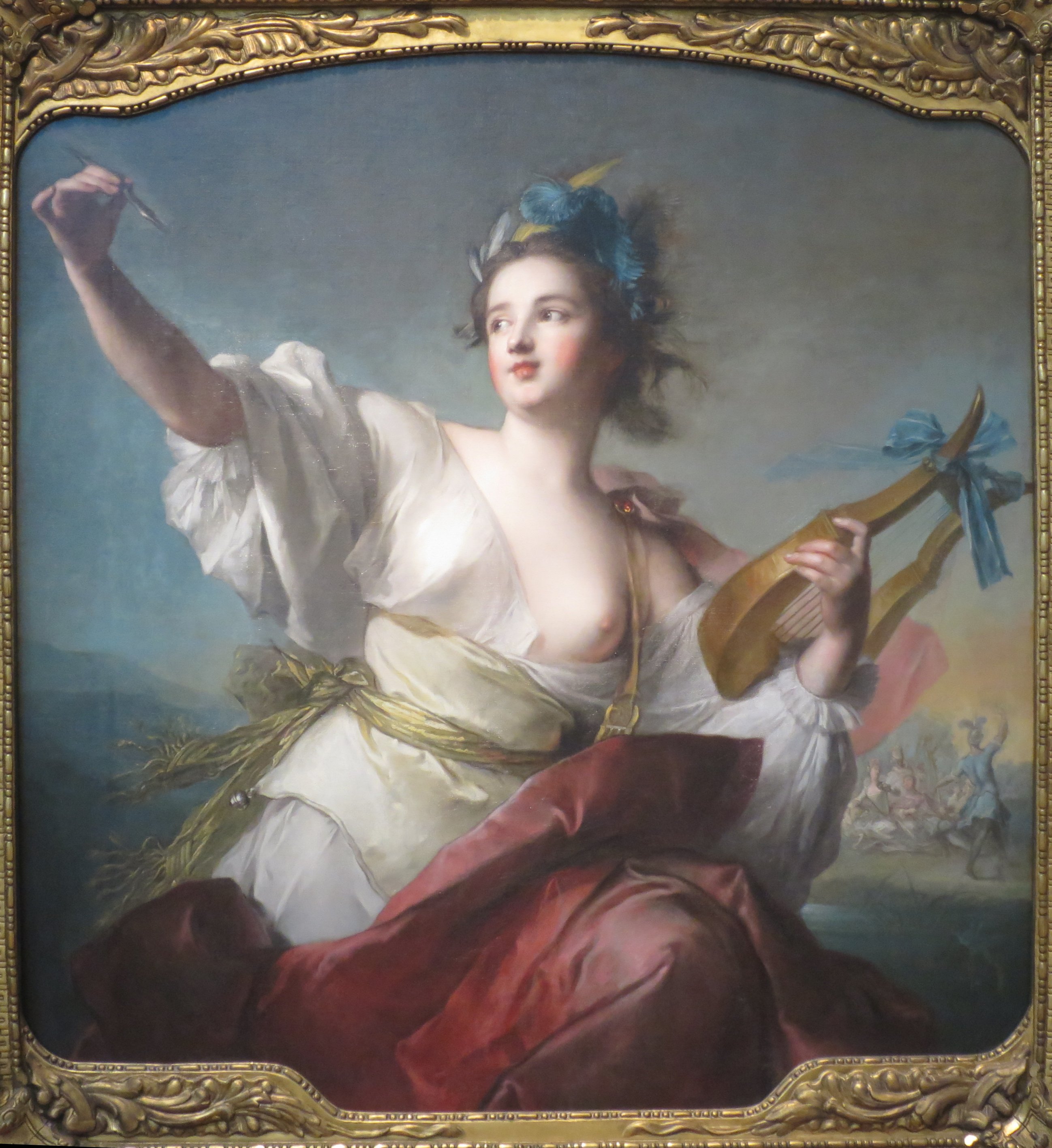
Terpsichore votes "Remain"

Τερψιχόρη
Jean-Marc Nattier


Tomorrow I will vote "Remain" and one of the reasons why I shall do so is that I care about the arts and creative industries in general and the performing arts and ballet in particular.

The case for Remain was made eloquently by members of the Creative Industries Federation in their briefing note Why is EU membership so important for the health of UK’s arts, creative industries and cultural education?  It was echoed  in Ismene Brown's article The Royal Ballet and Sadler’s Wells explain how Brexit will hurt dance 13 June 2016 and supported by Jessica Duchen's I'm IN, and here's why you should be too 25 May 2016 JDCMB which I mentioned in my own article Should we stay or should we go? 30 May 2016.

Much of the steam for the Leave campaign has been generated by concern about immigration. There is some outright xenophobia in that sentiment but I believe that it is mainly a worry about shortages of housing, healthcare, education and other public services which could be overcome with proper planning and resourcing.

For the arts, free movement of labour is essential.  Let me give just one example. Earlier this month the Scottish Ballet delighted audiences throughout Scotland and the North of England with David Dawson's Swan Lake (see Empire Blanche: Dawson's Swan Lake 4 June 2016). Dawson was born in London and trained at Tring Park and the Royal Ballet School but he has spent much of his career with the Dutch National Ballet where he is now an associate artists. He is not the only Brit there. The company's artistic director is Matthew Rowe who is another Londoner (in fact as there is a reference to him in the latest issue of The Pauline he may even have attended my old school).

Conversely many of Scottish Ballet's finest dancers come from France: Constance Deverney recently promoted to principal, Sophie Martin, Marge Hendrick, and Laura Joffre to name just a few. The same is true of our other leading companies. Where would the Royal Ballet be without Laura Morera or Federico Bonelli? The Birmingham Royal Ballet without Koen Kessels?  English National Ballet without Tamara Rojo or Alina Cojocaru?

There are dancers from the EU also in our splendid regional companies like Giuliano Contadini and Kevin Poeung with Northern Ballet and Allegra Vianello and Andrea Battagia with Ballet Cymru. I could go on.

Those artists delight us. Let's continue to make them feel welcome tomorrow.

Monday, 30 May 2016

Should we stay or should we go?

European Union
Source Wikipedia


A very interesting debate has taken place on BalletcoForum on "how is leaving or staying with the EU going to affect the arts?" The thread has now been locked by one of the moderators but before the discussion was closed down one of the subscribers referred to an article by the arts writer Jessica Duchen entitled I'm IN, and here's why you should be too 25 March 2016 Jessica Duchen's Classical Music Blog.

Duchen gave a number of compelling reasons for remaining in the EU:
  • British musicians will lose their treaty right to perform in other parts of the EU and EU musicians will lose their right to perform here with the result that "quality levels will most likely drop and career prospects for UK musicians will be unnecessarily hobbled";
  • If British artists had to obtain work permits or visas to perform in the Schengen area logistics will be more complicated and costs will rise;
  • many of our employment rights derive from EU legislation:  "Take those away and the pro-Brexiters left in charge will get rid of your rights faster than you can say Emmeline Pankhurst";
  • British students will lose their right to study in countries like Germany where there are no tuition fees; and
  • it will be harder and more expensive to travel to concerts and other performances in the EU if sterling falls and the advantages that have been achieved by the Commission's intervention such as cheap fares cease to be available to us.
And the advantages of leaving? 

"In the interests of 'balance'," writes Duchen "I've been trying to think of one advantage for the music industry of leaving.
"I've come up with....
um...??
Nothing. Null. Nix. Nada. Nul points. (Oh, right - perhaps if we exit Europe we would have to leave the Eurovision Song Contest. That would be an advantage because the British entries are usually so embarrassing.)"
Duchen's views are shared by 96% of the members of the Creative Industries Federation including Deborah Bull and Andrea Stark, chief executive of High House Production Park in Thurrock where the Royal Opera House's Bob and Tamar Manoukian Production Workshop is located (see David Cameron Meets the Fed as Members Vote Remain May 2016). Andrea Stark writes:
“Our new costume centre would not have been possible without support from the European Regional Development Fund - crucially it unlocked the other funds necessary to make this development happen. The Bob and Tamar Manoukian Costume Centre will house costumes for Royal Opera House productions, and a new BA (Hons.) degree course in costume construction will be delivered from the centre’s bespoke workrooms.”
Duchen mentioned a letter to The Guardian signed by 300 historians (see Lessons from history for the Brexiters 24 May 2016) although I have to say that I am more impressed by the views of 600 British economists:
"Poll shows 88% of 600 experts fear long-term fall in GDP if UK leaves single market, and 82% are alarmed over impact on household income" (see Economists overwhelmingly reject Brexit in boost for Cameron 28 May 2016).
Or, indeed, the view of The Economist itself (see The Brexit Delusion 27 Feb 2016).

There is a contrary argument (other than xenophobia) based on the contention that the EU is too inward looking, too bureaucratic and decreasingly important in a world in which trade will gravitate increasingly towards East Asia and that we can run our economy better and secure better access to the markets of China, India and other countries outside Europe through our own efforts than in concert with our continental neighbours.  I see some force in that argument but at the end of the day it is a matter of judgment and on the balance of probabilities I think it is wrong. Though I have formed my view independently, I draw comfort from the fact that it coincides with that of the Prime Minister, the Leader of the Opposition, the Chancellor of the Exchequer, the Governor of the Bank of England, the Managing Director of the World Bank, the President of the United States and all the other luminaries from around the world who have weighed into the referendum debate on the side of Remain.

Nevertheless, I would vote Remain even if the economic arguments were stacked the other way. I have been inspired by the European ideal ever since I was a child. One of the sources of that inspiration is a common European culture. That culture is expressed through literature, music, painting and, of course, the performing arts. In particular the art of Terpsichore, which evolved in the courts of renaissance Italy, was codified in 17th century France, refined in Paris, Copenhagen and St Petersburg, conveyed to England by the Ballets Russes and now flourishes in theatres, opera houses, studios and even draughty gyms and church halls the length and breadth of the United Kingdom.

Wednesday, 3 June 2015

The Creative Industries Road Show comes to Leeds

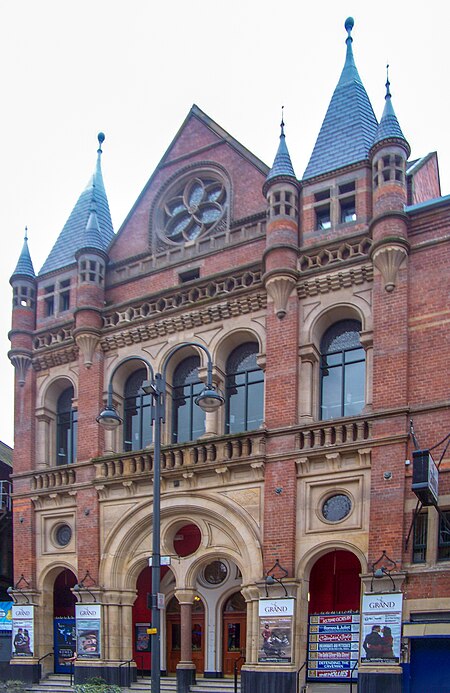
Leeds Grand Theatre
Photo Mtaylor848 
Source Wikipedia


The Creative Industries Federation describes itself as
"the first fully independent body bringing together the public and private sector, across all parts of the country, from the largest multinational to the smallest start-up, from television to computer games, from music to design, from architecture to visual arts".  
For the purpose of recruiting members the Federation recognizes the following as creative industries advertising, architecture, computer gaming, crafts, design, creative education, fashion, film, IT and software, museums, galleries and libraries, music, performing arts, publishing, radio, TV, video and photography and visual arts. English National Ballet is among the Founder Supporter Companies and Organizations as is the Royal Opera House and Tamara Rojo appears on the Federation's launch video.

The Federation is running a series of road shows around the UK "in which leading figures from the arts, creative industries and commercial education will come together to forge new links and map the challenges the sector faces in their area.".  The first of these took place in Manchester on 27 April 2015 and the second in Birmingham on 20 May 2015. On Monday, 1 June 2014, it was Leeds's turn and the caravan gathered in the Howard Assembly Room, a large auditorium leading off the bar of the dress circle in the Grand Theatre,

The event came to my attention because one of the Federation's promises is to "defend intellectual property rights in an ever more digital future." Defending intellectual property rights and indeed attacking them sometimes is what I do for a living but I would probably have given the road show a miss had I not noticed two names on the panel. One of those was Sally Joynson who is CEO of Screen Yorkshire. The other was Sharon Watson, the artistic director of Phoenix Dance Theatre.

The event was chaired by John Kampfner, CEO of the Federation and Anamaria Willis CEO of CidaCo. The first part of the evening was a monologue by Anya Hindmarsh on how she got to be where she is now. All very worthy but it is not as if we had not heard countless similar stories from other entrepreneurs from way back when. The next talk was Tom Riordan, CEO of Leeds City Council which was equally worthy. The main part of the evening for me was the panel discussion in which Sally and Sharon were billed to take part. Also on the panel were Jamie Sefton, Managing Director of Game Republic Ian Thompson, of Thompson Brand Partners, Dominic Gray of Opera North and Anya Hindmarsh.

The advertised topic of the panel discussion was
"'Uniting the Northern Powerhouse' - Following the emergence of the Great North concept how can growth and success be leveraged across the M62 corridor for the benefit of us all?"
Kampfner posed the combustible (for Leeds) question "Is the Northern Powerhouse all about Manchester and if it is does it matter?" and he asked Sharon to respond. Sharon played that ball with a very straight bat. She replied that Phoenix Dance and Northern Ballet had always regarded the North as a powerhouse so there was nothing new there. Actually that was about as much as she or anyone said on the subject because one of the first questions from the floor came from a teacher who complained that children in Yorkshire were just not taking art and design courses in sufficient numbers and that she was looking to the panellists to put that right. For the rest of the evening the panel concentrated on why that should be, whether it was because parents wanted their offspring to get "a real job" whatever that might mean and whether there was too much an emphasis in this country on STEM. As we could do better in maths and science according to recent PISA tables I was rather worried where that discussion might be leading but apart from a few calls to turn STEM into STEAM there was no serious attack on existing educational priorities.

As there had been a lot of Manchester bashing at the LEP Summit in 2011, the Leeds International Economic Conference last year and even at Northern Ballet's breakfast meeting in September 2013 I was really heartened by Dominic Gray. He urged Leeds not to compare itself to Manchester because the two cities are different.  He recalled the success of the Tour de France last year when images of our beautiful countryside were transmitted round the world. Leeds's strength lay in its hinterland, he seemed to suggest which was like music to my ears.

After the talk there was networking in the bar at which attendees had to buy their own drinks in the best Yorkshire tradition. I met a number of interesting people from different arts and creative sectors including Sharon Watson.  I am a great admirer of her company and her work and had met her very briefly on a couple of other occasions. We swapped a couple of stories about the importance of dance and I told her about my faltering efforts to learn her dance form (see My First Contemporary Dance Class 27 Feb 2015).

If anyone wants to join the Creative Industries Federation here is some further information. Subscriptions do not come cheap. Businesses with turnovers of £200 million or above are charged £15,000 plus VAT while businesses that provide support to the creative industries (such as barristers' chambers) would be charged £6,000. Even individuals aged 25 or under are charged £40.  Having said that, there are discounts for those who join in June and further discounts for those who join after attending the Leeds road show. The creative sector does need a forum and collective voice but few of the people I know in dance have that kind of spare cash.