Showing posts with label Philip Feeney. Show all posts

Sunday, 5 January 2020

Northern Ballet's 50th Anniversary Celebration Gala


Dratdard YouTube Licence

Northern Ballet 50th Anniversary Celebration Gala 4 Jan 2020 19:00 Leeds Grand Theatre

Last night's gala was everything for which I had hoped and a great deal more than I had dared to expect.  It was one of the best evenings that I have ever spent in a theatre and by far the best evening that I have ever spent in Leeds.  It was so much better than the company's 45th-anniversary gala in March 2015.

The evening consisted of excerpts from 18 ballets some of which are among my favourites.  A few of those ballets I had not seen for decades. Several of those excerpts were danced by favourite artists such as Federico Bonelli and Marge Hendrick. The excerpts were interspersed with speeches and videos from dancers, choreographers, directors and others who have contributed to Northern Ballet over the last 50 years.  A few of those recollections touched me personally because they recalled events that have become part of my life.

Having seen Elaine McDonald on stage and having met Peter Darrell several times (see Scottish Ballet 20 Dec 2013) I was close to tears when Hendrick danced Darrell's Five Rückert Songs to Mahler's haunting music. My association with Scottish Ballet goes back to my second year at St Andrews where I was taught my first plié as well as a lot of other things that qualified me to make a living (see Ballet at University 27 Feb 2017). Scottish Ballet was the first company that I knew and loved and it is still the company that I love best.  I swelled with pride as Christopher Hampson entered the stage and discussed the two companies' kinship.

My other personal highlight was A Simple Man with Jeremy Kerridge and Tamara Rojo as the painter and his mother.  That was the first work by Northern Ballet that I ever saw.  I attended its performance shortly after returning to Manchester to take up a seat in chambers. My late spouse and I had been regular ballets goers in London and remoteness from Covent Garden, Sadlers Wells, the Coliseum, The Place and the Festival Hall seemed unbearable.  It was Gillian Lynne's brilliant choreography with Christopher Gable and Moira Shearer in the leading roles that reassured us.  We could see that there was a ballet company in the North that was just as good as Nick Hytner's Royal Exchange and the Hallé at the Free Trade Hall. I have followed and supported all three of those great Northern institutions (albeit not always uncritically) ever since.

The evening started with the party scene from The Great Gatsby which I reviewed at its premiere and on tour. After the opening, the company's director, David Nixon, appeared and greeted the audience. He paid tribute to his predecessors and all who had contributed to the company in various ways over the years. He singled out Carole Gable who also appeared in a video and the composer Philip Feeney (see Central School of Ballet's staff biographies). The very early years of the company were recalled by photos of the dancers and press clippings that flashed on the screen.  There were also some personal reminiscences from the 1970s. The later years were covered in much more detail, There were videos from Robert de Warren, Michael Pink, Patricia Doyle. Several of the company's leading dancers were recalled from retirement including Tobias Batley, Martha Leebolt and Dreda Blow who now live on the other side of the Atlantic.  The nostalgia was palpable - just like Noel Coward's Cavalcade.

Some of the works in Northern Ballet's repertoire were danced by guest artists from other companies. Federico Bonelli of the Royal Ballet partnered Abigail Prudames of Northern Ballet in the balcony scene from Massimo Moricone's Romeo and Juliet.  Momoko Hirata and César Morales of the Birmingham Royal Ballet danced the wedding night scene from Nixon's Madame Butterfly which I have always regarded as Nixon's masterpiece. The Royal Ballet's Laura Morera and Ryoichi Hirano, another two of my favourite artists, danced the countryside scene from Jonathan Watkins's 1984.   Greig Matthews and Amanda Assucena danced Rochester and Jane in the proposal scene from Cathy Marston's Jane Eyre.

It was good to see Central's students, Elise de Andrade and Matteo Zecco, in a scene from Cinderella by their school's founder, Christopher Gable.  As a fan of Phoenix Dance Theatre, I was delighted to see the magnificent Vanessa Vince-Pang (yet another favourite) and Aaron Chaplin in Sharon Watson's dance chronicle Windrush: Movement of the People.  Space and time do not permit me to mention everything in detail.  Other works included
All danced delightfully and I congratulate them all.

The finale was the last scene of A Midsummer Night's Dream which is Nixon's other work that I regard as a masterpiece (see Realizing Another Dream 15 Sept 2013). The whole cast took to the stage including Kenneth Tindall.  He was one of my favourites in the company and I thought I would never see him dance again.  At the end of the gala, Nixon recited Puck's speech which ends the play: 
"If we shadows have offended,
Think but this, and all is mended,
That you have but slumber'd here
While these visions did appear.
And this weak and idle theme,
No more yielding but a dream,
Gentles, do not reprehend:
if you pardon, we will mend:
And, as I am an honest Puck,
If we have unearned luck
Now to 'scape the serpent's tongue,
We will make amends ere long;
Else the Puck a liar call;
So, good night unto you all.
Give me your hands, if we be friends,
And Robin shall restore amends."
It is supposed to be uttered by a dancer.  Kevin Poeung said those words when I last saw the show.  But the words seemed entirely appropriate as they dropped from Nixon's lips.  A shower of gold confetti rained from the ceiling. Hardly anyone remained seated and there were not many dry eyes.

Monday, 23 December 2019

Northern Ballet's Cinderella Second Time Round


Standard YouTube Licence


Northern Ballet Cinderella Grand Theatre, Leeds 21 Dec 2019 19:00

I attended Northern Ballet's Cinderella at the Grand on Saturday the day after I saw The Wizard of Oz at the Leeds Playhouse. I could not help reflecting that the two shows had more than a little in common,  Both rely heavily on special effects.  Both had wizards and cuddly dogs.  The only difference between the scene in which Dorothy acquires the slippers of the wicked witch of the east and Cinders her glass ones was in the colour of the footwear.  Anyone looking for h a rollicking good spectacle in Leeds has two from which to choose this Christmas.

For that reason, Northern Ballet's Cinderella may not be for everyone.  Anybody expecting Prokofiev's glorious music or the folk tale of Jacob and Wilhelm Grimm will not find them in this version.  A new score was commissioned from Philip Feeney who had previously composed the music for a Christopher Gable's version of Cinderella. As Feeney remarked in the programme notes, the ballet was set in imperial Russia.  I think I detected allusions to Petrushka in the winter market and crystal lake scenes.  Unlike most versions of Cinderella, her torment begins with the death of her father and not that of her mother,  Instead of a fairy godmother or birds Cinderella is rescued by a magician.

As in Wuthering Heights, Nixon has a young heroine and a grown-up one.  A flashback to Cinderella's childhood worked rather well in that it provided an explanation for the stepmother's antipathy towards Cinderella.  Cinders had pestered her father to retrieve a shawl from the other side of a stream where a  shoot was taking place.  As he picked it up he was struck by a stray shot.  It is much easier to understand a widow's anger at such needless loss of life than resentment at the rejection of a bunch of flowers as in Christopher Wheeldon's version of the ballet.

Any version of Cinderella is about grief and jealousy. These   are heavy subjects that need to be leavened now and then.  There is plenty of scope for levity in Cinderella.  Sir Frederick Ashton and Sir Robert Helpmann were a hoot as the ugly sisters in the Royal Ballet's version in the early 1970s (see Sir Frederick Ashton - A Most Lovably Monstrous Ugly Sister),   So, too, was Sarah Kundi (a former Northern Ballet dancer) as the stepmother who gets tighter and tighter at the royal ball in Christopher Wheeldon's (see Cinders in the Round 13 June 2019).  There is also the shoe matching scene.  Wheeldon has knights in armour in the queue to try the shoe.  Darius James and Amy Doughty dress Cinderella's brother as a girl and attempt to saw lumps off his foot in Ballet Cymru's version.  There was nothing like that in Nixon's version.  Apart from the magic with which the wizard transformed Cinderella's kitchen that reminded me of the easy peasy lemon squeezy advert and the illuminated "Cinders" sign on the sleigh I can't remember much to laugh about in Northern Ballet's Cinders.

Having said that, I had come to watch a ballet and not a pantomime,  Dancers who particularly impressed me yesterday include Miki Akuta as young Cinderella, Antoinette Brooks-Daw as the stepmother, Jonathan Hinks, Matthew Topliss who danced the magician or wizard and Cinderellas dad and Sarah Chun in the title role.   This was the first time I had noticed Chun in a leading role and she performed it with flair.  I shall look out for her in future.  Another quality I noticed on Saturday was Brooks-Daw's acting.  Scenes that stood out were her picking up and tossing down Cinderella's shawl immediately after her husband's death and the purposefulness with which she tries to separate her stepdaughter from the prince at the ball.

I have not praised everything that Nixon has produced but this is one ballet that I like a lot. This is the second time I have seen it.  On the first occasion I described it as a triumph (see Northern Ballet's Cinderella - a Triumph 27 Dec 2013).  Though not perfect in every respect, Cinderella is one of the best works in Northern Ballet's repertoire.  It is just over halfway through a nationwide tour that started last September and ends in June.  It stays at the Grand until 2 Jan and will then visit Leicester, Milton Keynes and the Lowry.  If you can reach any of those venues, it is well worth seeing.

Friday, 1 November 2019

Birmingham Royal Ballet and Ballet Black's Mixed Programme at Sadler's Wells


Standard YouTube Licence


Birmingham Royal Ballet and Ballet Black (A Brief Nostalgia, The Suit and Nine Sinatra Songs) Sadler's Wells 30 Oct 2019 at 19:30

As a fully paid-up Friend of Ballet Black and a big fan of Birmingham Royal Ballet and Cathy Marston, I decided to nip down to London on Wednesday to see their combined triple bill. I say "nipped" with some caution. It was easy enough to get down to the Smoke but coming back was quite a different matter. The East Coast mainline has deteriorated considerably since its re-nationalization by LNER and it is now a shambles. It took an hour for the 23:30 from King's Cross to amble from Doncaster to Leeds by way of Pontefract and goodness knows where else with the result that I arrived home at 04:00 yesterday morning.

Happily, the show made it all worthwhile. I arrived at Sadler's Wells just in time for a talk by Kit Holder of Birmingham Royal Ballet, Tom Harrold who had composed the score for the first work, A Brief Nostalgia, and Cassa Pancho, founder and artistic director of Ballet Black.  I am very glad that I did because Tom's talk prepared me for A Brief Nostalgia and helped me appreciate it properly.  He explained that he was a Scottish composer living in Manchester and this commission had been his first work for the theatre. The ballet was a collaboration between the Birmingham Royal Ballet and the Queensland Ballet. The companies had chosen Jack Lister, to choreograph the work and Tom described their long-distance collaboration.  Lister had wanted to express a mood that is expressed in Portuguese by the word saudade.  Deborah Jones's programme note described it as "a delicate, complicated feeling that has melancholy and pain built in but also has room for the beauty of remembering emotions, people or objects of personal value." She added that an American academic had offered "a word for 'the presence of absence," as an apt translation.

In the questions and answers that followed, a member of the audience asked why the ballet was entitled "A Brief Nostalgia". I guess he meant why a ballet addressing such a nuanced and complex topic should have been given such a prosaic title. Tom could not really answer the question but warned that it was quite a "dark ballet".  "Oh dear!" I thought to myself as I remembered what The Suit is all about. "Happen we are in for a right barrel of laughs."

The piece when it came to be performed was not too bad. It was certainly not as miserable as a marital breakdown and a suicide.  For a start, I liked the score and I was even more impressed with the lighting design for shadows on the sets exaggerated the dancers' line and movements. There were also some dramatic moments such as when the cast dashed in and froze in arabesque. It was the lighting which actually punctuated the phases of the ballet. It began at ground level while the later scenes lit up the space above the artists' heads.

There were six pairs of dancers: Brandon Lawrence with Delia Matthews, Matthias Dingman with Maureya Lebowitz, Tzu-Chao Chou with Momoko Hirata, Max Maslen with Samara Downs, Lachlan Monaghan with Alys Shee and Kit Holder with Beatrice Parma. The only downside with the lighting is that it was hard to make out who was who on stage. The only one that I could identify positively before the reverence was Brandon Lawrence and that is only because I have seen a lot of him lately. They all danced well and richly merited the applause with even a few Russian style growls.

The work that I had come primarily to see was The Suit.  I am a big fan of Ballet Black both for their outstanding artistry but also for their work in bringing ballet to every section of our community including those that have not been represented in ballet proportionately.  I am also a fan of Cathy Marston having seen her Jane Eyre and Victoria for Northern Ballet and Snowblind for the San Francisco Ballet recently and, of course, The Suit at least four times.  Of her works that I have seen live, The Suit is by far the best in my humble opinion.  However, I have seen a lot of videos of her work in Berne which I should like to see on stage.

It is one respect a very depressing work.  It starts happily enough with Philomom, the husband, José Alves, and Matilda, his wife, Cira Robinson in marital bliss. The alarm clock sounds and Philemon has to go to work. He gets up, shaves, showers and dons a suit with the rest of the cast playing washbasins, showers, wardrobes and mirrors. He says goodbye to his wife still in her nightie and absent-mindedly leaves his briefcase behind. The next few minutes show his commute to work. He meets all sorts of folk such as stylish ladies like Isabella Coracey and Sayaka Ichikawa, one of whom earns a wolf whistle. and little old ladies bent double over their walking sticks such as Marie-Astrid Mence, in real life probably the youngest members of the troupe. Suddenly, it dawns on him that has left his case behind. He returns to the house and finds it is not all it should be. Matilda is still in bed but she is not alone.

Philip Feeney's music changes dramatically from regular rhythms to sounds more akin to sirens. He freezes.  His home is shattered. Momentarily he is broken. When he recovers his composure he is a changed man.  Matilda may have deceived him but she must have been bored looking after the home while Philemon was in the city. When good-looking Simon, Mchuthuzeli November, paid her attention it would have required a lot of resolve to resist him.

Simon had darted out of the house in his underwear leaving his suit behind. It was through that suit that Philemon exacted his terrible revenge. For the rest of the marriage, he tortured his wife with the garment forcing her to treat it as an honoured guest even taking it for walks around the neighbourhood. Everyone would have known that she had erred.  She felt scorn and shame. For a brief moment, there seems a to be a chance of reconciliation but his anger gets the better of him and he shoves her away.

She wanders the home desolate and then spots the tie. She wraps it around her neck connecting the end to a beam. There then follows one of the most chilling scenes possible in theatre. That beautiful woman perishes before our eyes and then rests lifeless. I had seen that ballet four times and know that Cira springs back to life for the curtain call but I can't help shaking and feel the tears welling up in my eyes.  No, this is not a comfortable ballet to watch.  In fact, it is shocking.  But it is compelling watching.

We needed cheering up and that is just what we got with Twyla Tharp's Nine Sinatra Songs.  Each of the girls is beautifully dressed and coiffed wearing heels instead of pointe shoes.  Karla Doorbar who accompanied James Barton in his last performance with the company wore the most scrumptious costume.  Before the show Kit Holder told the audience that this was to be Barton's last appearance with the company and invited us to give him an extra burst of applause which we did.  I was sad for a while but then overjoyed to learn that he has not retired but is on his way to Glasgow to join Scottish Ballet. Readers will tire of my saying that that was the first company that I got to know and love. They will know that I am an even bigger fan of Scottish Ballet than I am of BRB,  Far from saying goodbye I look forward to seeing more of him in his new company.

I have never really listened much to Frank Sinatra but I have heard a lot of his music in lifts, waiting rooms and on the telephone waiting to be put through to the right extension in the course of a lifetime.  There is something comforting in the banal and the artists of the Birmingham Royal Ballet made us forget the horror of the previous piece with their wit, their charm and their virtuosity. Although the ballet is called Nine Sinatra Songs we actually got eight for My Way is played twice. The first time with three couples - Rachele Pizzillo, Emma Price and Yaoquian Shang with Rory Mackay, Edivaldo Souza da Silva and Alexander Yap.  The second time was the finale with the whole cast.

I have followed Ballet Black for as long as I have kept this blog and seen them grow. Watching them perform in one of the world's premier dance auditoriums with de Valois's foundation I thought they had come of age,  Interestingly one of the audience members had reminded me of their appearance of the pyramid stage of Glasto.  That must have earned them a lot of fame but I think the shows at The Hippodrome and Sadler's Wells would have given them even more kudos.

Later this month Ballet Black will perform Pendulum, Click! and Ingoma in Oxford, Stratford, Leeds and York in the next few weeks, I described that triple bill as stunning when I saw it at The Barbican earlier this year.   I recommend it strongly.

Sunday, 2 June 2019

San Francisco Ballet in London

Standard YouTube Licence

The San Francisco Ballet  The Infinite Ocean, Snowblind and Björk Ballet 1 June 2019, 14:00 Sadler's Wells

The San Francisco Ballet was founded in 1933 which makes it one of the oldest ballet companies in the United States. It was founded by William, Harold and Lew Christiansen who were born in Utah.  They were the first American company to dance Swan Lake and The Nutcracker.  Balanchine was an important influence but he was not the wellspring of inspiration. There have been plenty of other influences from around the world including Buornonville, Ashton and van Manen   Helgi Tomasson, the company's artistic director since 1985, was born, trained and began his career in Iceland.  The San Francisco Balet is therefore different from the companies on the East Coast and in many respects much more interesting.

The company has brought a portfolio of new work to London which includes many ballets by British choreographers such as David Dawson, Cathy Marston, Arthur Pita and Liam Scarlett.  Having seen Jane Eyre, The Suit and Victoria I am something of a Marston fan. When I heard that Marston had been commissioned to create a work for the San Francisco Ballet to be premiered on my 70th birthday I seriously considered a trip to San Francisco as a birthday treat to myself. Happily, I did not have to cross the Atlantic because the company has brought Marston's new ballet to London.

The new work is called Snowblind.   It is a one-act ballet which forms part of a triple bill.  The other works in the programme were Edwaard Liang's The Infinite Ocean and Arthur Pita's Björk Ballet.  I do not recall seeing anything by Liang at all but I have seen Arthur Pita's Dream within Midsummer Night's Dream for Ballet Black at least 8 times plus once in rehearsal and I love it to bits.

Although I must have seen the San Francisco Ballet when I was a graduate student at UCLA in the early 1970s because I spent much of my time watching ballet, I do not have a clear recollection of them as I do American Ballet Theatre, the New York City Ballet and the Dance Theatre of Harlem. I do not think they were as well known or well regarded in those days as they are now. I had seen many snippets of their performances on YouTube as they were one of the Royal Ballet's partners on World Ballet Day.  I knew they were good but I did not know that they were that good until I saw them in the flesh yesterday.  Some of their physical feats - particularly by the women - were amazing.  In The Infinite Ocean, for example, there were several scenes where they on pointe with their lower legs ramrod straight but their upper legs forming a perfect 90 degrees but their upper bodies bolt upright. That must have been so uncomfortable, yet they kept it up for some time.

The title of Liang's work was inspired by a Facebook message from a friend who was suffering from a terminal illness:
“I will see you on the other side of the infinite ocean.”
According to the programme notes, Liang lost his father to cancer at the age of 13. His ballet is an exploration of the time between life and death.   I was expecting something morbid but it was far from that.  The ballet opened with the dancers clad in gold and white walking slowly towards a golden orb like the sun to the music of Oliver Davis played on a Stradivarius violin by Cordelia Merks.  I was reminded a little bit of Macmillan's Gloria which was also set against a slope though I only noticed it in the last moments of Liang's piece when one of the dancers suddenly dropped behind it.  There were 12 dancers in the piece including duets by the principal dancers, Sofiane Sylve with  Tiit Helimets and Yuan Yuan Tan with Vitor Luiz.  The impression I formed was that each character was facing his or end in a different way, some with resignation, others with serenity and yet others with regret.  Something that we all have to think about but never do.

Snowblind is a narrative ballet inspired by Edith Wharton's Ethan Frome of which I regret to say I had never heard until I read about it in the programme notes.  It appears to be a very simple story of a husband with an infirm and ever demanding wife in a  remote farmstead who falls in love with a young woman he employs to care for his wife with predictable consequences. The set is very plan.  There is a bed for the wife and a chair for husband.  The husband meets the young woman at what appears to be a square dance.  She is resplendent in red while all the rest are in featureless grey.  For her score, Marston approached Philip Feeney who arranged the music with pieces by Amy Beach, Arthur Foot and Arvo Pärt. The husband, Ethan, was danced by Ulrik Birkkjaer, the wife by Jennifer Stahl and the woman in red by Mathilde Froustey.  A hallmark of Marston's work is what I call the dance equivalent of the chorus in classical Greek drama.  I had first seen that technique in Jane Eyre and she used it very effectively in The Suit.  The ballet opened with the chorus bending in the wind like snowflakes in a blizzard.   This is the best work from Marston that I have seen so far - or perhaps, less pretentiously, the work I have enjoyed most.   She appears to be very busy with new commissions.  I look forward very much to seeing her next one.

I guess that Pita chose a ballet on the music of one of Iceland's most popular entertainer because Tomasson also came from that country.  It opens with miniature golden palm trees that eventually fall to the ground with a thud.   Some of the women appear to be wearing yashmaks at one point which must be as far from Iceland as one can get.  The man with a very long fishing rod wears a tragedy mask but then fishes up a comedy mask from the orchestra pit which he wears on the back of his head.  I was reminded of Pita's Dream several times as I watched Björk Ballet.  The fishing rod made me think of Damien Johnson's butterfly net.   Also like Dream was the sudden juxtaposition of classical and popular music, the glittering costume of one of the female dancers and quirky interludes like the dropping palm trees.  Pita's quirkiness and sense of fun shone through.  I described the ballet on twitter as "the icing on the cake, the piece de resistance, the real McCoy for it was all those things.  The perfect end to a very log but also very enjoyable programme.

The Liang, Marston and Pita part of The San Francisco Ballet's season ended last night and I fear we shall have to fly to San Francisco if we are ever to see those works again. However, the company remains at Sadler's Wells until 7 June.  There is a lot more to see and if I lived in London and did not have to labour in the law courts for a living I should have seen them.

Monday, 8 April 2019

Another Look at Victoira

Author: Rasiel Suarez
Licence Creative Commons Attribution-Share
Alike 3.0 Unported
Source Wikipedia Queen Victoria 


Northern Ballet Victoria 6 April 2019 Curve, Leicester

"How different, how very different, from the home life of our own dear Queen!"  The Oxford Essential Quotations attributes that remark to A Laugh A Day Keeps the Doctor Away by the American humorist, Irvin S Cobb which was published in 1924.  It is said to have been overheard at a performance of Antony and Cleopatra in which Sarah Bernhardt played Cleopatra.

The conversation is probably apocryphal but the reason why the quotation is remembered is that the home life of Queen Victoria was unremarkable.  Of course, there was sex.  How could it be otherwise with 9 children? But it was almost certainly within marriage notwithstanding speculation over her relationships with John Brown and Abdul Karim.  Queen Victoria gave her name to an age of momentous cultural, economic, political, scientific, social and technological change throughout the world but, as a constitutional monarch, she had very little to do with any of that.

According to "Creating Victoria" in the programme the idea of a ballet about Queen Victoria was David Nixon's.  He asked Cathy Marston whether she would be interested in making such a work, Evidently, someone mentioned the TV series for Marsrion spent part of a weekend watching a recording of the series before deciding to accept.

To make a full-length ballet about a home life that is a byword for respectability and normality must have been something of a challenge. Marston responded to that challenge by selecting incidents from the queen's life that she had recorded in her diary.  Those incidents were presented not as they had happened but as they had been perceived by Princess Beatrice upon reading her mother's diary for the first time. An impression was given that some of those incidents bordered on the scandalous for there were for there were several scenes where Beatrice tore pages from the diary.

On the whole, I think Marston's approach worked well, particularly in the second act.  There were moments of great beauty such as the passionate duet of the queen and prince consort towards the end. There were also some comic moments such as the childbirth scenes with Mlindi Kulashe delivering baby after baby.  Some of the scenes in the first act were still lost me even though I had seen them before and had read and digested the synopsis.  Someone - I could not work out who it was - drew a revolver and shot John Brown. I could find no reference to that in the synopsis.  It certainly did not happen in real life for Brown died in his bed in Windsor.  I had a vague recollection from my criminal law studied that Queen Victoria survived an assassination attempt because it was from that incident that we have got the M'Naghten rules but it seems to have nothing to so with that. I concluded that the assassination must have been an analogue for character assassination. There were several other analogues in the piece such as the ritual kissing of the queen's feet.

The cast I saw in Leicester was almost the same as the one I saw in Leeds (see A Great Send-off for a Great Lady 17 March 2019).  Abigail Prudames was the queen, Joseph Taylor the prince consort, Pippa Moore was Beatrice and Kulashe doubled as John Brown as well as an obstetrician.  All the cast danced well but I particularly enjoyed their interaction with a curious piece of furniture that I can best describe as a Victorian round sofa and their tussle over the red dispatch boxes.  Everybody in the show danced well and it would be unjust for me to select any for special praise,

Steffen Aarfing's set worked well.  A semicircular structure doubled as a gallery in a palace and the stacks of a library.   I am not quite so satisfied with the costumes.  The queen's white gown with its blue sash was effective. The red and cream costumes of the corps were less so.  Philip Feeney's score was pleasant enough. It was said to be derived from the music of the period.   I am sure that must be so but I struggle to remember a note of it even though I have heard it twice.

Though the auditorium was far from full the audience seemed to appreciate the show.   There was some cheering and the curious masculine growls that one sometimes hears in live streaming from the Bolshoi and even Covent Garden.   Several folk in the stalls rose to their feet which does not happen quite so often in England as in other countries.  I think Northern Ballet can chalk up Saturday evening's performance as a success.

The ballet's tour continues to Edinburgh, Cardiff, Milton Keynes and Belfast and it will be streamed to cinemas throughout the nation on 25 June 2019.  I think it is worth seeing and probably more than once since I appreciated it more the second time around.   Marston is a master of her craft and while I still prefer The Suite and Jane Eyre I appreciate Victoria.   Her many fans (of whom I am one) can look forward to her Snowblind which the San Francisco Ballet will bring to London at the end of May and beginning of June.  We will have another chance to see The Suit in Birmingham in September

Sunday, 17 March 2019

A Great Send-off for a Great Lady


Standard YouTube Licence

Northern Ballet Victoria, Leeds Grand Theatre, 16 March 2019, 19:30

Victoria may have been the title rôle but the star of last night's show was Pippa Moore who danced Princess Beatrice. That is not because the ballet is really about someone other than the character in the title like Coppelia or Don Quixote.  Queen Victoria has a very substantial role in Cathy Marston's ballet and it was danced beautifully by Abigail Priudames whom I admire greatly. But last night was the night the company and its audience said goodbye to Moore who is, for the time being, Northern Ballet's last remaining female premier dancer and one who enjoys great respect and affection.

At the end of the performance, Moore was presented with an enormous bouquet of flowers. Something that does not happen very often outside London (see Flowers for Dreda 9 June 2018). David Nixon came on stage and gave the best speech that I have ever heard him make (I have heard more than a few from him over the years) and handed Moore a picture of herself as Beatrice. I am a hard-bitten patent lawyer and I have seen some great moments in the theatre but I could feel the tears welling up inside me. Several members of the audience including yours truly rose to out feet.  Just as well that the curtain fell when it did because I am not sure for how much longer I could have contained my emotions.

The show in which Moore and Prudames danced was Cathy Marston's Victoria, a co-production between Northern Ballet and the National Ballet of Canada. The score was by Philip Feeney and the sets and costumes were designed by Steffen Aarfing.  There was some stunning choreography in the ballet of which the duets between the queen and John Brown, danced by Mlindi Kulashe, and the queen and Prince Albert (Joseph Taylor) were perhaps the most striking. I was particularly struck by the invocation of the saltire as the queen splayed her arms in open fifth and legs second in defence of Brown.  There were other touches that I loved like the relevés to convey excitement when Victoria met Albert for the first time.

However, regular readers of my blog will by now have sensed a "but" coming.  I cannot deny it is there but I don't want to exaggerate it.  Victoria was still a work of considerable merit.  I am a great fan of Cathy Marston even though I have not seen much of her work on stage. Most of her works that I have seen have been on YouTube.  When I saw Jane Eyre in Richmond in 2016 I described it as "the best new ballet from the company in 20 years." I think I was even more impressed with The Suit when I saw it for the first time (see Excellence - Ballet Black's Double Bill 17 March 2018). Though I admired it very much, Victoria did not have the same effect on me as Jane Eyre or The Suit.

I have asked myself "why?" as there was a lot of good in this ballet.  I think the weakness lies in the libretto.  This was a very complex story but I don't think that was the main problem.  It is never easy to create a ballet around a recent historical figure as Sir Kenneth MacMillan's Anastasia shows.  The only choreographer to have pulled it off in my humble opinion is Ted Brandsen with his Mata Hari  (see Brandsen's Masterpiece 14 Feb 2016). I think he succeeded because he kept the story simple with hardly any flashbacks, unlike Anastasia and Victoria.  Had I not read the synopsis I would not have had a clue as to what was going on and I think that would have lost me.

My only other criticism (and it is a minor one) is of the costumes for the corps.  They were clad in a stripey top and what appeared to be a red skirt for dancers of both genders.  From row P of the stalls, they looked like a crocodile of schoolgirls on an outing.  When I read the programme properly on the train to London later this morning I shall probably discover the significance of that apparel.  All I can say that it was less than obvious yesterday.

But this was still a magnificent evening. I would not have missed it for the world.  It is still a fine ballet and Cathy Marston is still one of my favourite choreographers.  I saw Anastasia when it was first staged in 1971 and have never had a desire to see it again. Unlike Anastasia, I am going to give this ballet a second view.   I am sure it will go down well at Sadler's Wells. It has already had a good press.  I have very heterodox tastes having no time whatsoever for The Favourite despite its many awards and nominations.  So see Victoria for yourself. Don't let my niggles at the plot and costume designs put you off

Wednesday, 18 April 2018

Jane Eyre Second Time Round


Standard YouTube Licence

Northern Ballet Jane Eyre 13 April 2018, 19:45  Lyceum, Sheffield

The first time I saw Cathy Marston's Jane Eyre I described it as "one of the best new ballets I have seen all year from any company and it is the best new work from Northern Ballet for many years if not decades" (see Northern Ballet's Jane Eyre: the best new Ballet from the Company in 20 Years 2 June 2016). I saw it again in Sheffield on Friday and I am still of that view.

Jane Eyre is a very long read.  It consists of 38 chapters and was first published in 3 volumes.  There is a good summary of the story in Wikipedia.  Although it cannot have been easy to compress a book of that length into a two act ballet, Marston preserved its essence in her libretto.  Most of the characters of the novel are reproduced in the ballet.  Marston has also invented a set of male characters called the "D-men" who are danced by some of the company's most experienced members. They haunt Jane at critical moments of her life.  In that regard, they perform a role similar to that of the chorus in Greek drama.  I noticed a similar use of such characters in The Suit (see Excellence - Ballet Black's Double Bill 17 March 2018).

Many of the dancers I saw at Richmond in 2016 were in Friday's performance in Sheffield though some had different roles. Dreda Blow danced Jane as an adult on Friday as she had two years ago. Jane as a girl was danced by Rachael Gillespie who had been Adèle last time.  Victoria Sibson, who had been Bertha Mason in Richmond, was Aunt Reed in Sheffield. However, there was a different Rochester.  Joseph Taylor performed that role on Friday.

Each and every member of the cast performed well.  Blow is the only Jane I know.  The last time I saw her I wrote:
"Blow is a fine dancer but I have never seen her dance better than she did tonight."
I can only say the same about her performance on Friday.  Taylor delivered a confident and convincing performance as Rochester.  Gillespie is one of my favourite dancers in the company and her portrayal as the young Jane did not disappoint me.  However, the performance that impressed me most in Sheffield was Mariana Rodrigues's as Bertha.  She makes only a couple of brief appearances but her role is a key one.  The attempted bigamy scene has a lot in common with the mad scene in  Giselle and if she is ever cast as Giselle I should be very interested to see what she makes of it.  I think she is an artist to watch and I will make a point of looking out for her.

Once again I admired Patrick Kinmonth's sets - especially the Pennine backdrop with its dry stone walls. Also his costumes, especially Bertha's ragged dress.  The more I hear of Philip Feeney's music the more I like his work. He also wrote the score for The Suit  which was another successful collaboration with Marston.

I concluded my review of the performance in Richmond with the hope that the ballet would be revived as I had hoped to see it again.  I am very glad that Jane Eyre is back in Northern Ballet's repertoire and that it has been staged in major venues this time.  I am particularly glad that it is coming to the Wells and Lowry for I think it will do well in both of those theatres.

Wednesday, 7 March 2018

Visiting Friends - Ballet Black at Home

The View from outside the Feathers
Author Geoffrey Skelsey
Licence Creative Commons Attribution-Share Alike 4.0 International
Source Wikipedia


The day before I left for Amsterdam while the Beast form the East was still stalking its lair I visited Ballet Black for a rehearsal of extracts from Arthur Pita's  A Dream Within a Midsummer Night’s Dream and Cathy Marston's The Suit which the company will present at the Barbican between 15 and 17 March 2018. Every performance of that show is now sold out but the company will take it on tour to Newbury, Hatfield, Bristol, Nottingham, Inverness, Dundee and Exeter in Spring and no doubt Leeds and other venues in the North in the Autumn (see the Performances page of Ballet Black's website).

Pita's Dream is already a favourite with audiences and critics. I raved about it in 2014 when I saw it no less than 4 times in London, Southport, Nottingham and Leeds (see Extra Special - Ballet Black at the Linbury 26 Feb 2014  27 Feb 2014 and the links to other reviews and articles). The Suit also promises much with music by Philip Feeney and designs by Jane Heather.  As I don't want to spoil the anticipation of either ballet, all I will say at this stage is that Cira Robinson delighted me again as a regal Titania and Isabela Coracy as a playful Puck, Marston's work is dramatic and I was reminded of Jane Eyre and Rochester in the duet and the demons from Marston's work for Northern Ballet in the extract that was performed for us.

The rehearsal took place in Ballet Black's new studios at The Feathers Association in Lisson Grove. That's not a part of London that I know well and as Hull Trains delivered me to King's Cross with a couple of hours to spare I explored the neighbourhood.  It is largely residential with few places to eat though I managed to find a cafe a few hundred yards from the studios that served some excellent Moroccan specialities for a very reasonable price. The Feathers is positioned on a bridge above the railway tracks leading to Marylebone station from which the above photo must have been taken.

The visit was a special event for Friends of the company.  If you are not already a Friend, Thandie Newton, the company's patron, lists some of the benefits of membership:
"Internationally recognised for its vital message of giving black and Asian dancers the professional opportunities they merit based solely on their talent and dedication, Ballet Black continues to amaze. As a Friend, you will be making a valuable contribution to the sustainability of this small yet hugely significant company and will support its ongoing commitment to aspiring dancers and to its ever increasing and loyal audience. In return, Ballet Black will welcome you behind the scenes to watch Company rehearsals under the exceptional eye of Artistic Director, Cassa Pancho as well as with acclaimed guest choreographers. You will receive quarterly newsletters to keep you up-to-date about news, events and performances so you will never miss out."
After the show, the company invited us for tea and biscuits in their office where the dancers joined us. It was very pleasant to see them all again.  The only one I did not already know was Ebony Thomas who had impressed me in Leeds in November and I took the opportunity to introduce myself to him.

I am confident that this year's tour will be Ballet Black's most successful yet.  I shall watch the show on Friday 16 after which there will be a post show talk.   The next day there will be an open rehearsal and workshop as part of the Barbican OpenFest.  According to the blurb:
"Cassa Pancho (Artistic Director of Ballet Black) will conduct a Ballet Class for all ages on the Barbican Freestage, prior to Ballet Black's open rehearsal and performance on Saturday evening in the Barbican Theatre. This workshop is free and open to all, no prior experience necessary."
I can hardly wait.

Wednesday, 1 February 2017

Ballet Central returns to Leeds

Leeds Arts Neighbourhood
Author Kenneth Allen
Source Wikipedia
Creative Commons Licence


Christopher Marney, Hannah Bateman, Kenneth Tindall, Rachael Gillespie, Dominic North, Sarah Kundi, Paul Chantry and many more of my favourite dancers and choreographers trained at Central School of Ballet. One of the reasons why that school has produced so many fine dancers and dance makers is that it provides its students with an opportunity to learn every aspect of performance through its touring company Ballet Central. According to Christopher Hampson, Central graduates can normally be spotted in the studio within a few minutes because of their professionalism and understanding of how theatre works. Sir Matthew Bourne describes them as "a valuable asset to any company".

Ballet Central consists of the school's final year students: Angela Centomini, Sophie Cottrill, Tara Cox, Augusta De Marchis, Brittanie Dillon, Eleanor Ferguson, Sophie Hull, Emily Hulme, Kanon Kihara, Iori Matsuura, Amy McEntee, Moeno Oba, Rowan Parker, Charlotte Peers, Ciara Sampson, Eloise Shepherd Taylor, Reiko Tan, Saskia Twiss, Henrietta Wolf, Emma Zeppetella, Megumi Zushi, Ruaridh Bisset, Eric Caterer-Cave, Adam Davies, James Dunn, Álvaro Feliz Olmedo, Yusuke Kuroda, Cameron Lee-Allen, Liam Lindsay, Jonathan MacDonald, Craig McFarlane, Matthew Morrell, Stephen Murray, Jaume Ruiz Xifra and Rahién Testa. Their artistic director is Christopher Marney, their musical director is Philip Feeney and their rehearsal coach is Carole Gable (see Staff Biographies on Central's website).

As part of their degree course, those students will travel some 10,000 miles around the country from Penzance in the South West to Ayr in Scotland performing in towns and cities along the way to a total audience of 5,000. Their 2017 schedule was published yesterday and one of their venues is the Stanley and Audrey Burton Theatre at Northern Ballet and Phoenix Dance Theatre's studios in Leeds. They will visit us on 28 April 2017 at 19:30.  Save for a visit to Whitehaven on 13 May that will be the only chance to see them in the North.

This year the company will perform part of Sir Matthew Bourne's Highland Fling. Indigo Children by Liam Scarlett, a new version of the ballroom scene from Romeo and Juliet by Jenna Lee, a scene from Dracula by Michael Pink, a specially created work by Christopher Bruce and excerpts from Petipa’s La Bayadere and The Nutcracker.  I hope to see them on the 28 April and will review their performance shortly afterwards.  

Here is what I said about Ballet Central in their previous tours (Central Forward 25 March 2013, Dazzled 3 May 2015 and Images of War: Ballet Central's "War Letters" and other Works 29 April 2016). I hope to be in the audience on  the 28 April when the company returns to Leeds.

Sunday, 20 September 2015

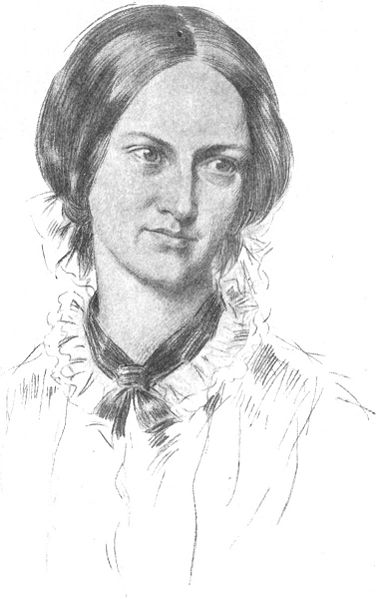
Northern Ballet's Jane Eyre

Charlotte Bronte
Source Wikipedia
Creative Commons Licence


On 17 Sept 2015 Northern Ballet announced that it had commissioned Cathy Marston to create a new ballet called Jane Eyre based on the novel by Charlotte Brontë to a score by Philip Feeney. The ballet is to be premièred on 19 May 2016 at CAST in Doncaster where I saw Madame Butterfly earlier this year (see Nixon's Masterpiece 22 May 2015). It will also be performed in Richmond upon Thames, Aylesbury, Wolverhampton, Stoke on Trent and Leicester over subsequent days.

Marston was the artistic director of the Bern Ballet between 2007 and 2013 where she created a large number of new works.  One of them is Wuthering Heights which is rather different from David Nixon's version (see Wuthering Heights 19 March 2015).  Marston, like Brontë, was born in the North but she was brought up in Cambridge and London and spent most of her adult life in Switzerland.  She speaks about her life and her work in this video.

For Wuthering Heights Marston commissioned a score from Dave Maric. For her other work by a Brontë sister she will collaborate with a composer who has already written many scores for Northern Ballet (see Cinderella, Dracula and Christopher Gable's Cinderella).  I have had the pleasure of watching him play for Ballet Central when they have visited The Lowry and Stanley and Audrey Burton Theatres (see Central Forward 25 March 2013 and Dazzled 3 May 2015). The set designer is Patrick Kinmonth and the lighting engineer is Al West.  They will have a field day staging the fire.

No casting has been announced yet. I guess Tobias Batley and Martha Leebolt must be favourites for Jane and Mr Rochester. Blow and Bateman are also obvious alternates for Jane and maybe Takahashi for Rochester. I can only speculate who will be unfortunate enough to dance poor, mad Mrs Rochester. I can see a nice role for one of the younger dancers in  Helen and two horrible ones in Aunt Reed and the Rev Brocklehurst.  If you have not yet read Jane Eyre you can download it for free in several versions from Project Gutenberg.

Although I think Northern Ballet has quite enough ballets based on GCSE set texts as it is I am looking forward to this work, At the symposium on narrative dance earlier this year David Nixon said that the company was best known for that type of ballet.  Marston describes herself as
"a choreographer, who joins the artistic dots and creates form for stories, emotions and ideas. She gives new perspectives to old narratives; opens original ideas to new audiences and crafts unexpected matches between classical and contemporary art forms."
Elsewhere she adds:
"During her six year tenure in Switzerland directing the Bern Ballett, her British ‘respect for the playwright’ became influenced by the ideas of German theatre and ‘Director’s Theatre’, resulting in her unique, hybrid signature. Lending new perspectives to old narratives in her version of Chekov’s Three Sisters, or in her historically-inspired Witch-hunt: both are danced-stories stripped back to their essence and displaying high quality technique and unflinching expressive integrity."
Let's hope she remembers that the audiences the company is likely to find in Doncaster and the other mid-size venues will not be like those she found in Bern and that most of them will have very fixed ideas about Jane Eyre.

Sunday, 12 April 2015

The Ballet comes to me


Normally I have to travel some distance to watch ballet but today the ballet came to me. To be more precise Northern Ballet performed Elves and the Shoemaker in The Lawrence Batley Theatre in Huddersfield. I have seen quite a lot of children's ballets with Vlad the Lad lately: English National Ballet's My First Ballet: Coppelia, Ballet Black's Dogs Don't Do Ballet and Ballet Theatre UK's Aladdin last week. I saw this one on my own (andI was by no means the only unaccompanied adult) and thoroughly enjoyed myself.

Unlike the other children's shows this ballet comes with live music. The score was composed by Philip Feeney who had written the music for Cinderella (see Northern Ballet's Cinderella - a Triumph! 27 Dec 2013 and Cinderella Even Better 30 Nov 2014). The choreography was by Daniel de Andrade who had created Fatal Kiss for the Sapphire gala. The sets were by Ali Allen. And the company deployed some of its best dancers including some of my very favourite.

The show is now touring the country and making three stops at the capital - the Linbury, Richmond and Bromley - so I will have three opportunities to take Vlad to see it. Earlier today I tweeted that I wonder whether I would be allowed to throw flowers on stage as audiences used to at Covent Garden before the flower and veg market moved to Nine Elms. I thought better of it but I really wish I hadn't because Bettina, Maggie, Snatch, Frances and Pearl as well as their men fork really deserved them.

Sunday, 30 November 2014

Cinderella - even better


Northern Ballet, Cinderella, Lyceum, Sheffield 29 Nov 2014


When I reviewed Northern Ballet's Cinderella at The Grand last Boxing Day I described it as "a triumph". Yesterday's performance at The Lyceum in Sheffield was even better.

It was much the same cast: Lucia Solari in the title role, Javier Torres as the Prince and Hiranao Takahashi as Cinderella's father and the Magician. The most significant change was that Hannah Bateman danced Cinderella's stepmother. I have admired Bateman for some time but I did not appreciate fully how good she was until yesterday evening. Having made her acquaintance at the Decadent Afternoon Tea last June to celebrate the 10th anniversary of the Centre for Advanced Training I can attest to her amiability but in role she was the epitome of meanness, peevishness and vindictiveness. Her performance contributed considerably to my appreciation of the ballet. The other dancer I noticed particularly last night  was Rachael Gillespie who danced Cinderella as a child. She loves to dance. She radiates enthusiasm with her eyes and smile.

As with Gatsby two weeks ago I was able to concentrate on the score and choreography. First time round I barely listened to the Philip Feeney's music (possibly because it wasn't Prokoviev) but this time I did listen and fell in love with it.  It has been resonating in my brain - especially the closing scene where Cinders runs to the prince  - all nght. As in Gatsby there is some very clever choreography. The skating scene on the Crystal Lake, the performing bear and huskies and the ecstatic pas de deux between Cinders and the Prince are just three examples.

And talking of bears I now know why I did not appreciate the Royal Ballet's The Winter's Tale  first time round. Nixon has a performing bear danced by the entertaining Matthew Broadbent whereas Wheeldon uses fabric which just didn't work for me and still doesn't. I had seen Cinderella a few weeks earlier and it is so good that I think it spoiled me for everything else. In my last review I spoke of the magic and the Cinders mobile. This time I noticed the ingenuity of some of the other scenes such as the opening with its forest and river.

This year we have seen Cleopatra, Dracula, Gatsby  and now Cinderella which are Nixon's most popular works. The last is my favourite work in Northern's repertoire and I would argue that it is Nixon's best work.

Friday, 27 December 2013

Northern Ballet's Cinderella - a Triumph!

Northern Ballet Cinderella Leeds Grand Theatre 26 Dec 2013


In my review of Scottish Ballet's Hansel and Gretel on 23 Dec 2013 I wrote:
"Brilliantly conceived, brilliantly orchestrated, brilliantly designed and brilliantly danced my only fear is that it will spoil me for the next ballet that I shall see which will be Northern Ballet's Cinderella at the Grand on Boxing Day."
Hansel and Gretel was not the only ballet that might have spoiled me. I had also seen Ashton's Cinderella with Sir Fred and Sir Bob as the ugly sisters. I had seen Matthew Bourne's Cinderella which is set in  wartime London and is the best work from New Adventures that I have seen so far. While waiting for the Grand to open I watched on my mobile phone the trailer for Christopher Wheeldon's new version for the Dutch National Ballet which looks amazing. How could anything that Northern might produce possibly stand comparison?

Well, it does. Nixon's Cinderella is his best work yet. Even better than Gatsby (see "Life follows Art: the Great Gatsby" 8 March 2013) and indeed Dream though the audience did not respond so enthusiastically (see "Realizing Another Dream" 15 Sept 2013).  As you can see from the synopsis Nixon has reworked the story and used a completely new score by Philip Feeney.  Setting the ballet in pre-revolutionary Russia has worked at least as well as Hampson's setting Hansel and Gretel in post-war central Scotland which I commended last week. The first scene brought Chekhov's Cherry Orchard to mind and the circus and skating scenes on the Crystal Lake reminded me of Petrushka. The setting provided the opportunity for some spectacular sets by Duncan Hayler with dashing uniforms for the men and gorgeous skirts and headdresses for the women.

Nixon also created a strong new male character: a magician who replaced the Fairy Godmother  in other versions of the story. Danced yesterday by Hironao Takahashi who was also Cinderella's father, Count Serbrenska, he literally wrought magic before our eyes. Conjuring tricks at first and then bigger ones such as doing the housework in a trice (making me and probably every other woman in the audience smile)- a better job than even James Dyson for all his technical wizardry could accomplish - and then finally, after audience dazzling light effects, his tour de force, the Cinders mobile. Her sleigh pulled not by mice but by huskies with the word "Cinders" on the sides in flashing lights.  Nixon and Hayler have probably started a new trend in stretched limos. Every girl in Adel, Bramhope and Harrogate will want one for her 18th birthday, prom or hen night.

I must say something about the leading dancers. Like millions of balletomanes I watched Acosta and Nuñez dance Basilio and Kitri in Don Quixote in the cinemas and on BBC4 on Christmas day. There was a special sort of rapport between them which I attributed to their being Latin Americans dancing roles derived from one of the classics of Spanish literature. I saw something of the same yesterday in  Javier Torres, who danced the prince, and Lucia Solari, who was Cinderella. Torres, like Acosta, is Cuban and Solari was born in Uruguay which is next to Argentina though she has lived in Europe for many years. Was it coincidence, my imagination or something more?  Whatever the reason I was captivated by their dancing, particularly the pas de deux at the end of the ball and the second pas de deux in the last scene.

It would however be unfair to single out those two for special praise.  All performed well. Teresa Saavedra-Bordes and Rachael Gillespie, who danced Cinderella's, were anything but ugly except in the way they treated poor Cinders. A strong performance from Jessica Morgan, the stepmother.  Oh and I loved the performing bear who I suspect was Matthew Broadbent.

If you want to know more about the show Janet McNulty, who seems to be as big a fan of Northern Ballet as me, has written some marvellous notes for Balletcoforum  I have just discovered that forum and am hooked on it. It is a wonderful resource and I commend it to all. Cinderella will be at Leeds until the 4 January 2014 and it will be staged in Hull and Cardiff in April. If you live in or near any of those cities you really must see it.

My only thought - which is only half frivolous - is will Cinderella spoil me for the next ballet that I shall be see which will be Giselle with Acosta and Osipova on 18 Jan in Covent Garden? When I tweeted that thought yesterday @norhernballet (Dolly?) replied that Giselle might give me the wilis which provided plenty of Myrthe.

Monday, 25 March 2013

Central Forward


Ballet Central, The Lowry, Salford 25 March 2013

Ballet Central is the Central School of Ballet's touring company.  Its members are final year students on its honours degree course in professional dance and performance. Apparently that is the only degree course of its kind in the UK.  It is the sort of course I used to dream about when I was an undergraduate reading a conventional honours degree subject.

On 25 March 2013 I attended the company's octuple bill at The Quays theatre in the Lowry.  It was a wonderful show. One that I would eagerly have watched from beginning to the end immediately afterwards.  It was good to see the company in Manchester because it was founded by Christopher Gable who later became artistic director of the company that is now Northern Ballet.

The programme was arranged in three acts.  The first consisted of five short works by different choreographers including "Fireside Pas de Deux" by Gable himself. The music for that work (and indeed several others) had been composed by Philip Feeney and the maestro was at the piano in the auditorium. Indeed, I also caught a glimpse of him in the bar at the first interval.

All the ballets in the first act were good but the one I enjoyed most was Stacey Haynes's "Love on Top". Set to the music of Michael Bublé's "Cry me a River" and Beyoncé's "Love on Top" this was a jazz piece with the girls in black sparkly dresses and heels and the boys in white shirts and black ties. This was a work to show off the company's versatility and the boys' virtuosity with some spectacular jumps.

The second act showed the company in a familiar classical work, a pas de trois from Act III of Sleeping Beauty.  It was good to have this little bit of Petipa's choreography fresh in my mind as a reference point when watching Matthew Bourne's re-working of the ballet at The Alhambra in Bradford on Thursday. Tchaikovsky's score, Petipa's choreography executed convincingly by promising dancers with good technique resplendent in Richard Geller's sumptuous costumes this little work satiated all the senses. It was a good example of what I call total ballet.

The extract from Sleeping Beauty was followed immediately afterwards by Darshan Singh Bhuller's Mapping #3.  With males and females dressed alike in loose white judo style tops and trousers dancing to a score that included Shankar this was a perfect foil to Tchaikovsky and Petipa. The clever bit of the choreography was to protect dancers' movements on the floor on to a screen that gave the impression of weird and wonderful acrobatics.

If anyone wonders why I called this post "Central Forward" it is because the last act was about football.  At least that was one of the dreams of a bespectacled bookworm danced engagingly by Bethany Pike in Christopher Marney's anon. She also dreamt of Viennese waltzes. Sitting on a massive pile of books the bookworm receives a delivery of books from the postman into which she daydreams roles for herself first at a ball of which she was the belle and then at a football match in which she was the striker's darling. I loved Marney's humour - longing glances by the girl at the very fit postie and her futile attempts to dance a romantic pas de deux with her beau without her glasses. The quest for love makes fools of us all.  With costumes by Geller ingeniously morphing Royal Mail blue shorts and shirt into red and white football strip and music arranged by Feeney it was another example of total ballet.

This is the 30th anniversary tour by Ballet Central. Tours like this must provide  enormously valuable experience for young dancers at the start of their careers.  It is only possible through generous public support.  There are several ways in which balletomanes can help future tours from funding pointe shoes at £35 a throw to sponsoring a whole production or a dancer for £5,000.  Further information about helping the company is available from Joanne McIntosh, the company's development and communications director, on 020 7837 6332. Oh and don't forget the School which also welcomes support from its audiences. You  don't have to be Bloomberg to bankroll ballet.