Showing posts with label Tamara Rojo. Show all posts

Friday, 3 February 2023

Dance for Parkinson's in the Pontio Centre

Srandard YouTube Licence


I remember an interview with Tamara Rojo in which she said that one of English National Ballet's achievements of which she was particularly proud were its Dance for Parkinson's class.  I blogged about them in English National Ballet's Appeal for Funds for its Parkinson's Classes on 14 Dec 2014 and I have supported them ever since.

I have recently learnt that the National Dance Company Wales runs Dance for Parkinson's classes at the Pontio Centre in Bangor as well as Blackwood, Cardiff and Wrexham.  The Pontio Centre is an initiative of Bangor University that houses a theatre, cinema, gallery, fabLab, bars and restaurants as well as the dance studio where the classes take place.  I described its importance in How the Pontio Centre and M-SParc complement each other in the Social and Economic Development of Northwest Wales in NIPC Wales on 5 June 2020:
"Like M-SParc, the Pontio Centre is an initiative of Bangor University and they complement each other. While the science park provides facilities for new knowledge-based businesses the Pontio is a venue for the performing arts. Both are essential for the economic and social regeneration of Northwest Wales. The new businesses in or clustering around M-SParc already provide employment for the region's graduates and young professionals. The arts will nourish their minds and spirits."

I have reviewed three shows at the Pontio by Ballet Cymru:  Dylan Thomas – A Child’s Christmas, Poems and Tiger Eggs on 1 Dec 2018, Wired to the Moon, Divided We Stand and Celtic Concerto on 30 Nov 2019 and A Child's Christmas and Terms and Conditions on 2 Dec 2022.

According to the National Dance Company's website classes at the Pontio take place every Tuesday at 13:30 and cost £3.50.  The Centre is on Deiniol Toad not far from the town centre.  There is a car park almost opposite.

The National Dance Company Wales is one of the UK's leading contemporary dance companies.  It is based at the Dancehouse in Cardiff   It is about to take its mixed bill Pulse which will start at the Pontio on 23 March 2023 and will take in London, Derby and Huddersfield as well as venues throughout Wales.  I am looking forward to seeing the show at the Lawrence Batley on 18 May 2023.

Tuesday, 8 February 2022

The Dutch National Ballet's "Raymonda"

Copyright 2021 Dutch National Ballet Standard YouTube Licence

As I said in my review of the live-streaming of the Bolshoi's performance on 27 Oct 2019, Raymonda is not performed in this country very often.  Indeed, as English National Ballet noted on its website, no local company had performed the work in its entirety until its production opened at the Coliseum last month.  As ENB's version is set in the 19th-century Crimean war rather than the medieval crusades, it could be argued that we still have to wait for a British company to dance the whole work.

But if we want to see a full-length performance of the traditional ballet, we do not have to go very far or wait very long to see one.  That is because the Dutch National Ballet will premiere a new production of Raymonda at the company's auditorium in Amsterdam on 3 April 2022.   It has been created by the company's assistant artistic director, Rachel Beaujean, in collaboration with the artistic director, Ted Brandsen, and Grigori Tchitcherine of the National Academy.  Beaujean produced Giselle which impressed me greatly when I saw it at Heerlen on 9 Nov 2018 (see Mooie! 10 Nov 2018). Tchitcherine gained a thorough knowledge of Raymonda first as a student at the Vaganova, later as a dancer with the Mariinsky and most recently from his research into the original and subsequent productions of the ballet.   As the sets have been created by Jérôme Kaplan who also designed the sets for David Nixon's The Great Gatsby and as the orchestra will be conducted by Boris Gruzin I have very high hopes for this production.  

Although Beaujean will depart from Countess Pashkova's libretto in one regard in order to "devise a crown and setting that are relevant to today" HNB's website emphasizes that the "choreographic splendours" will be retained. Further reassurance in that regard is provided in an interview with Beaujean and Tchitcherine. They describe how they delved into the history of the ballet over the last two years. They examined the records of the original choreography that had been made by Vladimir Stepanov. He devised one of the earliest systems of ballet notation which he explained in Alphabet des mouvements du corps human, essai d'enregistrement des mouvements du corps humain au moyen des signes musicaux published in Paris in 1892.  They also examined Konstantin Sergeyev's choreography for the Kirov's revival in 1948 and concluded that it was probably closest to Petipa's. A member of HNB's cast who also knows the Mariinsky's version well tells me that it follows tradition.    

Beaujean's modification to the story is to characterize Raymonda as "a young woman who makes her own choices on the path of love" rather than tamely accepting her marriage to Jean de Brienne as inevitable.  She justifies the change on the ground that Petipa and Glazunov were not happy with the original libretto and made changes to it.  That is altogether different from writing a story about a different war, in a different country in a different century.

In making these observations I do not disparage Tamara Rojo's version in the least.   I missed the season at the Coliseum only because of pressing professional commitments and soaring omicron infections in London.   I am a Friend of English National Ballet and have attended its performances regularly ever since I was enchanted by one of its performances of The Nutcracker in the Festival Hall.  New versions of familiar ballets can work as David Dawson has shown with his Swan Lake for Scottish Ballet.  I look forward to watching Rojo's version when English National Ballet brings its Raymonda to Manchester or Liverpool.

I will see ENB's Raymonda after HNB's.  I have my ticket for the centre of the stalls 6 rows from the stage, a return rail ticket to Amsterdam via St Pancras and a reservation at my favourite hotel in Amsterdam.   I shall publish my review in early April.

Sunday, 5 January 2020

Northern Ballet's 50th Anniversary Celebration Gala


Dratdard YouTube Licence

Northern Ballet 50th Anniversary Celebration Gala 4 Jan 2020 19:00 Leeds Grand Theatre

Last night's gala was everything for which I had hoped and a great deal more than I had dared to expect.  It was one of the best evenings that I have ever spent in a theatre and by far the best evening that I have ever spent in Leeds.  It was so much better than the company's 45th-anniversary gala in March 2015.

The evening consisted of excerpts from 18 ballets some of which are among my favourites.  A few of those ballets I had not seen for decades. Several of those excerpts were danced by favourite artists such as Federico Bonelli and Marge Hendrick. The excerpts were interspersed with speeches and videos from dancers, choreographers, directors and others who have contributed to Northern Ballet over the last 50 years.  A few of those recollections touched me personally because they recalled events that have become part of my life.

Having seen Elaine McDonald on stage and having met Peter Darrell several times (see Scottish Ballet 20 Dec 2013) I was close to tears when Hendrick danced Darrell's Five Rückert Songs to Mahler's haunting music. My association with Scottish Ballet goes back to my second year at St Andrews where I was taught my first plié as well as a lot of other things that qualified me to make a living (see Ballet at University 27 Feb 2017). Scottish Ballet was the first company that I knew and loved and it is still the company that I love best.  I swelled with pride as Christopher Hampson entered the stage and discussed the two companies' kinship.

My other personal highlight was A Simple Man with Jeremy Kerridge and Tamara Rojo as the painter and his mother.  That was the first work by Northern Ballet that I ever saw.  I attended its performance shortly after returning to Manchester to take up a seat in chambers. My late spouse and I had been regular ballets goers in London and remoteness from Covent Garden, Sadlers Wells, the Coliseum, The Place and the Festival Hall seemed unbearable.  It was Gillian Lynne's brilliant choreography with Christopher Gable and Moira Shearer in the leading roles that reassured us.  We could see that there was a ballet company in the North that was just as good as Nick Hytner's Royal Exchange and the Hallé at the Free Trade Hall. I have followed and supported all three of those great Northern institutions (albeit not always uncritically) ever since.

The evening started with the party scene from The Great Gatsby which I reviewed at its premiere and on tour. After the opening, the company's director, David Nixon, appeared and greeted the audience. He paid tribute to his predecessors and all who had contributed to the company in various ways over the years. He singled out Carole Gable who also appeared in a video and the composer Philip Feeney (see Central School of Ballet's staff biographies). The very early years of the company were recalled by photos of the dancers and press clippings that flashed on the screen.  There were also some personal reminiscences from the 1970s. The later years were covered in much more detail, There were videos from Robert de Warren, Michael Pink, Patricia Doyle. Several of the company's leading dancers were recalled from retirement including Tobias Batley, Martha Leebolt and Dreda Blow who now live on the other side of the Atlantic.  The nostalgia was palpable - just like Noel Coward's Cavalcade.

Some of the works in Northern Ballet's repertoire were danced by guest artists from other companies. Federico Bonelli of the Royal Ballet partnered Abigail Prudames of Northern Ballet in the balcony scene from Massimo Moricone's Romeo and Juliet.  Momoko Hirata and César Morales of the Birmingham Royal Ballet danced the wedding night scene from Nixon's Madame Butterfly which I have always regarded as Nixon's masterpiece. The Royal Ballet's Laura Morera and Ryoichi Hirano, another two of my favourite artists, danced the countryside scene from Jonathan Watkins's 1984.   Greig Matthews and Amanda Assucena danced Rochester and Jane in the proposal scene from Cathy Marston's Jane Eyre.

It was good to see Central's students, Elise de Andrade and Matteo Zecco, in a scene from Cinderella by their school's founder, Christopher Gable.  As a fan of Phoenix Dance Theatre, I was delighted to see the magnificent Vanessa Vince-Pang (yet another favourite) and Aaron Chaplin in Sharon Watson's dance chronicle Windrush: Movement of the People.  Space and time do not permit me to mention everything in detail.  Other works included
All danced delightfully and I congratulate them all.

The finale was the last scene of A Midsummer Night's Dream which is Nixon's other work that I regard as a masterpiece (see Realizing Another Dream 15 Sept 2013). The whole cast took to the stage including Kenneth Tindall.  He was one of my favourites in the company and I thought I would never see him dance again.  At the end of the gala, Nixon recited Puck's speech which ends the play: 
"If we shadows have offended,
Think but this, and all is mended,
That you have but slumber'd here
While these visions did appear.
And this weak and idle theme,
No more yielding but a dream,
Gentles, do not reprehend:
if you pardon, we will mend:
And, as I am an honest Puck,
If we have unearned luck
Now to 'scape the serpent's tongue,
We will make amends ere long;
Else the Puck a liar call;
So, good night unto you all.
Give me your hands, if we be friends,
And Robin shall restore amends."
It is supposed to be uttered by a dancer.  Kevin Poeung said those words when I last saw the show.  But the words seemed entirely appropriate as they dropped from Nixon's lips.  A shower of gold confetti rained from the ceiling. Hardly anyone remained seated and there were not many dry eyes.

Monday, 22 January 2018

Tamara Rojo at Last! Le Jeune Homme et la Mort and La Sylphide


Standard YouTube Licence

English National Ballet La Sylphide and Le Jeune Homme et la Mort  19 Jan 2018 Coliseum

Having chosen to see La Sylphide and The Song of the Earth on 14 Oct 2017 in order to catch Tamara Rojo I was disappointed to watch The Song of the Earth over a flickering monitor with the sound turned down in a noisy bar. The reason for my banishment to the bar was that I arrived at the Palace Theatre a few minutes after the performance had begun. That was because Manchester City Council in its wisdom had seen fit to close Albert Square to traffic without  adequate warning or diversion signs just as crowds were streaming into the city for a night out. The result was chaos and although I found a way round the traffic I could not avoid it entirely.  That was my only low point of the evening and the pleasure of meeting Sarah Kundi, one of my favourite dancers, after the show went a long way to making up for it (see Always Something Special from English National Ballet: La Sylphide with Song of the Earth 18 Nov 2018).

Had I seen The Song of the Earth on stage it is unlikely that I would have gone to London on Friday.  I would then have missed one of the most remarkable performances that I have seen in nearly 60 years of ballet going.  It is strange how something that appeared to be a disaster can sometimes turn out for the best. The performance of Le Jeune Homme et la Mort by Ivan Vasilev and Tamara Rojo was one of the most compelling that I have ever seen.

The work was created by Roland Petit shortly after the Second World War.  We don't see much of Petit's work in this country which is a regrettable because he was an important choreographer.   I have seen only one other work by Petit in a lifetime of ballet going. Petit's muse was his wife Zizi Jeanmaire who was a dramatic dancer with the most captivating eyes.  I never got to see her in real life though I saw her on film in Carmen and Le Jeune Homme et la Mort.  Sadly it is no longer possible to see Jeanmaire as the temptress in Le Jeune Homme et la Mort but we can still see Rojo.  I believe that the experience of seeing her in the role is very similar to seeing Jeanmaire. That is not to say that Rojo imitates her predecessor - far from it because Rojo has made the role her own - but she is at least as exciting to watch. Rojo, like Jeanmaire, is a dramatic dancer with striking features and an imperious manner both as the woman and as death.

As my eyes were riveted on Rojo from the moment she appeared at the door, I am not sure that I gave Vasilev the attention that he deserved.  He is another outstanding dancer.  I appreciated his strength and beauty. I marvelled at his virtuosity as he perched on the backs of chairs and leaped over furniture waiting for his visitor.  But it was only when he kicked away his support with his head in a noose that I focused on him fully. As the scene changed from garret to afterlife Rojo drew me back as she emerged as some angel of death.  A ballerina's ballet if ever there was.

I should say a word about Georges Wakhévitch's designs and in Karinska's costumes,  The young man is stripped to the waste in jeans but the woman wears a fluid, canary yellow dress and black gloves in life and a long white dress, death mask and red veil as death.  The next life appears to start on the rooftops of Paris. In the background stands the Eiffel tower advertising Citroën. I never knew that the Eiffel tower was ever used for advertising so I looked it up. According to Sophie Nadeau, it really did happen. For a time the tower was the biggest outdoor advertisement in the world (see Solo Sophie).

The rest of the evening was Bournonville's treasure La Sylphide.  I love that ballet so much. How I would enjoy dancing Madge.  As I said in my review of English National Ballet's performance of La Sylphide in Manchester, I greatly prefer that ballet to Giselle:
"I prefer Løvenskiold's score to Adam's any day and the idea of the ghosts of spurned maidens dancing their lovers - or indeed any other man who finds himself in the wrong place at the wrong time - to death gives me the heebie-jeebies. The story in La Sylphide is so much more reasonable even if it does have mythical creatures like sylphs and witches."
I had enjoyed the show in Manchester but I liked Friday night's performance even more. Rina Kanehara was a delightful sylph. Her loyal friend Anna was danced again by Sarah Kundi. I have followed her for years and it is always a pleasure to see her. Joseph Caley portrayed a headstrong James.  I can't help feeling sorry for him. Yes he may have been mean to Madge but he didn't deserve what happened to him.  Had I been Effy I would have forgiven him.  Caley had been one of my favourite dancers at the Birmingham Royal Ballet and it was good to see him in his new company.  Daniel Kraus was a scheming and devious Gurn.  Crystal Costa made a very successful debut as Effy. Life with Gurn. Hmm! Frying pans and fire spring to mind.  Madge makes or breaks a performance of La Sylphide for me and Jane Howarth was a splendid witch. One could almost hear her imprecations.

It had not been easy getting to the theatre from Holborn as the Piccadilly Line was up the creek. I arrived at Leicester Square squashed, squeezed, hot and bothered with hardly any time to spare to pick up my ticket, deposit a heavy brief case and find my seat. I was hardly in the most appreciative frame of mind for an evening at the ballet.  The drama, the choreography. Rojo's  dancing, the brilliance of the work blew all that away. The show finished at 22:00 and my train home was at 22:57.  Plenty of time for a few stops one would have thought. In fact, I needed every single minute as the Piccadilly Line had still not found its paddle by the time the theatres were emptying. And when I arrived at Doncaster I had to drive 35 miles on ungritted roads through falling snow. The excellence of the double bill was well worth those tribulations.

Saturday, 18 November 2017

Always Something Special from English National Ballet: La Sylphide with Song of the Earth


Standard YouTube Licence

English National Ballet  La Sylphide. Song of the Earth Palace Theatre, 14 Oct 2017, 19:30

Long before Laverne Meyer set up his Northern Dance Theatre in Manchester, Mancunians had a special affection for English National Ballet. The company, then known as London Festival Ballet, gave its first performance in our city. Every year it returns with something special. Last year, it was the Akram Khan's Giselle.  This year it was La Sylphide with Song of the Earth.

Because it is set in Scotland, I have often argued that it should be our national ballet but very few British companies dance it.  I have seen Danes, Americans, Italians and Australians in kilts but never Scotsmen. The Royal Ballet has a version but they last danced it in 2012 (see La Sylphide on the Royal Opera House website). Scottish Ballet has Sir Matthew Bourne's Highland Fling in its repertoire which was performed brilliantly by Ballet Central last year. One company that would be ideally placed for this ballet is Ballet West which is actually situated in Gurn and Effie country. I have begged Daniel Job to stage this work but for some reason or another, it is just not possible.

To my mind, it is much more satisfying than Giselle.  I prefer Løvenskiold's score to Adam's any day and the idea of the ghosts of spurned maidens dancing their lovers - or indeed any other man who finds himself in the wrong place at the wrong time - to death gives me the heebie-jeebies.  The story in La Sylphide is so much more reasonable even if it does have mythical creatures like sylphs and witches.

The version that English National danced last month was Andersen and Kloborg's version rather than the Peter Schaufuss's which was previously in its repertoire. The Queensland Ballet brought it back to London in 2015 and I reviewed it in A dream realized: the Queensland Ballet in London 12 Aug 2015. I liked both versions very much but if I had to opt for a favourite it would have to be the Andersen and Kloborg. It has a certain lightness of touch and parts of it such as the fruitless search for the hidden sylph and her cheeky leaps across the stage are even quite funny.

Jurgita Dronina was a perfect sylph. Playful, ethereal, enticing. Easy to see why James was led astray on his wedding day. Isaac Hernández was that wayward James. Magnificent with his jumps and turns but so weak of resolve.  Giorgio Garrett was the scheming Gurn.  Jealous and treacherous, catching Effie of the rebound. I felt glad not to be in her shoes as the wedding procession made its way to the kirk in the final scene. Anjuli Hudson played poor, sweet Effie.

My favourite character in any production of La Sylphide is, of course, Madge. The bag lady turned away from the fire by a mean-spirited James. Her dance with the other witches at the start of Act 2 is chilling and thrilling.  Her's is a dramatic role not easy to perform. Justice was done to it, however, by 
Stina Quagebeur.

A particular pleasure for me was to see Sarah Kundi as Effie's confidante, Anna. Sarah is a dancer that I have admired for many years. She led me to Ballet Black and I have followed her closely at ENB. Even though I have long been one of her fans and also support Chantry Dance and the Chantry School I had never actually met her. As we follow each other on Twitter and Facebook I asked her how she would feel about meeting two of her fans after the show. No problem was the reply so Gita and I, together with Helen McDonough waited for her at the stage door. Gita, who is a champion chef had prepared a little Diwali treat for her.

Often when a fan meets a favourite artist it is something of an anticlimax. But not with Sarah!  She was as charming and gracious in real life as she is delightful to watch on stage. She accepted Gita's gift and chatted about her roles for several minutes until she had to board the coach that was to take the company from the theatre. Helen, who was armed with an autograph book, got several signatures that night including Sarah's. 

Meeting one of my favourite artists went a long way to offsetting my only disappointment of the evening,  For some reason or other the local authority had closed Albert Square for an event but had failed to give adequate warning. The result was gridlock and chaos as we approached the theatre. I managed to drop Gita at the theatre steps minutes before the curtain was due to rise.  I had to park. I had to drive to the top of the multistorey to find a seat which meant that I missed the start of the show. Consequently, I was obliged to watch Song of the Earth on a flickering monitor with crackly sound in a noisy bar. I had chosen that performance expressly to see Tamara Rojo and, sadly, I missed her,

But it was still a great evening and I still have the chance of seeing Song of the Earth at the Coliseum in the New Year.

Wednesday, 29 March 2017

Isabelle Brouwers in Kibera


Standard YouTube Licence


Over 4 years have elapsed since I first wrote about Mike Wamaya's ballet class in Kibera (see What can be achieved by a good teacher 3 March 2013). The world took an interest in that class towards the end of last year when The Guardian featured it on its Facebook page and other news outlets followed suit (see Recognition for the Kibera Ballet Class 9 Jan 2017).

Shortly after that feature appeared, dancers and companies in Britain offered help.  Birmingham Royal Ballet sent pointe shoes to the class (see Thank you Birmingham Royal Ballet 17 Jan 2017). Yesterday, after being reminded of its blog by Feedspot (see We hate to blow our own trumpet but .... 28 March 2017) I read that Isabelle Brouwers of English National Ballet had actually been to Kibera and given a class there (see Isabelle Brouwers teaches ballet to Kenyan children in Kibera slum 8 Feb 2017 ENB Blog).

I have always had a lot of affection for English National Ballet ever since I attended their Christmas performances of The Nutcracker at the Festival Hall. I have a high regard for that company and their artistic director, Tamara Rojo, not only for their work on stage but also for their work for the community, and in particular, their classes for patients with Parkinson's disease (see ENB's Big Give to Dance for Parkinson's 25 Nov 2016). It came as no surprise to read:
"Backed up by my ever supporting parents, and my wonderful colleagues and Artistic Director Tamara Rojo at the English National Ballet, who helped me gather an incredible amount of dancewear and shoe donations, I was all set for what I knew would be one of the most eye opening and life changing events of my life!"
The article on Brouwers's visit is a very good read and I commend it to my own readers.

I also commend the triple bill of ballets by Pina Bausch, William Forsythe and Hans van Manen at Sadler's Wells this week which I wish I could get to see.  If any of my readers wants to offer me a review I will be very pleased to publish it.

Thursday, 19 January 2017

Positioning Ballet - International Ballet Conference


The Dutch National Ballet will hold a private working conference at its studios in Amsterdam called Positioning Ballet between 10 and 12 Feb 2017 to coincide with the opening of Made in Amsterdam. The Purpose of the conference is to give artistic directors, choreographers and dance journalists from around the world an opportunity to exchange ideas about the future of ballet. The UK will be represented by the Royal Ballet's Director Kevin O'Hare (who also sits on the board of Northern Ballet), Tamara Rojo and Judith Mackrell of The Guardian.

The timetable for the conference is as follows:
Saturday 11th of February
09:30 – 10:15 Walk-in
10:15 – 10:30 Opening
10:30 – 11:45 Talk & discussion: Heritage
11:45 – 12:45 Lunch
12:45 – 14:00 Talk & discussion: Diversity
14:00 – 14:30 Break
14:30 – 16:00 Talk & discussion: Identity
16:00 – 16:20 Short Break
16:20 – 17:00 Wrap up

20:15 Premiere: Made in Amsterdam 1

Sunday 12th of February
11:30 – 14:00 The next step! (guest speakers and lunch)
14:00 Premiere: Made in Amsterdam 2
16:00 Reception

The discussion on "Heritage" covers "the art of programming", "ballet as re-enactment" and "heritage and innovation," There is only an hour and a quarter to cover all that ground - less than the time required for a typical ballet class - and it covers such interesting topics as "Which works are kept in the archive, based on which criteria? When is something still relevant? And when should it be revived?" I for one would just to know the decision-making process by which works like the Royal Ballet's Anastasia and Northern Ballet's Swan Lake are revived. As for "heritage and innovation" I should love to learn whetherTamara Rojo has more to say about shillelagh-wielding wilis.

"Diversity" is a topic very dear to my heart. Only 75 minutes to discuss:
"How can ballet companies better reflect the diversity of the metropolitan society in which they operate? Which steps must be taken in order to make the ballet world more inclusive? It is a fact that the stark differences in our society run along the lines of ethnicity, culture, gender and sexual orientation. During the working conference, we will focus primarily on ethnic and cultural diversity. We will also take a look at some good practices – projects that are successful in diversifying dancers, choreographers, organisation and audience."
On my very limited experience of two galas and half a dozen shows, the audience at the Amsterdam Music Theatre or Stopera seems a little more typical of the population at large than the audience of a ballet night at Covent Garden and certainly The Grand.  But it may be wishful thinking and I have no statistics to back it up. It would be interesting to find out what if any sociological research has been carried out.

Incidentally, it is encouraging that Corinne Vigreux who helped to found Tom Tom sits on the National Ballet's supervisory board.  It is rare for a tech entrepreneur to show such interest in the performing arts - at least in this country.

The last top is "Identity" and includes a discussion on whether it is still possible for ballet companies to reflect their geographical location. The company notes:
"Companies are increasingly engaging in co-production, and choreographers and dancers travel all over the world. This requires individual companies to position themselves clearly."
But was it not ever thus? Petipa was a Frenchman and Pavlova danced everywhere.  Why should a ballet company be like a football team? I am not Welsh but I am a Friend of Ballet Cymru. Too much emphasis on place reduces choice. When was the last time Northern Ballet danced in Birmingham or Birmingham Royal Ballet at The Grand or Alhambra?

I congratulated the National Ballet on this initiative.   I hope they will consider making the discussions available to the public.

Thursday, 10 November 2016

English National Ballet's Reimagining Classics Panel Discussion

Tamara Rojo
Artistic Director and Lead Principal of the English National Ballet
Author: Erik Doble
Source: Wikipedia
Creative Commons Licence


In Livestream: Reimagining Classics Panel Discussion 9 Nov 2016 English National Ballet's blog, Tamara Rojo said:
"Ballet, and art, has the potential of interpretation and reinterpretation, and this is vital to drive our art form forward. My vision for English National Ballet has been to introduce new works that push the boundaries of ballet, for both the Company and audiences, while at the same time honouring and reinvigorating traditional works that have become so loved over the years.”
The topic was discussed briefly on BBC Radio 4's Front Row by the critic, Luke Jennings, and the Artistic Director of Northern Ballet, David Nixon. I mentioned their conversation in Of Bikes and Buses 25 Oct 2016. I applaud Tamara Rojo's aspiration though I am not persuaded that Akram Khan's Giselle  achieved it (see (Akram Khan's Giselle 28 Sept 2016).

However, there will be an opportunity to consider the topic in more detail tonight in a panel discussion between Tamara Rojo and Gavin Sutherland of English National Ballet, Robert Icke, the Almeida Theatre's Associate Director and Mark Evans of the Victoria and Albert Museum. The event is restricted to Friends and Patrons of the company but the discussion will be live streamed via its Facebook page from 19:30 this evening. Further information is available in the blog article which I have mentioned.

The post adds that although attendance at the meeting is restricted to Friends and Patrons members of the public can ask a question via twitter:
"The discussion will also conclude with a Q&A, so we are asking anyone that has a question for the panel to tweet us using #AskENB handling us in (@ENBallet)."
This is a topic that interests me greatly and I am very grateful to English National Ballet for arranging this discussion and opening it up to the public through Facebook. Readers will know that I mentioned the topic again very recently in my review of Darius James and Amy Doughty's Romeo a Juliet  which is a work that does meet Tamara Rojo's objective in my judgment (see A Romeo and Juliet for our Times  7 Nov 2016). In that review I also mentioned David Dawson's Swan Lake for Scottish Ballet which also got it right and Ted Brandsen's Coppelia for the Dutch National Ballet which I have not yet seen but also seems to work. I do not know whether any of the panellists have seen any of those works or whether any of the creators of any of those ballets can listen to tonight's discussion but I do hope so.

I shall certainly be listening and I may well tweet a question if I get an opportunity. Finally, as I have been following ENB since 1955 I really ought to become one of its Friends soon. I love the company at least as much as I do any other.

Sunday, 11 September 2016

At last we have a Synopsis for Giselle Re-imagined. Oh Boy! Do we have a Synopsis!

Standard You Tube Licence


Akram Khan's Giselle will open in Manchester on 27 Sept though there will be previews on the 23 and 24.

English National Ballet and the Palace Theatre have published the synopsis. It is much closer to the traditional story than I had feared but it is still very different.  Post industrial utopia or rather Dystopia rather than the Vosges or Rhineland. The score by Vincenzo Lamagna is said to follow Adam but the soundtrack to the videos sounds quite different to me.

It will open with Alina Cojocaru and Isaac Hernandez in the leading roles.  Hernandez was with the Dutch National Ballet where he won the Alexandra Radius prize. I last saw Cojocaru in Romeo and Juliet in the round on 14 July 2014.

The English National Ballet has a special website for Akram Khan's Giselle and a huge programme of events in Manchester and around the country. Several of the best take place on the 18 September.

Though I feel the same kind of trepidation as I would if an old friend were to undergo surgery I know that Tamara Rojo loves Giselle at least as much as I do and knows it so much better.

So I trust her to keep faith with it and her great company and save our dear friend.   I really do.

Thursday, 18 August 2016

Manchester's Link with English National Ballet

Manchester Opera House
Author: Mike Peel
Creative Commons Licence
Source Wikipedia


As a Mancunian I am immensely proud that the company which is now England's national ballet company danced its first performance at the Opera House on 5 Feb 1951 (see Our History on English National Ballet's website). The company has chosen our city again to premiere Akram Khan's Giselle on 27 Sept 2016 before taking the work on a tour of the rest of the nation. There is enormous affection in this city for English National Ballet which I noted in Manchester's Favourite Ballet Company 29 Nov 2015).

I was delighted to learn yesterday from Tamara Rojo herself that our pride and affection is reciprocated. She had tweeted:
To which I replied:
The company and its director signalled that they liked my tweet. Tamara Rojo quoted it and added:
A number of events will be held around the country in connection with this important new work including some in Manchester (see the Take Part page of the company's website). There is also a fascinating dialogue between Akram Khan and Tamara Rojo on Re-imagining Giselle and Ballet Meets Kathak: the traditions behind Akram Khan's Giselle.

Having just completed in Manchester as it happens a 3-day intensive workshop on La Bayadere which is set in Hyderabad (see La Bayadère Intensive Day 1: 16 Aug 2016 Day 2 17 Aug 2016 Day 3 17 Aug 2016) I should love to see how a choreographer from the Sub-Continent would reinterpret that work. I tentatively suggest that ballet which is not well known in this country as subject matter for a future collaboration between Akram Khan and our national company.

Saturday, 2 January 2016

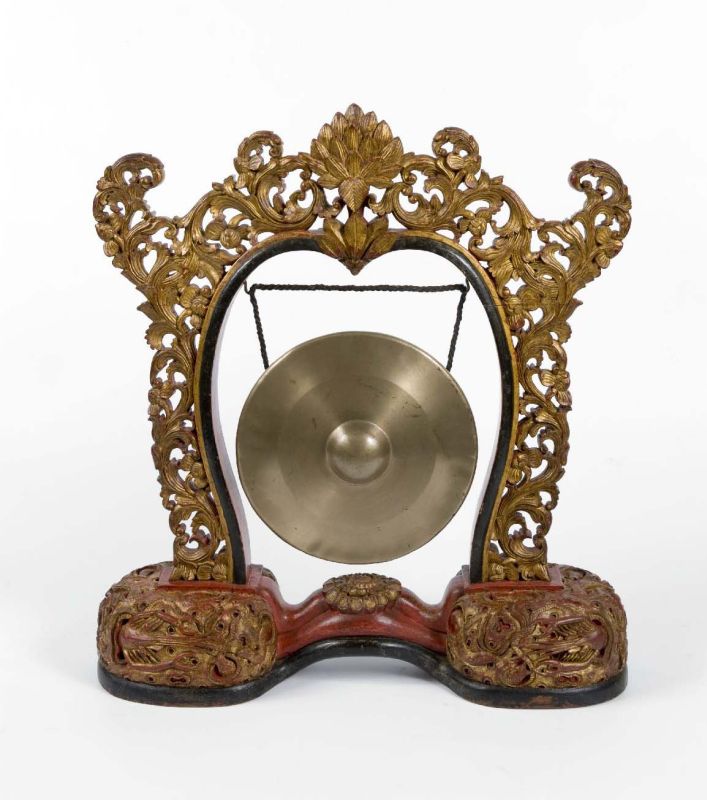
More Gongs

Source Wikipedia
Creative Commons Licence


In Arise Sir Matthew 31 Dec 2015 I congratulated Sir Matthew Bourne and the others who had been honoured in the New Years Honours List for services to dance. In the last paragraph I wrote:
"If I have forgotten to mention anyone else who has been honoured for his or her contributions to dance I apologize profusely and offer my congratulations."
There were in fact two very important omissions: Tamara Rojo, artistic director of the English National Ballet who gets a CBE and the choreographer, Christopher Wheeldon, who gets an OBE, The reason I missed them first time round is that their names appear on a separate Diplomatic Service and Overseas List.

The Foreign and Commonwealth Office press release explains that the 72 awards are in "recognition of truly exceptional and outstanding service to Britain overseas."  It describes Tamara Rojo as:
"one of the most outstanding dancers of her generation. After more than a decade of being one of the Royal Ballet’s most spectacular artists, she was appointed as Artistic Director and Principal Dancer of the English National Ballet in 2012. Under her leadership the company has flourished and continues to honour its commitment to touring the UK and overseas. Her belief in the importance of making the arts in general and dance, in particular, accessible to people from all walks of society has led her to contribute to the Arts Council East, Dance UK and the ICA."
It quotes Rojo's reaction:
“I am so honoured and humbled to receive this award. I owe so much to the UK already, it has given me so many opportunities and great fulfilment and happiness in my life, and this honour is a wonderful encouragement to continue to work for the Arts.”
 Wheeldon is described as an "international choreographer of contemporary ballet" and he us recognized "for services to promoting the interests and reputation of British classical and theatrical dance worldwide."

I congratulate Rojo and Wheeldon on their honours and wish them well.


Wednesday, 3 June 2015

The Creative Industries Road Show comes to Leeds

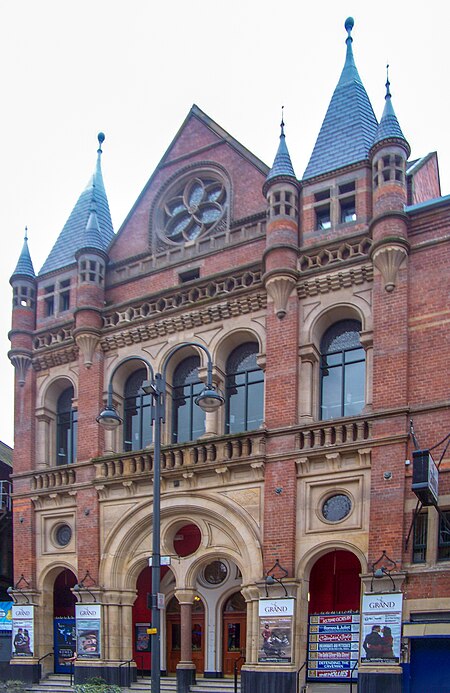
Leeds Grand Theatre
Photo Mtaylor848 
Source Wikipedia


The Creative Industries Federation describes itself as
"the first fully independent body bringing together the public and private sector, across all parts of the country, from the largest multinational to the smallest start-up, from television to computer games, from music to design, from architecture to visual arts".  
For the purpose of recruiting members the Federation recognizes the following as creative industries advertising, architecture, computer gaming, crafts, design, creative education, fashion, film, IT and software, museums, galleries and libraries, music, performing arts, publishing, radio, TV, video and photography and visual arts. English National Ballet is among the Founder Supporter Companies and Organizations as is the Royal Opera House and Tamara Rojo appears on the Federation's launch video.

The Federation is running a series of road shows around the UK "in which leading figures from the arts, creative industries and commercial education will come together to forge new links and map the challenges the sector faces in their area.".  The first of these took place in Manchester on 27 April 2015 and the second in Birmingham on 20 May 2015. On Monday, 1 June 2014, it was Leeds's turn and the caravan gathered in the Howard Assembly Room, a large auditorium leading off the bar of the dress circle in the Grand Theatre,

The event came to my attention because one of the Federation's promises is to "defend intellectual property rights in an ever more digital future." Defending intellectual property rights and indeed attacking them sometimes is what I do for a living but I would probably have given the road show a miss had I not noticed two names on the panel. One of those was Sally Joynson who is CEO of Screen Yorkshire. The other was Sharon Watson, the artistic director of Phoenix Dance Theatre.

The event was chaired by John Kampfner, CEO of the Federation and Anamaria Willis CEO of CidaCo. The first part of the evening was a monologue by Anya Hindmarsh on how she got to be where she is now. All very worthy but it is not as if we had not heard countless similar stories from other entrepreneurs from way back when. The next talk was Tom Riordan, CEO of Leeds City Council which was equally worthy. The main part of the evening for me was the panel discussion in which Sally and Sharon were billed to take part. Also on the panel were Jamie Sefton, Managing Director of Game Republic Ian Thompson, of Thompson Brand Partners, Dominic Gray of Opera North and Anya Hindmarsh.

The advertised topic of the panel discussion was
"'Uniting the Northern Powerhouse' - Following the emergence of the Great North concept how can growth and success be leveraged across the M62 corridor for the benefit of us all?"
Kampfner posed the combustible (for Leeds) question "Is the Northern Powerhouse all about Manchester and if it is does it matter?" and he asked Sharon to respond. Sharon played that ball with a very straight bat. She replied that Phoenix Dance and Northern Ballet had always regarded the North as a powerhouse so there was nothing new there. Actually that was about as much as she or anyone said on the subject because one of the first questions from the floor came from a teacher who complained that children in Yorkshire were just not taking art and design courses in sufficient numbers and that she was looking to the panellists to put that right. For the rest of the evening the panel concentrated on why that should be, whether it was because parents wanted their offspring to get "a real job" whatever that might mean and whether there was too much an emphasis in this country on STEM. As we could do better in maths and science according to recent PISA tables I was rather worried where that discussion might be leading but apart from a few calls to turn STEM into STEAM there was no serious attack on existing educational priorities.

As there had been a lot of Manchester bashing at the LEP Summit in 2011, the Leeds International Economic Conference last year and even at Northern Ballet's breakfast meeting in September 2013 I was really heartened by Dominic Gray. He urged Leeds not to compare itself to Manchester because the two cities are different.  He recalled the success of the Tour de France last year when images of our beautiful countryside were transmitted round the world. Leeds's strength lay in its hinterland, he seemed to suggest which was like music to my ears.

After the talk there was networking in the bar at which attendees had to buy their own drinks in the best Yorkshire tradition. I met a number of interesting people from different arts and creative sectors including Sharon Watson.  I am a great admirer of her company and her work and had met her very briefly on a couple of other occasions. We swapped a couple of stories about the importance of dance and I told her about my faltering efforts to learn her dance form (see My First Contemporary Dance Class 27 Feb 2015).

If anyone wants to join the Creative Industries Federation here is some further information. Subscriptions do not come cheap. Businesses with turnovers of £200 million or above are charged £15,000 plus VAT while businesses that provide support to the creative industries (such as barristers' chambers) would be charged £6,000. Even individuals aged 25 or under are charged £40.  Having said that, there are discounts for those who join in June and further discounts for those who join after attending the Leeds road show. The creative sector does need a forum and collective voice but few of the people I know in dance have that kind of spare cash.

Saturday, 14 December 2013

Cracking!

Standard YouTube |Licence

English National Ballet The Nutcracker The Coliseum 11 Dec 2918, 19:30

One of the pleasures of Christmas growing up in Surrey in the nineteen sixties and early seventies was London Festival Ballet's Nutcracker at the Royal Festival Hall. It quickly became part of the London Christmas like the Regent Street illuminations and the Norwegian spruce in Trafalgar Square.  It would appear from Alistair Macaulay's Nutcracker Chronicles in the New York Times when he set out to see 20 versions across the USA in December 2010 that there is a similar tradition elsewhere though not everywhere for Tamara Rojo writes in the programme for English National Ballet's current production that the first time she saw the work was when she was asked to dance in it for Scottish Ballet. The tradition continues though London Festival Ballet has changed its name to English National Ballet and it is now at the Coliseum and not the Festival Hall.

English National's current version of The Nutcracker is by Wayne Eagling and he has made a few changes to Petipa's choreography and Hoffmann's story such as setting it by the Thames rather than somewhere in Mitteleuropa, casting Clara as a grown woman fusing her with The Sugar Plum Fairy and letting the mouse hang on (literally) into the second Act which I am not altogether sure that I like. Turning Clara into an adult in particular takes away some of the innocence and indeed charm of a ballet which for me and many others is about sweets, toy soldiers and rampaging rodents.

Despite those reservations, I thoroughly enjoyed The Nutcracker on the opening night of its Christmas season. It will be at the Coliseum until the 5 Jan 2014.  It is well worth seeing for Daria Klimentova and Vadim Muntagirov's brilliance, for Peter Farmer's designs, for the sparkling Spanish, Arabic and Russian dances and other divertissements in the second Act and the wonderful character artistry by Junor Souza as the Nutcracker and James Streeter as King Mouse. There are some cute touches like a rat in a kilt in Act 1 (which may become a regular feature in English versions if Scotland votes the wrong way in September), using a mousetrap as a catapult and the substitution of a balloon for a sleigh as a transport to the kingdom of sweets and the land of dreams.

In the last 12 months I have seen Northern Ballet's Nutcracker at The Grand in Leeds, Ballet West's in Pitlochry and now English National's at the Coliseum as well as live streaming of the Royal Ballet's version from Covent Garden last year. Nothing like as many as Mr. Macaulay saw in his marathon but still a fair number. Do I have a favourite? Oh please don't ask me that for it is like asking parents to choose between their children. I love them all. I am just so grateful to every dancer who has ever been on the stage for his or her vocation and for sticking at it through years of training and risking injury to bring unadulterated pleasure to millions like me.